Senior Design Manager · CapgeminiOpen to senior design roles
Design leadership for systems that carry real risk.
I lead UX research and product design teams working on banking, insurance, utilities and enterprise platforms — the systems where a confusing screen becomes a compliance problem, a call-centre queue, or a customer who leaves. My job is to make that complexity legible, and to prove the decision with evidence before it ships.
10+Years across banking, insurance, retail, consulting and education
2Disciplines led day to day — UX research and product design
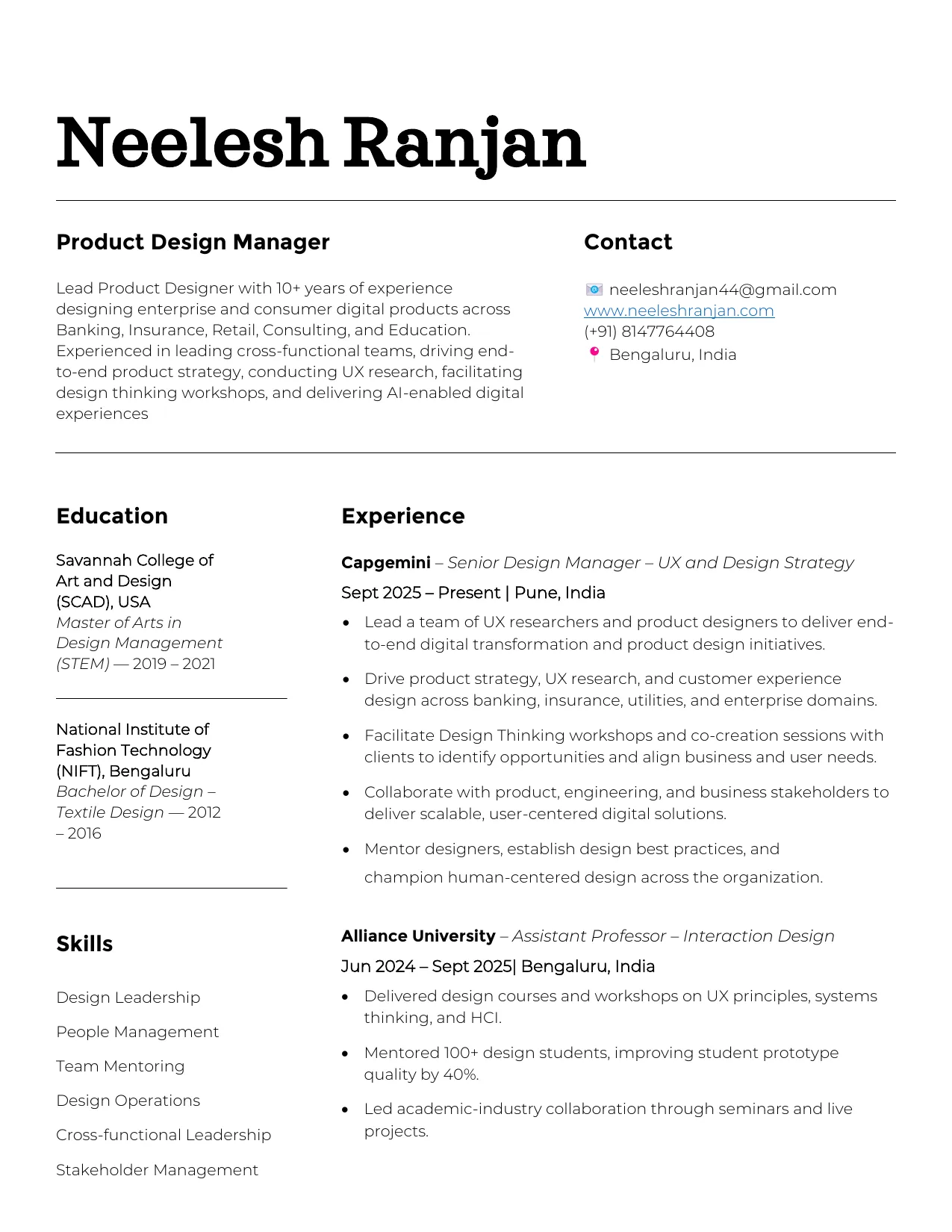
I'm a Senior Design Manager at Capgemini in Pune, leading UX researchers and product designers across banking, insurance, utilities and enterprise accounts.
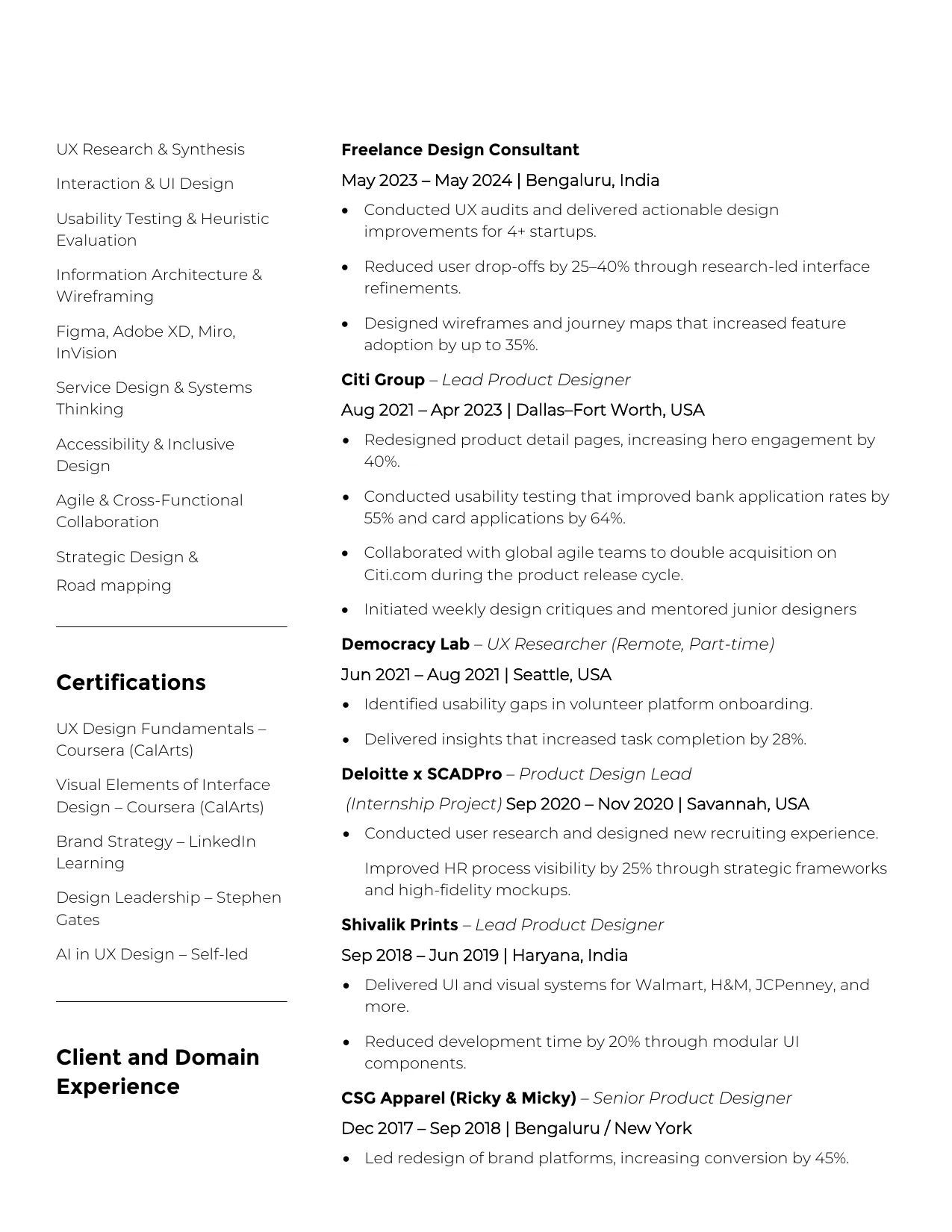
Before consulting I designed for Citi out of Dallas–Fort Worth, taught interaction design as an assistant professor, and ran research at Democracy Lab. That mix is why I tend to argue for the method as hard as the pixels.
2025—
CapgeminiSenior Design Manager, UX & Design Strategy · Pune
2023—25
Consulting & teachingAssistant Professor, Interaction Design, Alliance University · independent design consulting
Neelesh has been an invaluable strategic asset to our Citi.com pre-login journeys. Two 2022 banking page redesigns netted double-digit acquisition growth rate, and Neelesh was a key Citi Strategy partner in that success. His enthusiasm is contagious and his insights are sharp. We're better when Neelesh is in the room.
CitiColleague at Citi HQ · New York, United States
“
It was a pleasure working with Neelesh during his time at Deloitte. He was quick to take action in support of his teammates, insightful, hard-working, and driven to succeed.
DeloitteColleague at Deloitte HQ · WA, United States
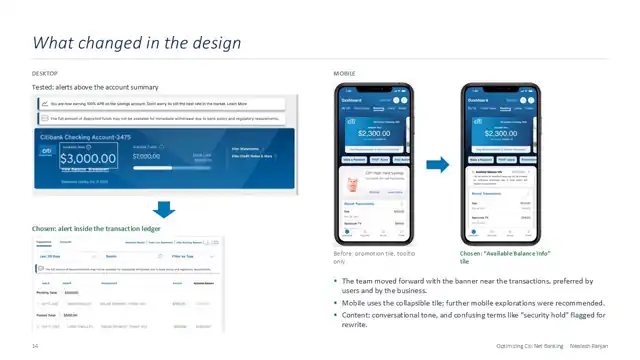
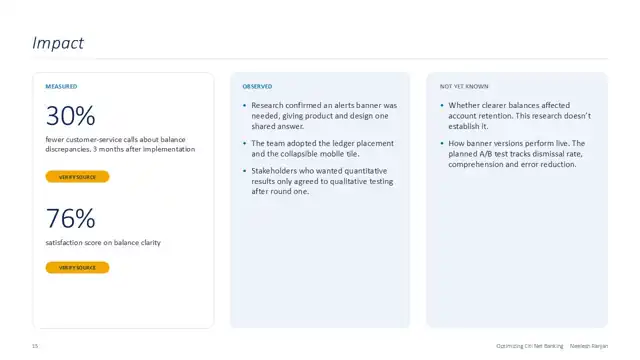
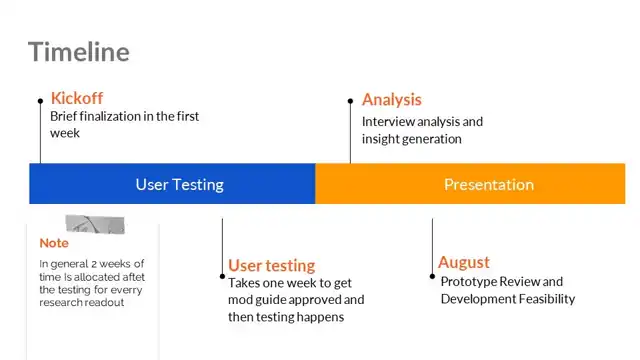
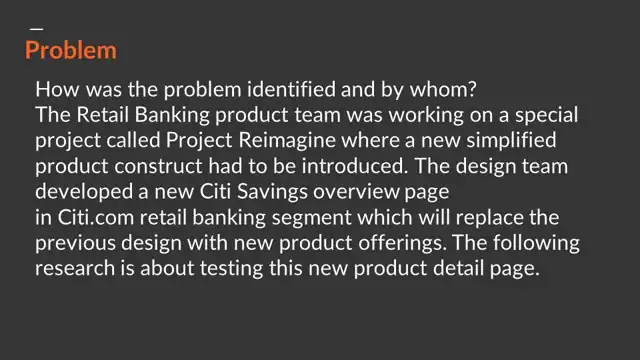
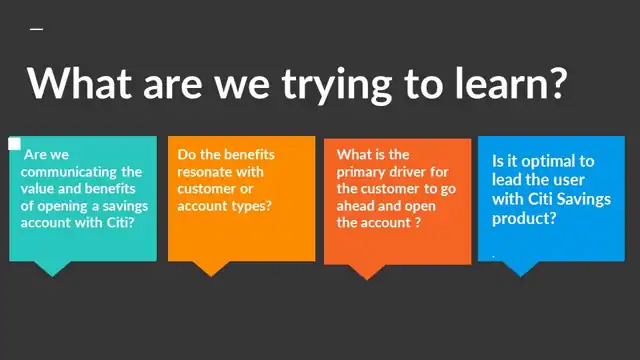
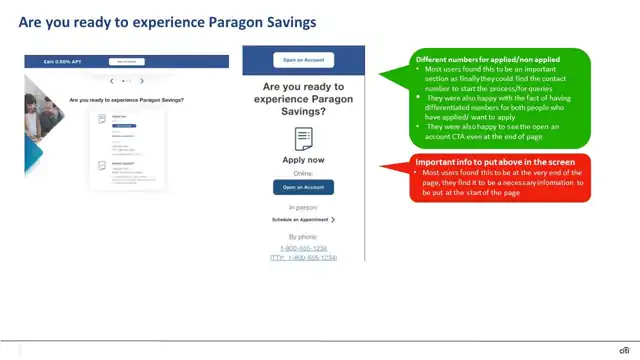
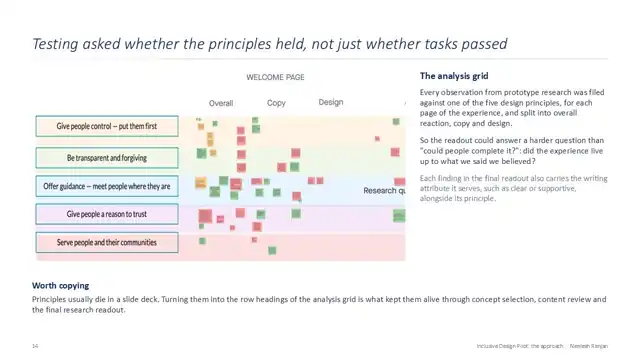
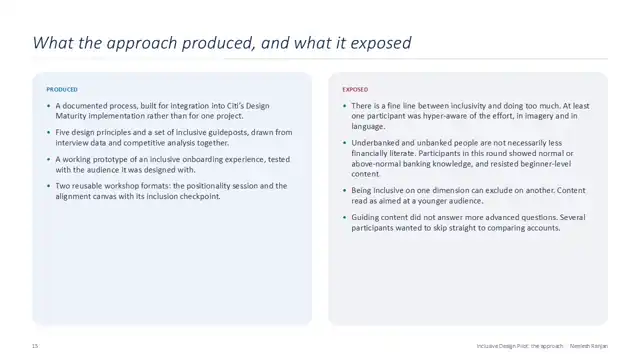
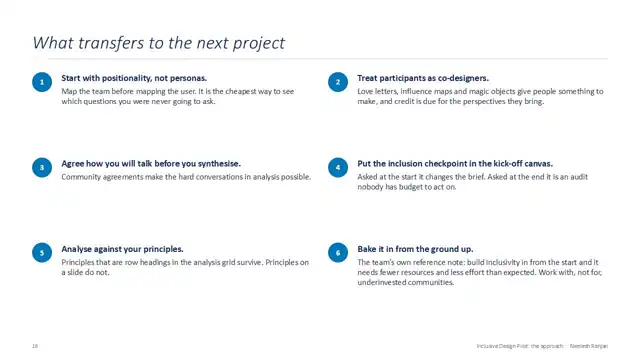
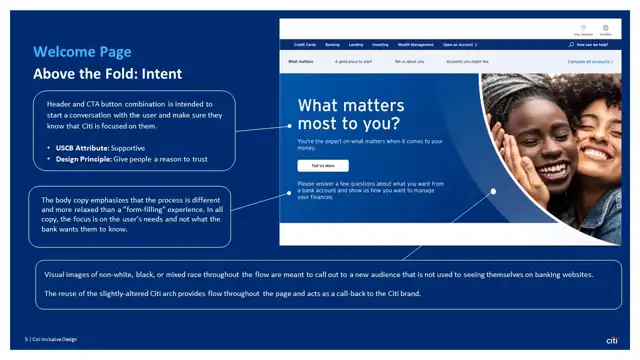
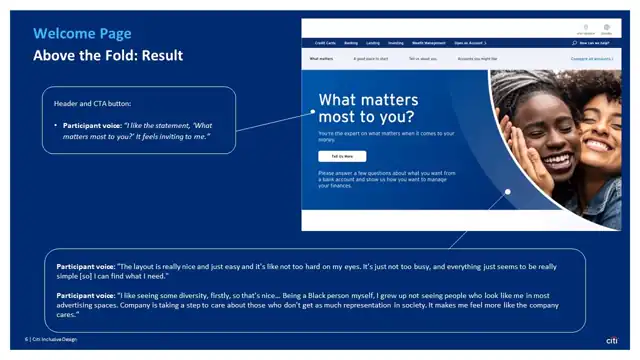
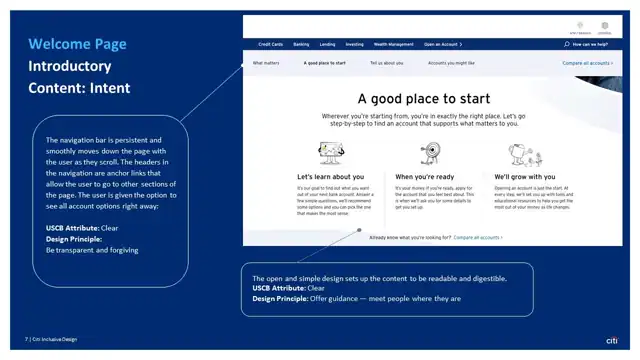
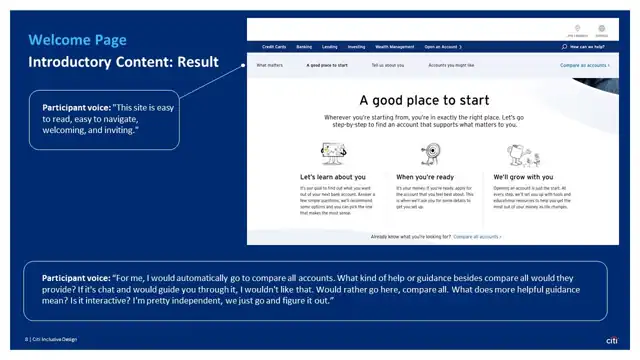
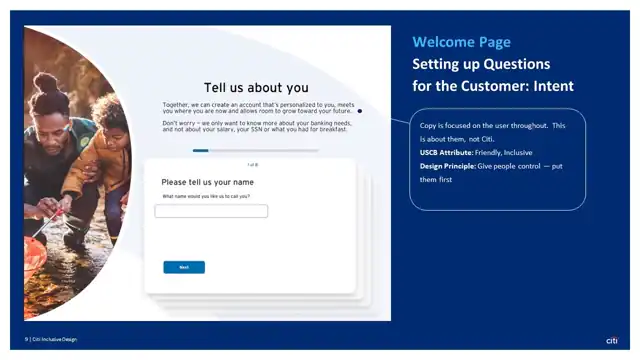
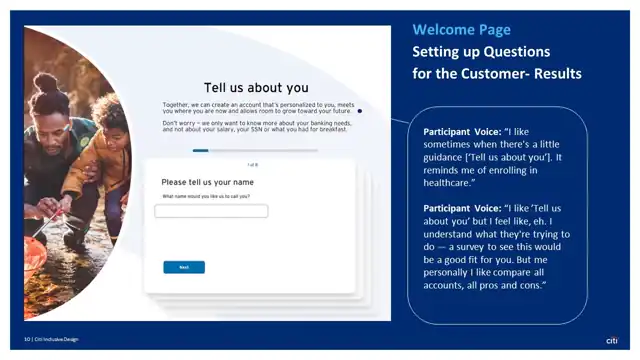
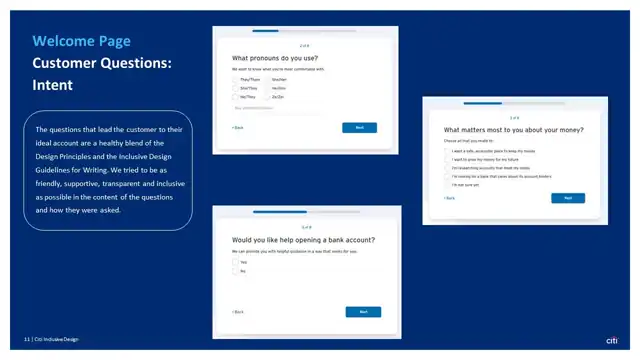
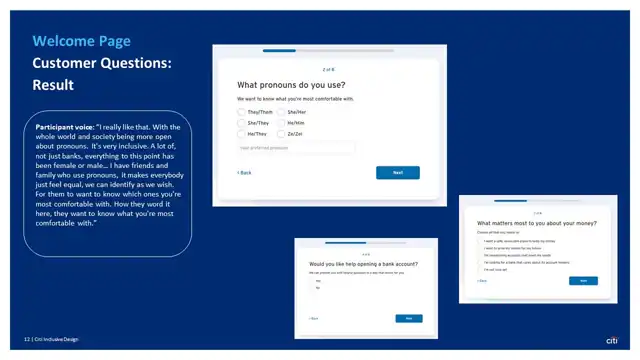
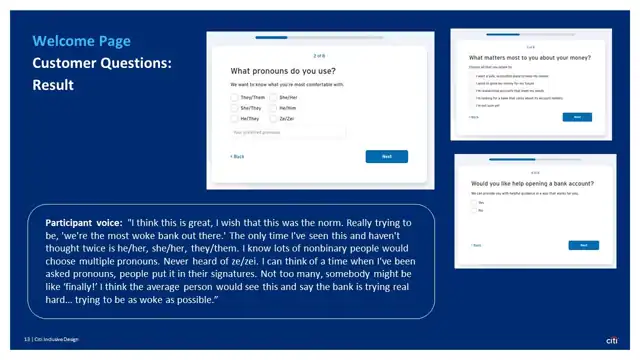
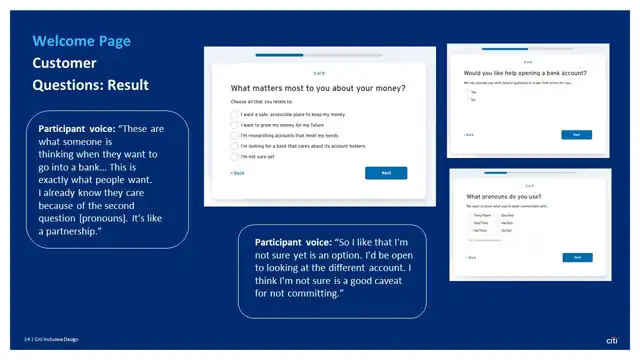
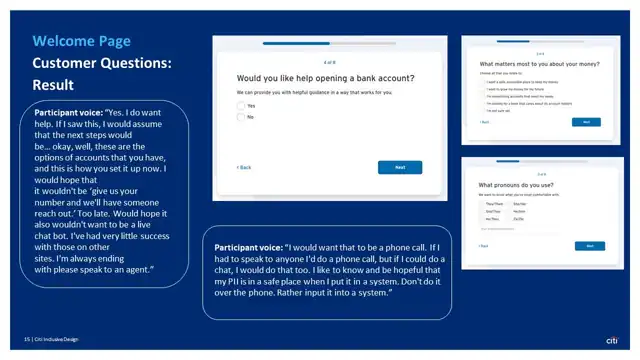
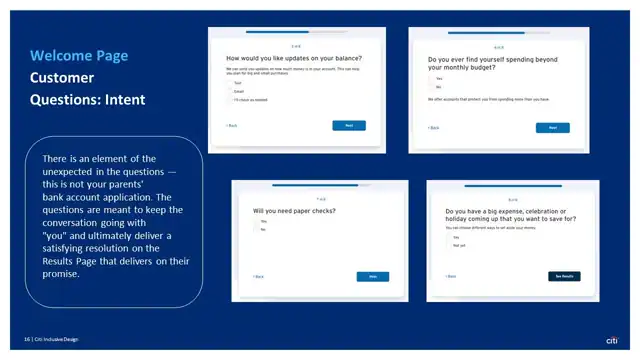
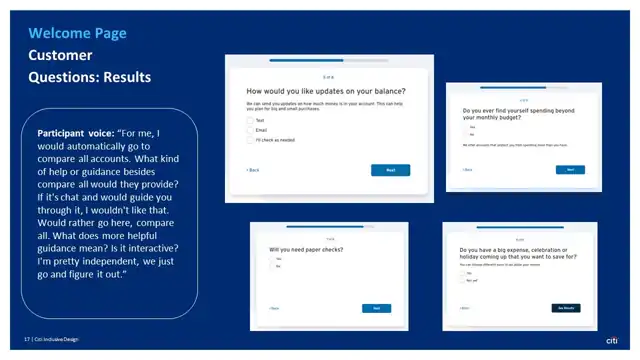
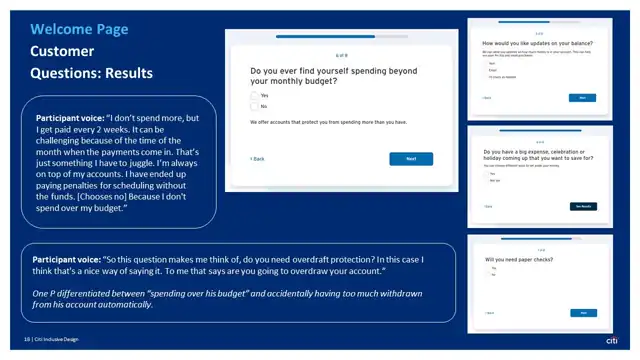
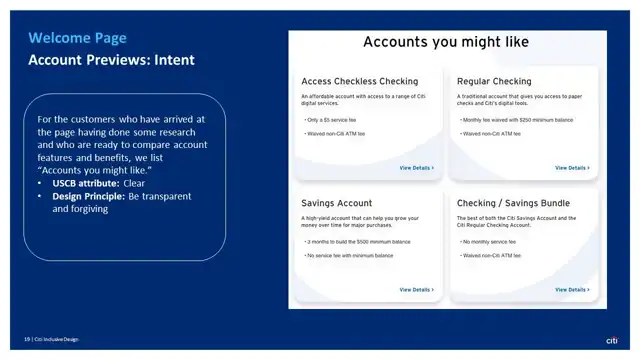
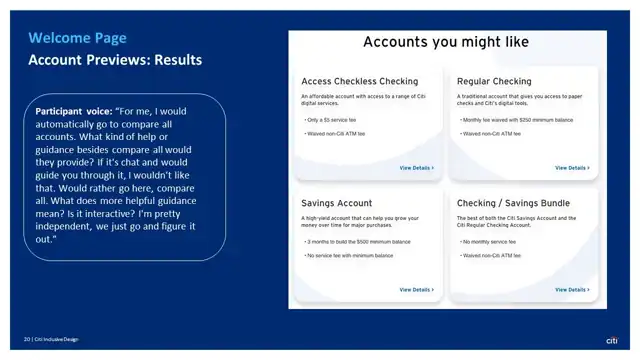
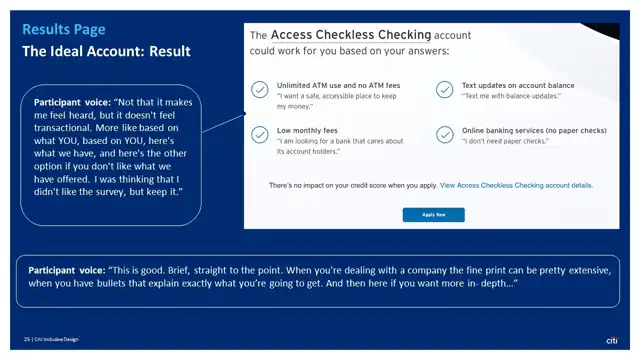
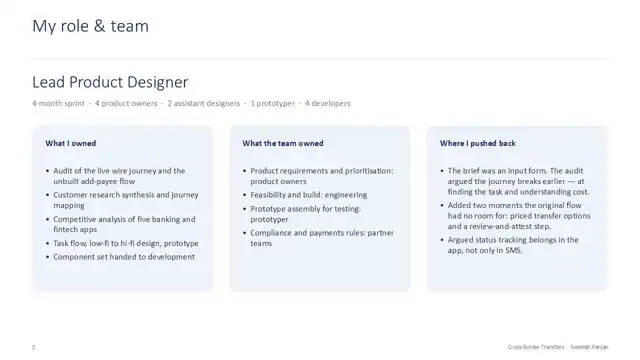
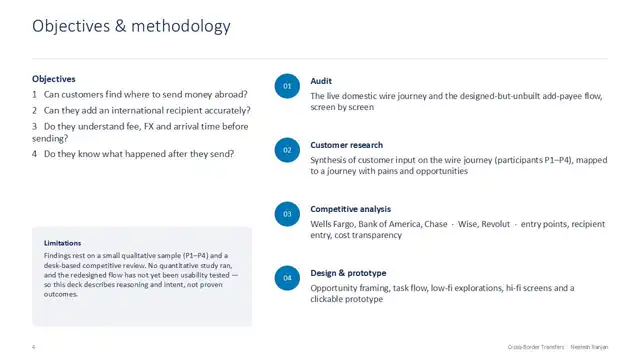
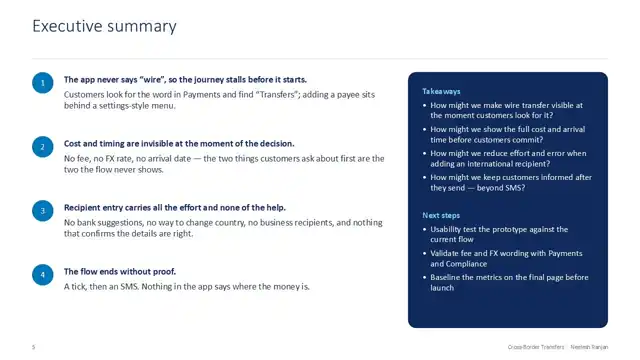
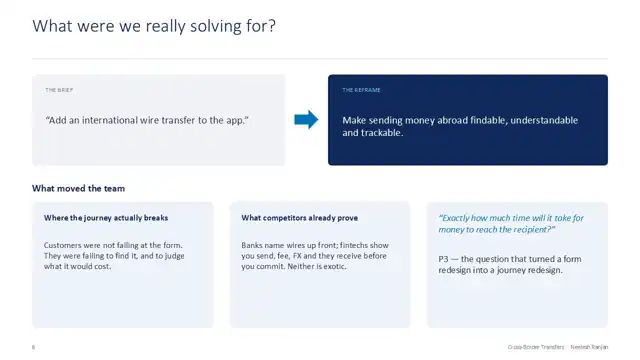
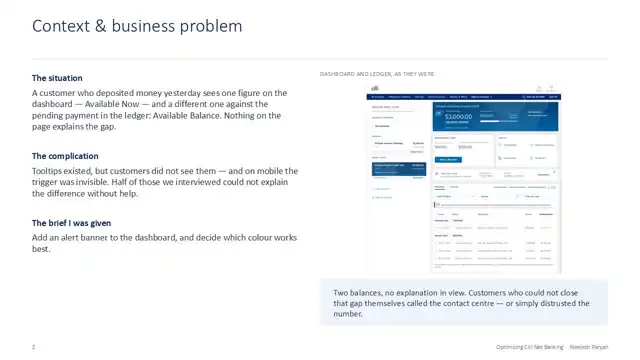
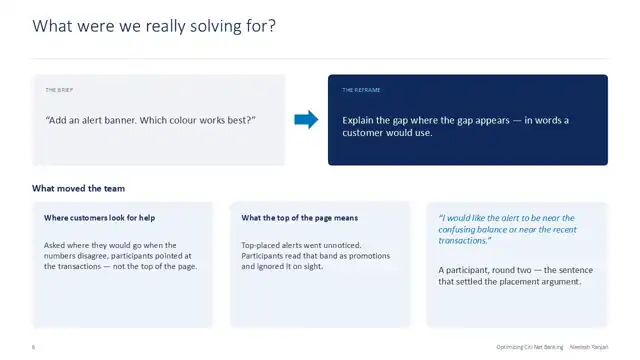
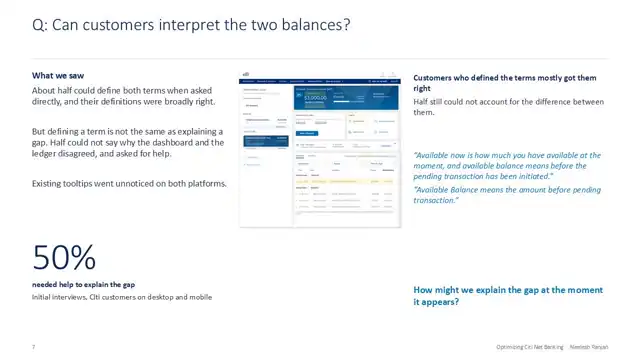
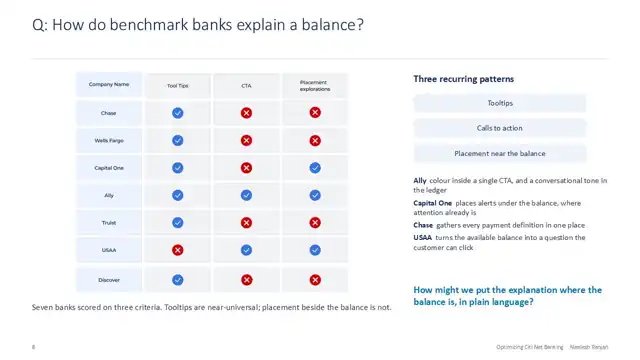
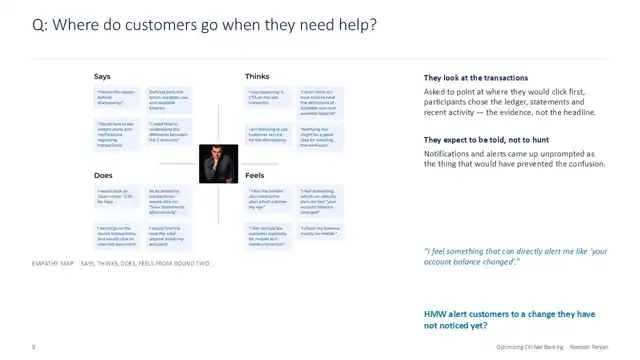
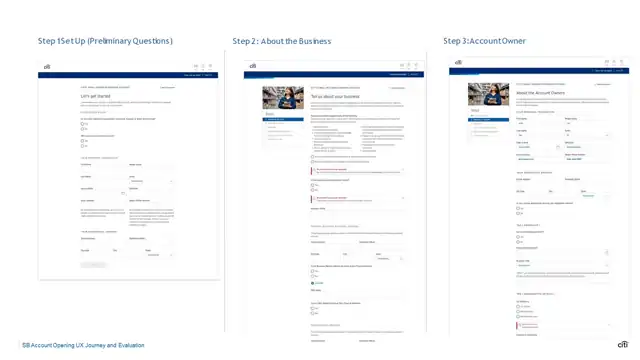
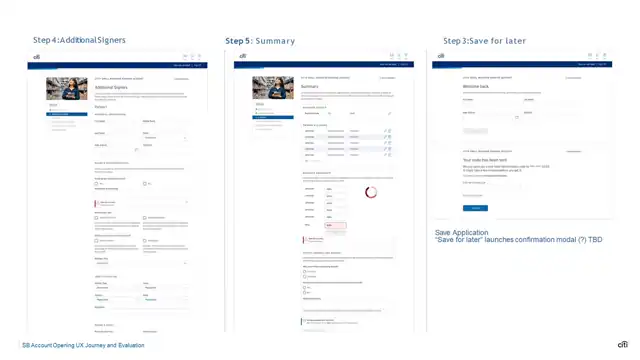
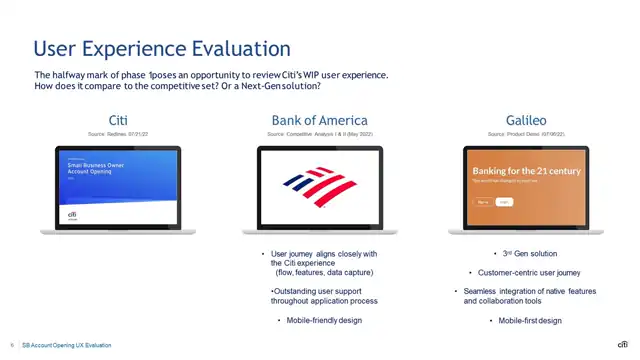
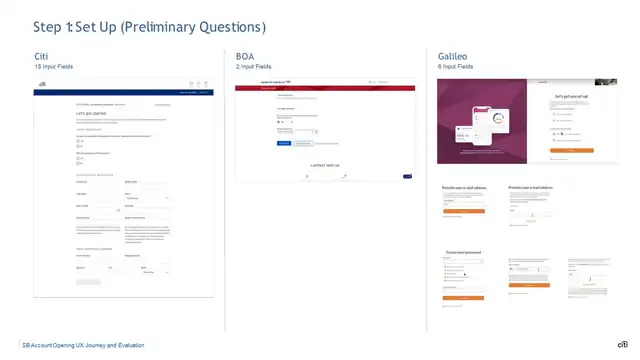
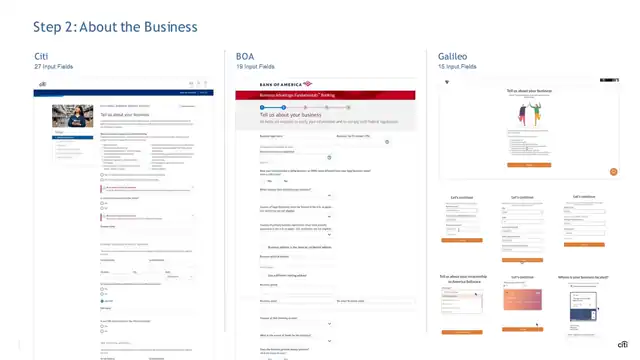
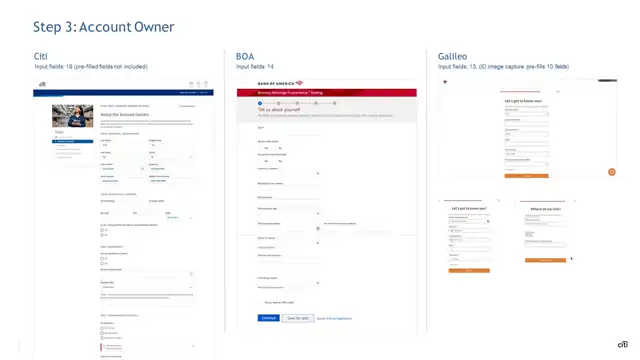
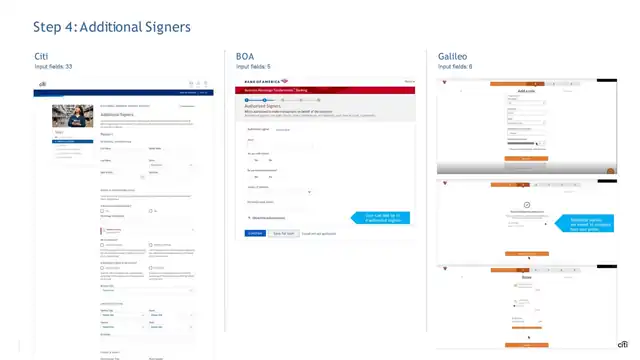
This is a compilation of my work in Citi's Consumer Banking division. Over two years I worked across Acquisitions, Payments, Lending and Service — and as product design lead I was involved end to end, from research through strategy to design execution.
Three workstreams ran alongside each other. Research fed strategy; strategy set the frame for what actually got designed and shipped. Each has its own page with the full slide decks.
Research that had to answer to three different domains.
I was the sole strategic researcher across product and design needs — which meant choosing the method for the decision in front of us rather than running the same study every time.
methodEvaluative research — testing what already existed against what it was supposed to do
methodGenerative research — finding the problem before committing to a solution
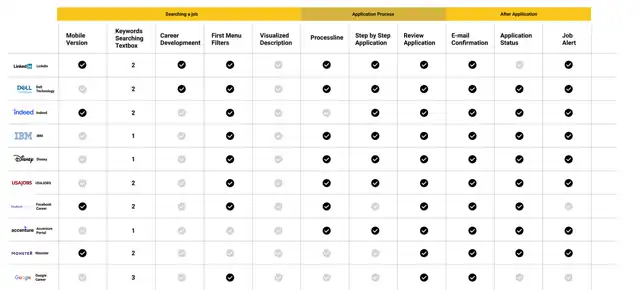
methodMarket research — what the rest of the category had already taught customers to expect
methodUsability testing and user interviews
methodBest-practice reports — so findings outlived the project that paid for them
Regulated money movement, an institution with real compliance exposure, and a design team that had to prove its decisions rather than assert them. That is the same problem shape I work on now — the industry changes, the constraint doesn't.
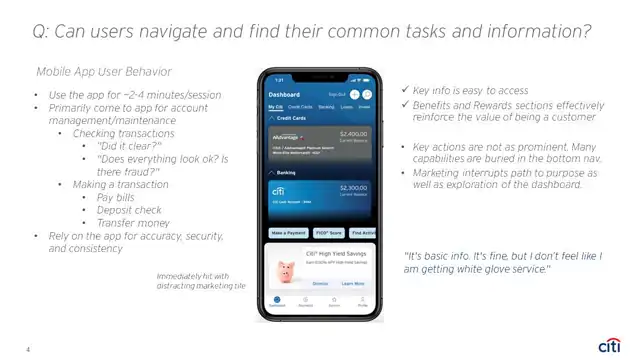
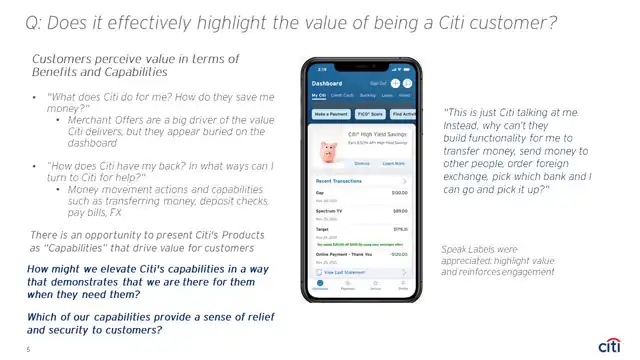
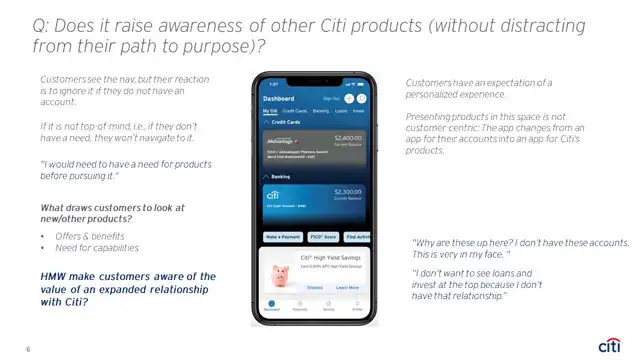
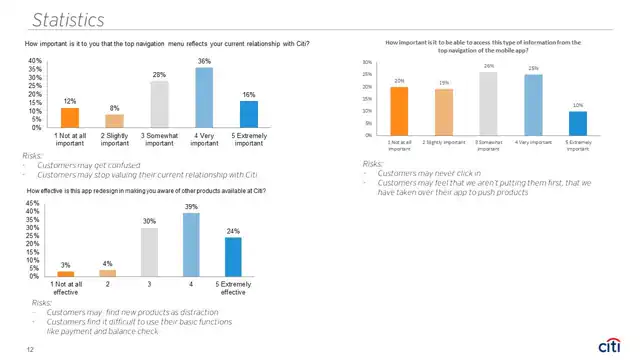
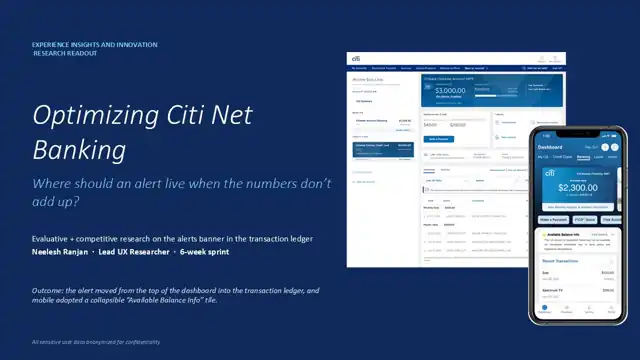
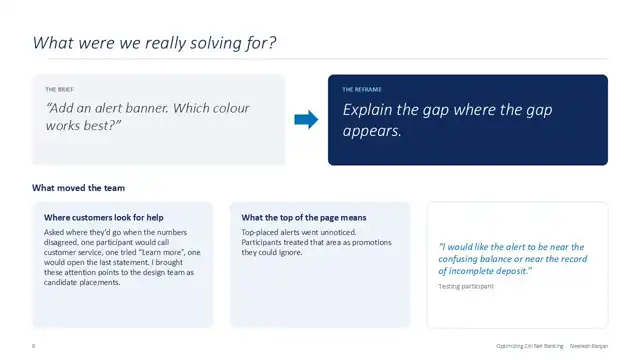
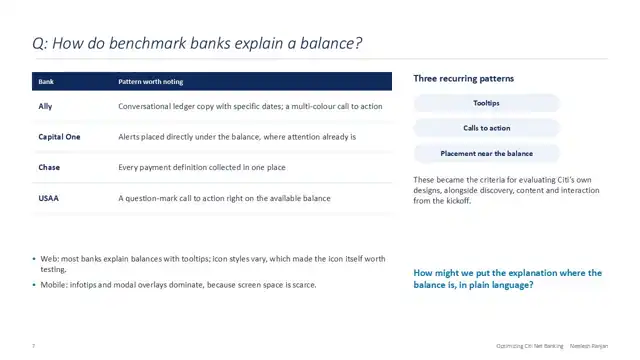
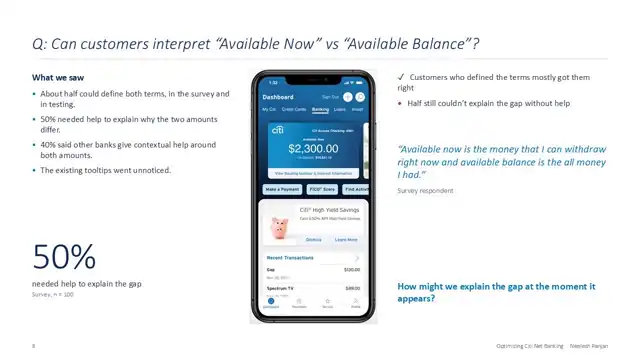
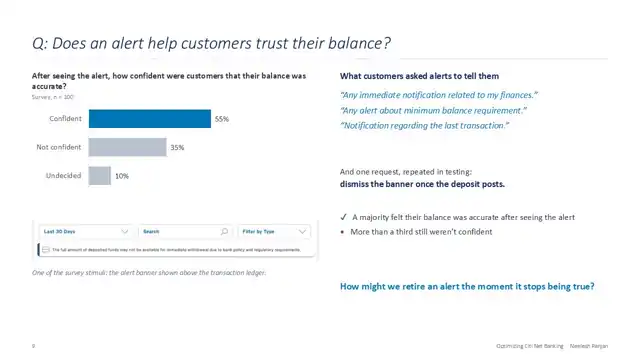
citi consumer banking · usasole strategic researcherux research
Citi research
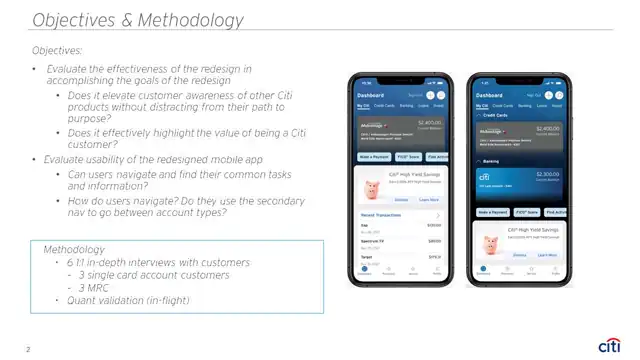
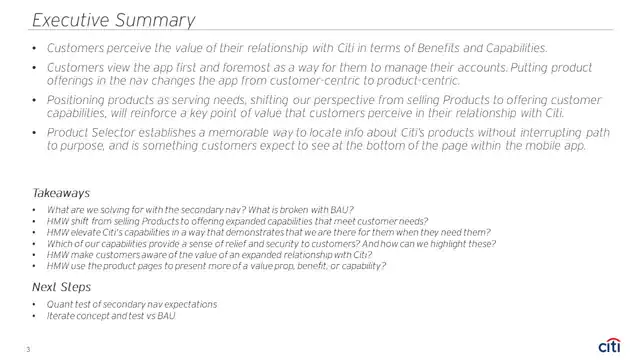
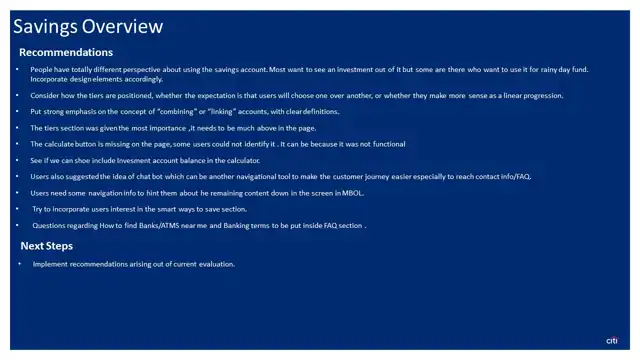
Six research studies from Citi Consumer Banking USA: mobile evolution, the service, acquisitions and shop domains, usability findings, and best practices in fintech UX.
role
Sole Strategic Researcher-Product and Design Needs
Design Execution and Development
Overview
These case studies are a compilation of my work done at the Citi Consumer Banking division. In a span of 2 years, I worked in various domains like Acquisitions, Payments, Lending, Service, and more.
citi consumer banking · usastrategic designusability & utility research
Citi strategy
Strategic design at Citi Consumer Banking USA: where mobile banking should go next, who the experience was excluding, and how the whole journey fits together.
role
Strategic Design
Usability and Utility Research
Overview
These case studies are a compilation of my work done at the Citi Consumer Banking division. In a span of 2 years, I worked in various domains like Acquisitions, Payments, Lending, Service, and more.
Product design at Citi Consumer Banking USA across the payments, service and acquisition domains.
role
Product Designer
Overview
These case studies are a compilation of my work done at the Citi Consumer Banking division. In a span of 2 years, I worked in various domains like Acquisitions, Payments, Lending, Service, and more.
Federal agencies incl. TSA and the Foreign Service
process
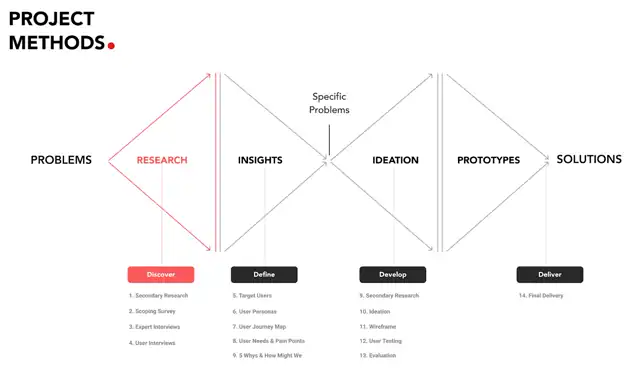
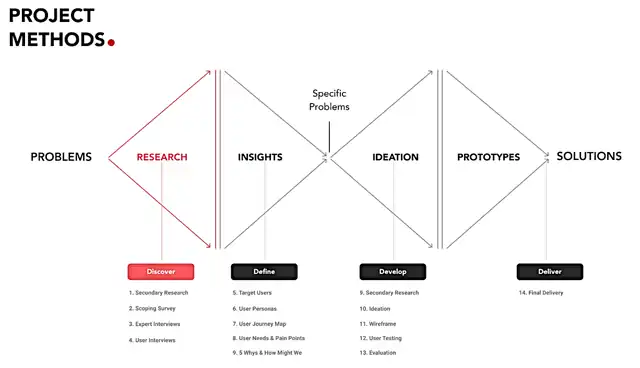
Double Diamond
British Design Council
the prompt
Deloitte's most valuable asset is other people's people.
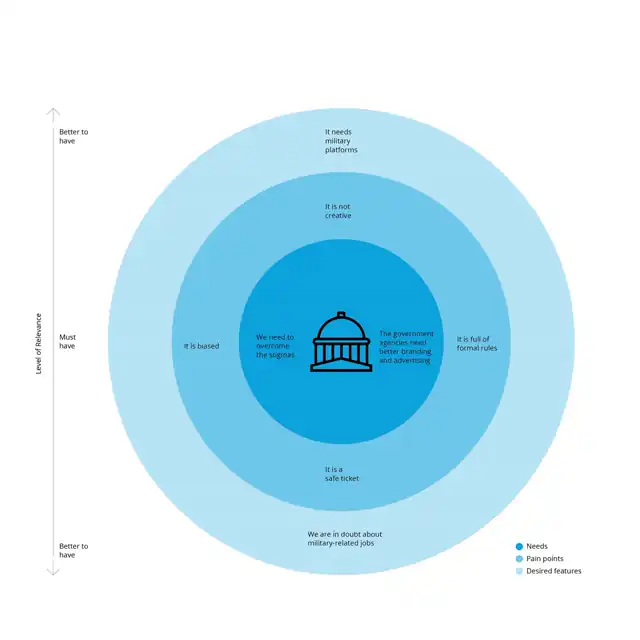
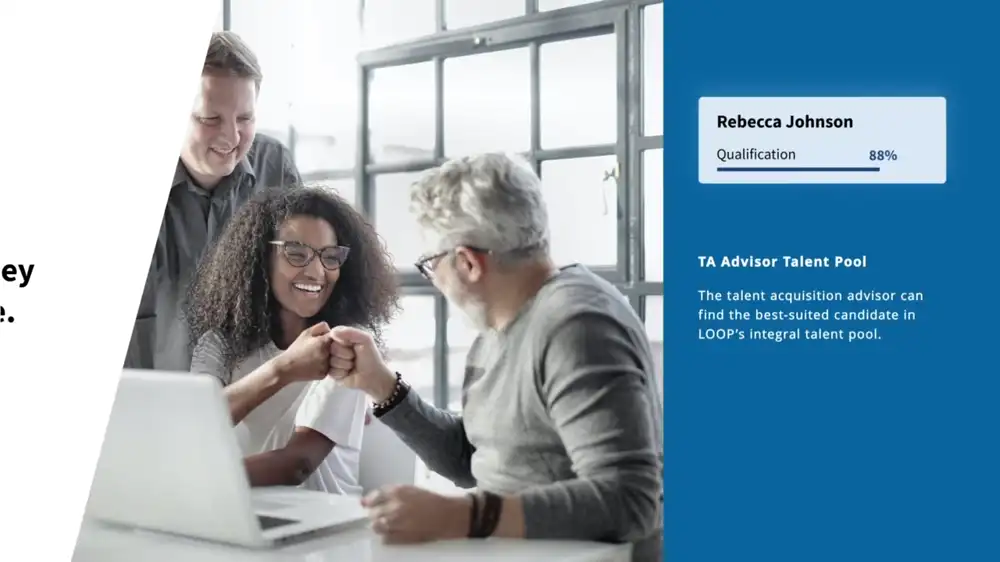
Deloitte's Government & Public Services practice helps organisations sustain performance through their people. With the job market getting more competitive, an accessible and transparent candidate experience stops being a nicety and starts being how you win talent at all.
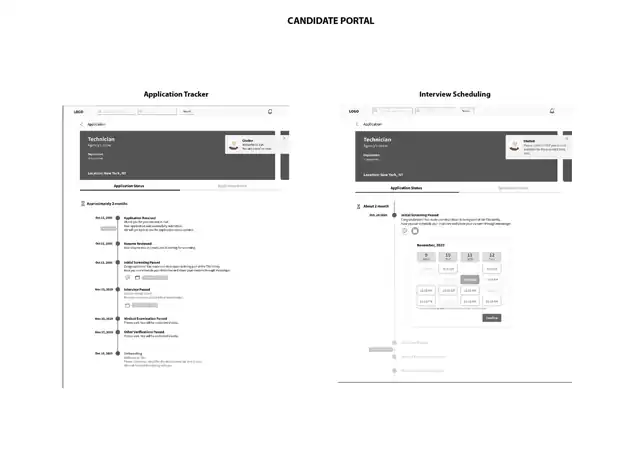
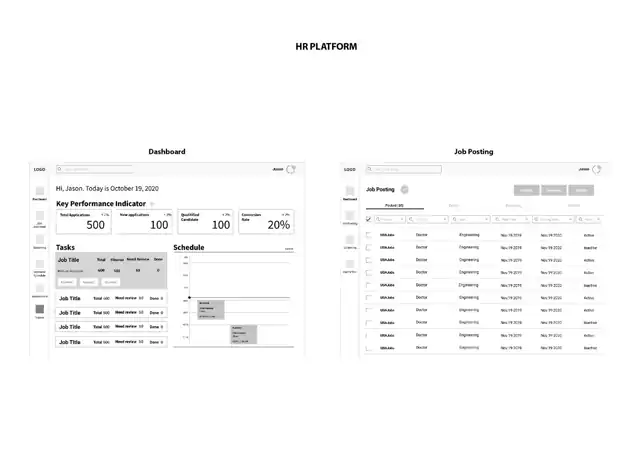
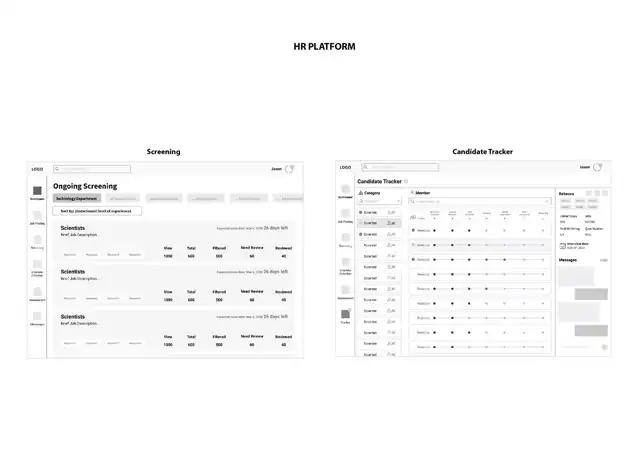
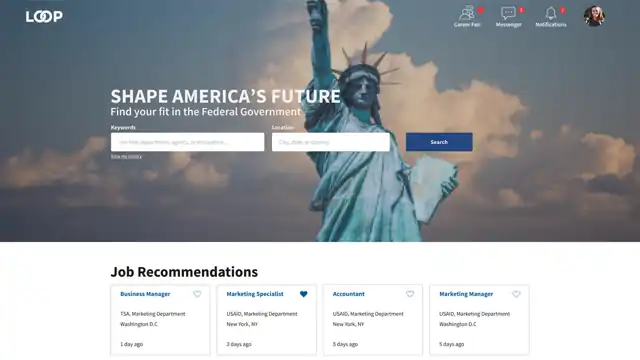
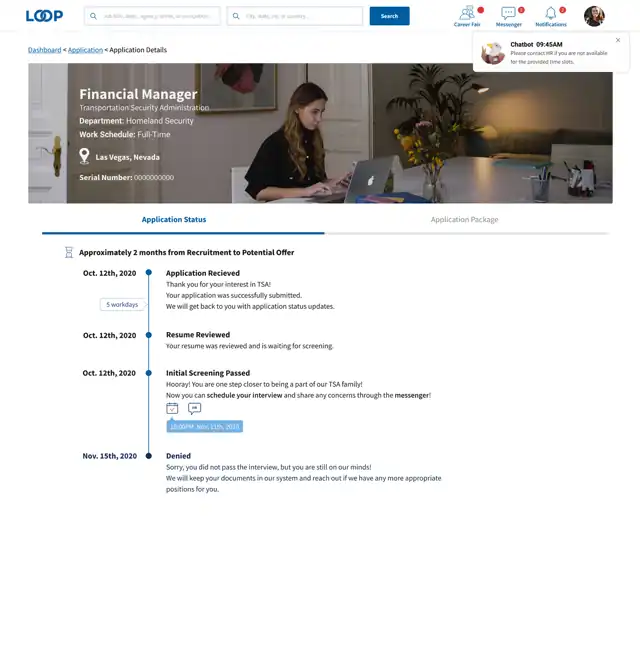
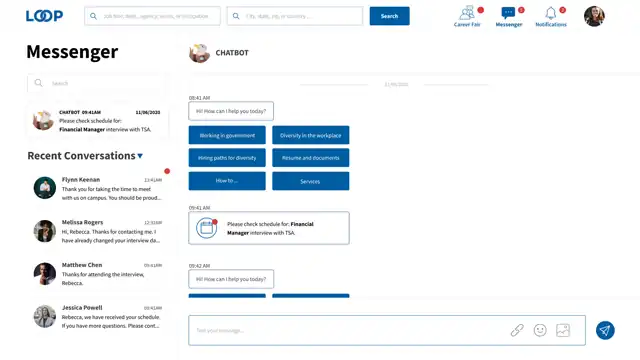
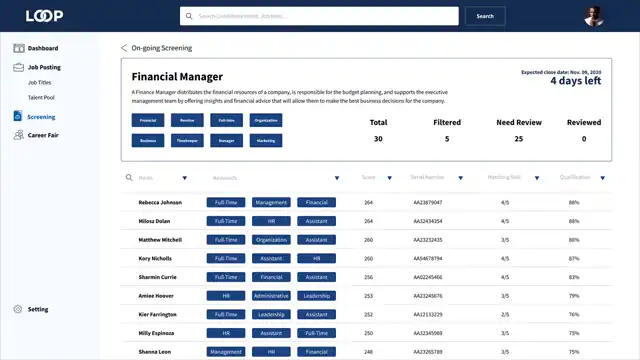
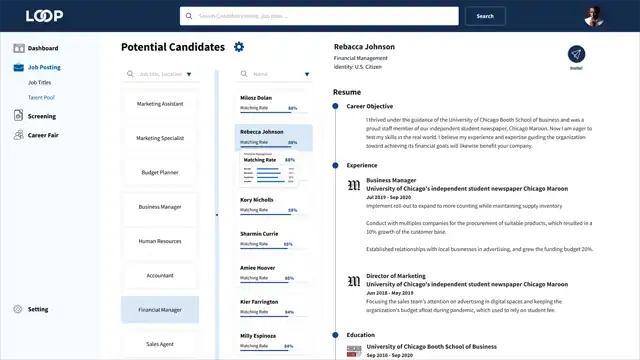
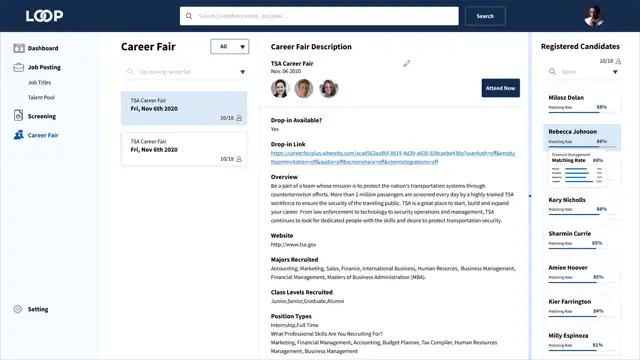
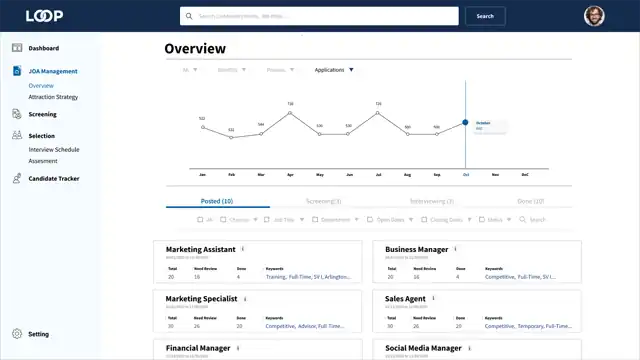
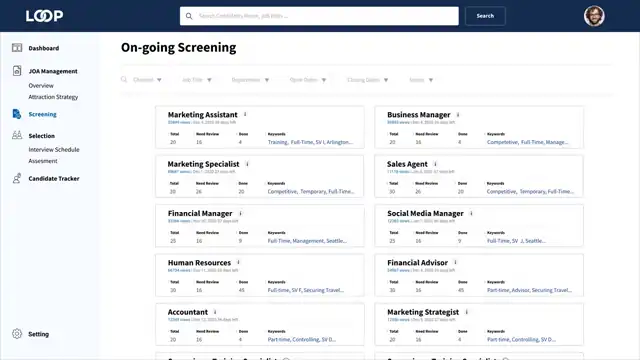
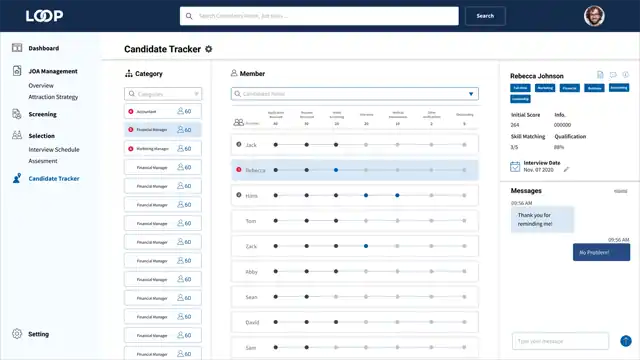
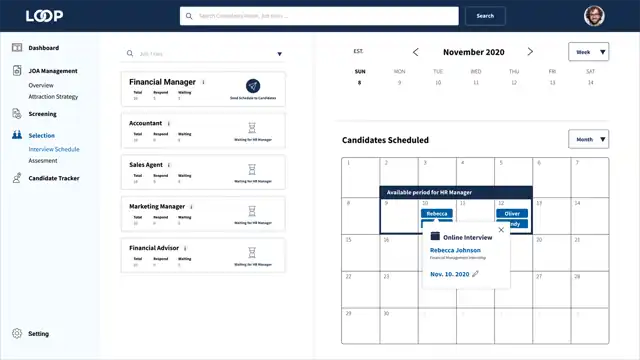
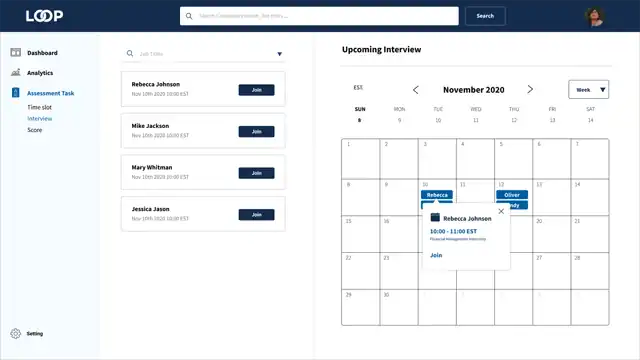
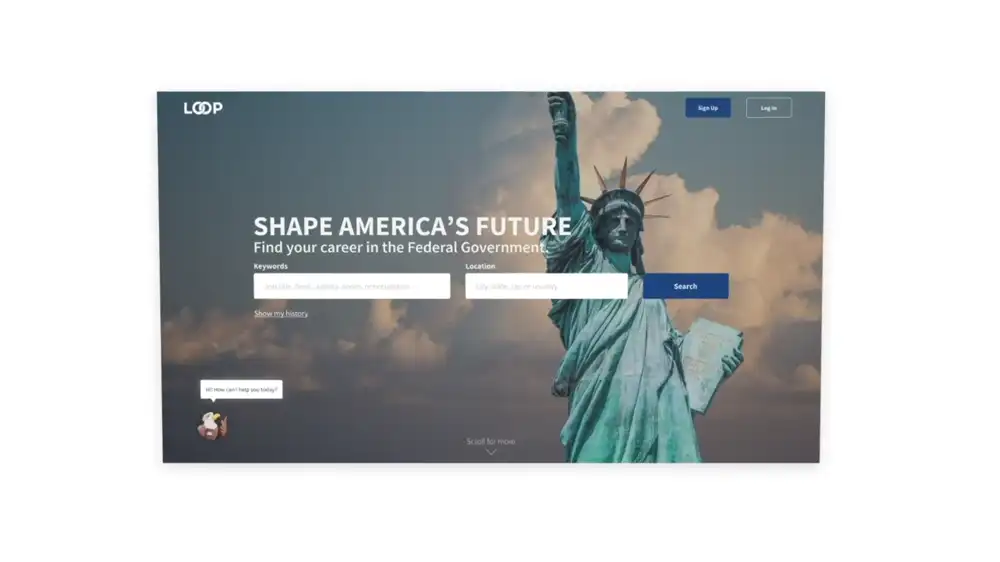
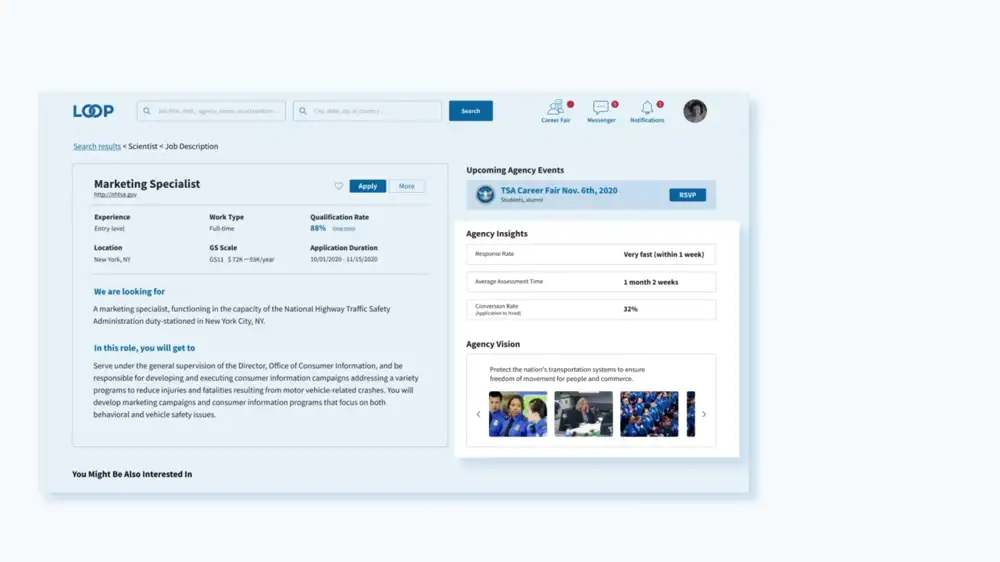
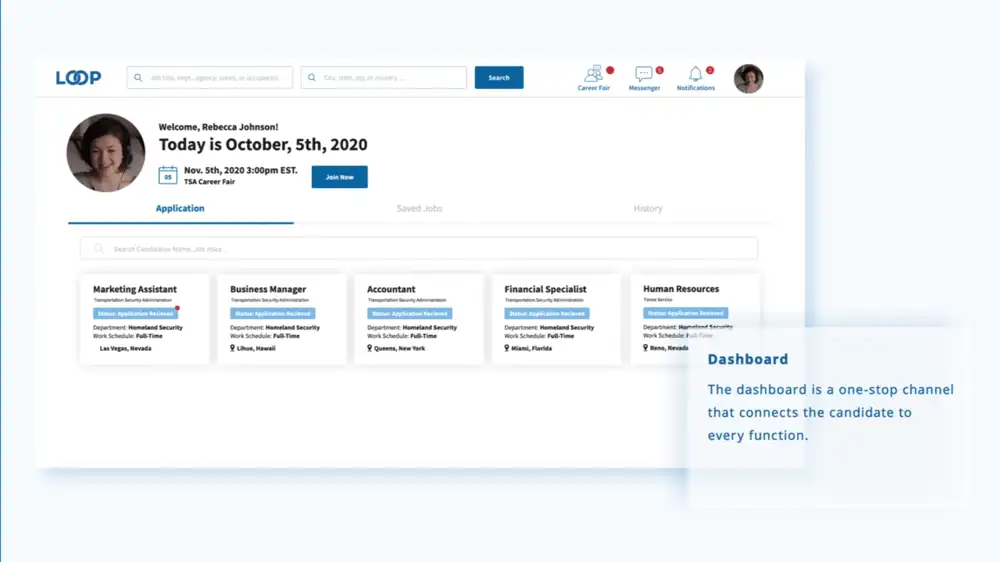
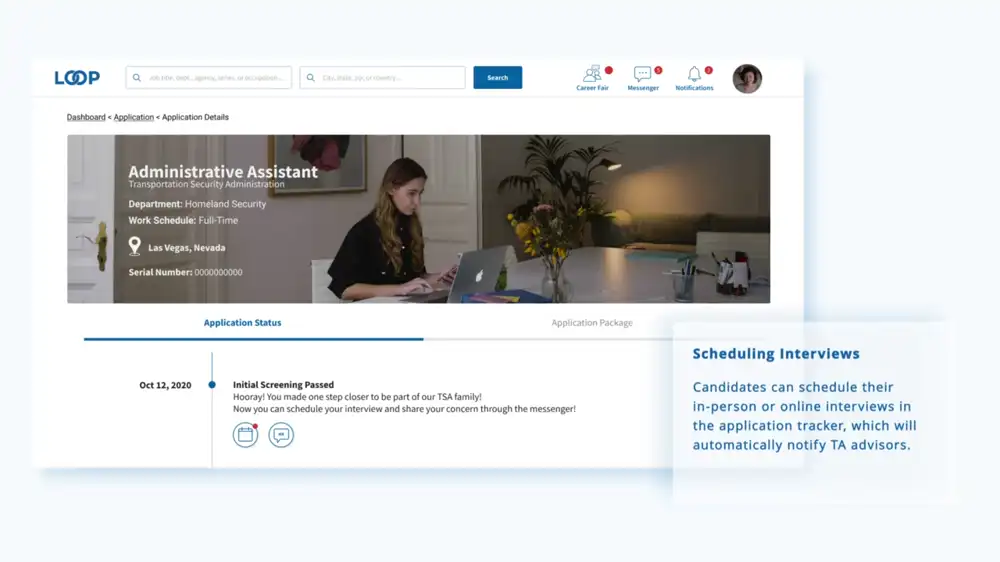
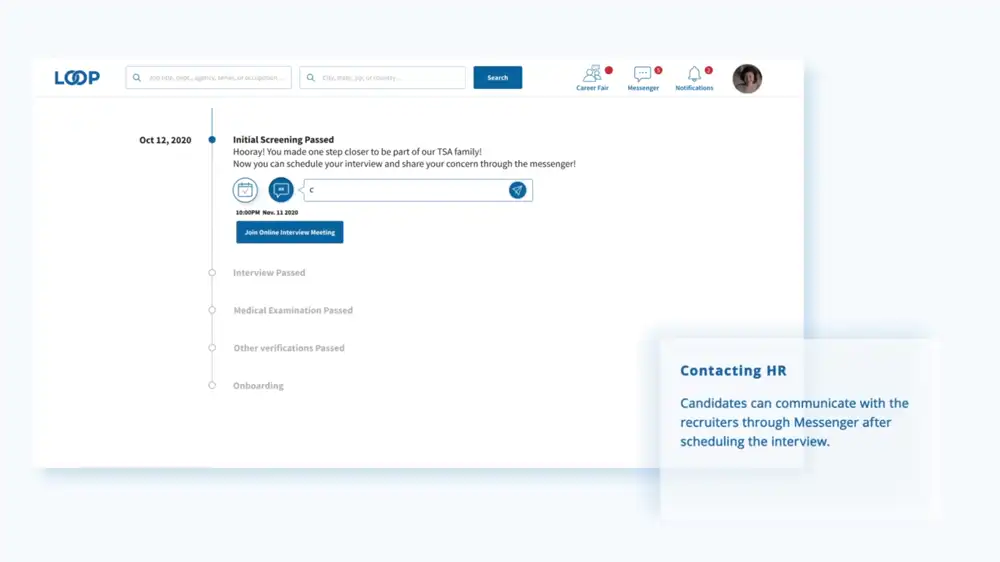
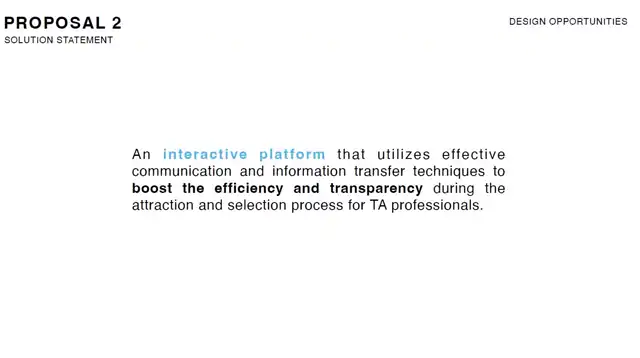
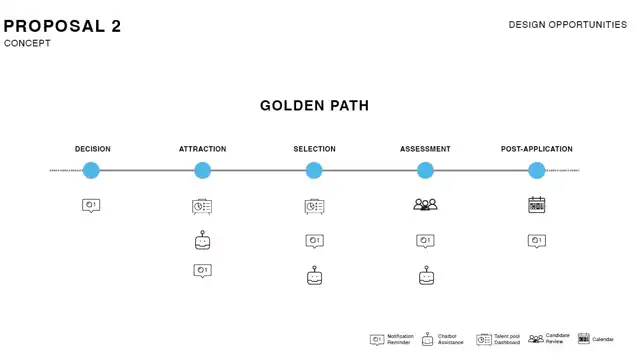
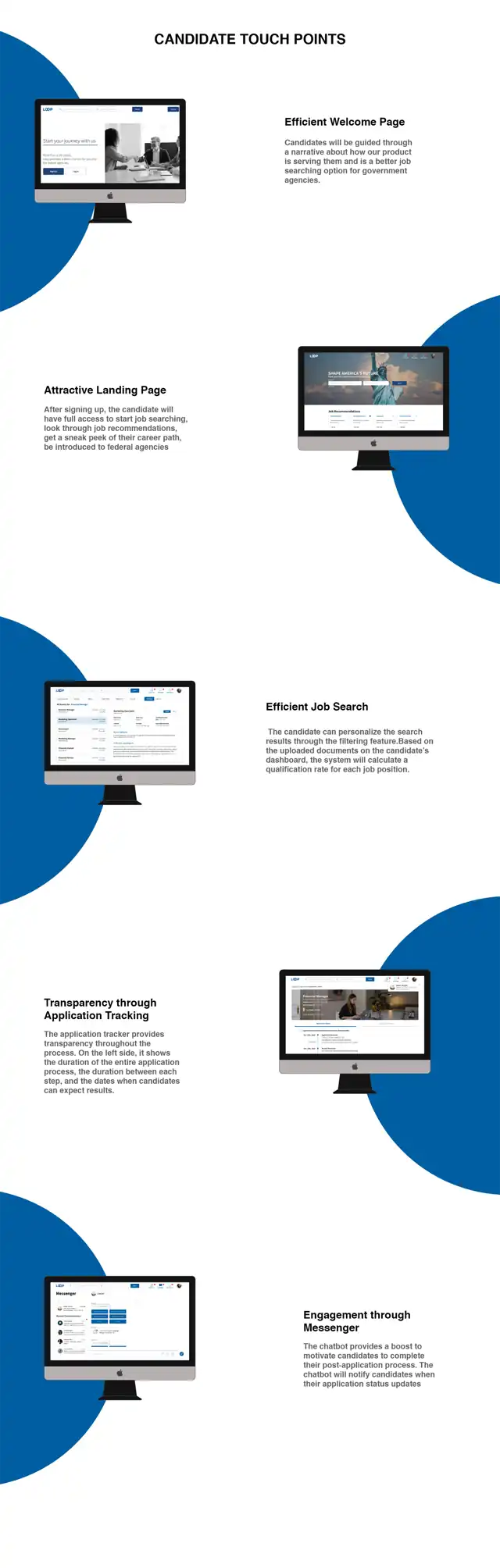
LOOP is the answer we built: a talent solution that connects the front end a candidate sees to the back end HR actually works in, serving federal agencies in the USA.
problem & opportunity
The gap between the job portal and the system behind it.
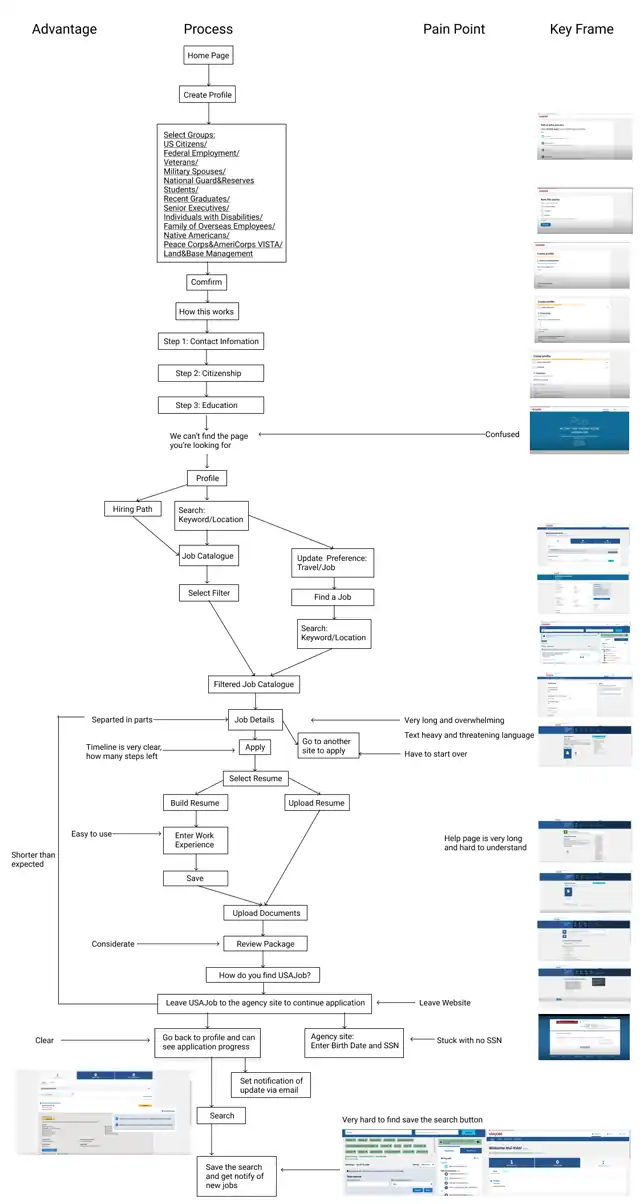
The talent acquisition process was inefficient because the front-end job portal and the back-end acquisition system didn't meet. The cost of that gap is talent loss and wasted human resource — qualified people falling out of a process nobody could see end to end.
The opportunity was a holistic strategy built on top of USAJobs: retain quality candidates, streamline the recruiting workflow, and stop duplicating effort across agencies.
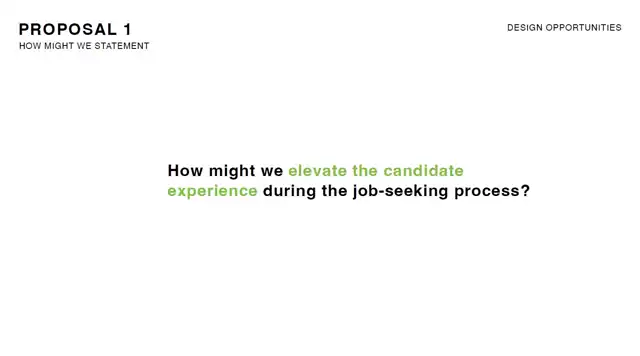
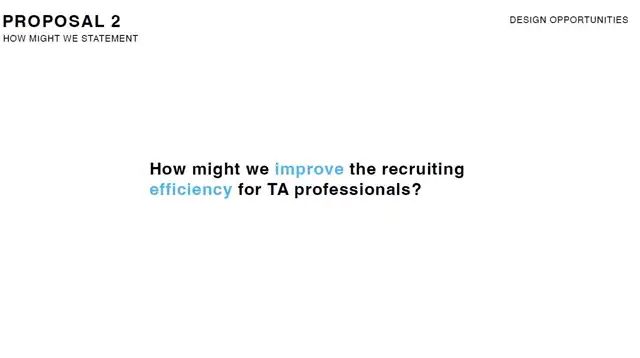
“How might we elevate the candidate experience for the federal agency to retain quality candidates efficiently?”
the umbrella question
research
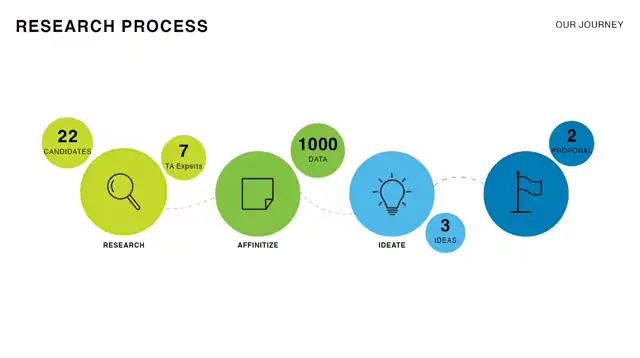
Two weeks, two research groups, over a thousand data points.
We ran the Double Diamond and split the team into primary and secondary research groups so qualitative and quantitative evidence came in parallel rather than in sequence.
research
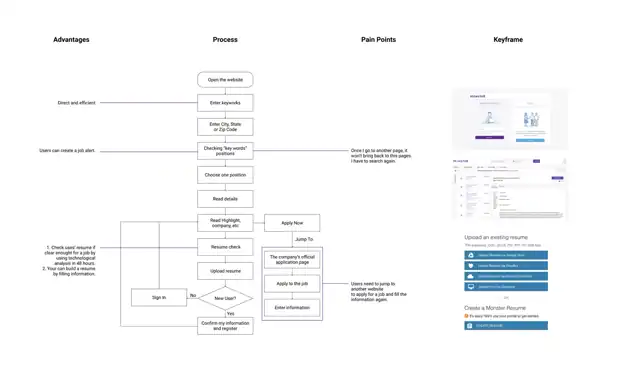
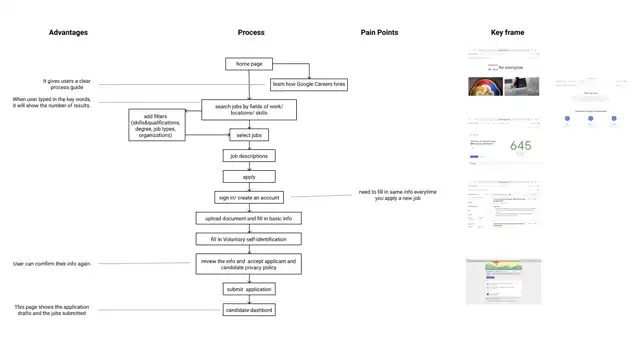
Secondary: media scanning, publications research, and a sweep of existing job-search and hiring portals. Primary: discussion guides and surveys for both candidates and talent acquisition professionals, compiled into a research magazine on the ideal federal job-seeking experience.
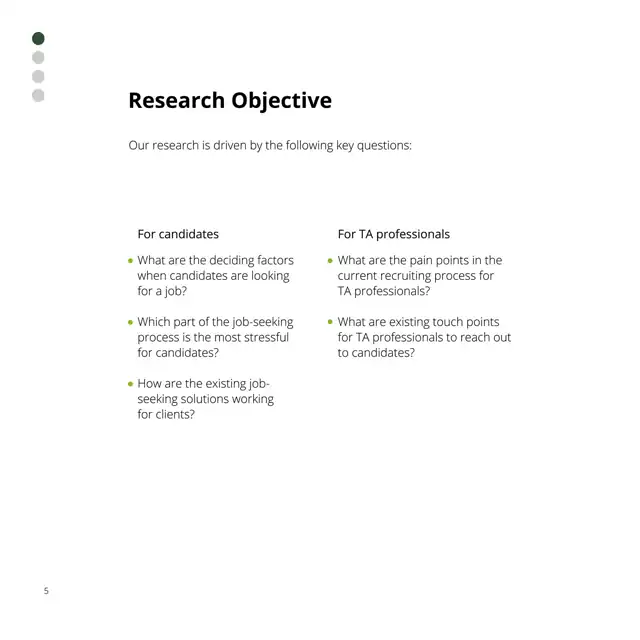
candidatesHow do you feel about the job portals you've used? What are your expectations and ambitions while job hunting? How does the current recruitment process feel?
ta prosWhat happens after you post an announcement? How do you want to access candidate information?
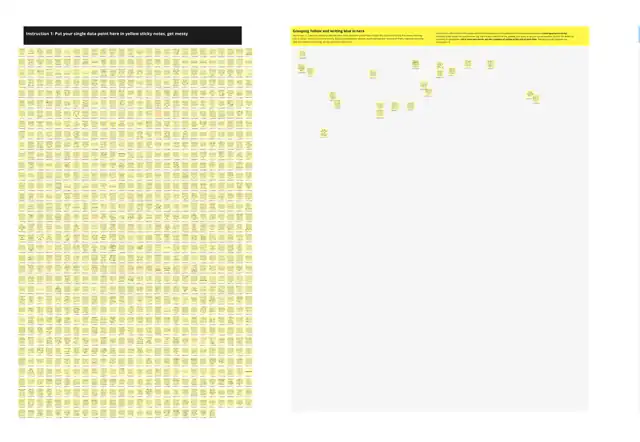
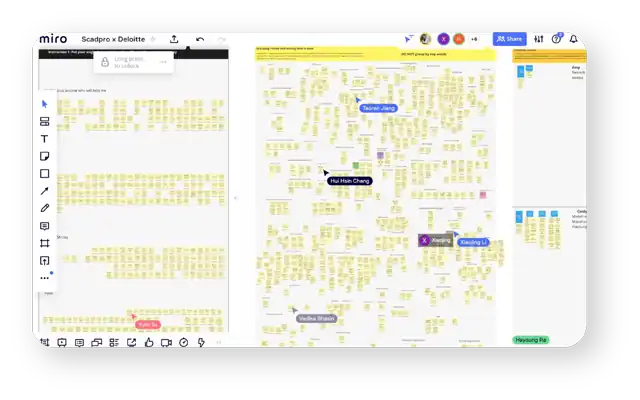
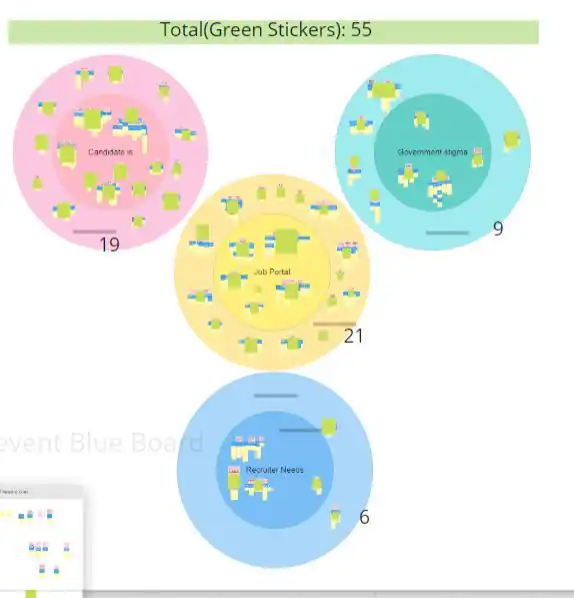
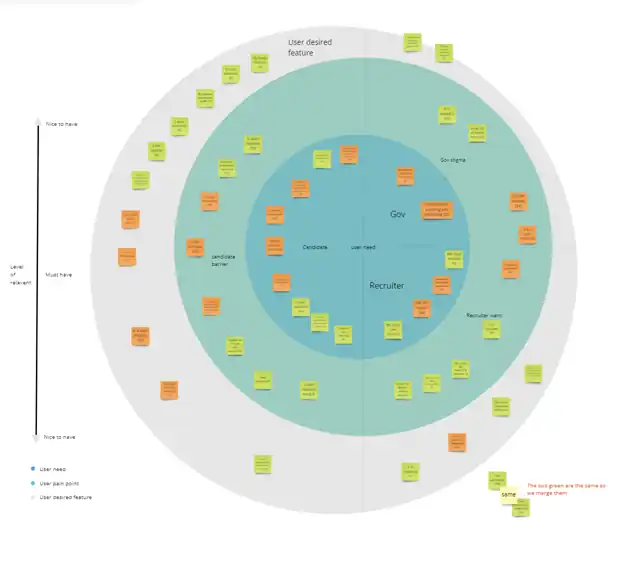
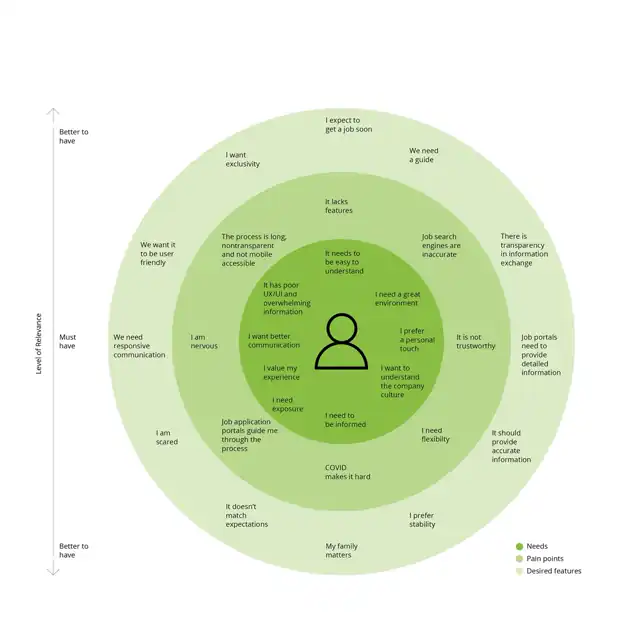
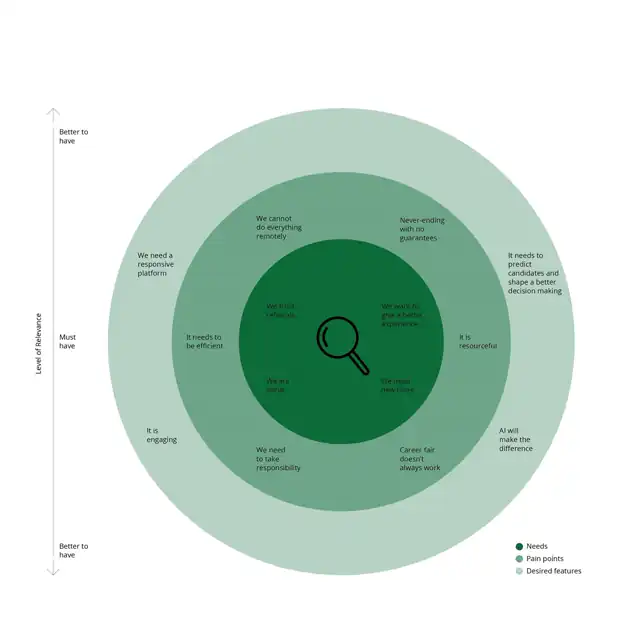
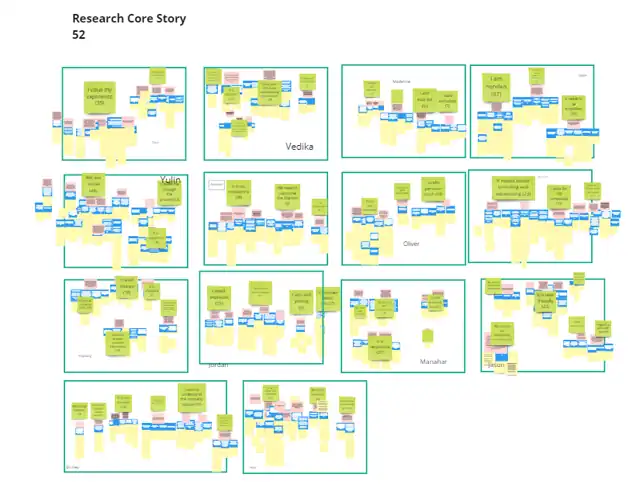
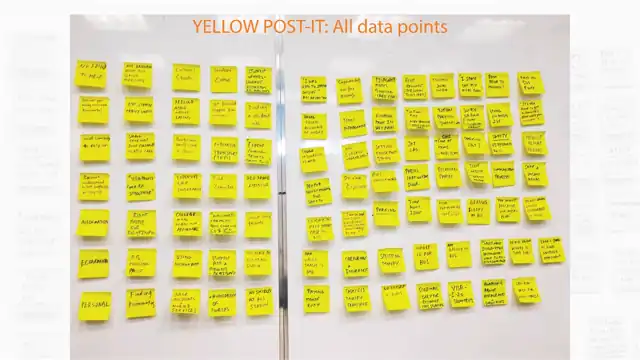
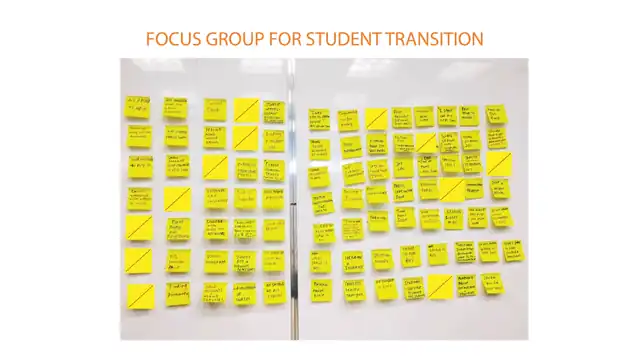
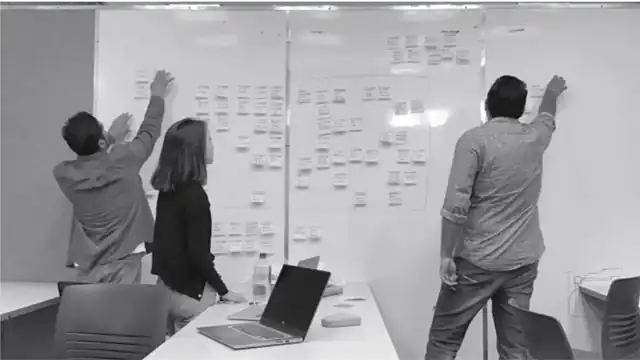
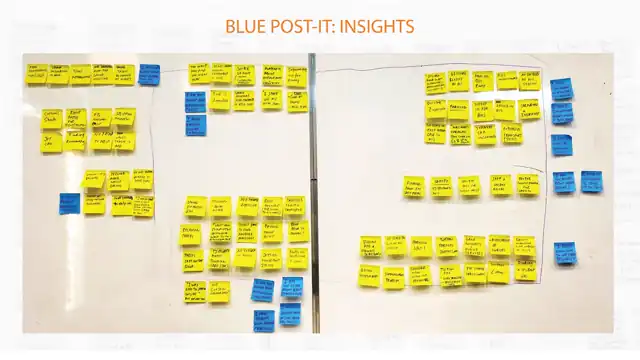
synthesisOver 1,000 data points affinitised in Miro — insights on yellow notes, combined into blue, then grouped by stakeholder according to how often they repeated
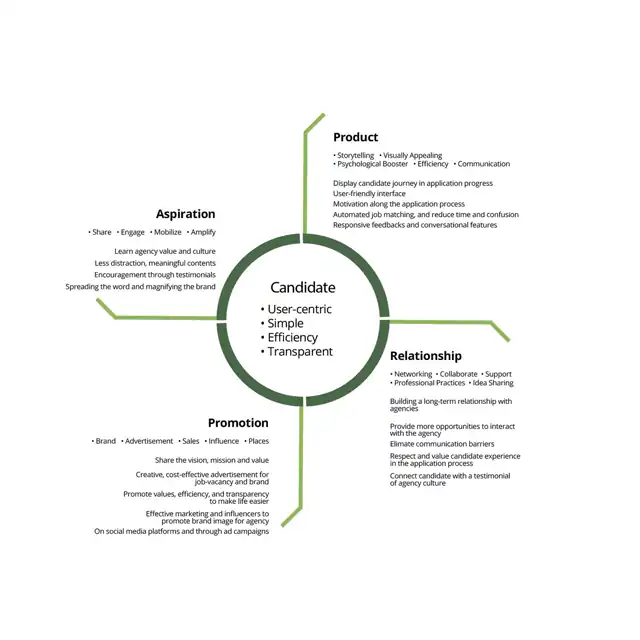
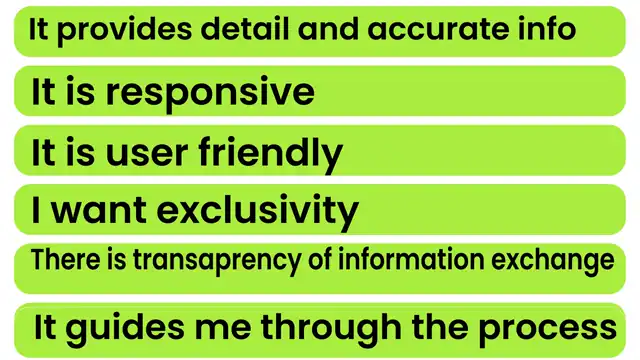
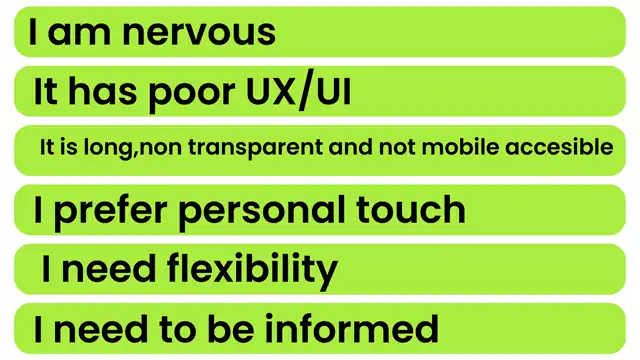
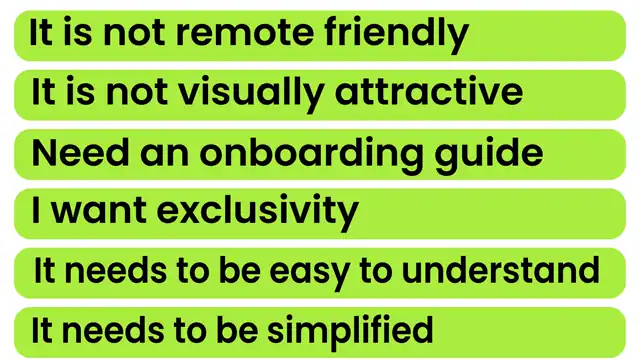
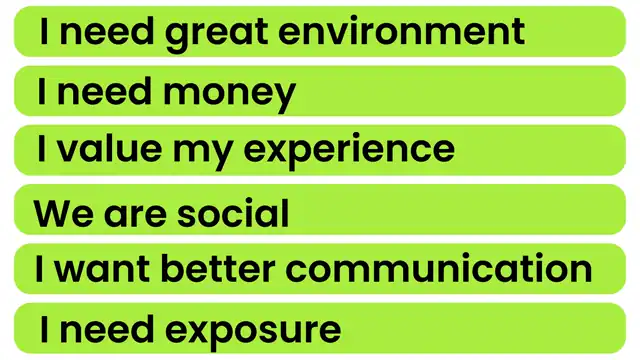
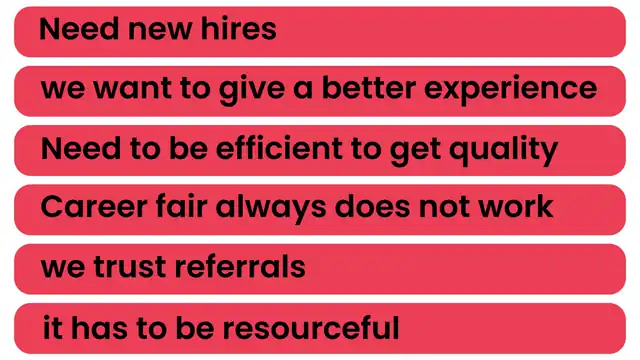
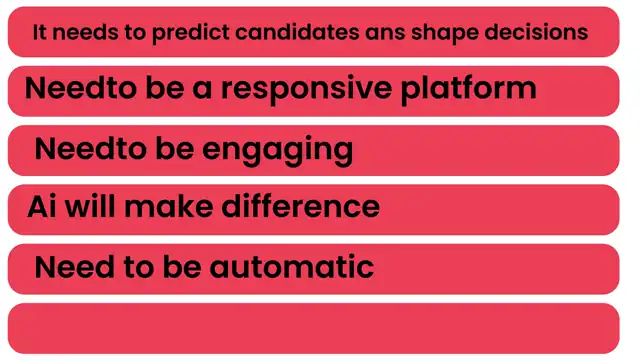
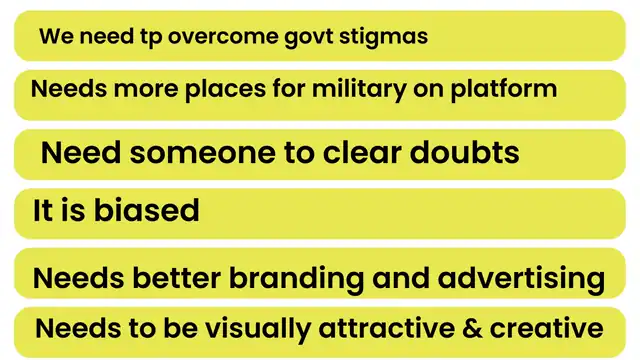
The framework we built off the correlations between data points gave us core stories for each user — and each story pointed at a different lever.
hrTimeline and collaboration
candidateCandidate motivation
agencySocial media and marketing campaigns
1 / 4
design framework
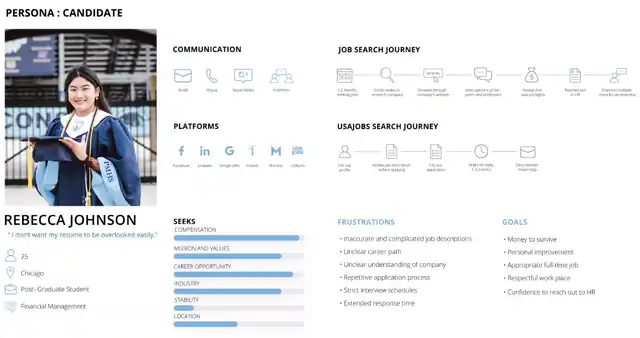
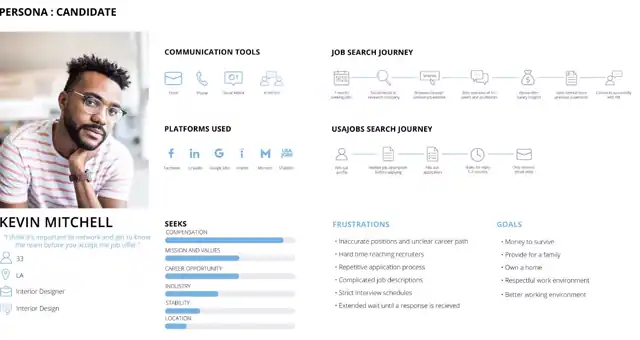
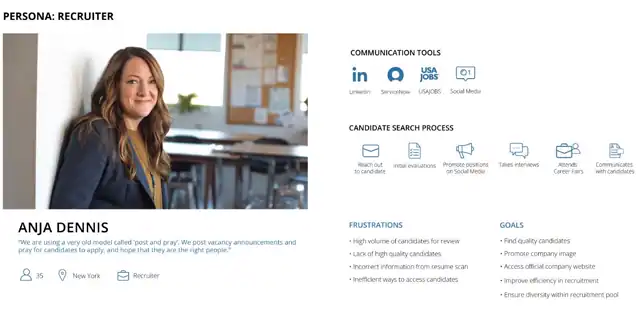
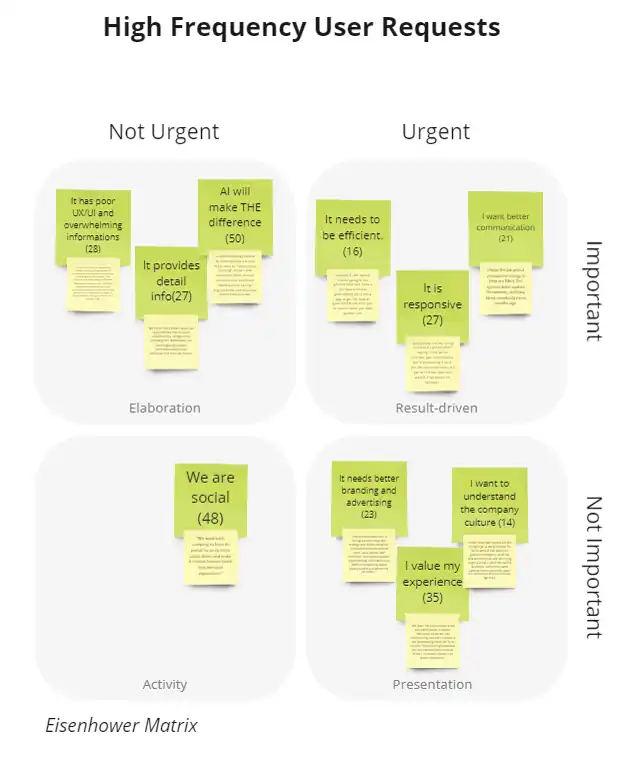
From there: an Eisenhower matrix to sort pain points by urgency, personas built from the interview and survey data, and a user journey that let us watch the flow of the concept before it existed.
1 / 5
personas
1 / 6
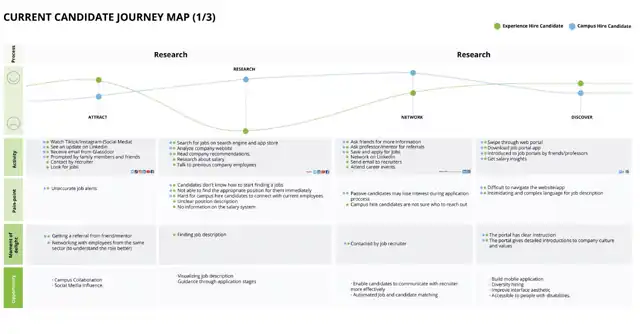
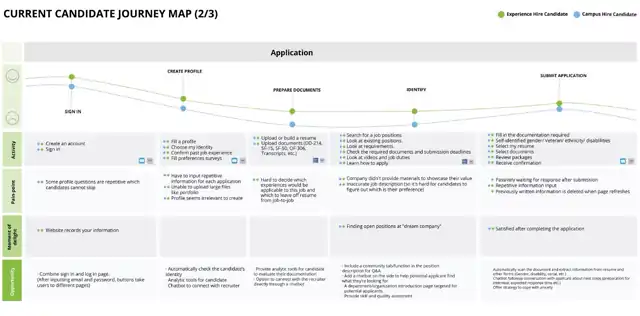
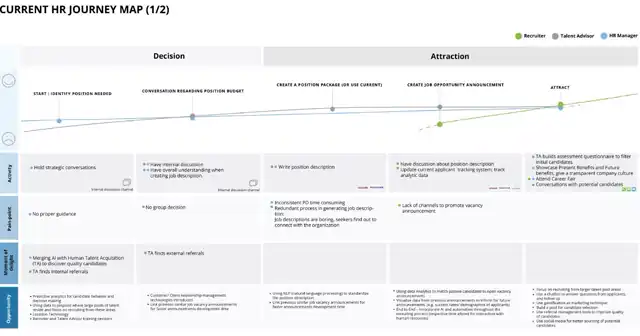
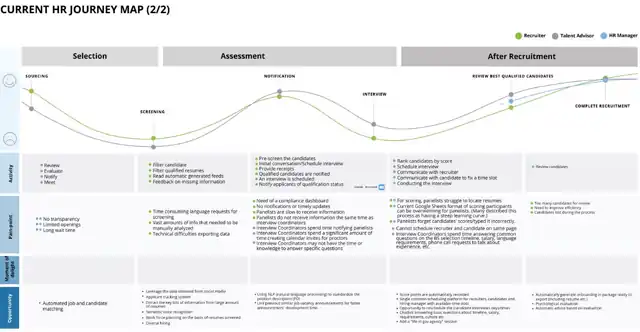
user journey
what the journey showed
Five failures, spread across two user groups.
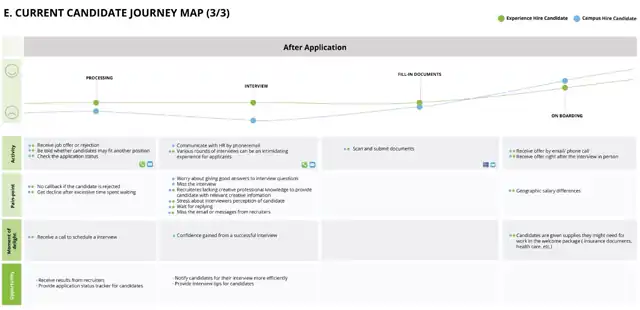
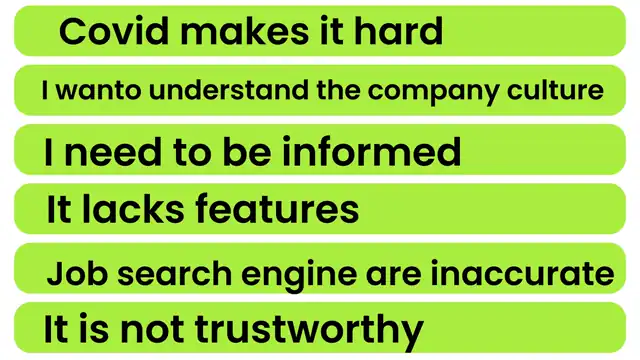
01Applicants tire of scrolling wordy postings, can't find clear descriptions, and can't find anything about company culture
02Once they start the application, the process frustrates them and they lose interest mid-way
03After applying they wait with little or no feedback, no way to track the application, and start considering other options
04TA professionals can't track candidates through the selection phase; the process is tedious and time-consuming
05There are limited channels for vacancy announcements and insufficient technology to categorise candidates
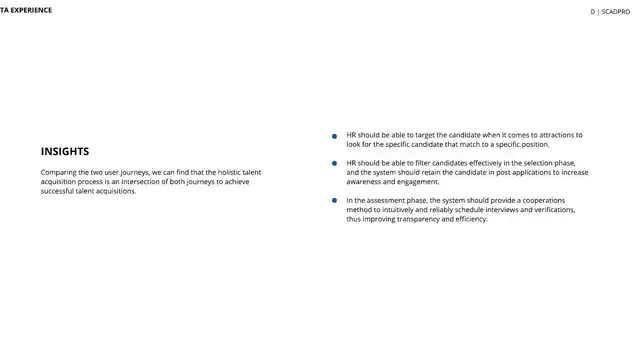
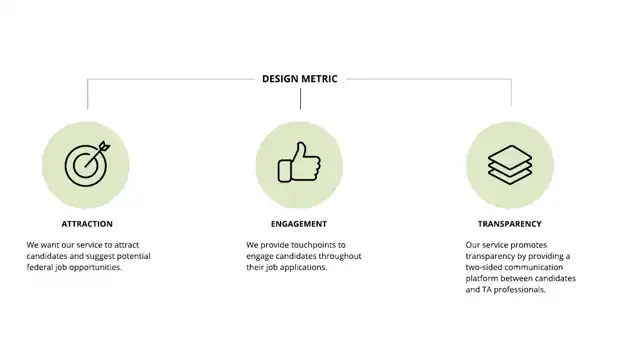
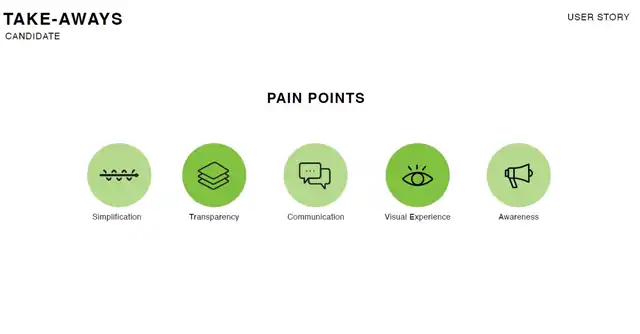
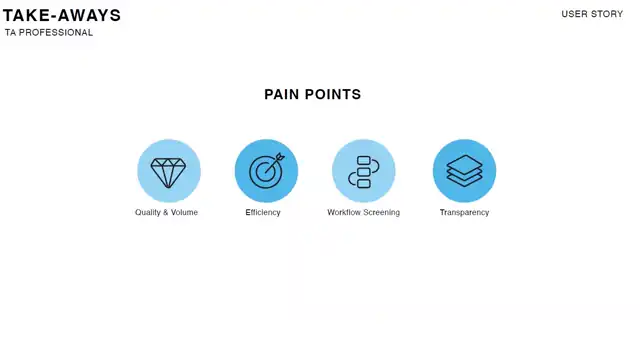
Those five became the design metric: the product had to promote efficiency, improve quality, enhance transparency and boost attraction.
1 / 4
12 3 key ideas-design metrics & insights
business design
A service this complex needs a business case, not just a flow.
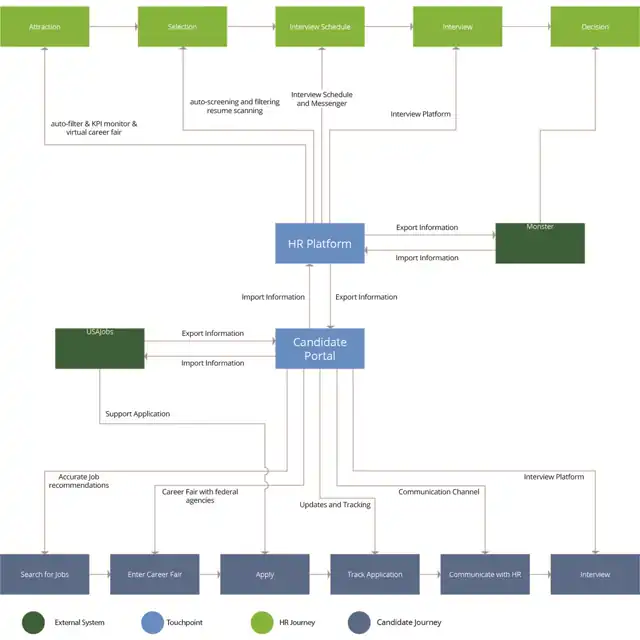
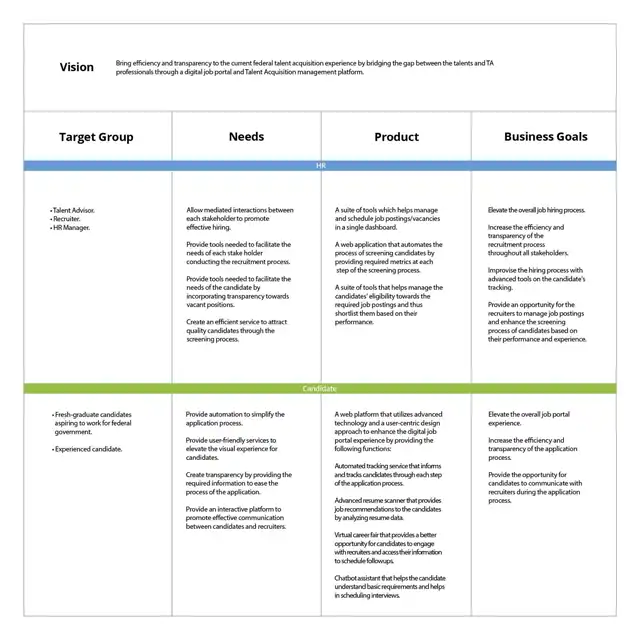
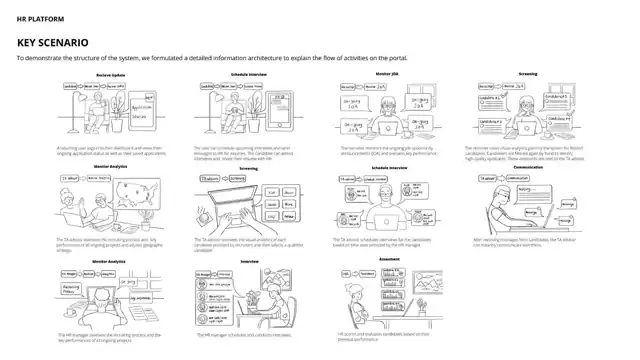
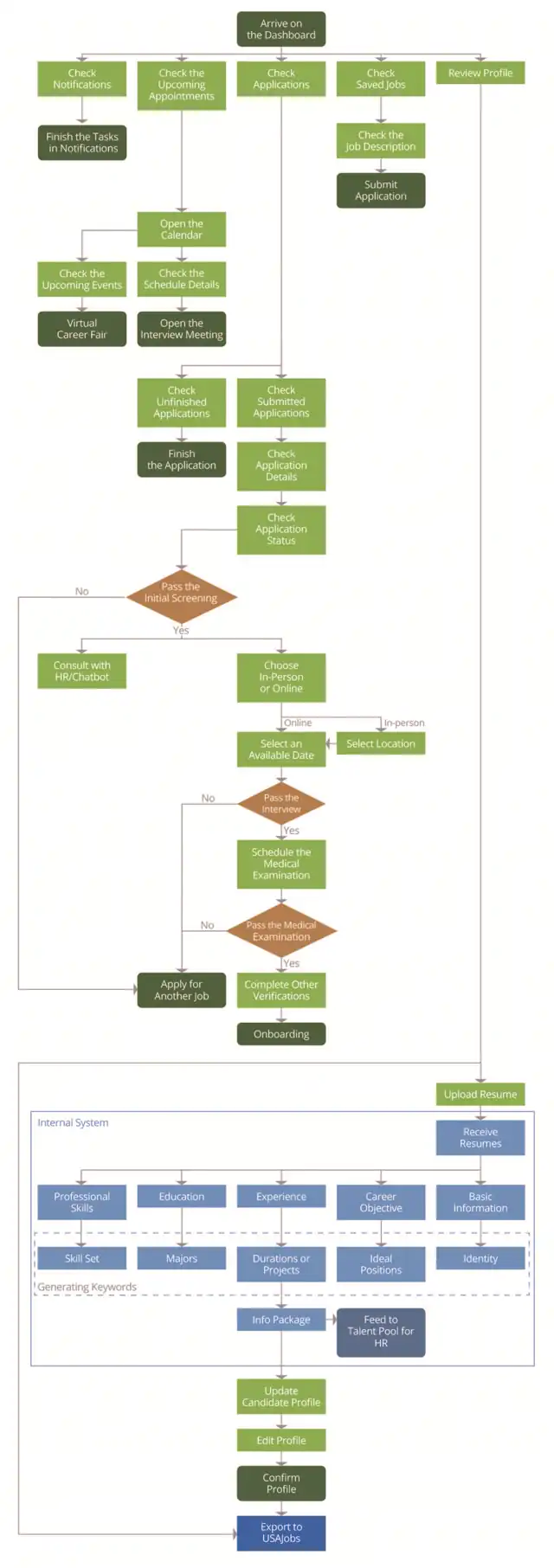
Federal talent acquisition has a wide ecosystem, so we mapped it before narrowing scope — two user groups, two digital touchpoints: an HR platform supporting the recruiting process, and a candidate portal supporting the job search.
the service ecosystem map
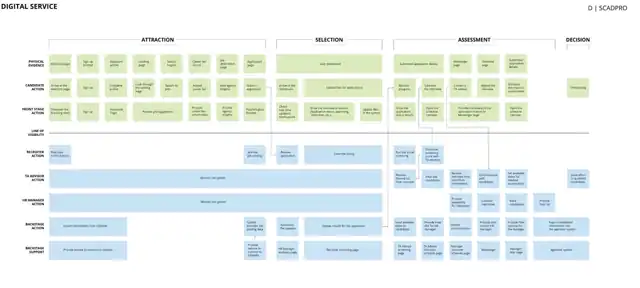
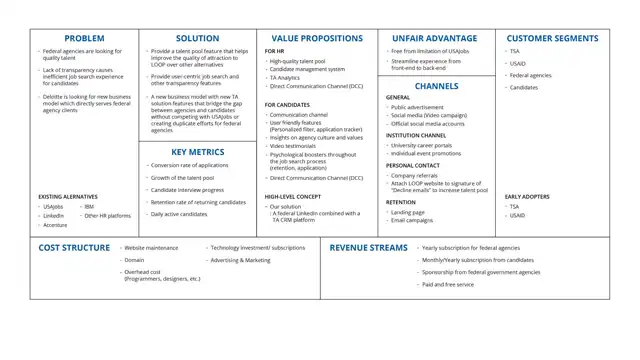
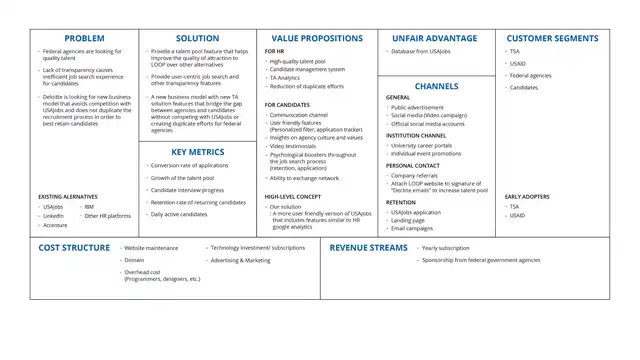
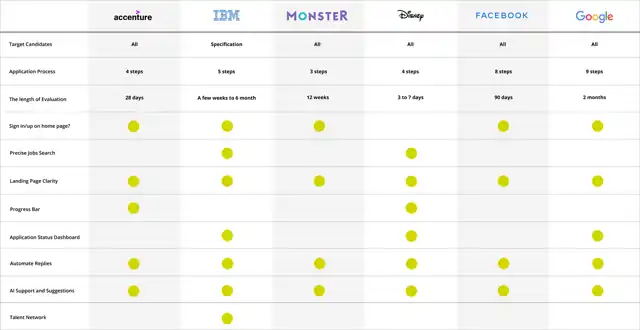
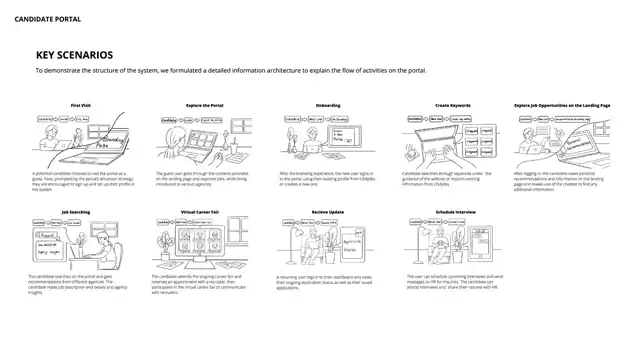
A service blueprint showed how the two systems talk to each other. A lean canvas broke the idea down to its key assumptions and let us prioritise features against the key scenarios, with the candidate portal first. A product vision board, competitor analysis of existing recruitment platforms, information architecture and user flows took it the rest of the way to something buildable.
the service blueprint
1 / 2
the lean canvas
the product vision board
design
Wireframes, four user tests, then the real thing.
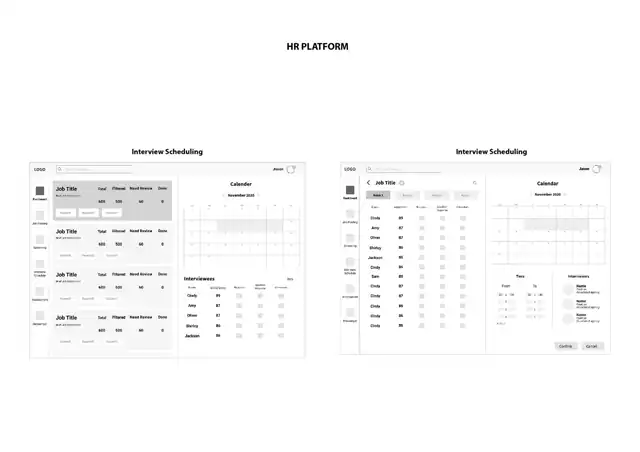
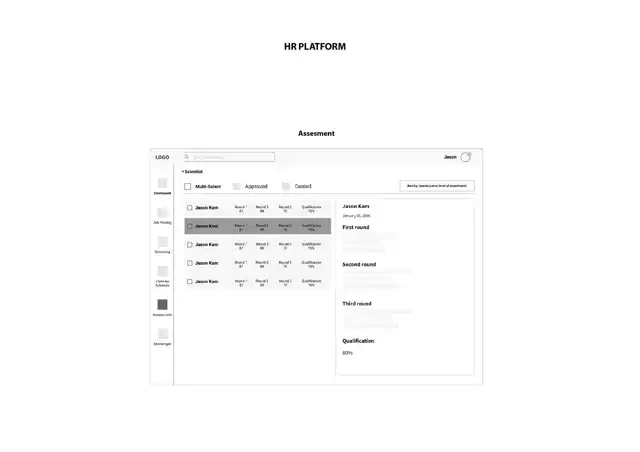
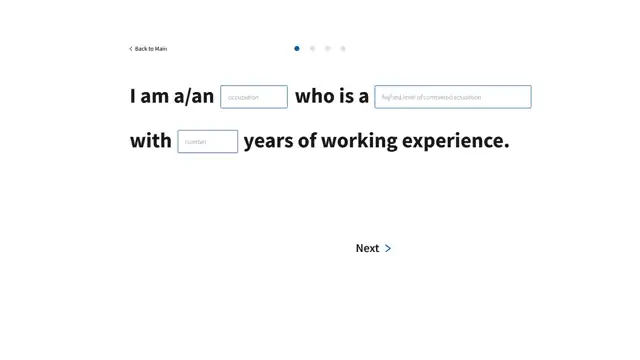
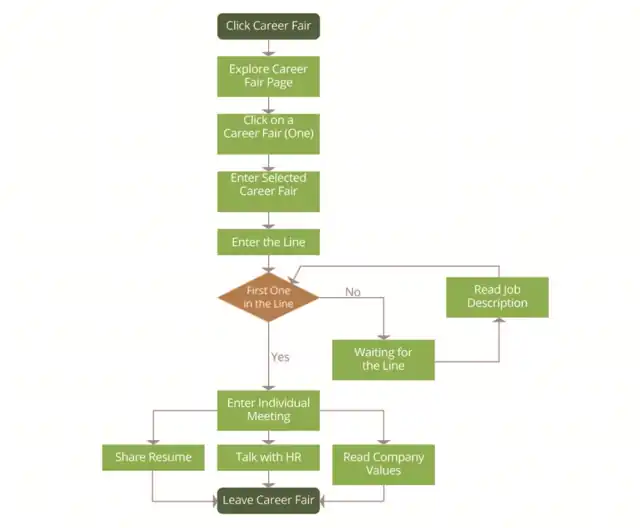
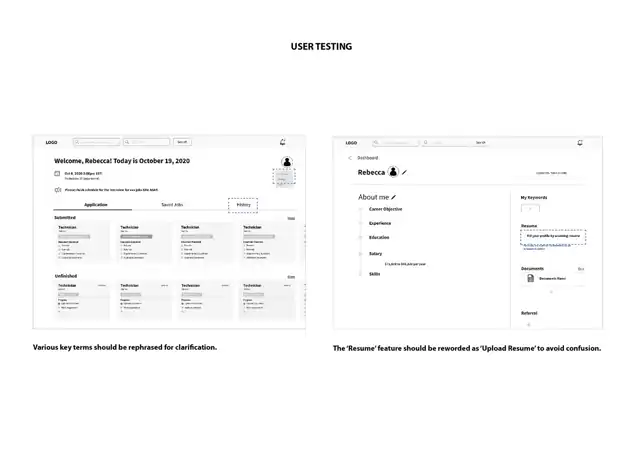
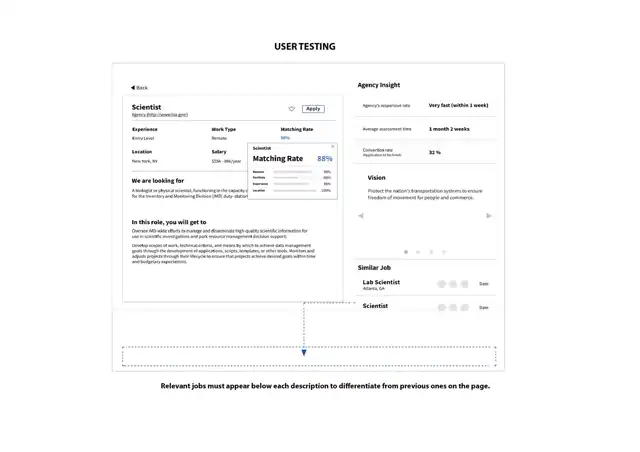
Low-fidelity frames first, for both the candidate portal and the HR platform. Then four user tests covering the segments that carried the most risk — landing pages, profile creation, résumé upload and interview scheduling — to check whether the system actually read as efficient and transparent.
1 / 4
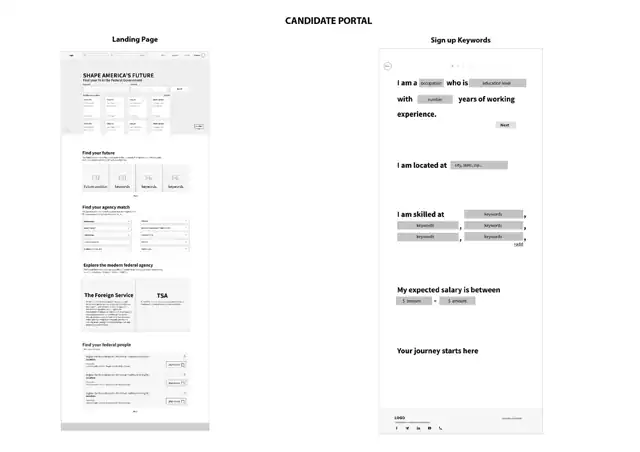
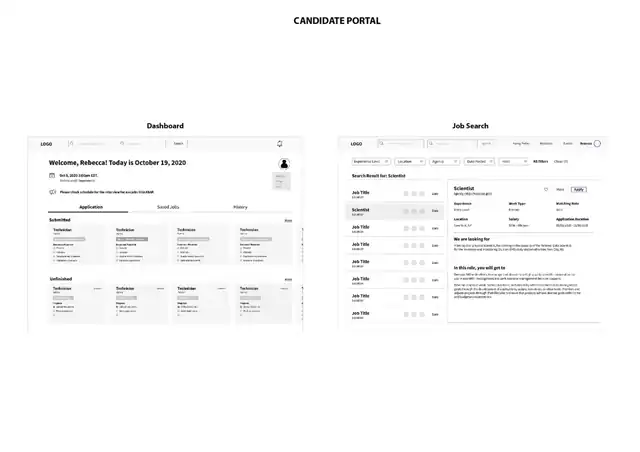
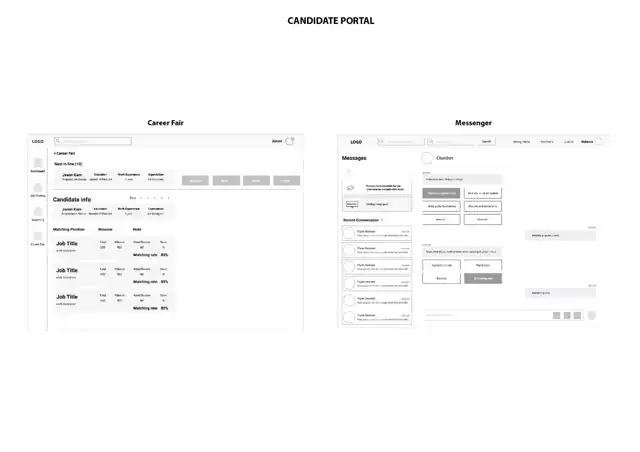
low-fidelity wireframes — candidate portal
1 / 4
low-fidelity wireframes — hr platform
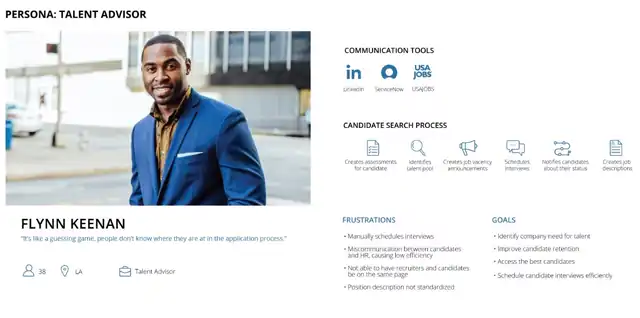
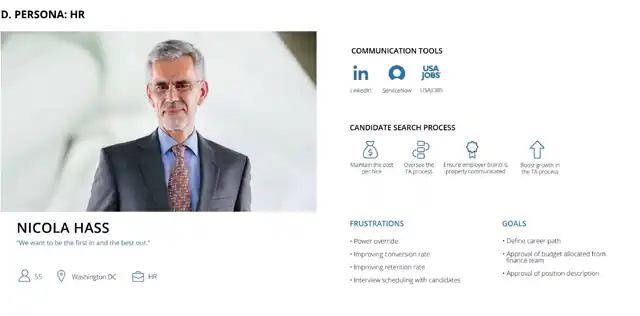
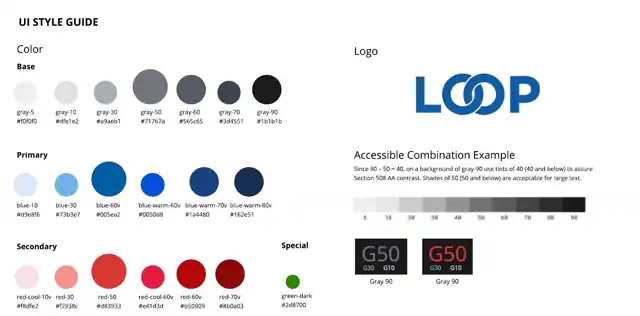
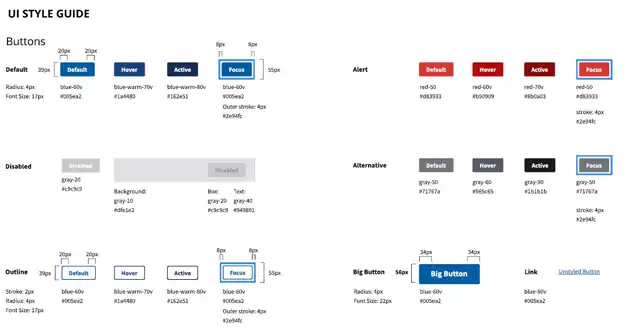
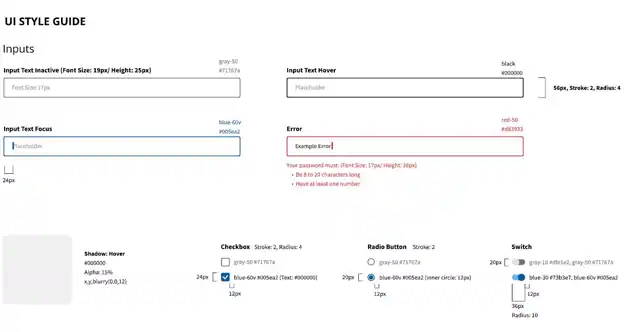
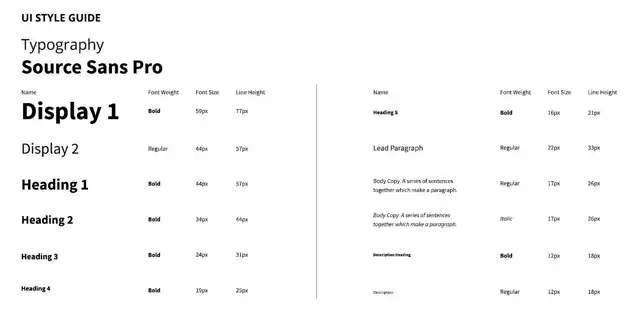
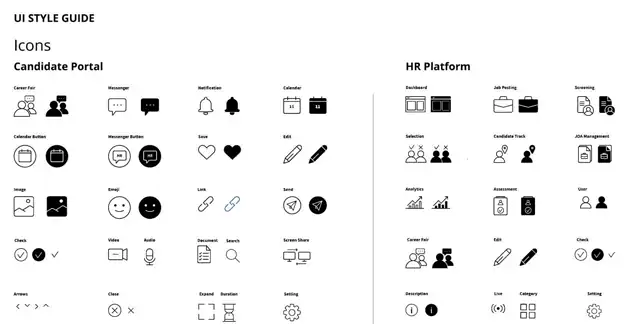
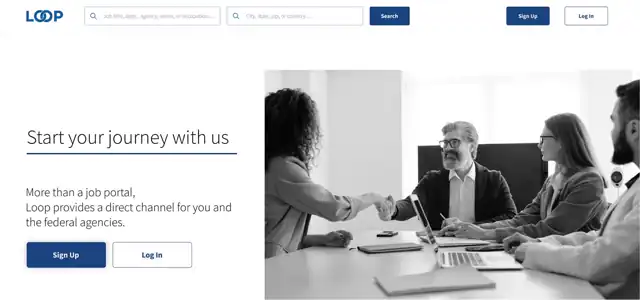
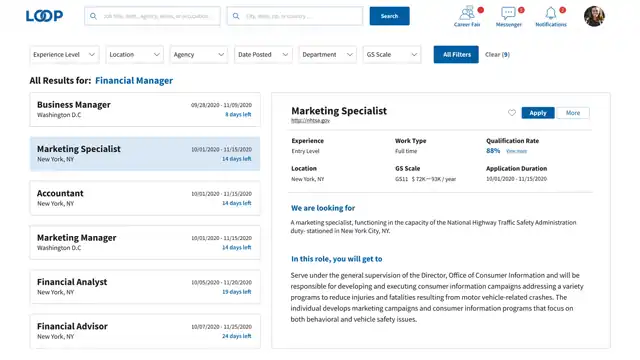
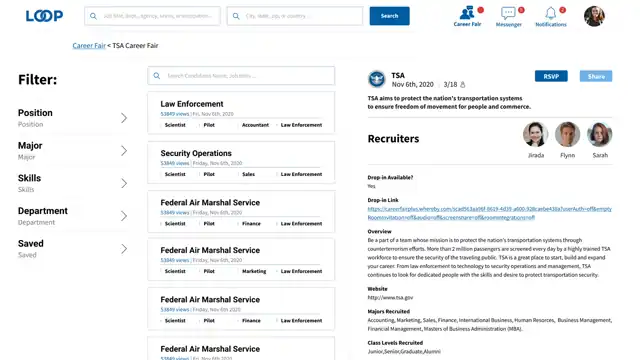
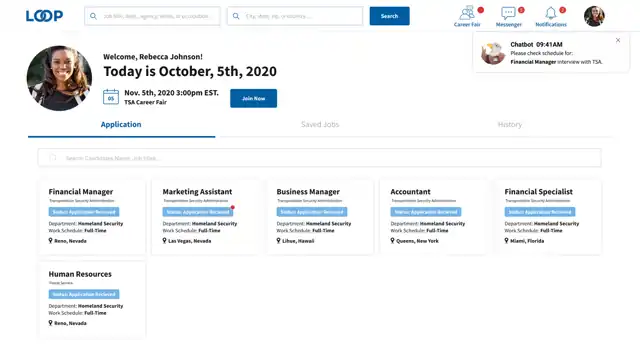
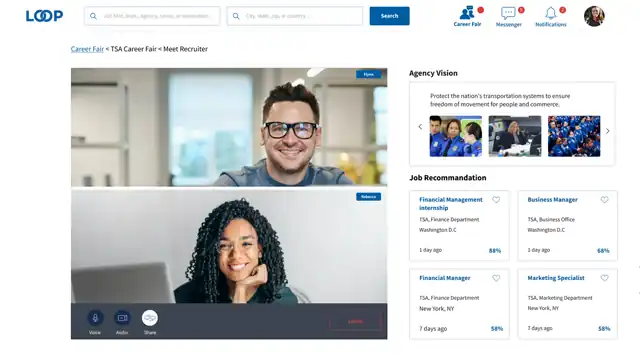
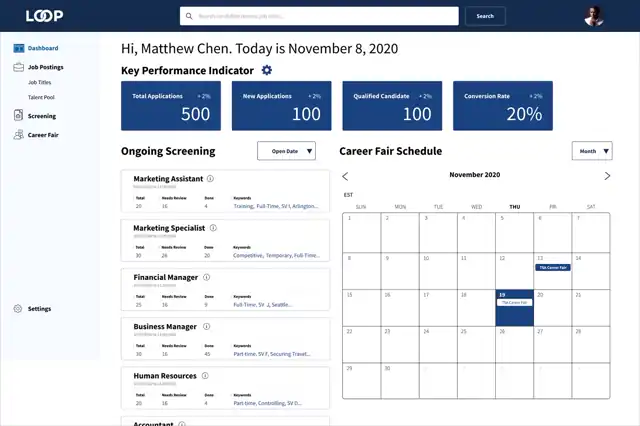
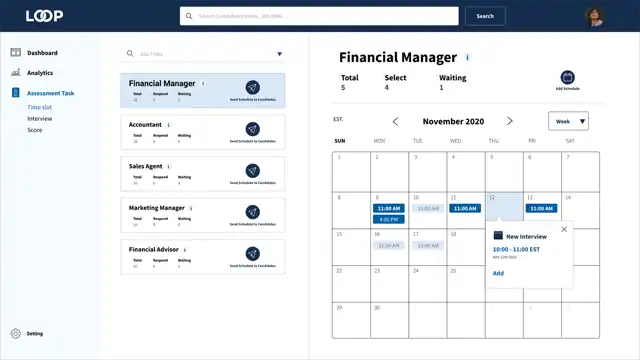
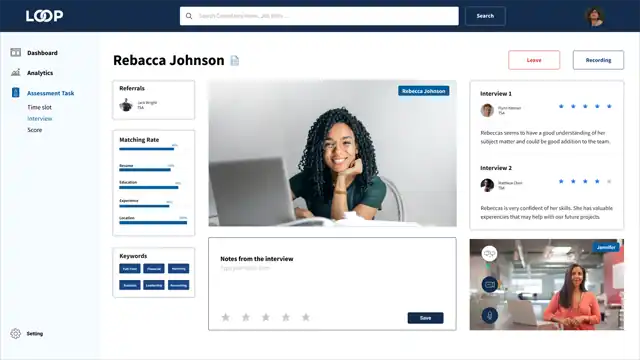
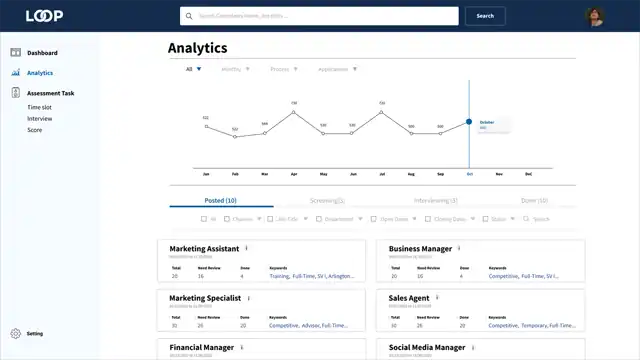
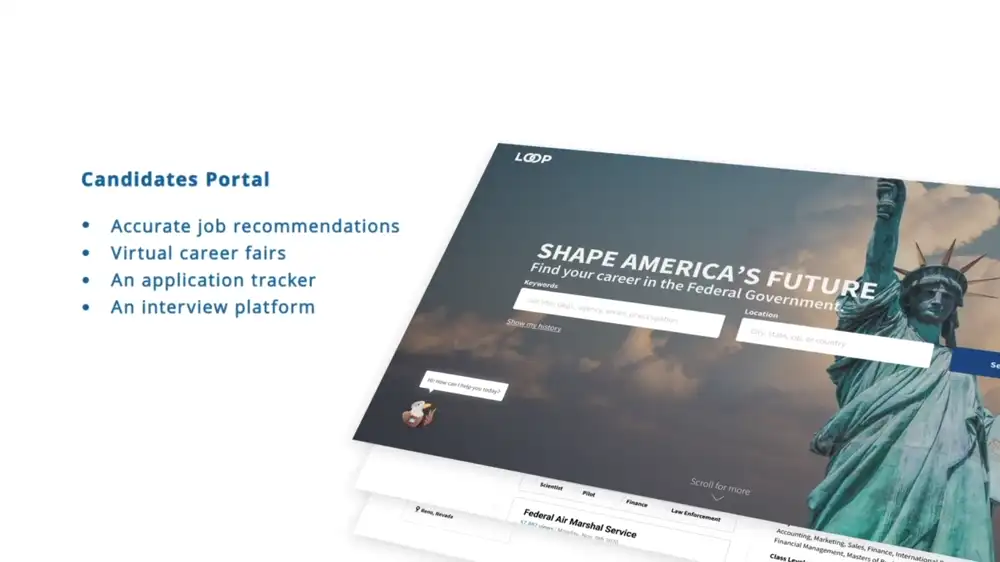
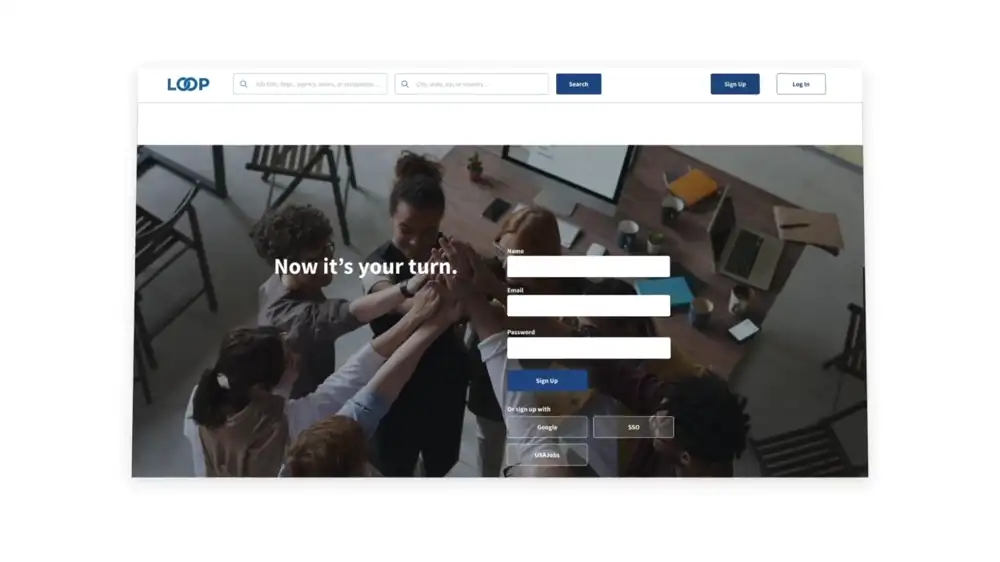
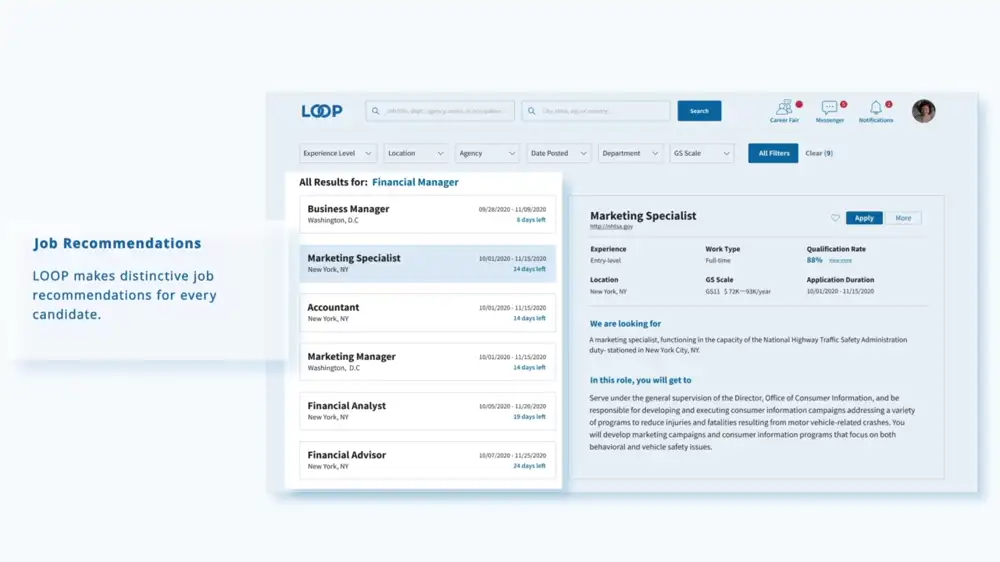
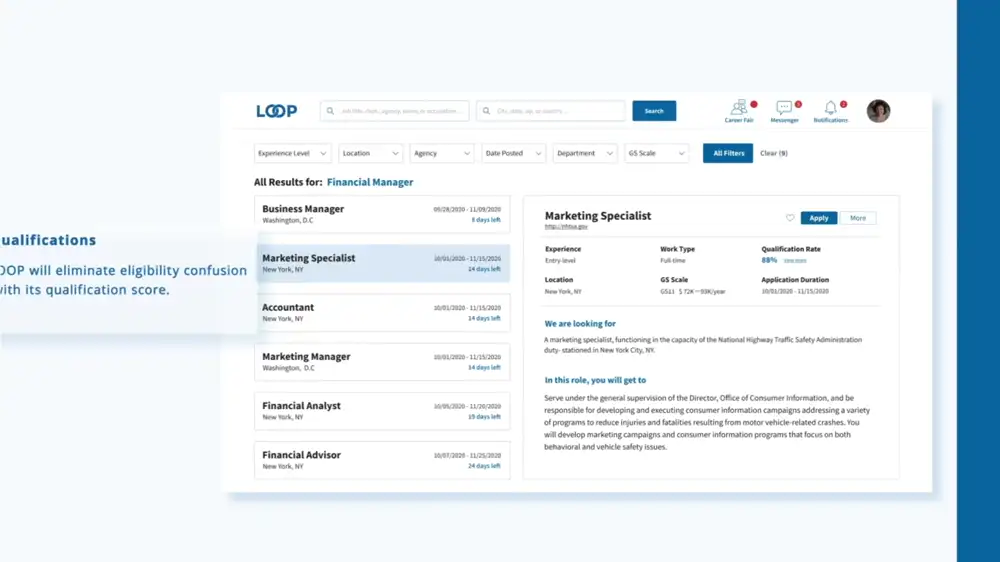
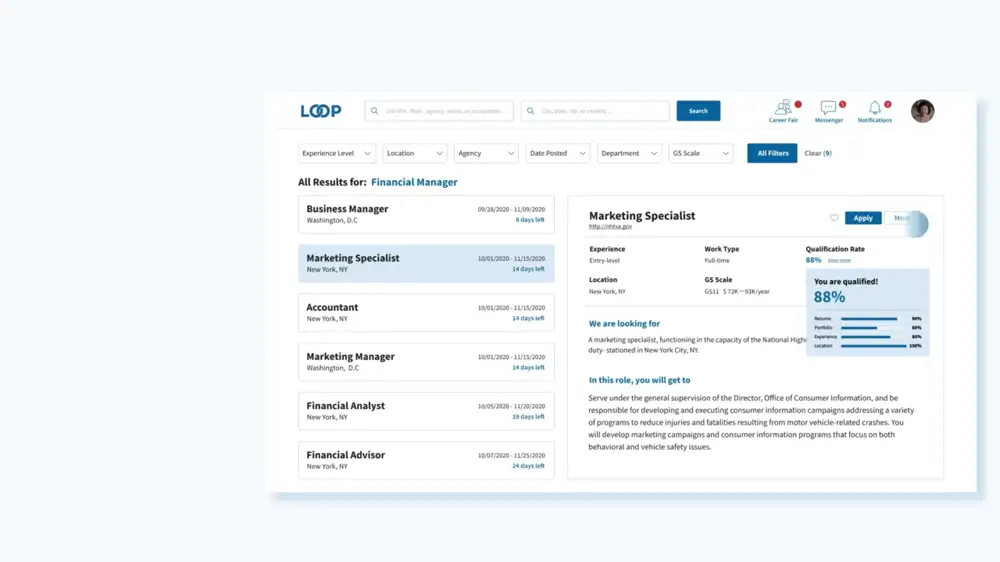
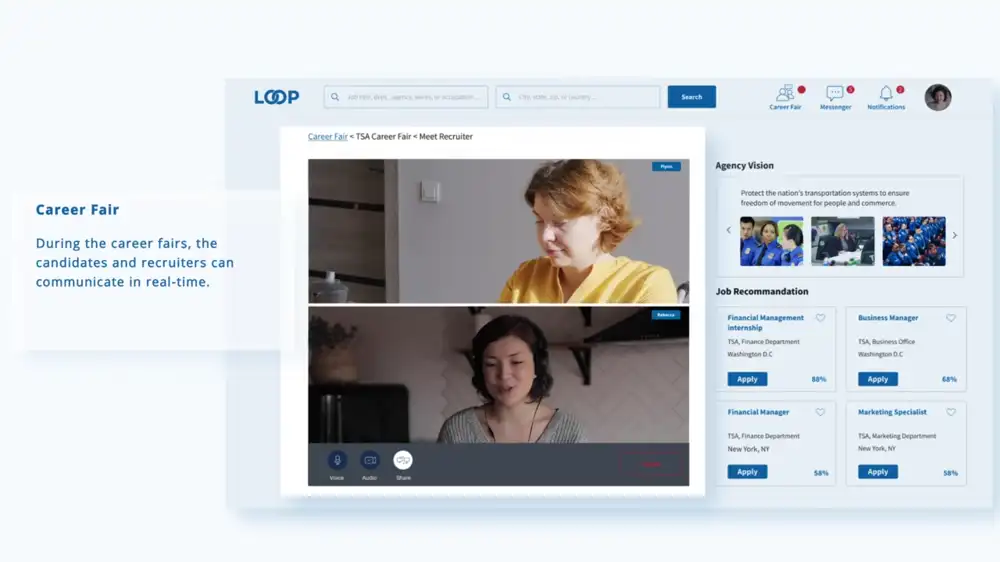
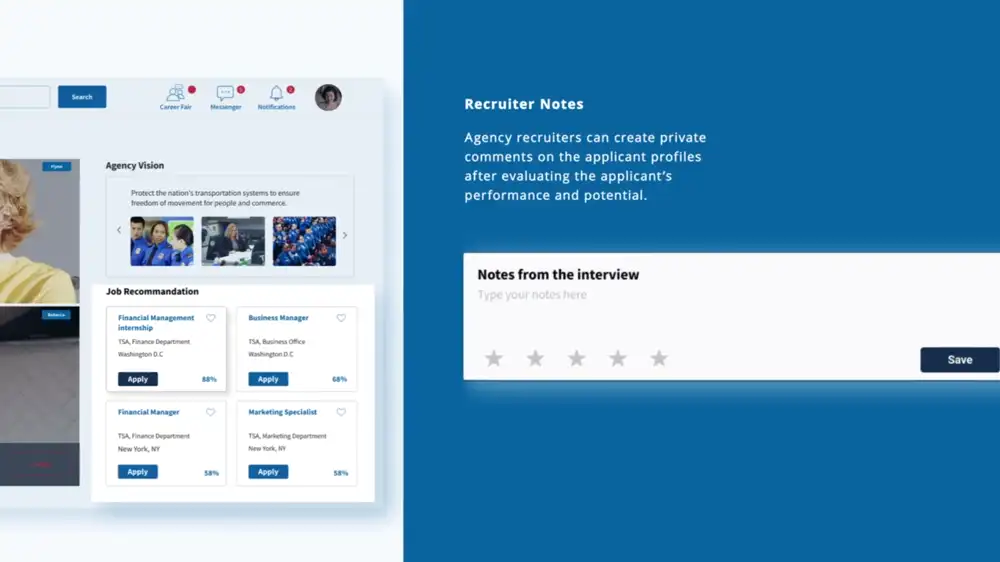
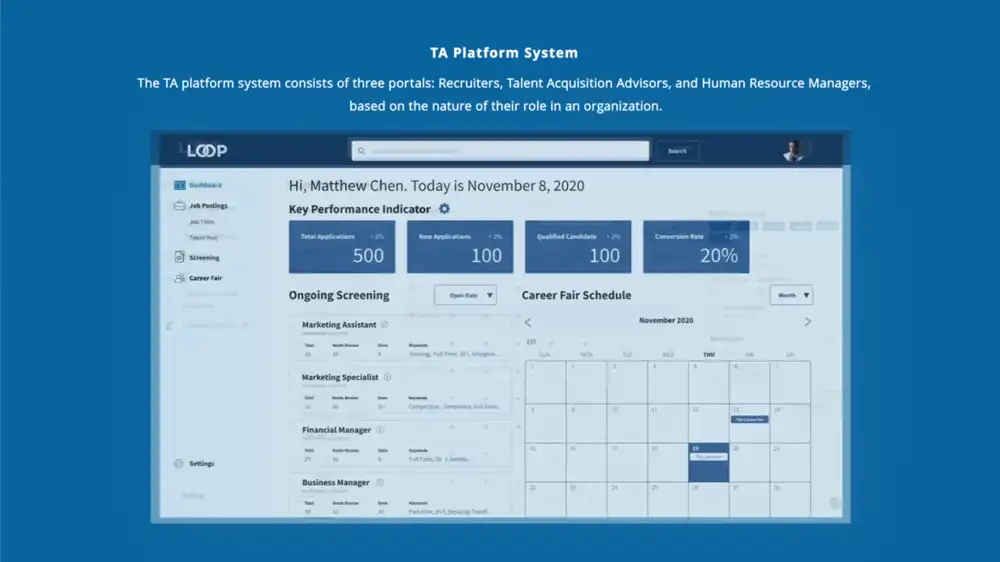
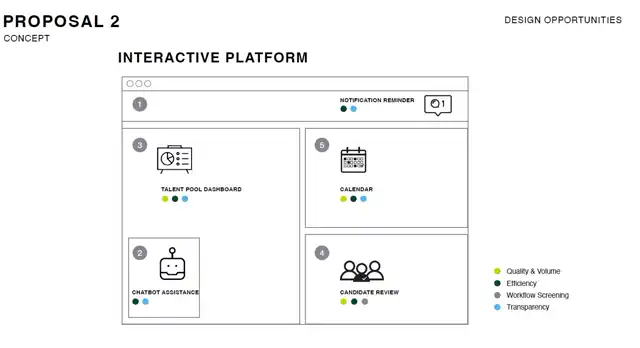
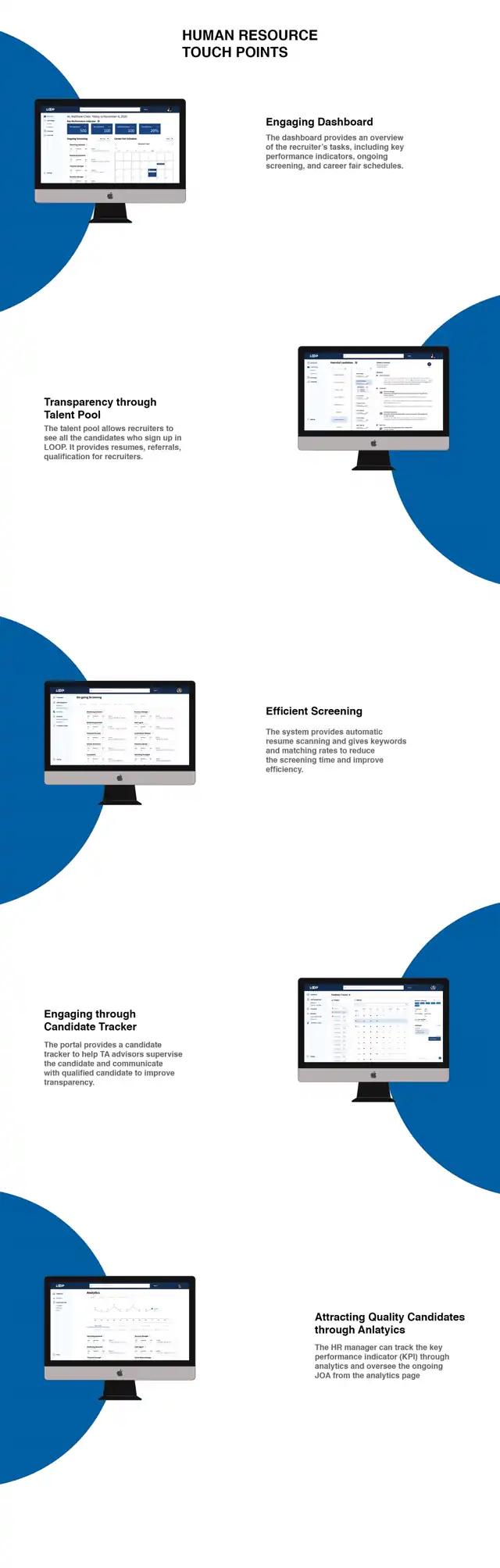
A UI style guide brought the product together — branding, typography, colour, buttons, inputs, icons — and the high-fidelity screens followed. The candidate portal provides accurate job recommendations, virtual career fairs and a dashboard that tells you where you stand. The HR platform splits into three portals by role: Recruiters, Talent Acquisition Advisors and HR Managers.
1 / 5
the ui style guide
1 / 9
candidate portal — high fidelity
1 / 4
hr platform — recruiter
1 / 4
hr platform — talent advisor
1 / 4
hr platform — hr manager
outcome
What LOOP gives each side.
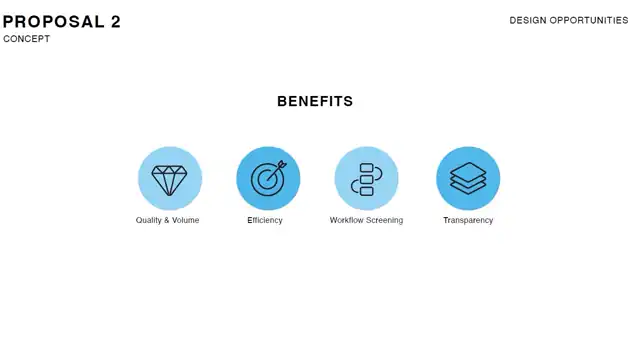
hrMediated interaction between stakeholders, a screening process that attracts quality candidates, and tools built for each role in the recruitment process
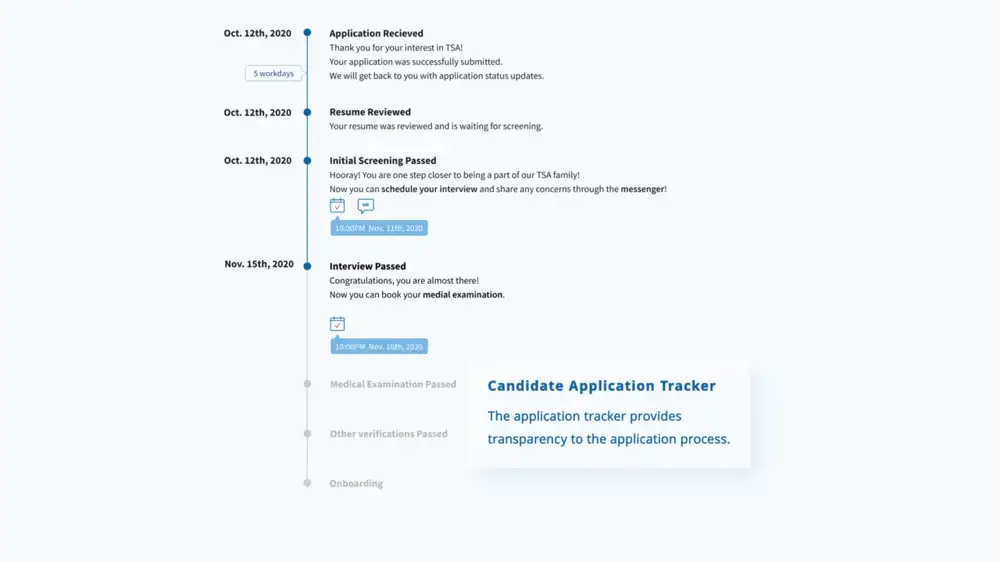
candidateTransparency about where the application stands, a visual experience worth staying in, and automation that simplifies applying
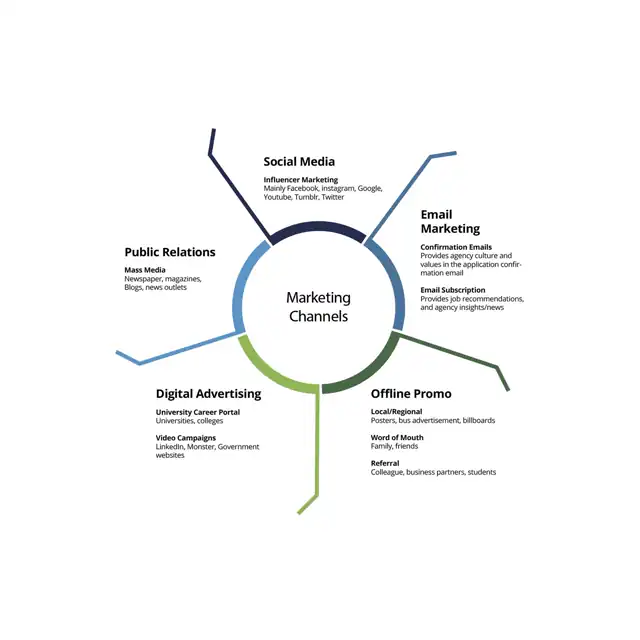
We closed with an attraction strategy — marketing across physical and digital touchpoints — so the platform had a route to the volume it needed.
marketing channels
the attraction strategy
demonstration
LOOP, end to end.
The app demonstration: the candidate portal and the HR platform working together, from finding a job to scheduling the final interview.
1 / 18
loop demonstration — one frame every 8 seconds of the app walkthrough
The full process
every board from the project, in order
process
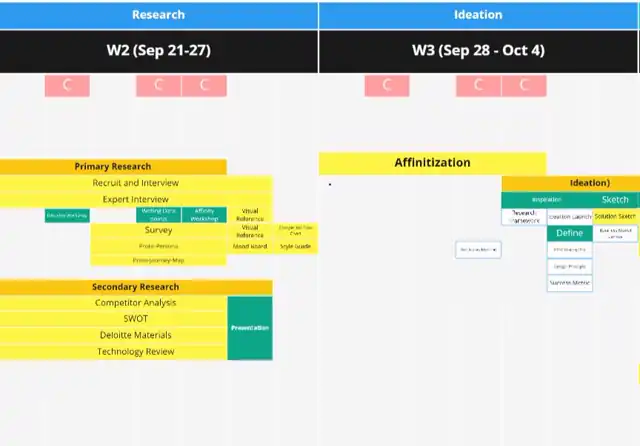
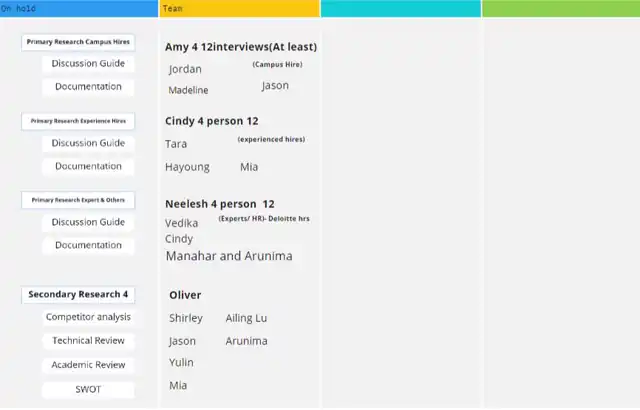
Research schedule
1 / 3
02 / process
Secondary research
1 / 5
process
Research process
process
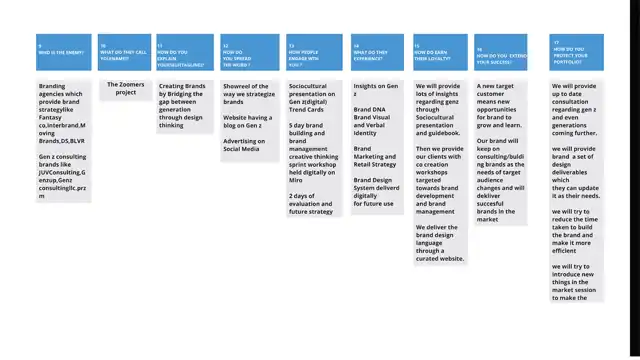
-summarized final insights of the user after synthesis.
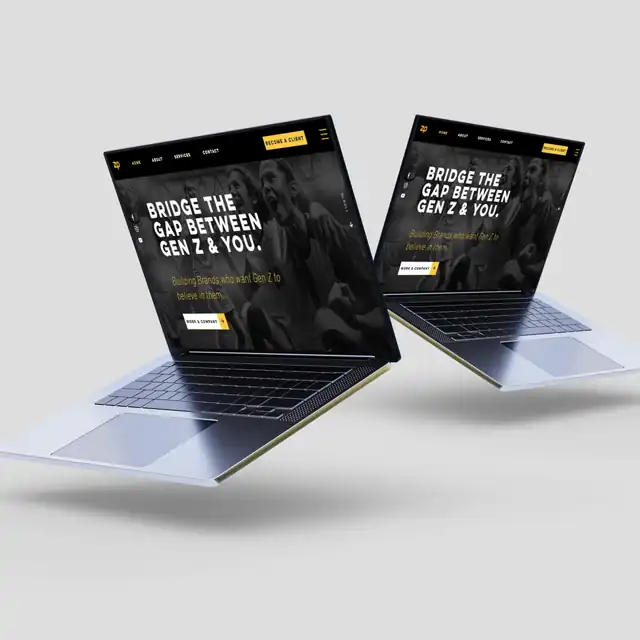
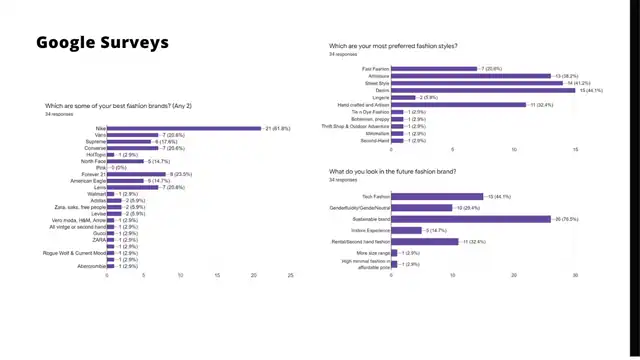
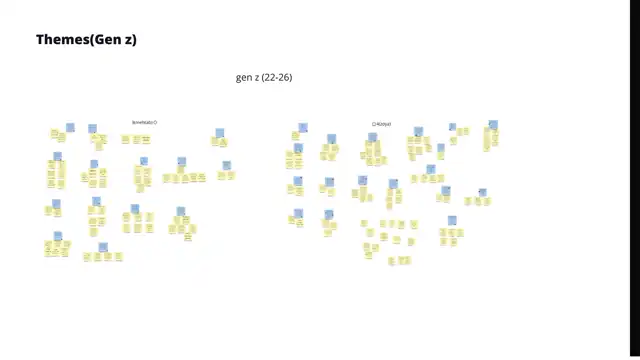
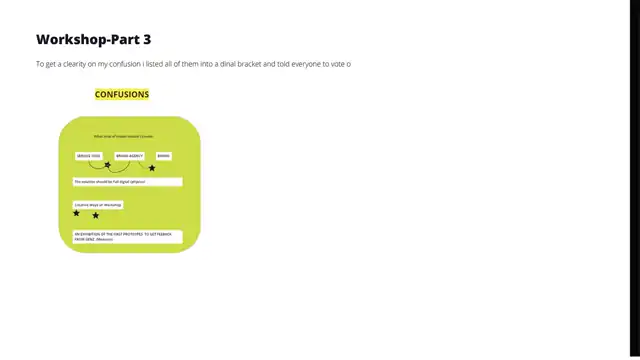
My Master's capstone at SCAD applied design thinking to a commercial question: how should fashion companies build brand strategy for Generation Z?
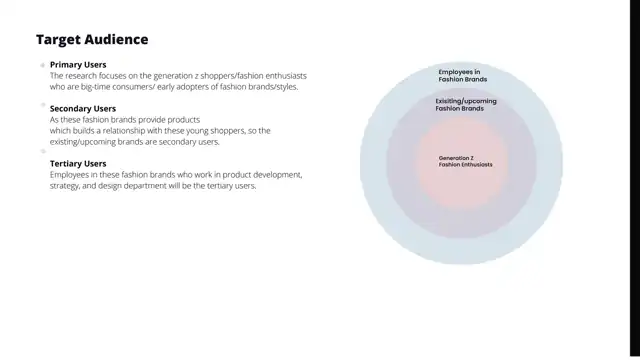
Born between 1995 and 2015, Gen Z are the first digital natives — and they behave in ways that contradict each other often enough that the usual segmentation stops working. That contradiction was the research problem, not a footnote to it.
purpose of study and target audience
research
Eight conversations, one survey, and everything already written.
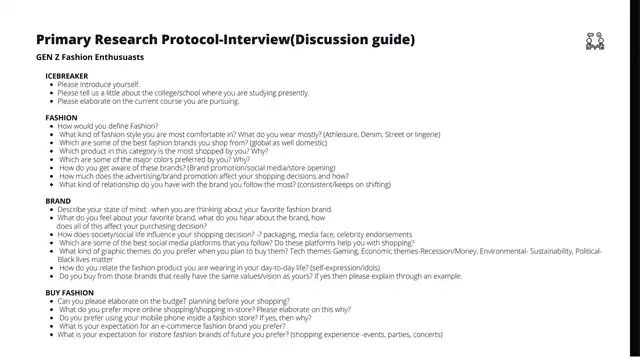
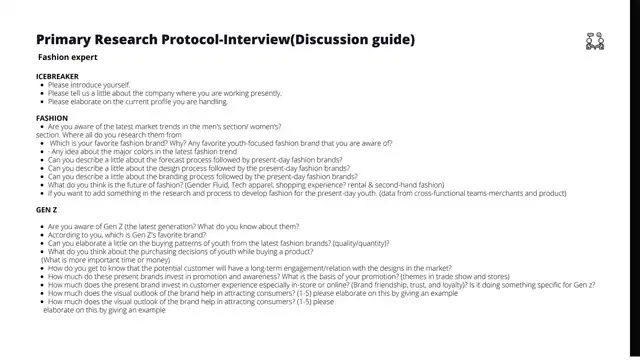
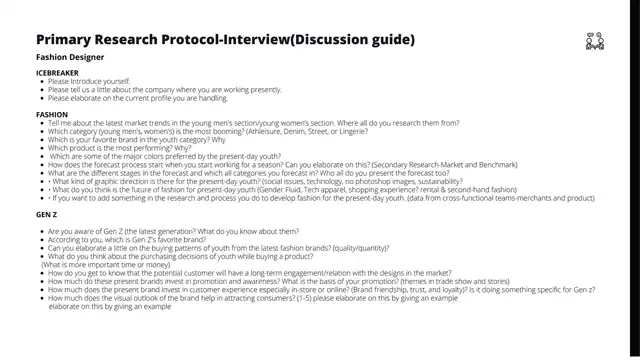
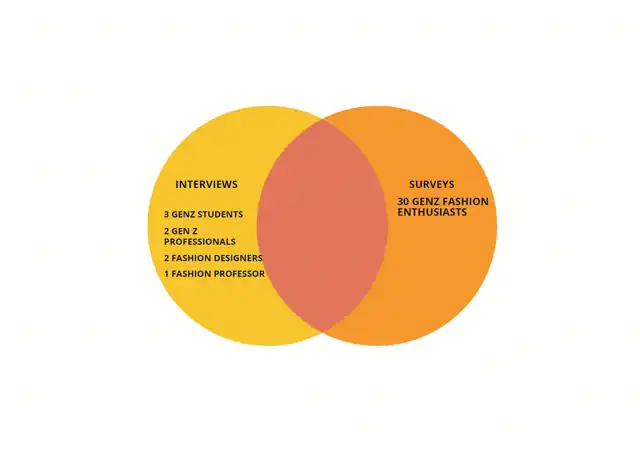
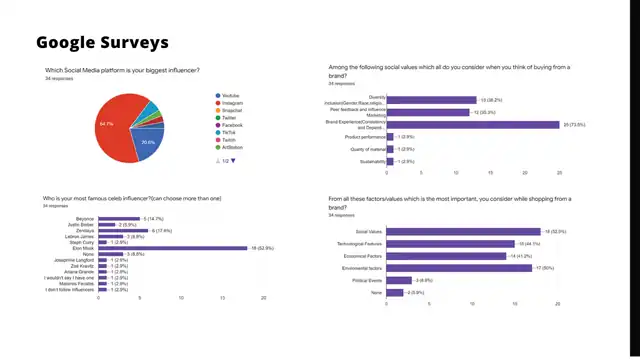
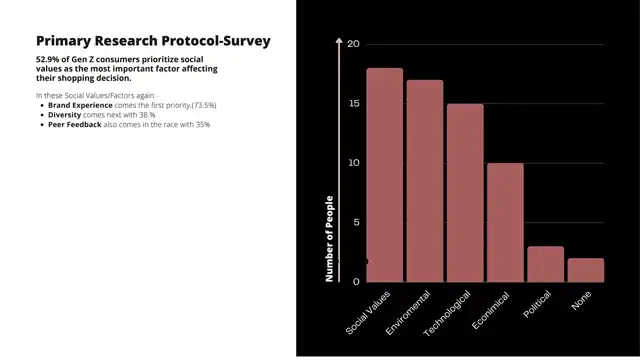
Primary: eight Zoom interviews spanning Gen Z students, working professionals, designers, trend forecasters and professors — deliberately mixing the people inside the generation with the people trying to predict it. Plus an online survey reaching Gen Z fashion enthusiasts from a range of backgrounds.
1 / 4
1 / 3
interviews and survey
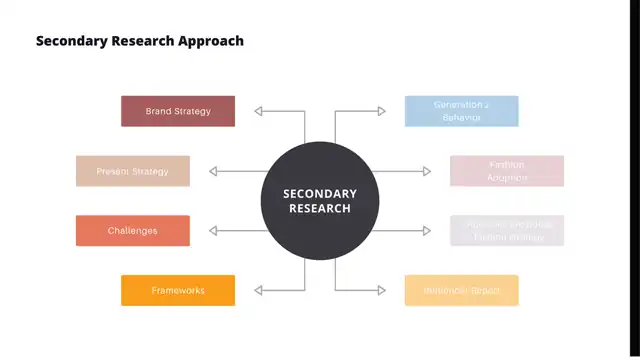
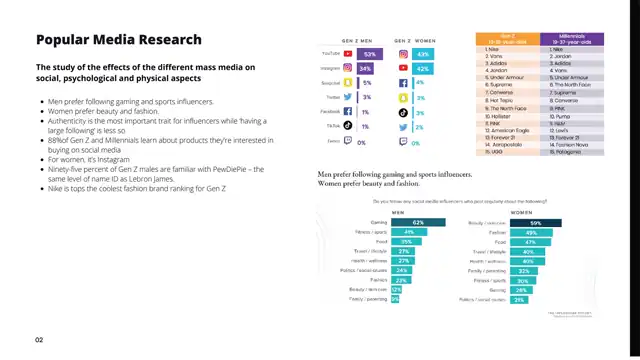
Secondary: media scanning, publications review and online research across the fashion industry and brand strategy.
1 / 2
secondary research
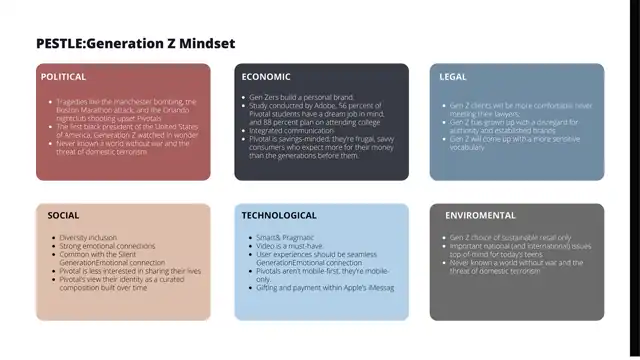
pestelThe macro forces acting on the category
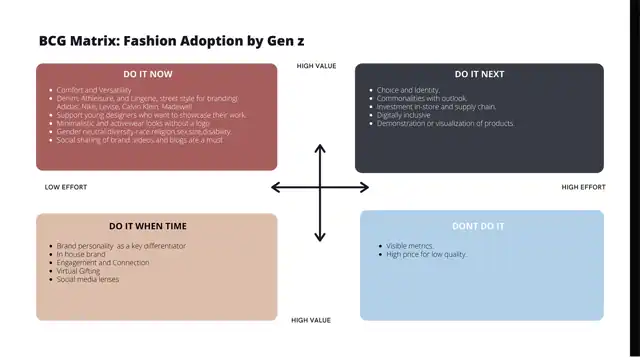
bcg matrixWhere existing brand portfolios actually sit
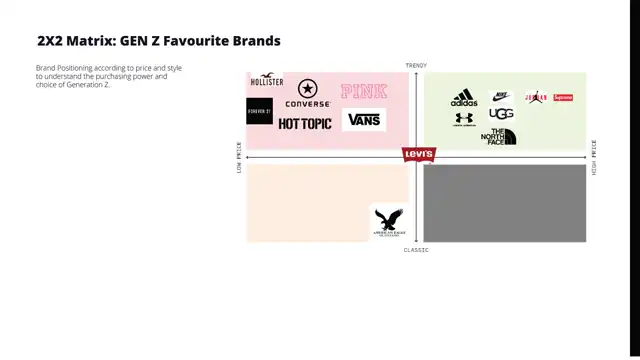
2×2Concept mapping, later used to run feasibility workshops
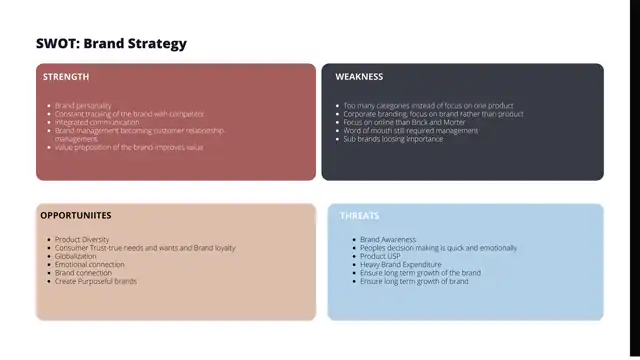
swotThe honest position of a brand trying to enter this market
1 / 5
pestel, bcg, swot and the 2×2
synthesis
From Miro walls to people you can design for.
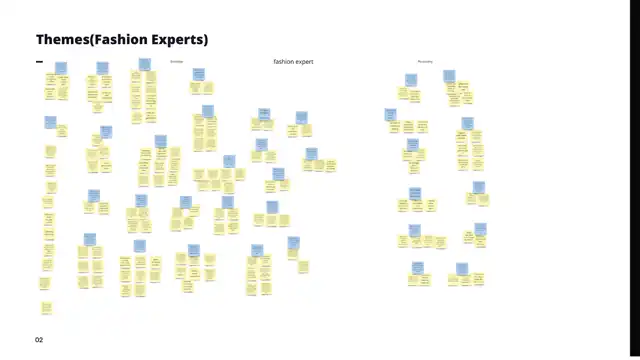
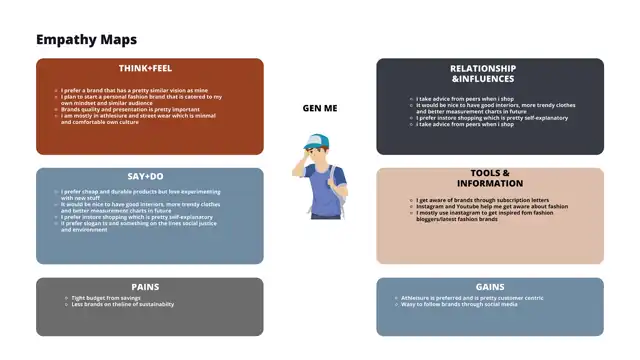
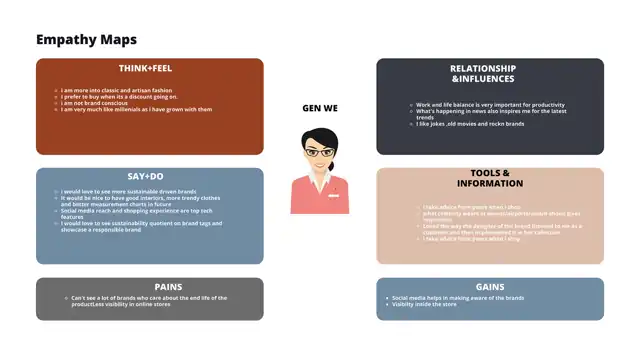
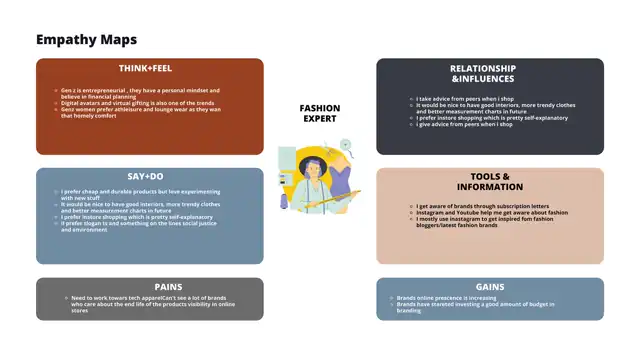
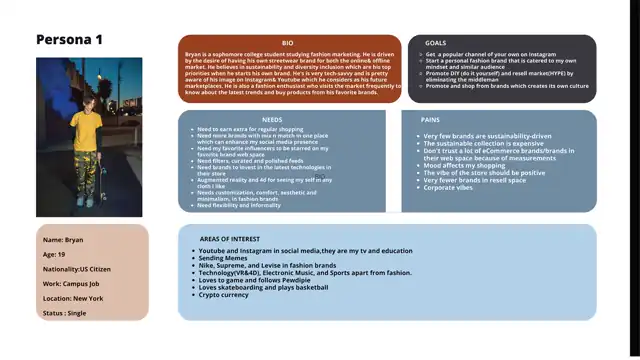
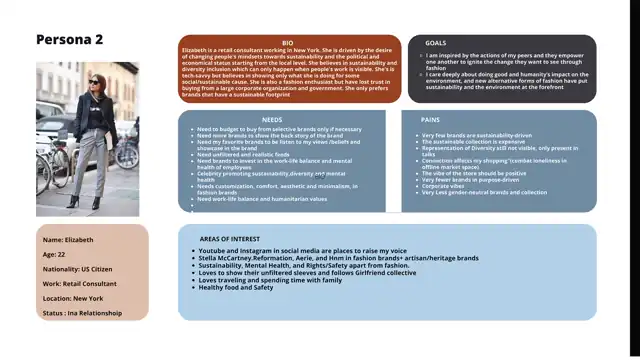
Affinity mapping and categorisation on Miro boards turned the raw material into patterns. Those became empathy maps, user personas and a research framework — the bridge between what people said and what a brand could do about it.
1 / 6
the affinity map on miro
1 / 3
1 / 3
empathy maps and personas
1 / 2
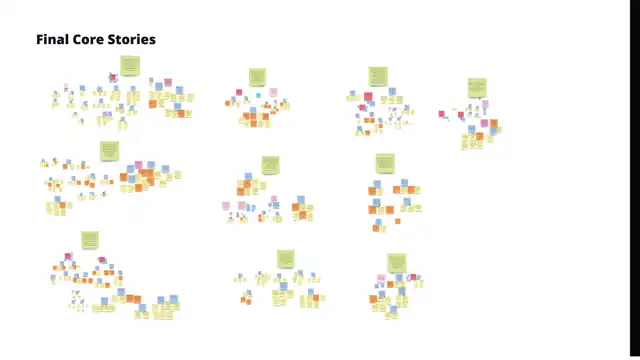
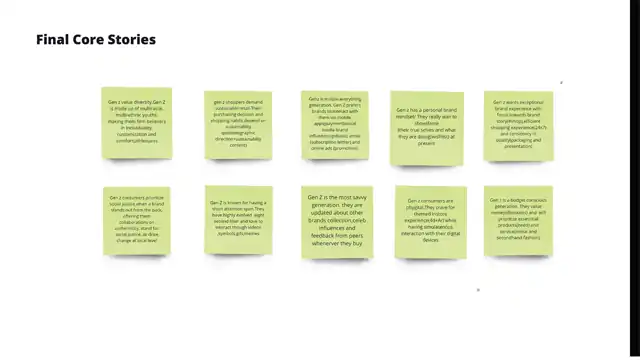
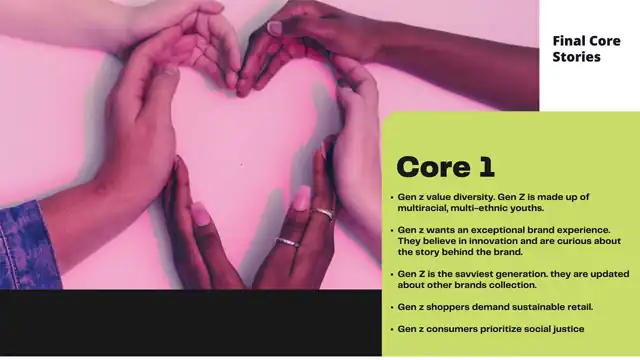
core stories
1 / 3
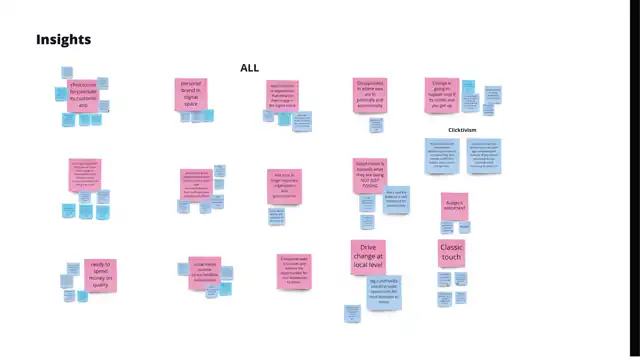
insights
ideation & brand building
Seventeen steps, borrowed on purpose.
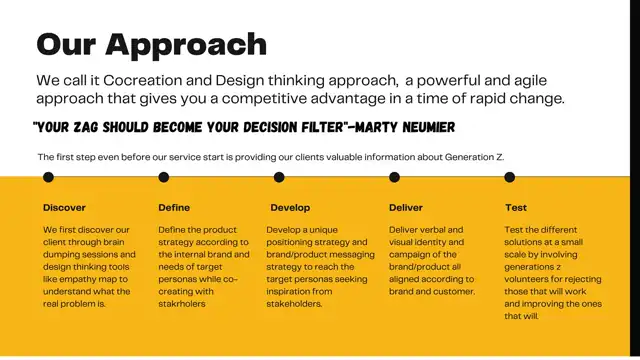
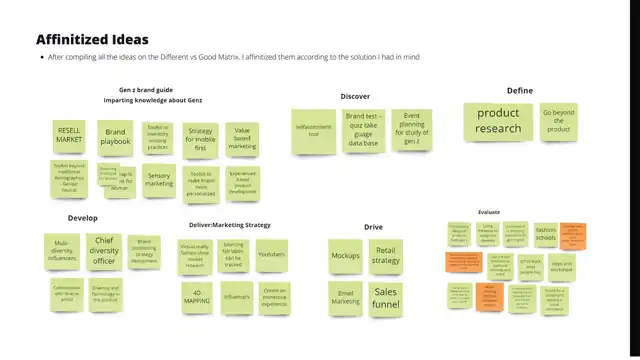
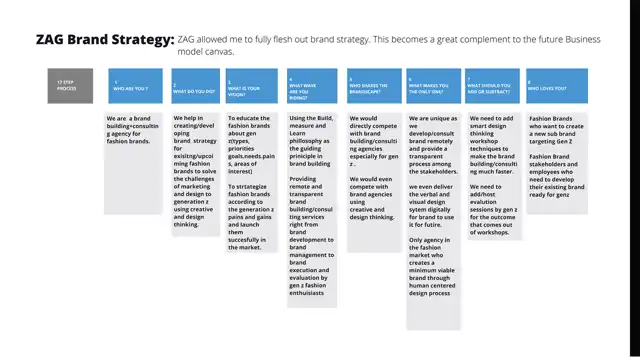
Concepts were mapped on a 2×2 and pressure-tested in feasibility workshops rather than chosen by preference. The brand itself was built through the 17-step branding methodology from Marty Neumeier's ZAG — using an established framework meant the decisions could be argued for rather than defended as taste.
1 / 3
initial concepts
1 / 4
concept selection
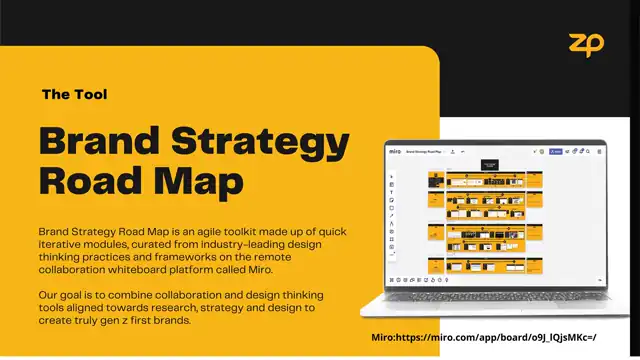
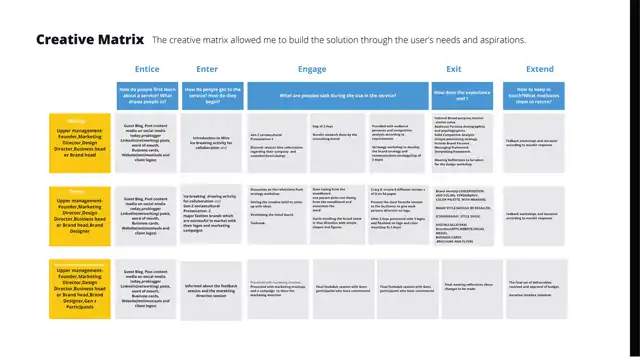
Prototyping ran on a 5E creative matrix to define the tools the agency would actually offer.
1 / 4
developing the brand
outcome
The Zoomers Project.
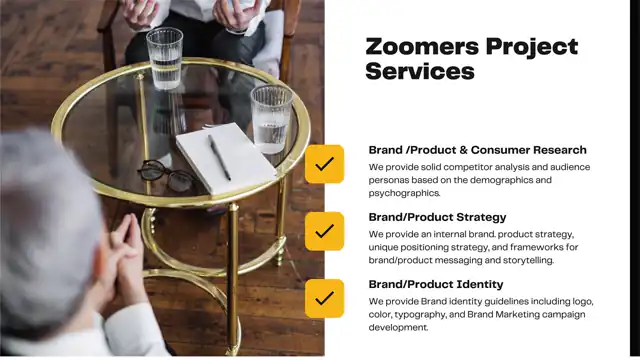
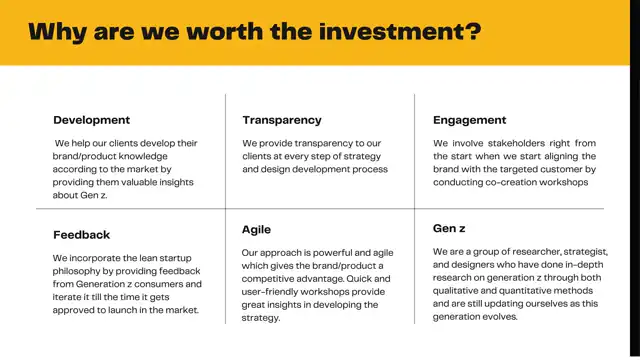
A strategic brand agency providing remote consulting in brand and product experience, focused on Generation Z, working through co-creation and design thinking.
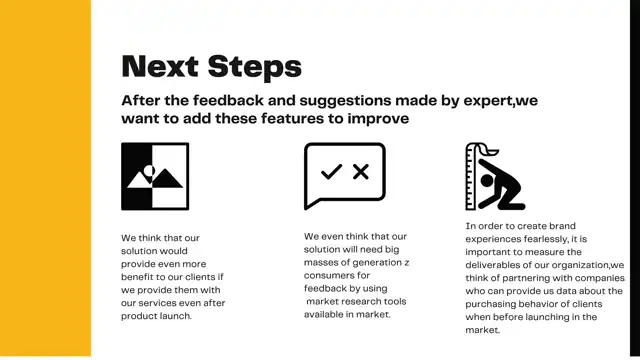
The deliverable wasn't a campaign. It was a repeatable way for a fashion brand to understand a generation that doesn't hold still — and a service model for delivering it.
A retail problem the business was treating as a marketing problem.
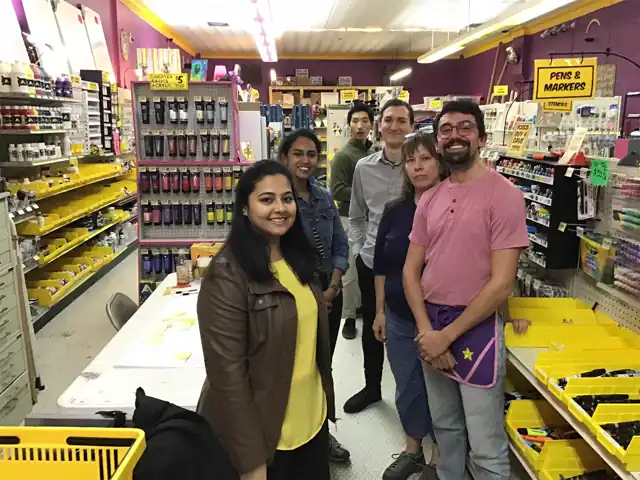
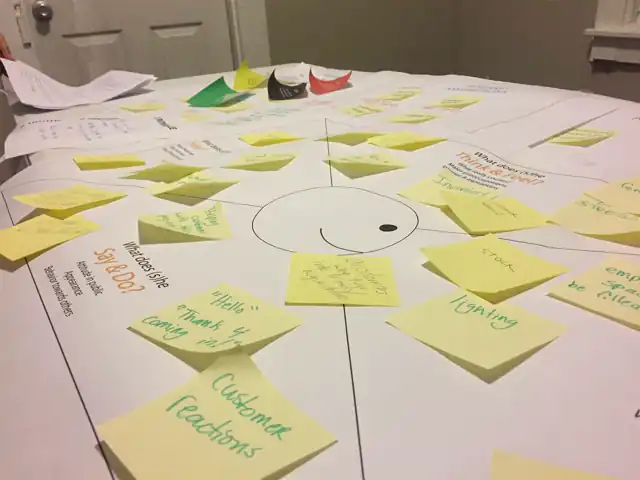
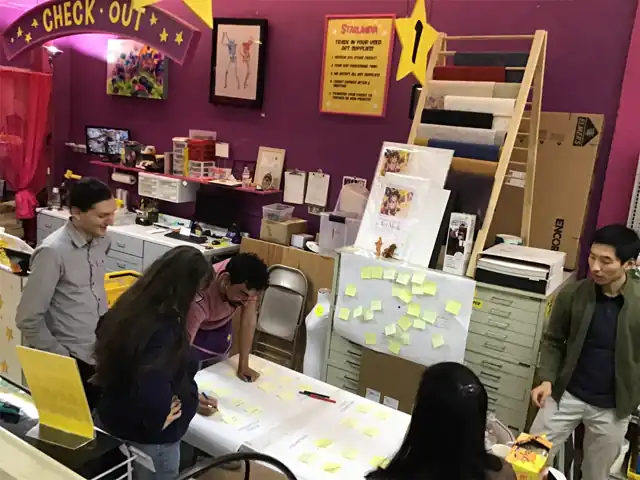
Starlandia is an art supply store in Savannah's Starland District. The questions they brought us were about attracting customers from outside the SCAD student body, reaching professional artists, and making better use of the store layout.
the store
Underneath all three was one question, which became the workshop's frame:
“How might we improve the customer experience in Starlandia?”
the workshop brief
designing the session
Four activities, in an order that does work on the room.
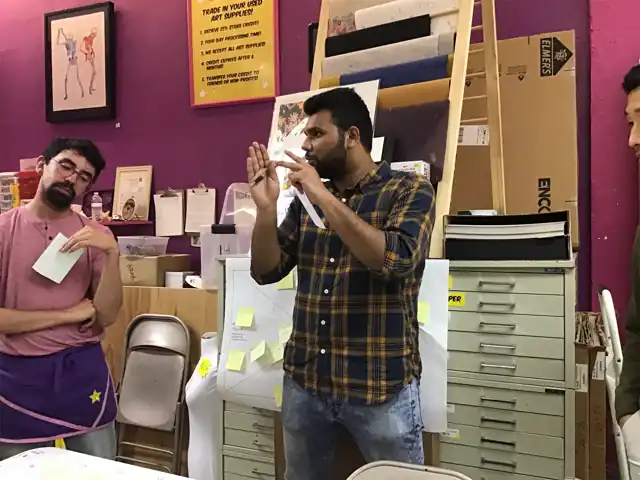
The participants were professionals from mixed backgrounds, not designers. So the sequence had to build the thinking before it asked for ideas.
planning the workshop
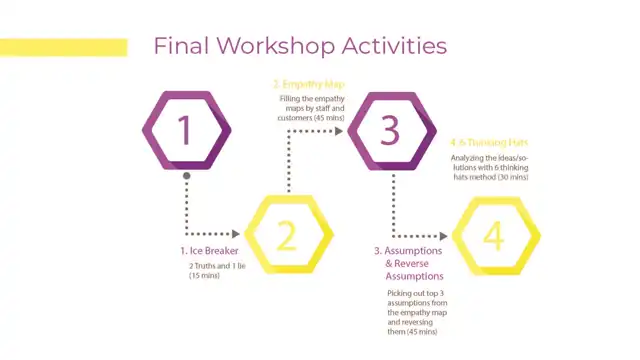
01Ice breaker — two truths and a lie. Builds the group and warms up the kind of thinking the rest of the session needs
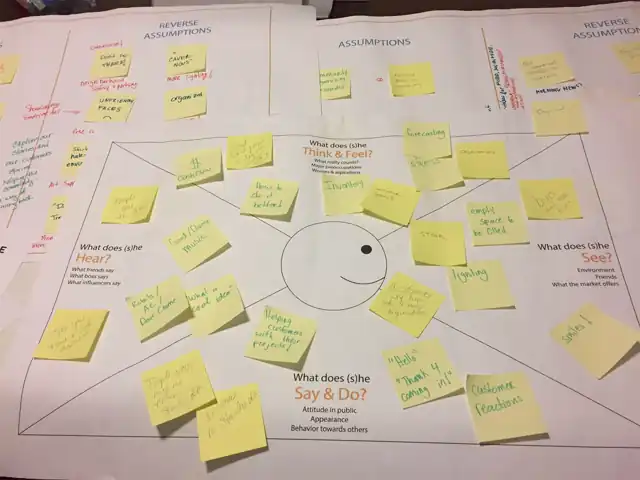
02Empathy mapping. Groups took the customer's and the staff's side in turn — what they do, see, hear, think and feel
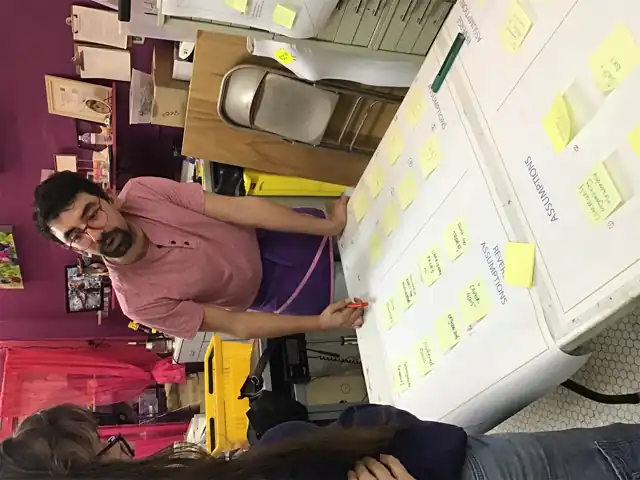
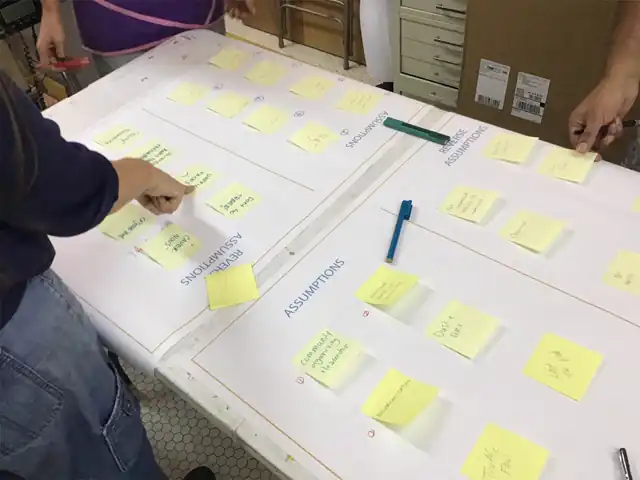
03Assumption and reverse assumption. Teams inverted their own empathy map findings to force unconventional answers
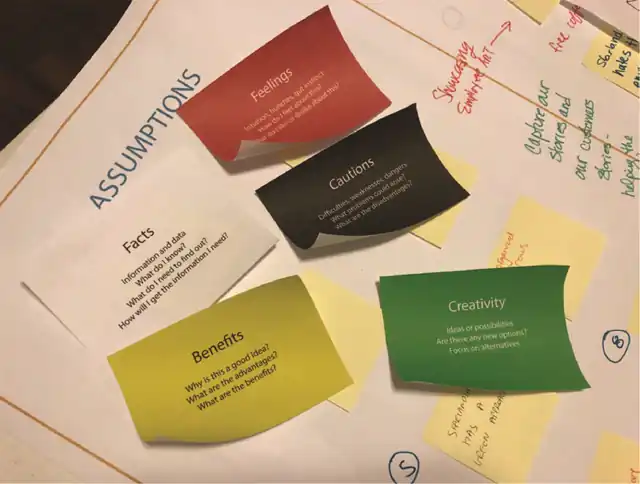
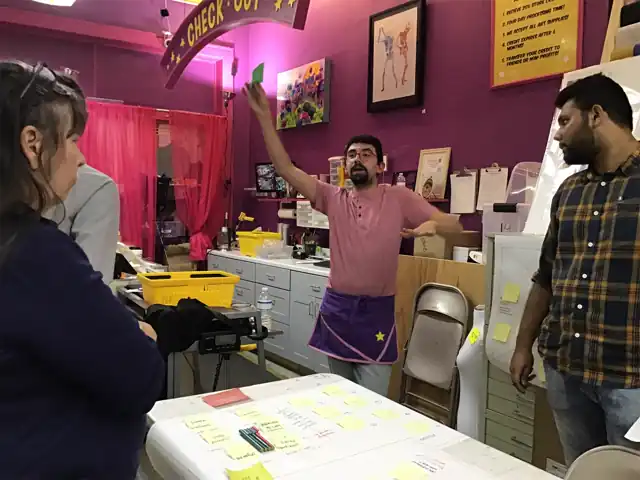
04Six Thinking Hats. Colour cards moved people through the perspectives deliberately — the problem, the feasibility, the team dynamics
1 / 2
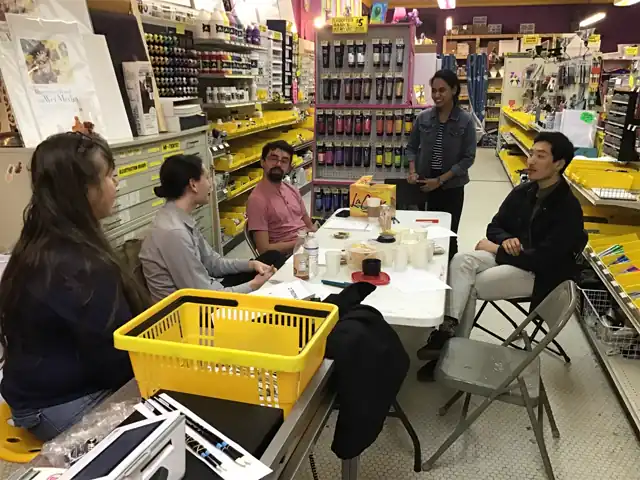
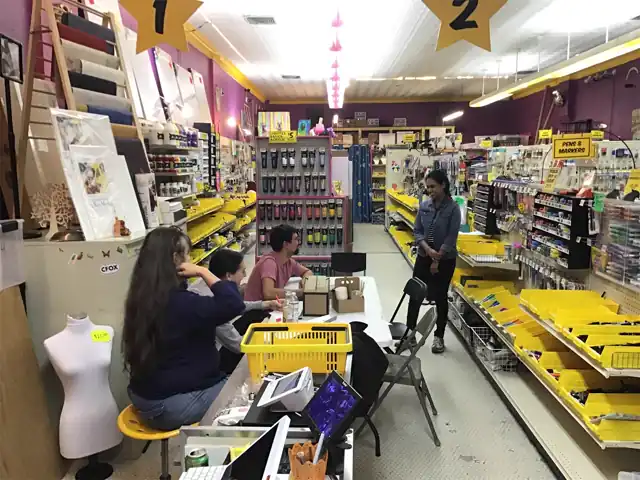
the workshop in session
1 / 2
the filled empathy maps
1 / 3
assumption and reverse assumption
1 / 3
six thinking hats — the cards in use
what came out
The answers came from the staff, not from us.
Reversing the empathy maps produced the two strongest directions: visual merchandising, and showcasing the employees' own artwork in the store. The second one is the interesting one — a shop staffed by working artists had been treating that as a scheduling fact rather than the reason to come in.
The solutions the room converged on centred on marketing initiatives and on making those creative staff members visible.
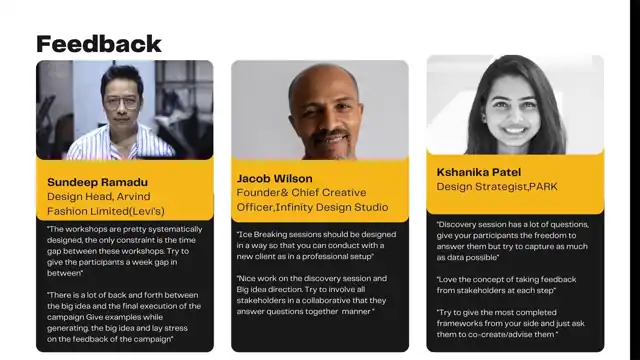
“a productive session filled with fun activities”
the client, on the workshop
client feedback
reflection
Facilitation is design work.
Nothing here needed an interface. The output was a room of people who could now see their own business from the customer's side — which is the same job as any research programme, run in two weeks instead of two quarters.
The full process
every board from the project, in order
process
Every board, in order.
The workshop from start to finish: the team, the store, the session plan, the ice breaker, the empathy maps, the assumption reversal, Six Thinking Hats, and the client's feedback.
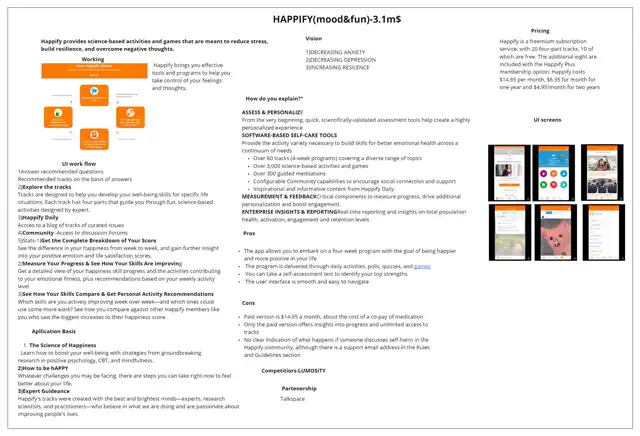
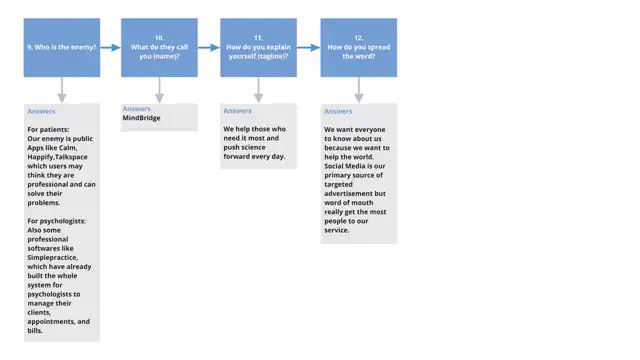
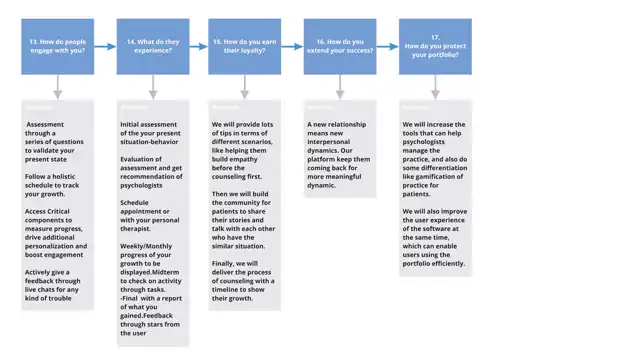
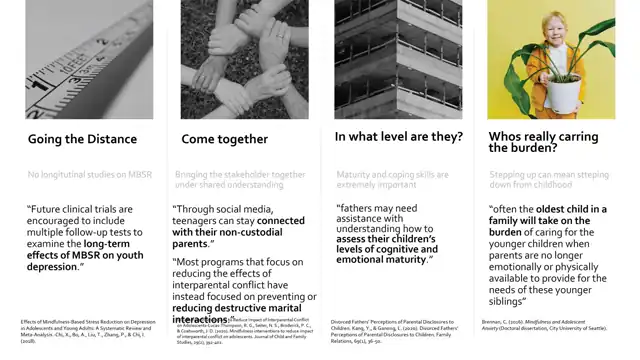
The project aimed to apply Design Thinking and Business Design methods and tools to solve the problem related to mental health patients suffering from divorce. This project was part of the one fo the freelance projects during my time in United States.
02 / the project
Problem
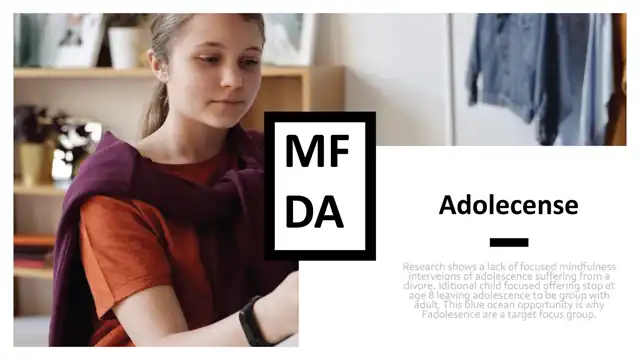
Empirical and academic evidence has documented that parental divorce or separation causes many adjustment problems for children and adolescents. The problems include depressed mood, academic difficulties (e.g., lower grades and school dropout), and disruptive behaviors(e.g., conduct and substance use problems).The adverse effects of divorce on mental health may stay with child/adolescent well into their adulthood.
03 / the project
What it is
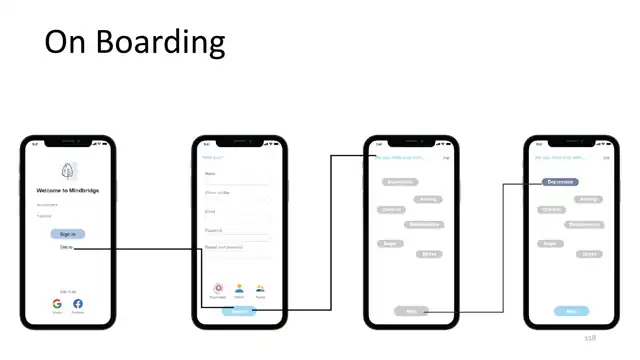
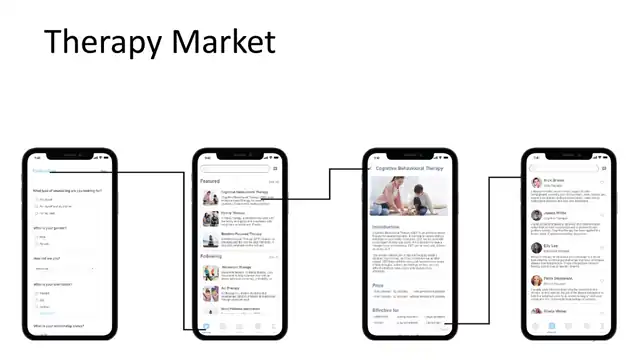
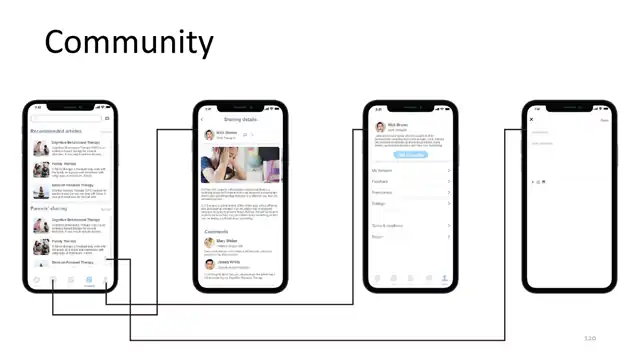
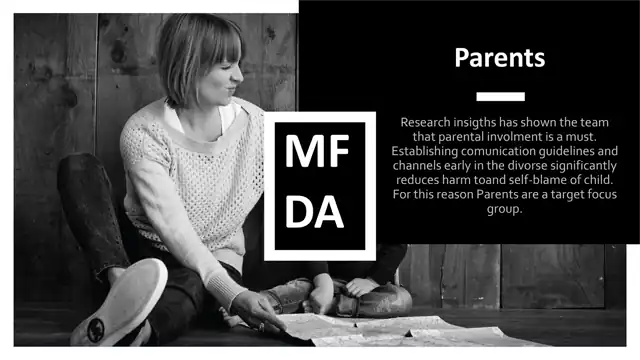
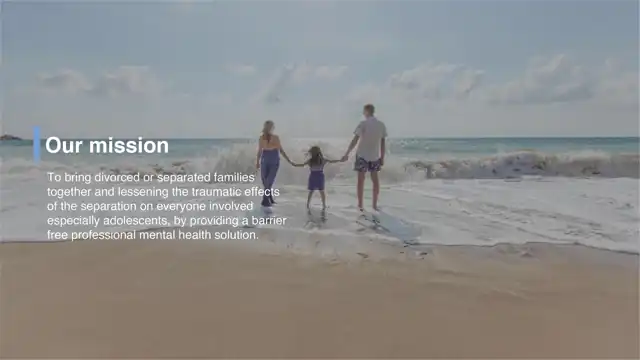
Mindbridge is the bridge to mental health. The Objective is to strategize and create a barrier-free professional mental health solution to bring divorced or separated families together and lessening the traumatic effects of the separation on everyone involved especially adolescents
04 / the project
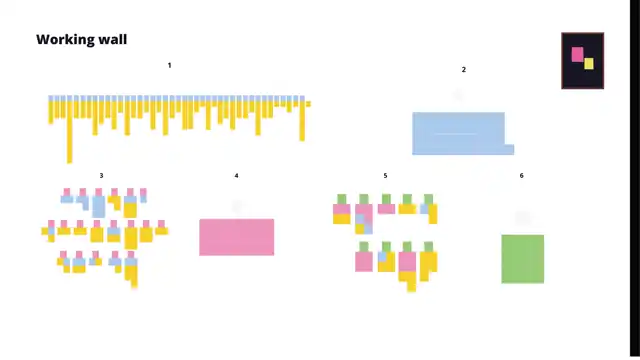
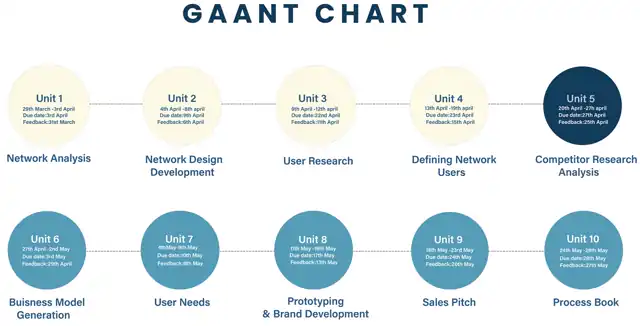
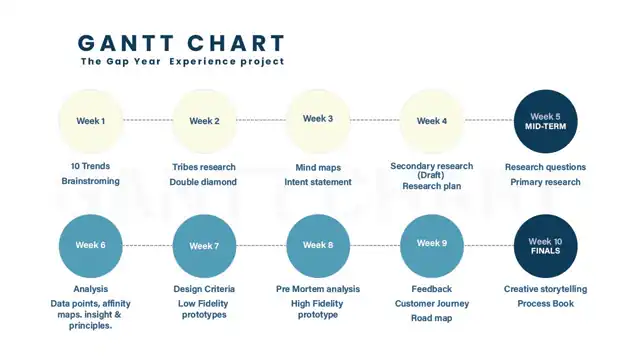
Gantt chart
Research process
01 / research process
Background
This project was done as a part of the course, Design Innovation Development, and Marketing Strategies. The project kick-started with a thorough market analysis to find an opportunity space for a new business. This was then followed by-
01Identifying the user groups,
02Conducting ethnographic research
03Analyzing the data,
04Defining the user needs,
05Competitor research,
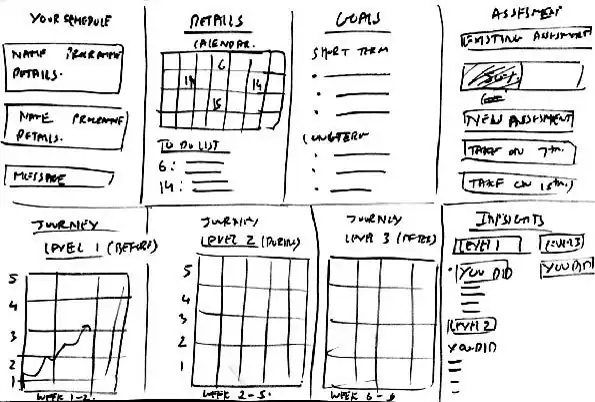
06Prototyping the user experience,
07Brand development
08Creating a business strategy
1 / 6
02 / research process
Network analysis
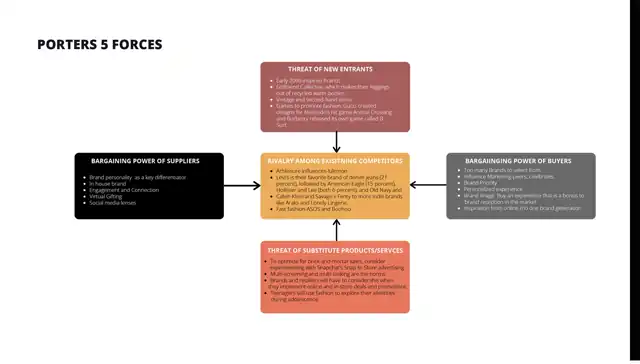
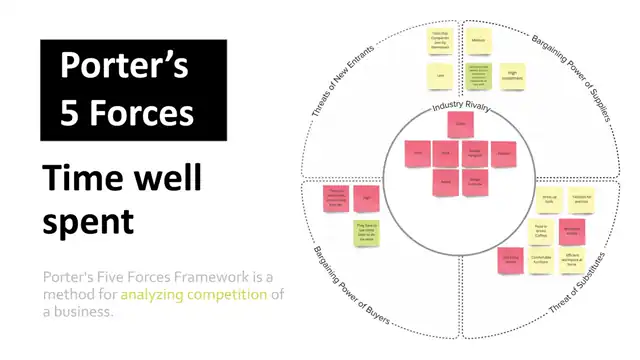
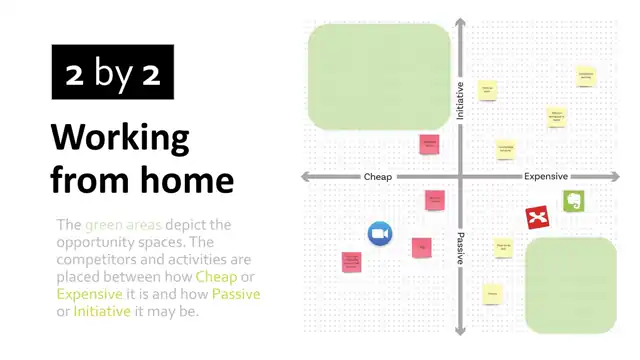
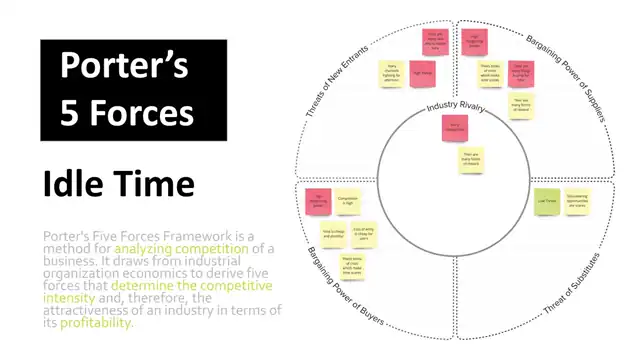
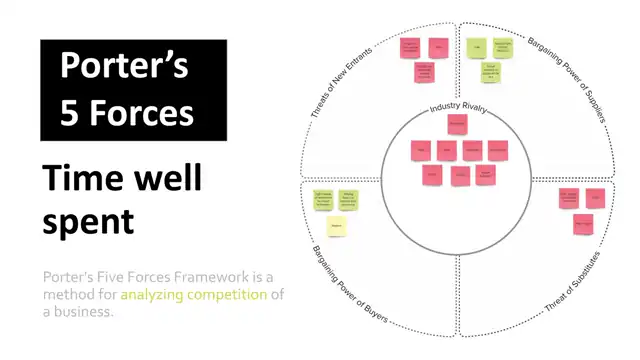
We used “Porter’s 5 Forces”: a tool for analyzing competition of a business. It draws from industrial organization economics to derive five forces that determine the competitive intensity and, therefore, the attractiveness of an industry in terms of its profitability.
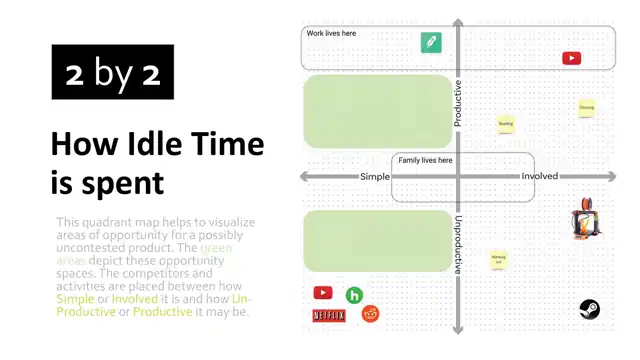
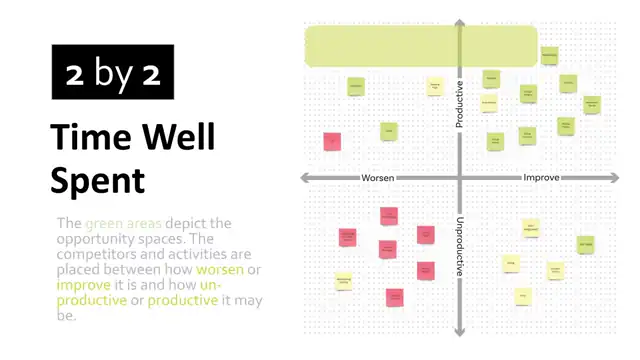
The 2x2 Matrix is a decision support technique where the team plots options on a two-by-two matrix
1 / 6
05 / research process
Umbrella question
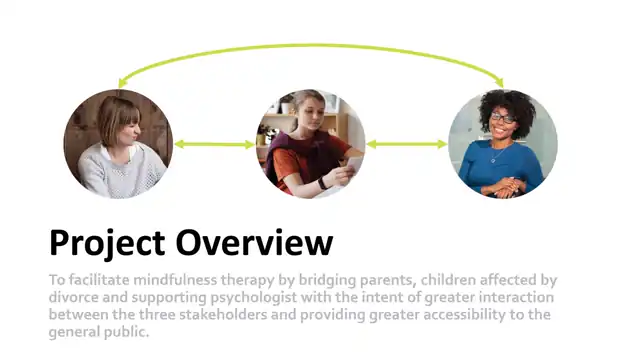
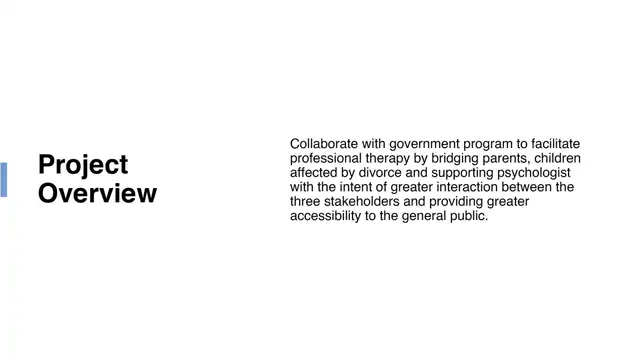
How might we use design thinking to facilitate mindfulness therapy by bridging parents, children affected by divorce and supporting psychologist with the intent of greater interaction between stakeholders and accesibilty to public ?
06 / research process
Secondary research
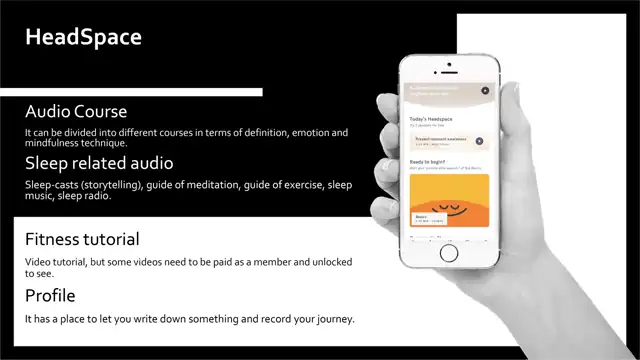
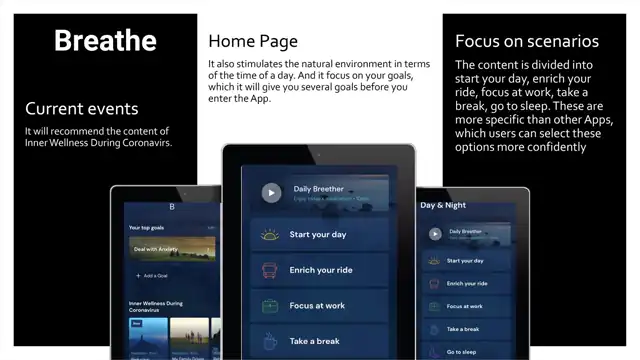
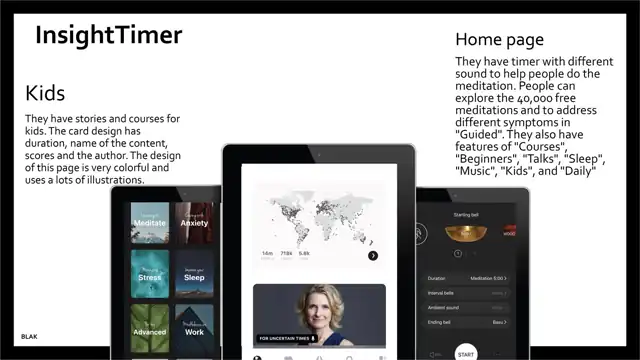
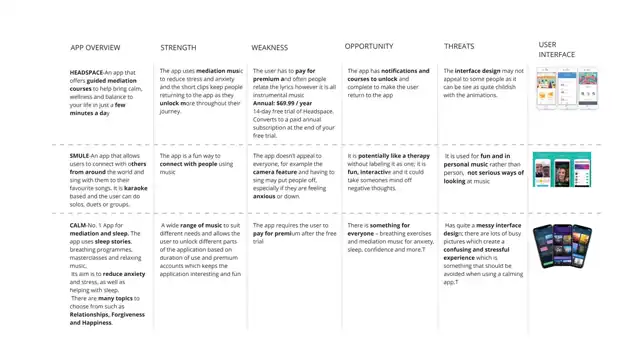
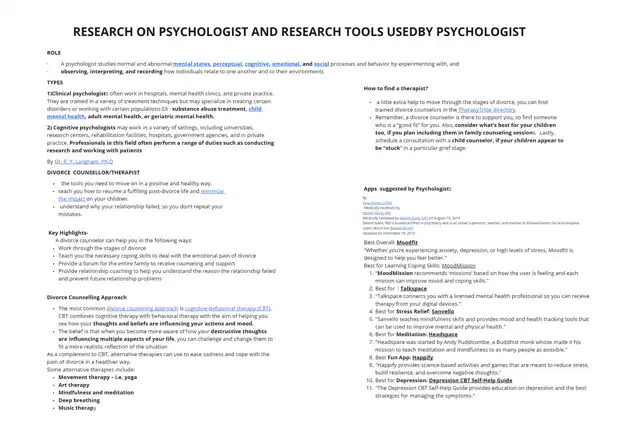
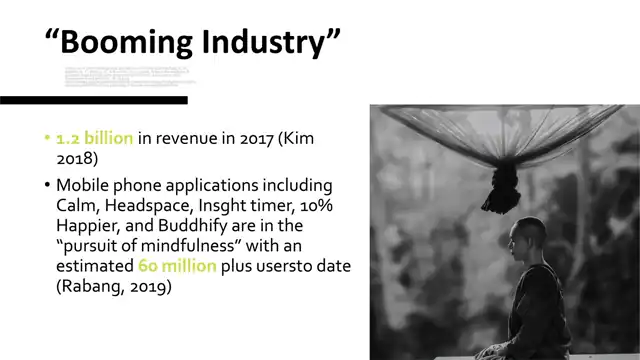
We conducted secondary research using tools like popular media scanning, publications research, and online research on existing Mindfulness trends and applications existing in the market.
1 / 9
07 / research process
Primary research
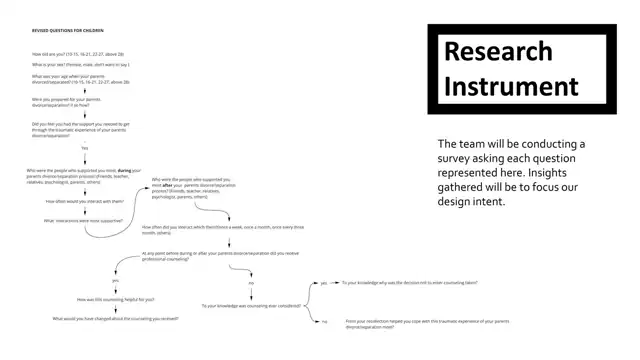
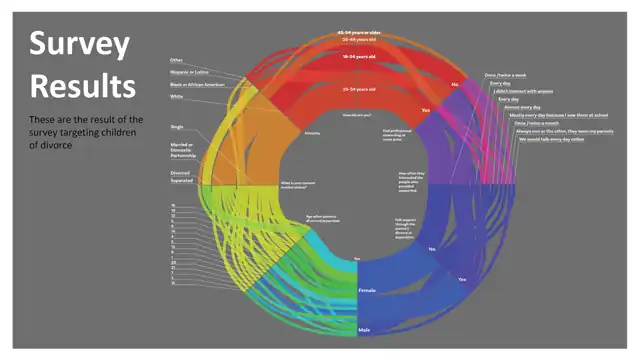
Two surveys were created to target adolescents of divorce and parents of divorce with the intent to acquire data that would support our design intent.
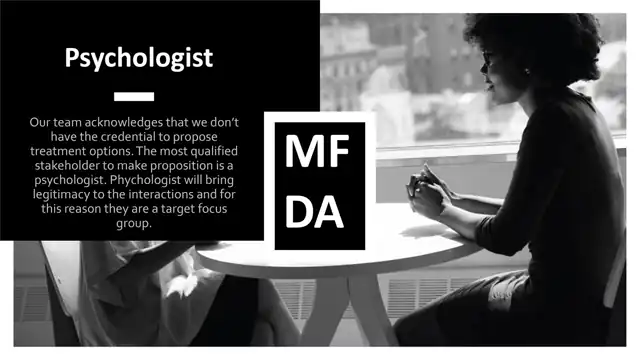
Our team was able to meet with two therapists, two divorced parents, and three adolescents of divorce. The interview was conducted using the framework of an empathy map.
1 / 2
08 / research process
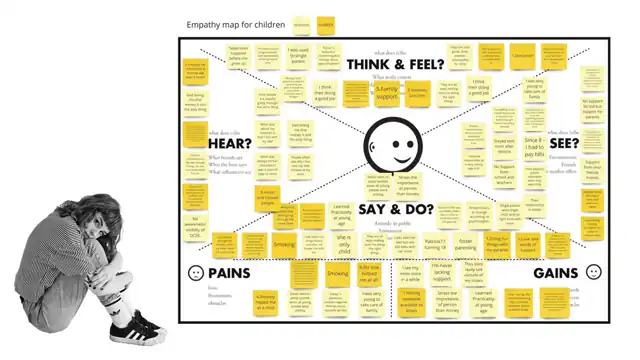
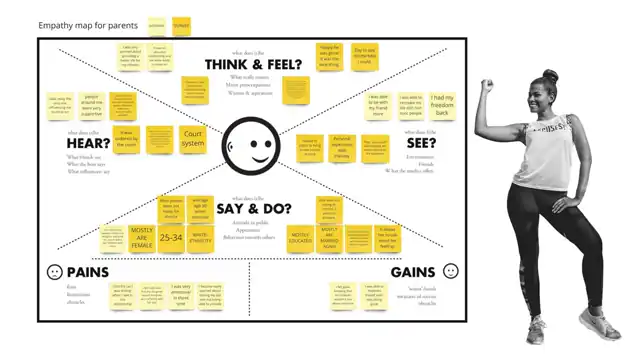
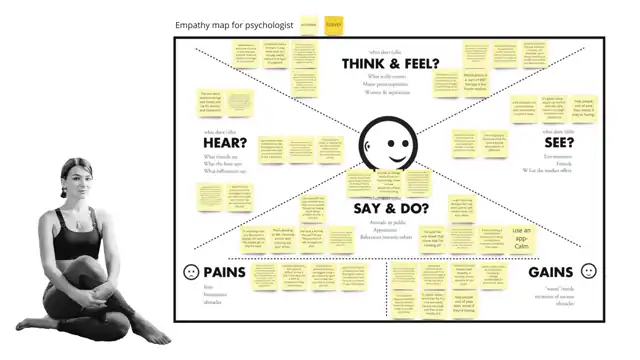
Empathy maps
An empathy map is a simple, easy-to-digest visual that captures knowledge about a user’s behaviors and attitudes.The mapping process helped us synthesize research observations and reveal deeper insights about our user’s needs
1 / 3
08 / research process
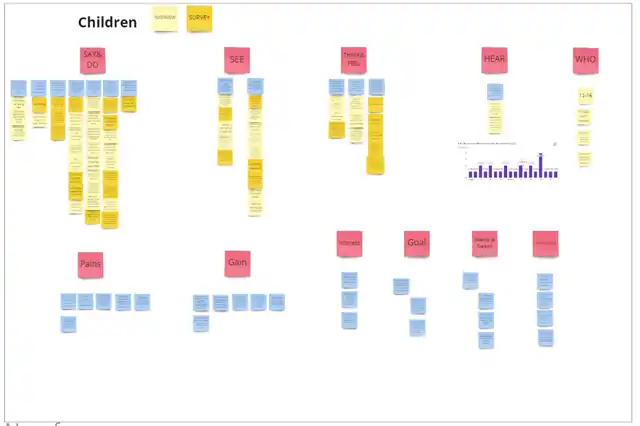
Synthesis
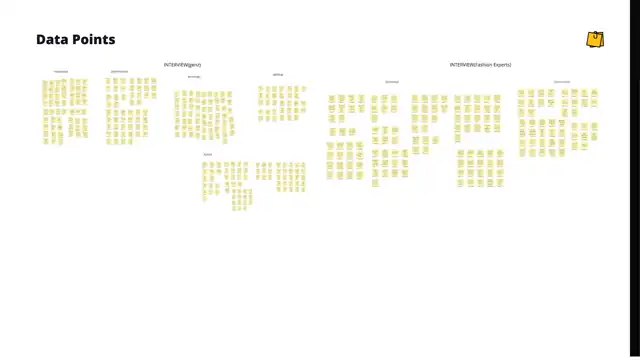
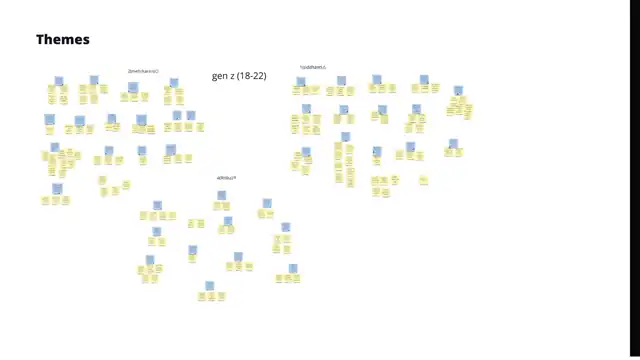
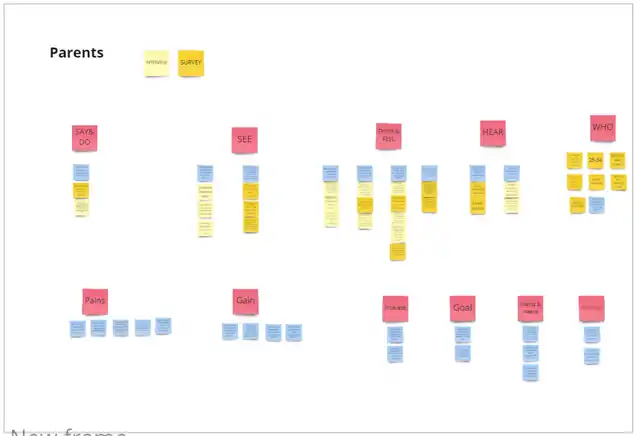
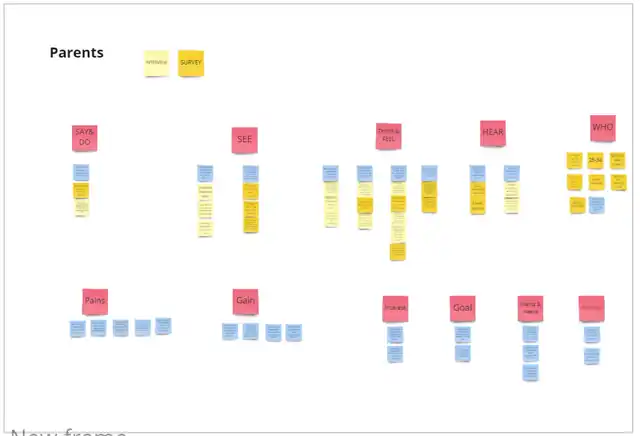
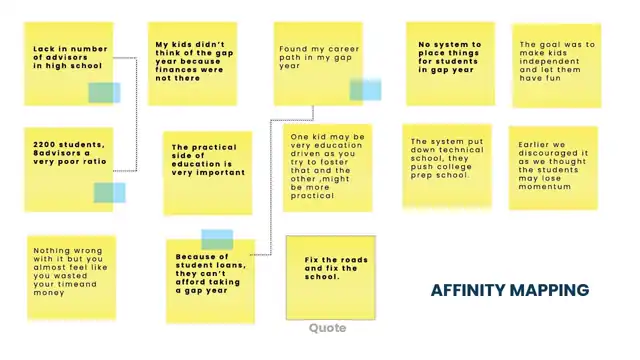
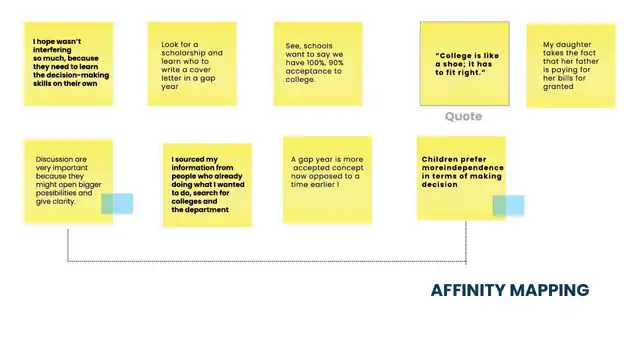
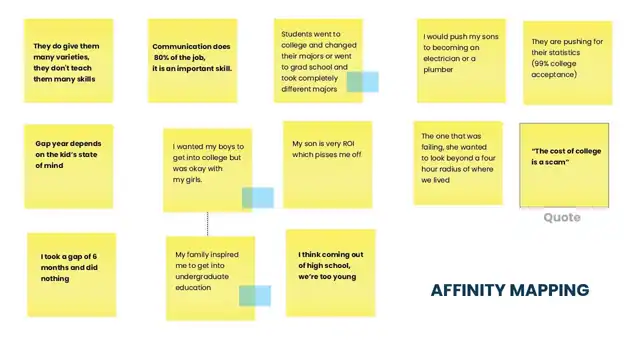
From the data collected from secondary and primary data, the qualitative and quantitative data were collected from various user groups. These insights were noted on YELLOW POST ITS. They were then combined into BLUE POST ITS. Then they were all grouped according to the five senses to use it in the Empathy Maps.
1 / 3
09 / research process
Personas
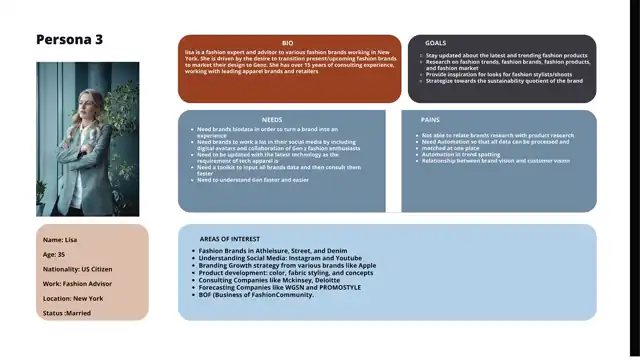
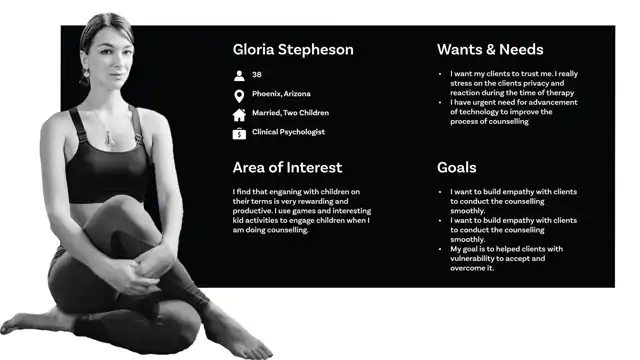
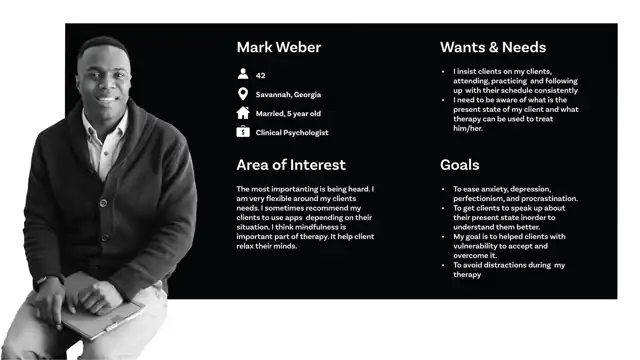
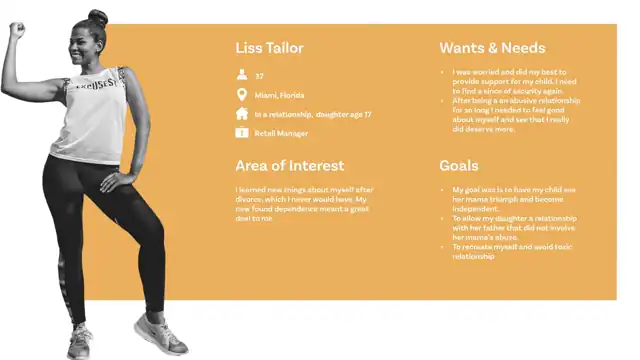
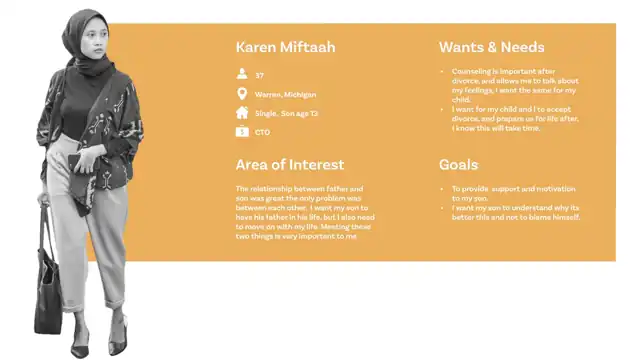
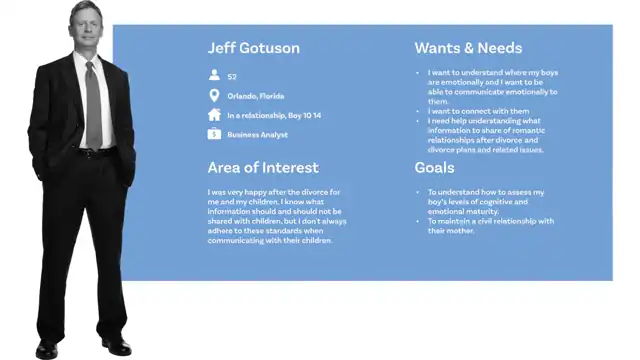
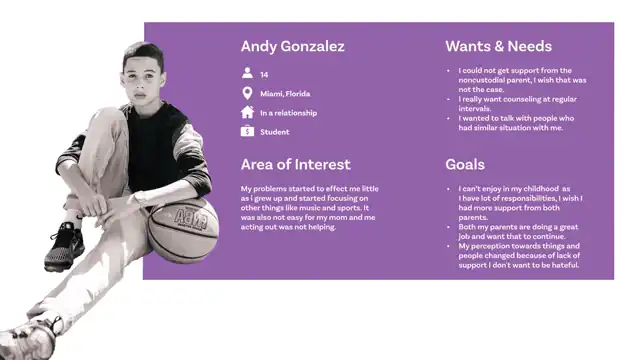
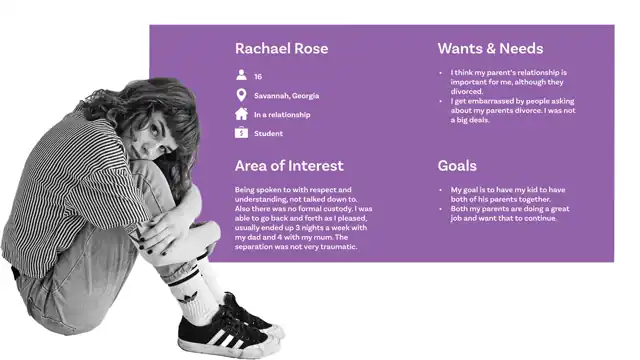
The team created personas that embodied each type of personality we encountered during interviews and survey responses.
1 / 7
10 / research process
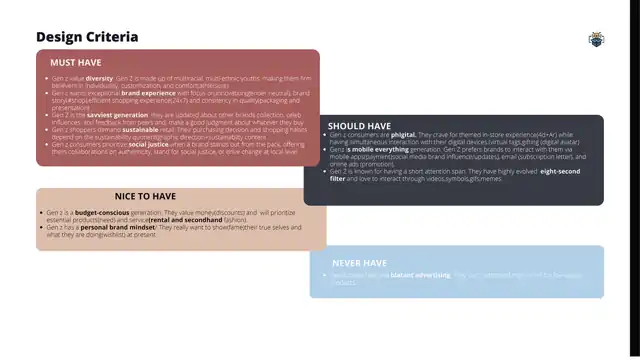
Design criteria
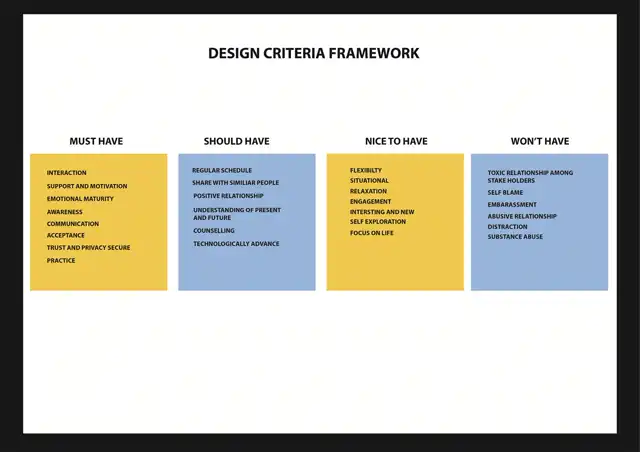
With the help of Personas and Synthesis, I was able to identify the "Pains and Gains" of our users and was able to come up with the Design Criteria for our product.
Business strategy
11 / business strategy
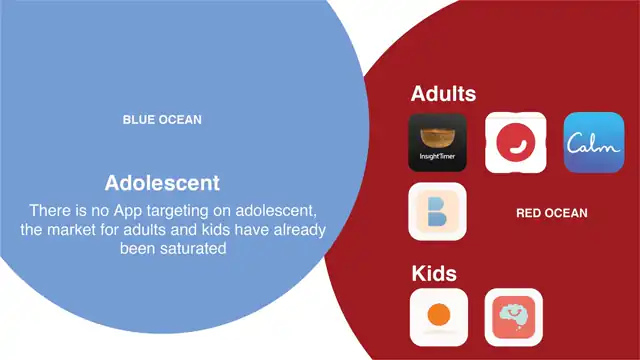
Blue ocean strategy
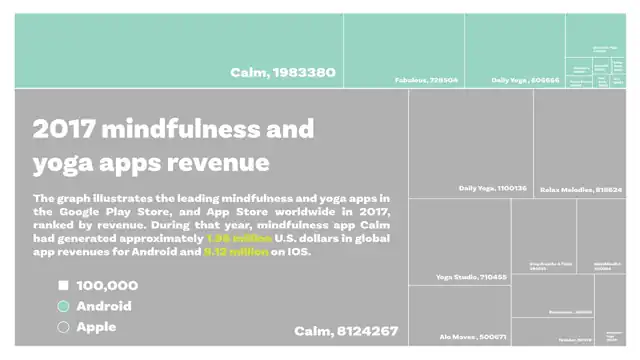
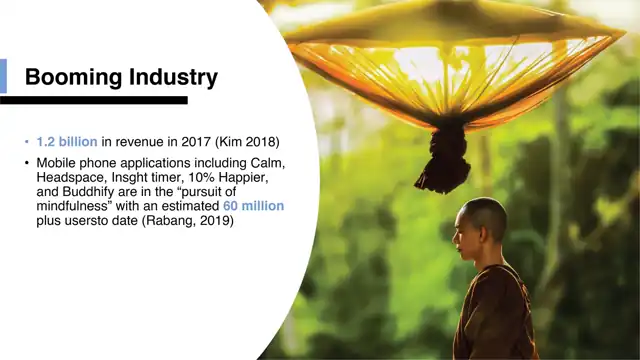
The goal of any blue ocean strategy is to search for and gain uncontested market space instead of engaging in traditional competition.We researched about the competitors yearly earnings and general mindfulness ,market earnings
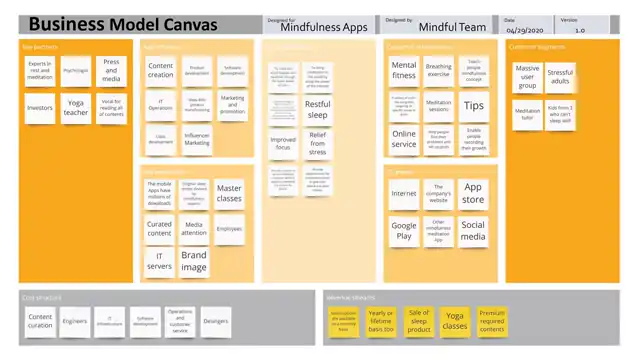
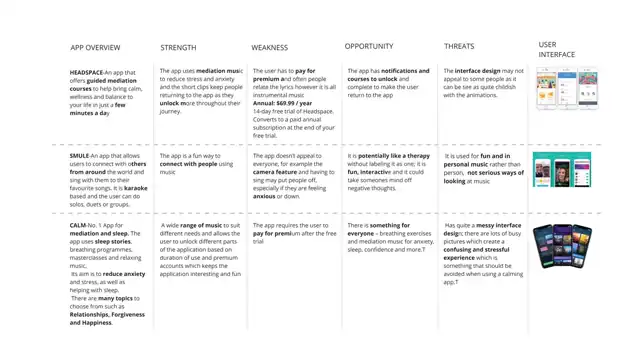
We then generated the business model canvas to an investigative tool for existing companies. The team studied mental health apps and a not for profit mental health organization to see the differences in how they operate.
12 / business strategy
Competitor research
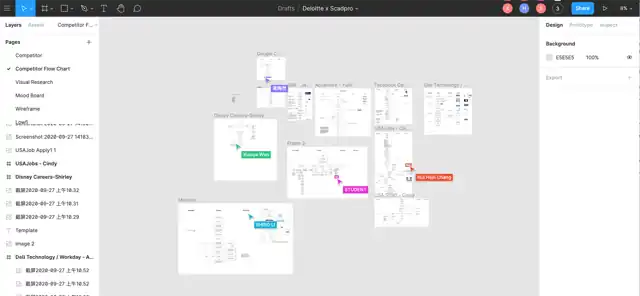
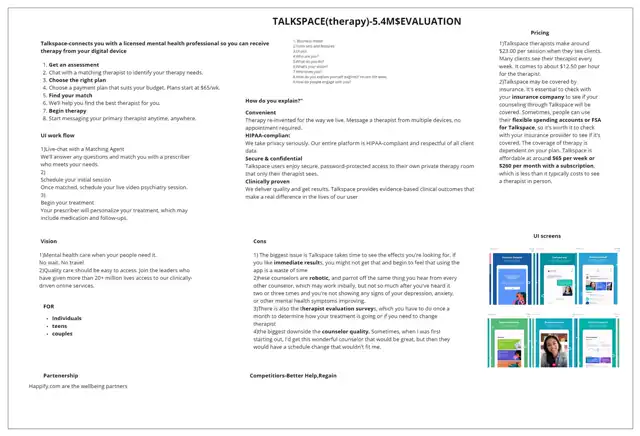
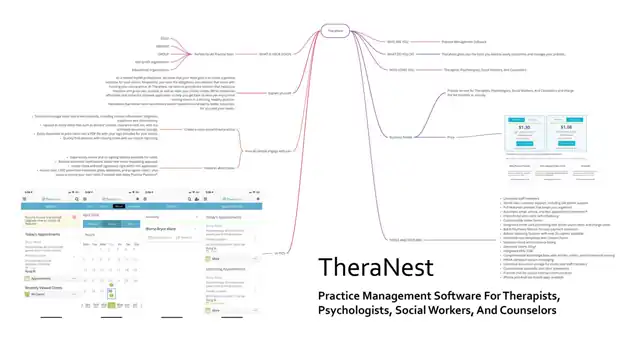
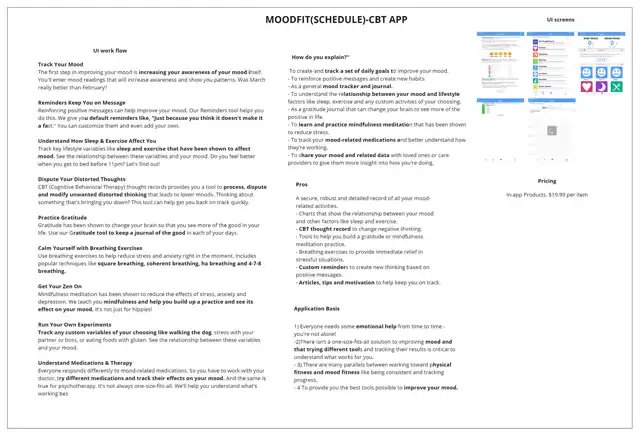
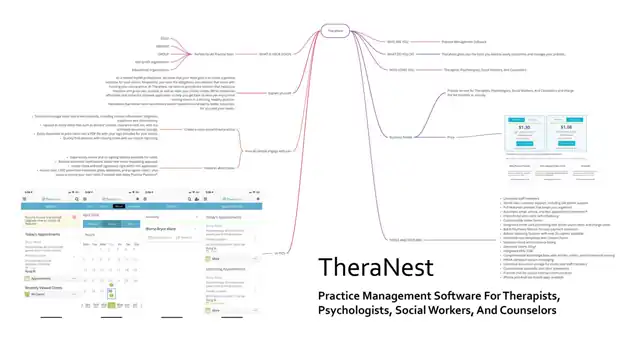
Our direction led to a gap in research software and psychologist tool. I conducted competitor research on three unique tools focused on these two areas. And applied our unique research method to understand the competition
1 / 6
13 / business strategy
Business model generation
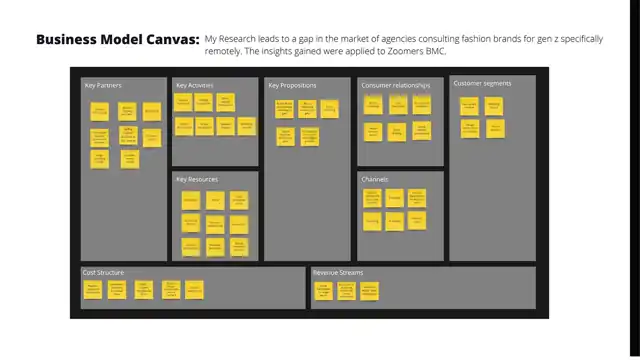
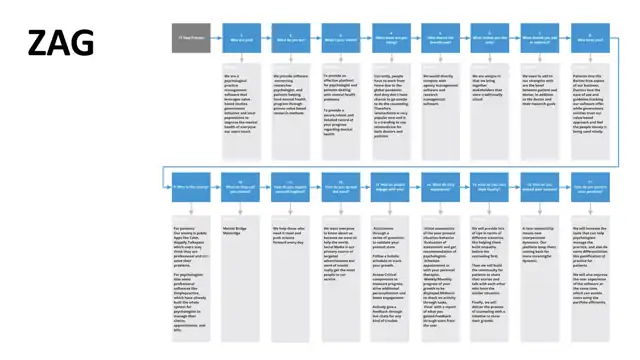
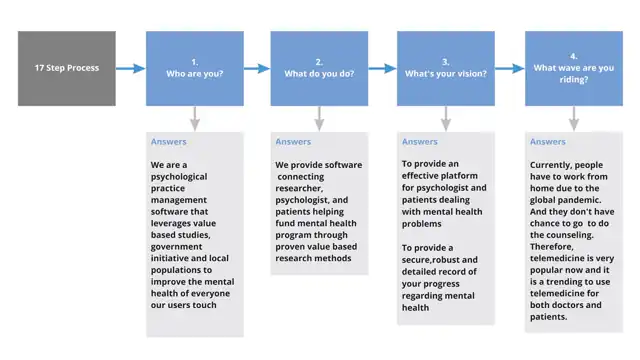
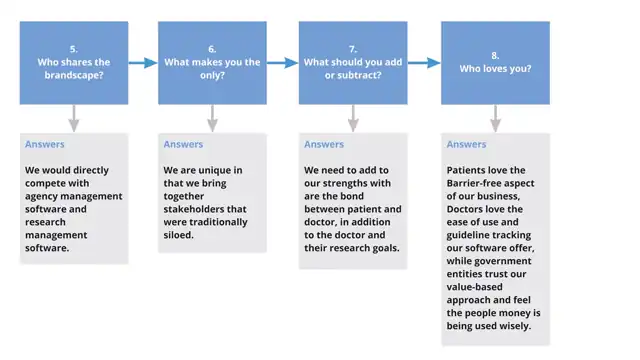
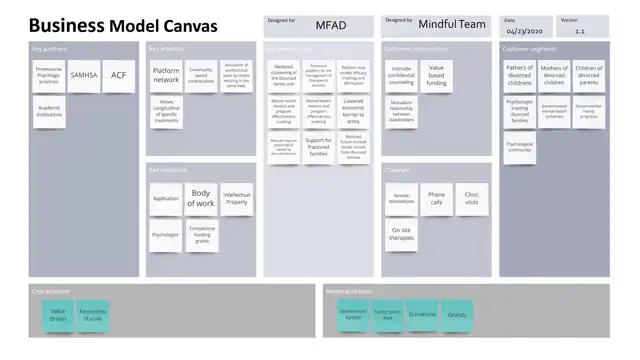
Using the business model canvas format from the above case studies, we developed our own service. The 17 steps for effective branding from “ZAG” by Marty Neumeier, was used to develop our concept branding.
1 / 5
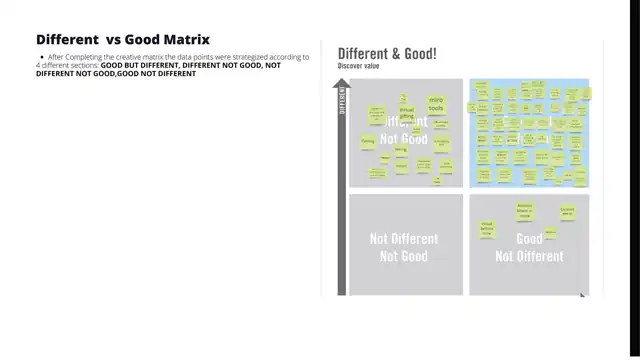
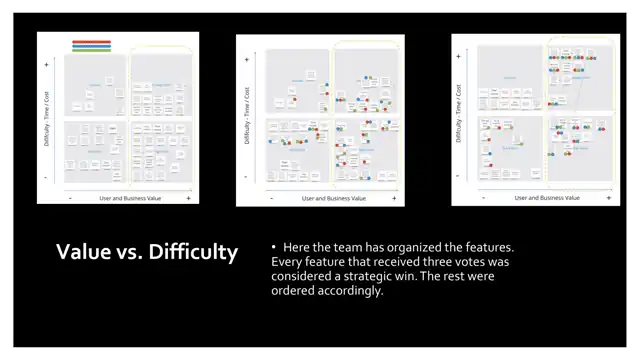
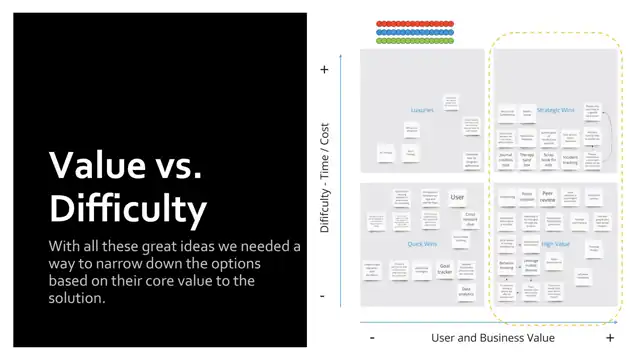
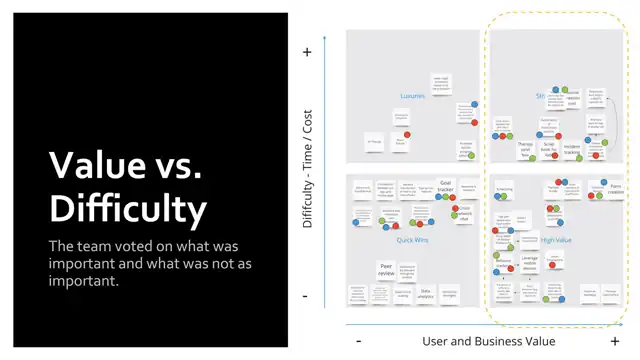
With all the features and Ideas generated we need a way to agree on what was essential and what was not. The four quadrants of the Value vs Difficulty model perfectly fit that need.
1 / 3
Our direction led to a gap in research software and psychologist tool. Our team conducted competitor research on three unique tools focused on these two areas. And applied our unique research method to understand the competition. The insights gained were applied to the MindBridge BMC
14 / business strategy
User needs
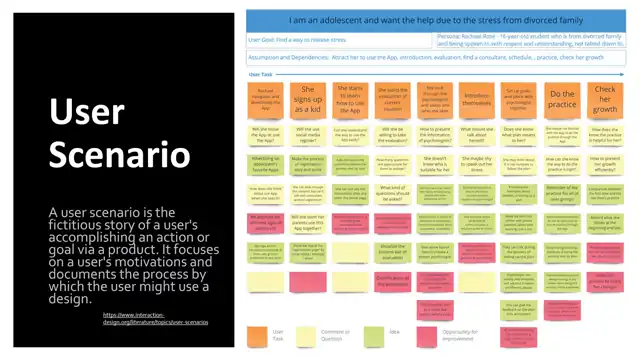
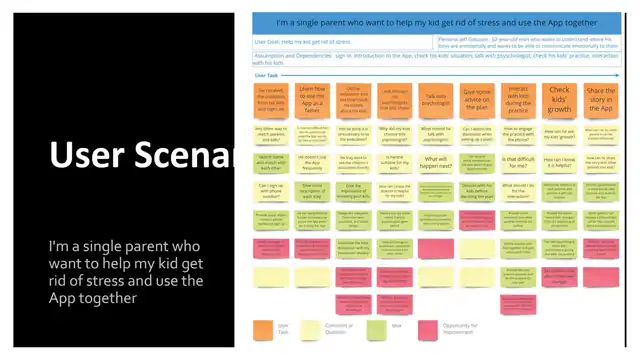
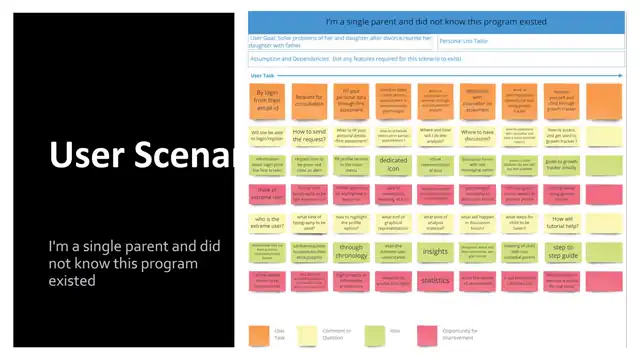
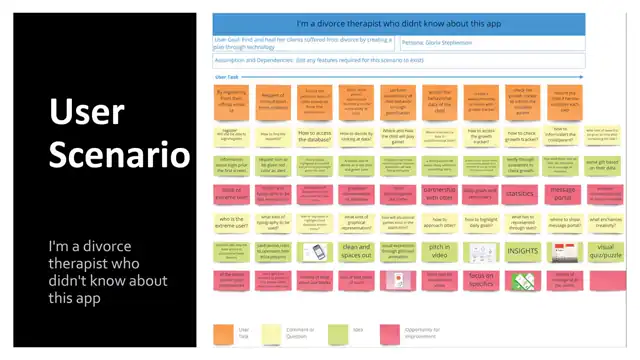
For understanding user needs we created user scenarios. A user scenario is the fictitious story of a user's accomplishing an action or goal via a product. It focuses on a user's motivations, and documents the process by which the user might use a design
1 / 4
business strategy
User journey
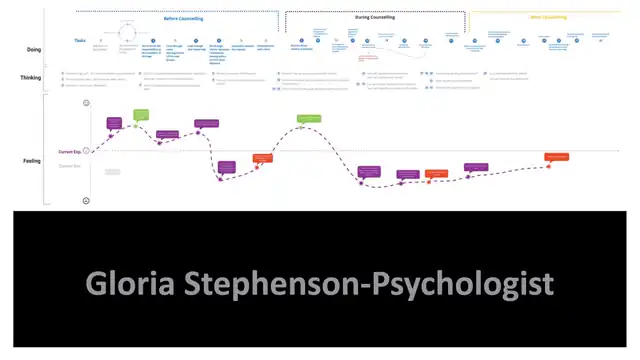
Once our team gathered insights from the user scenarios we assembled a journey to test the flow of our concept.
business strategy
Product vision board
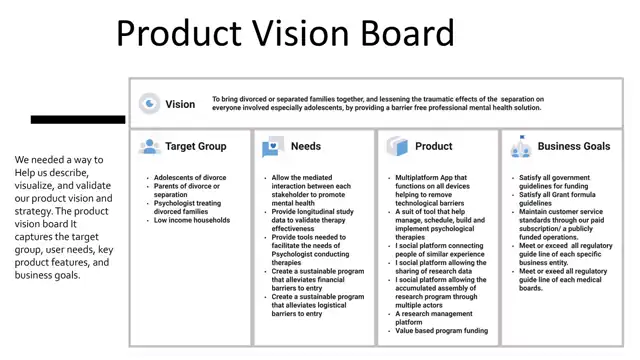
Now that our team had an understanding of the needs and goals of our users, we put together or product vision to encapsulate the concept direction.
business strategy
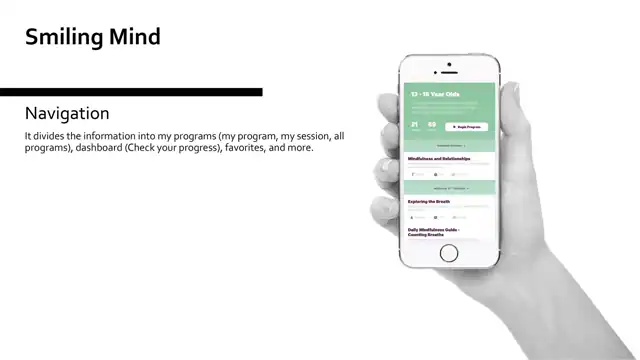
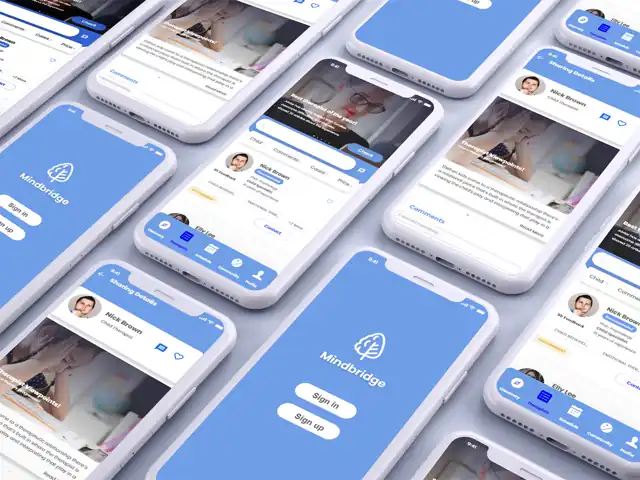
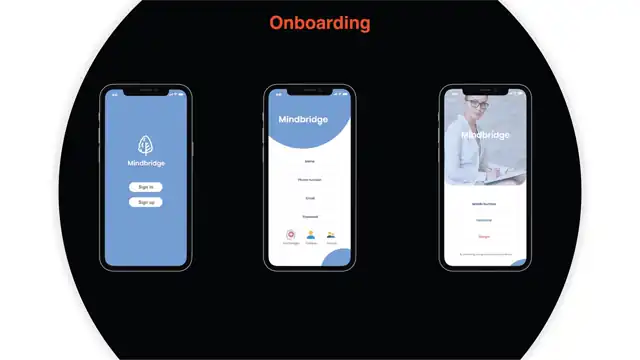
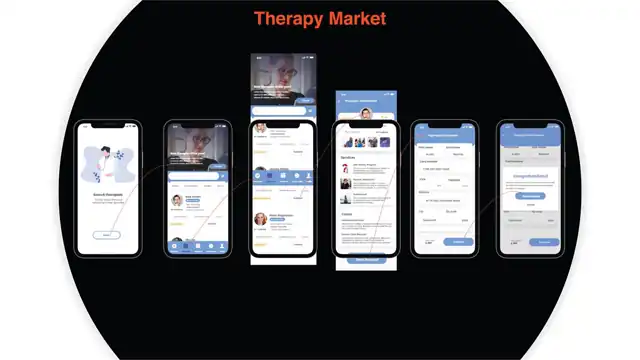
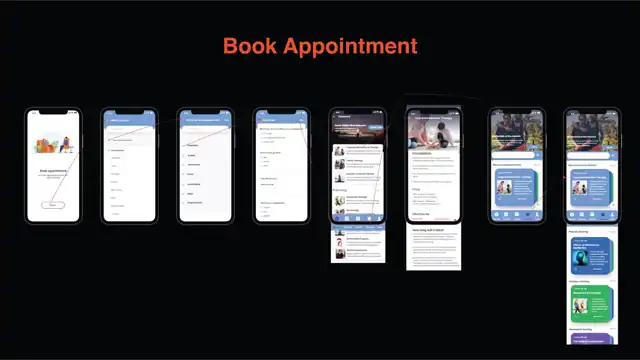
Mindbridge: the app
15 / business strategy
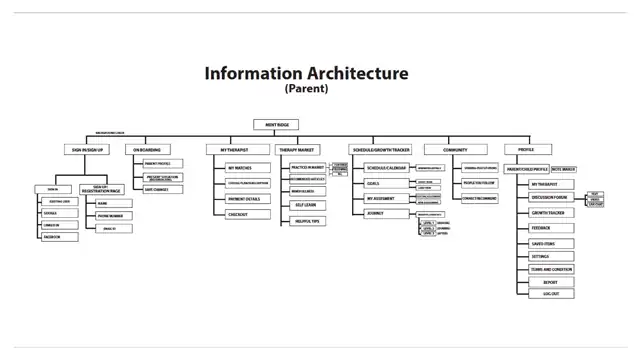
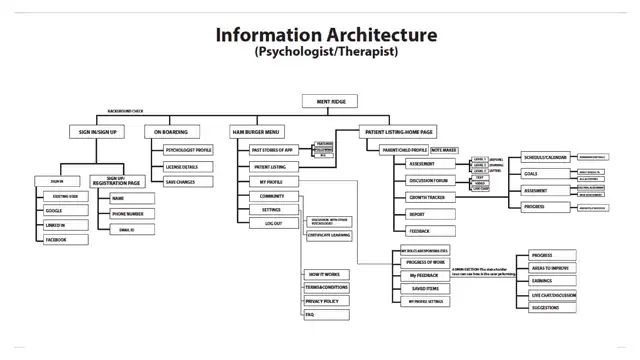
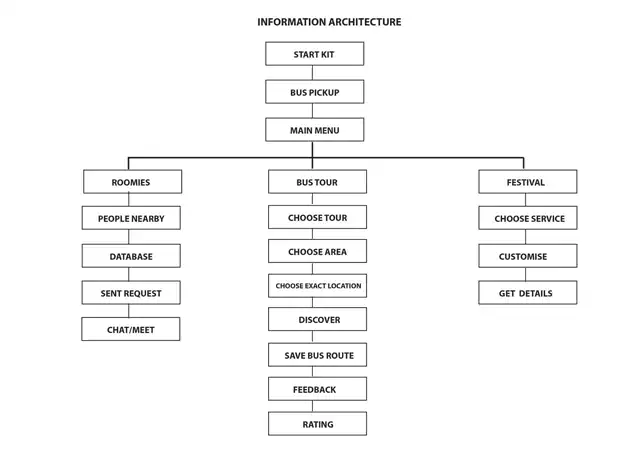
Information architecture
IA is the art and science of organizing and labelling websites, intranets, online communities, and software to support usability and findability. According to the customer journey, I started creating the hierarchy of the application.
1 / 2
Prototyping
protoyping
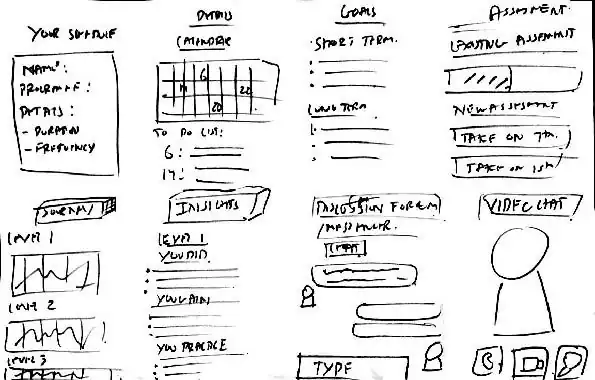
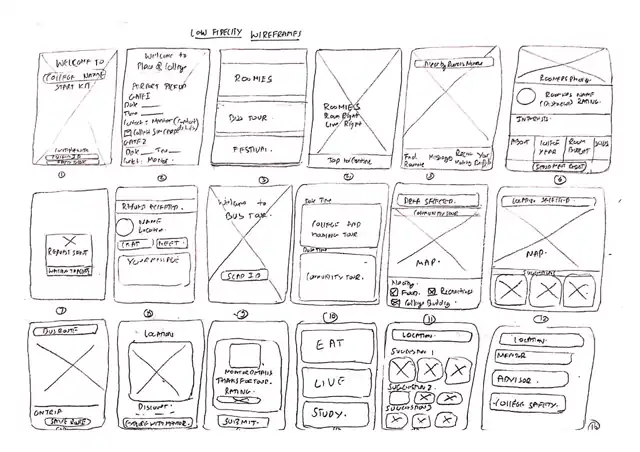
Paper prototypes
After creating the information architecture, I began to create basic sketches of a near-final prototype.
1 / 2
Design process
17 / design process
Wireframing
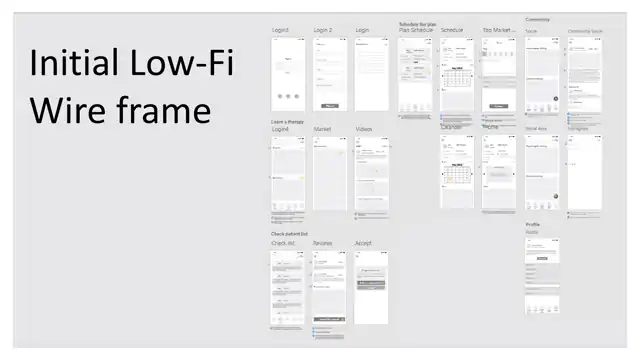
The wireframe is a page schematic or screen blueprint, is a visual guide that represents the skeletal framework of an application. According to the sketches, we started creating the skeletal of the application.
design process
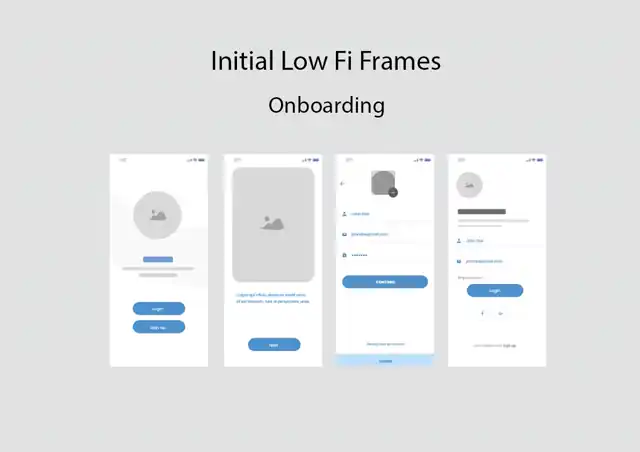
Low fidelity wireframes
I began rapidly ideating a number of concepts before narrowing in on one and creating user flows, user stories and storyboards to define user requirements
1 / 3
design process
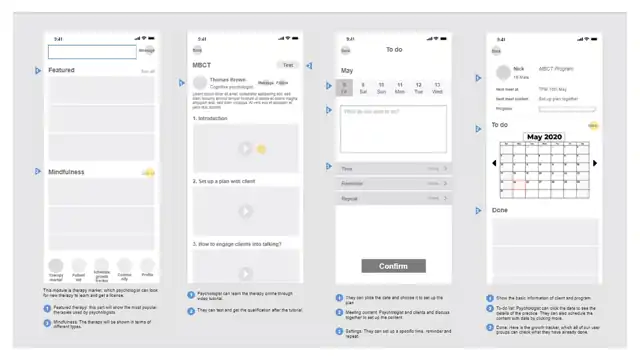
Medium fidelity wireframes
Once our initial prototype was heavily tested our team began to assemble what would become a near-final prototype.
1 / 4
design process
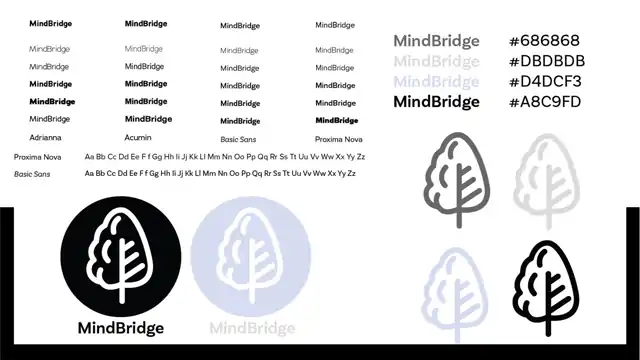
Branding
While none of our team members were marketers we gave the branding the old college try.
design process
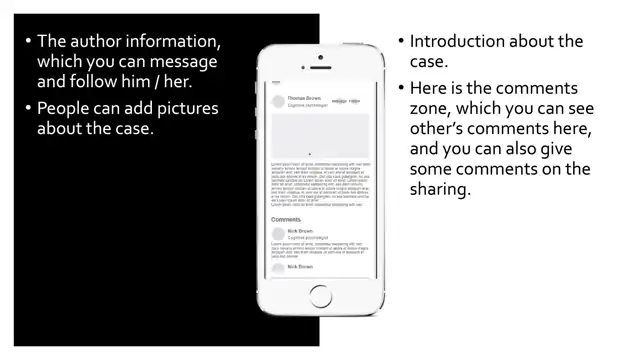
High fidelity wireframes
After the testing of the mid-fi frames within our personas in the real world, I finally made out hi-fi screens.
1 / 4
19 / design process
App demonstration
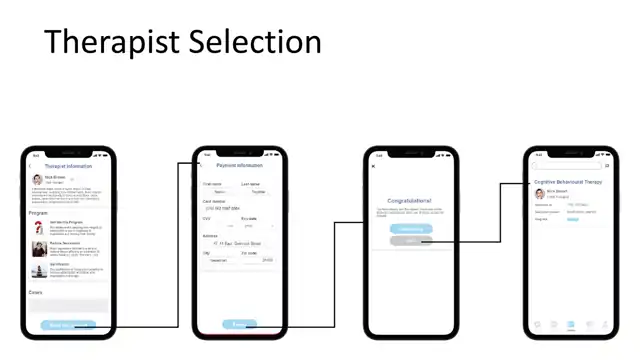
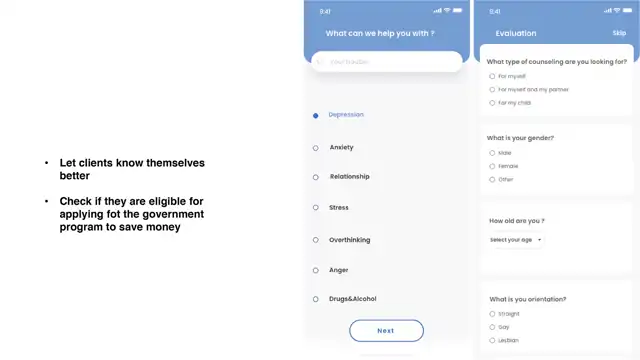
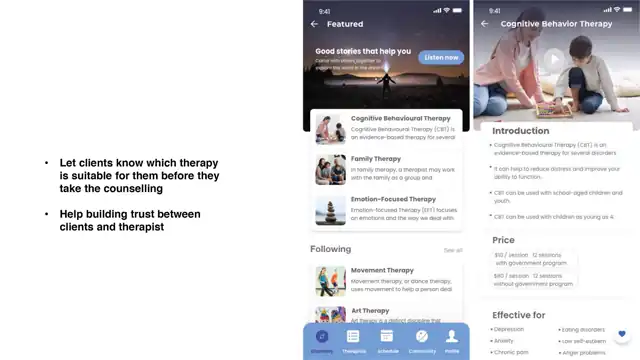
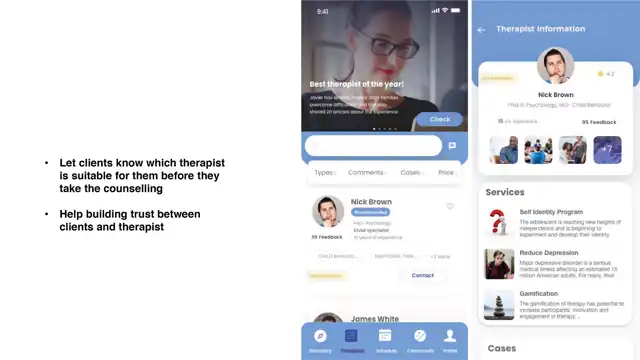
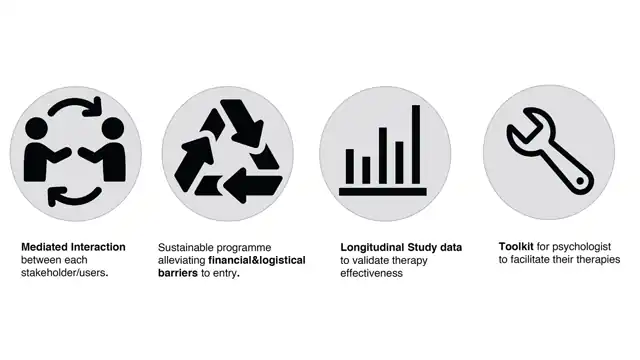
Following is the app demonstration of the Mindbridge specially made for parents and adolescent suffering from divorce and other mental health issues. This app will help them by providing-
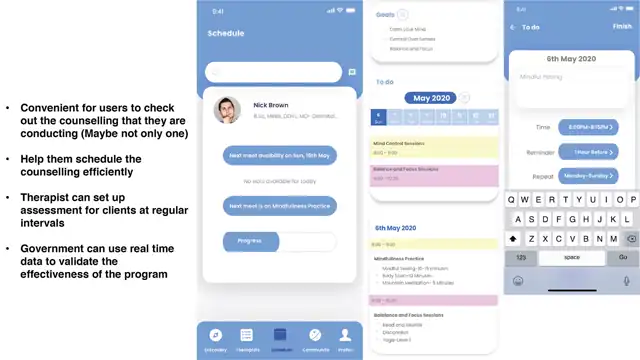
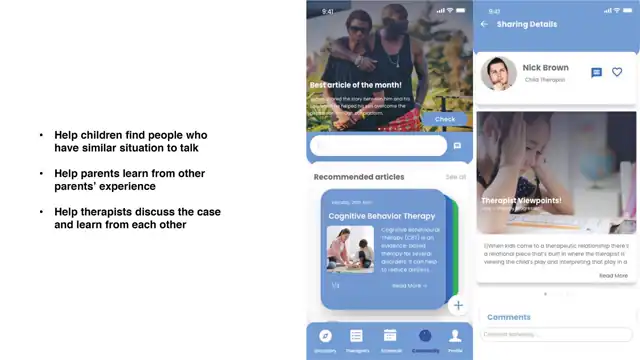
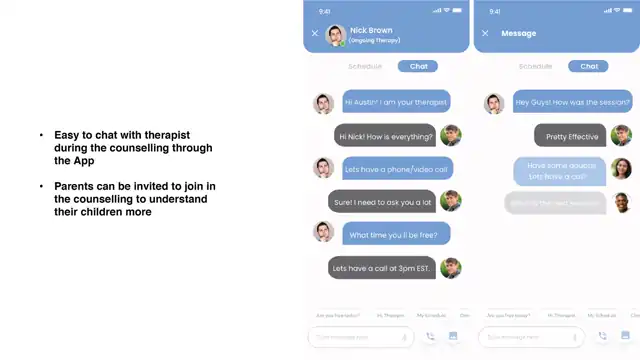
01Mediated interaction between parents, children, and psychologists
02Sustainable programme alleviating financial &logistical barriers to entry.
03Longitudinal Study data to validate therapy effectiveness
04Toolkit for the psychologist to facilitate their therapies.
Project management, User research, Conceptualization, Strategy, Business Design, Mobile Application Development.
Project navigation
project navigation
What it is
Mindbridge is the bridge to mental health. The Objective is to strategize and create a barrier-free professional mental health solution to bring divorced or separated families together and lessening the traumatic effects of the separation on everyone involved especially adolescents
Storytelling is used in design as a technique to get insight into users, build empathy and access them emotionally. It involves -
01Setting Context (tell me why this is important)
02Showing the Solution (why does this solve the problem)
03Defining Success (how are we going to know if this works)
In this case, we made an experiential video by taking the case of one of the personas
Gantt chart
Background
02 / background
Network analysis
This project was done as a part of the course, Design Innovation Development and Marketing Strategies. The project kick-started with a thorough market analysis to find an opportunity space for a new business. This was then followed by-
01Identifying the user groups,
02Conducting ethnographic research
03Analyzing the data,
04Defining the user needs,
05Competitor research,
06Prototyping the user experience,
07Brand development
08Creating a business strategy
1 / 6
We used “Porter’s 5 Forces”: a tool for analyzing competition of a business. It draws from industrial organization economics to derive five forces that determine the competitive intensity and, therefore, the attractiveness of an industry in terms of its profitability.
The 2x2 Matrix is a decision support technique where the team plots options on a two-by-two matrix
1 / 6
Network design development
04 / network design development
Defining users
We conducted secondary research using tools like popular media scanning, publications research and online surveys and also identified problems in different aspects like social, economic, personal, tech and information while in the process of transition.
We conducted secondary research using tools like popular media scanning, publications research and online surveys and also identified problems in different aspects like social, economic, personal, tech and information while in the process of transition.
1 / 7
05 / network design development
Umbrella question
How might we use design thinking to facilitate mindfulness therapy by bridging parents, children affected by divorce and supporting psychologist with the intent of greter interaction between stakeholders and accesibilty to public ?
1 / 5
07 / network design development
Primary research
Two surveys were created to target adolescents of divorce and parents of divorce with the intent to acquire data that would support our design intent.
Our team was able to meet with two therapists, two divorced parents and three adolescents of divorce. The interview was conducted using the framework of an empathy map.
1 / 2
08 / network design development
Synthesis
From the data collected from secondary and primary data, the qualitative and quantitative data collected from various user groups. These insights were noted on YELLOW POST ITS. They were then combined into BLUE POST ITS. Then they were all grouped according to the five senses to use it in the Empathy Maps.
1 / 3
10 / network design development
Design criteria
With the help of Personas and Synthesis, I was able to identify the "Pains and Gains" of our users and was able to come up with the Design Criteria for our product.
1 / 2
06 / network design development
Secondary research
We conducted secondary research using tools like popular media scanning, publications research and online research on existing Mindfulness trends and applications existing in the market.
1 / 9
08 / network design development
Empathy maps
An empathy map is a simple, easy-to-digest visual that captures knowledge about a user’s behaviours and attitudes.The mapping process helped us synthesize research observations and reveal deeper insights about our user’s needs
1 / 3
09 / network design development
Defining users
The team created personas that embodied each type of personality we encountered during interviews and survey responses.
1 / 7
11 / network design development
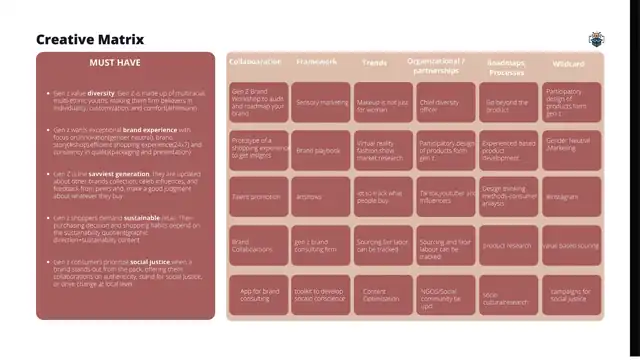
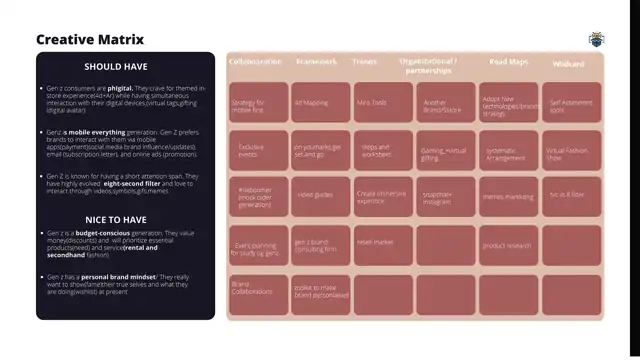
Creative matrix &relatonship ecosystem
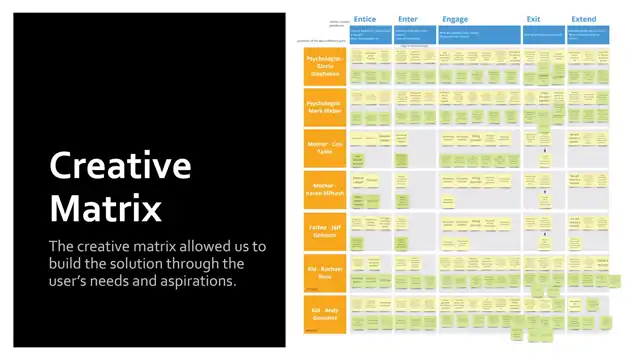
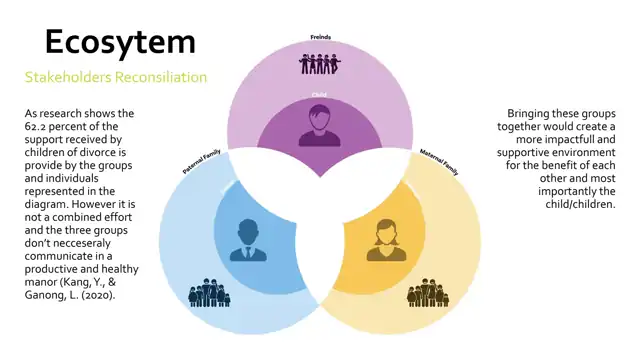
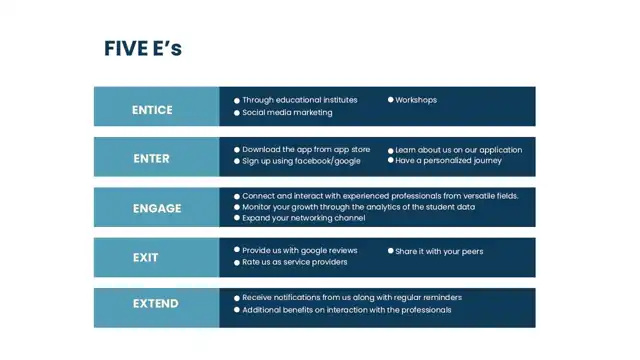
This phase includes conducting sessions for brainstorming and sketching out the ideas. Using a creative matrix chart, a designed concepts for each Persona as per the 5 E’s - Entice, Enter, Engage, Exit and Extend.
1 / 2
Business design
12 / business design
Blue ocean strategy
The goal of any blue ocean strategy is to search for and gain uncontested market space instead of engaging in traditional competition.
We researched about the competitors yearly earnings and general mindfulness ,market earnings
1 / 2
We then generated the business model canvas to an investigative tool for existing companies. The team studied mental health apps and a not for profit mental health organization to see the differences in how they operate.
13 / business design
Competitor research
Our direction led to a gap in research software and psychologist tool. I conducted competitor research on three unique tools focused on these two areas. And applied our unique research method to understand the competition
1 / 2
1 / 4
14 / business design
Business model generation
Using the business model canvas format from the above case studies, we developed our own service. The 17 steps for effective branding from “ZAG” by Marty Neumeier, was used to develop our concept branding.
1 / 5
Our direction led to a gap in research software and psychologist tool. Our teamconducted competitor research on three unique tools focused on these two areas. And applied our unique research method to understand the competition. The insights gained were applied to the MindBridge BMC
With all the features and Ideas generated we need a way to agree on what was essential and what was not. The four quadrants of the Value vs Difficulty model perfectly fit that need.
1 / 3
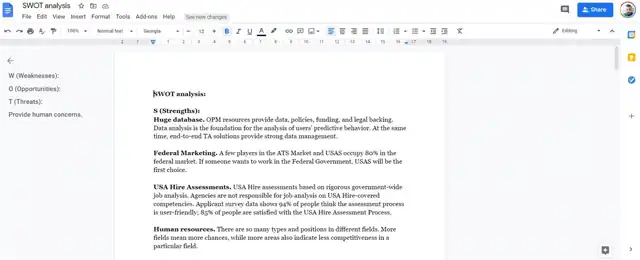
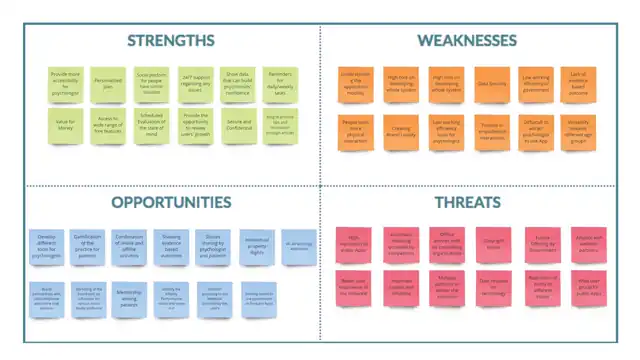
After creating the business model canvas we did an indepth SWOT Analysis to understand where all we can improve and expand.
14 / business design
User needs
For understanding user needs we created user scenarios. A user scenario is the fictitious story of a user's accomplishing an action or goal via a product. It focuses on a user's motivations, and documents the process by which the user might use a design
1 / 4
User journey
user journey
Product vision board
Once our team gathered insights from the user scenarios we assembled a journey to test the flow of our concept.
Now that our team had an understanding of the needs and goals our users, we put together or product vision to encapsulate the concept direction.
user journey
Mindbridge: the app
Paper prototypes
paper prototypes
Information architecture
IA is the art and science of organizing and labelling websites, intranets, online communities and software to support usability and findability. According to the customer journey, I started creating the hierarchy of the application.
1 / 2
1 / 2
After creating the information architecture, I began to create basic sketches of a near-final prototype.
Design process
15 / design process
Wireframing
The wireframe is a page schematic or screen blueprint, is a visual guide that represents the skeletal framework of an application.. According to the sketches, we started creating the skeletal of the application.
Low fidelity wireframes
low fidelity wirerames
Medium fidelity wireframes
i began rapidly ideating a number of concepts before narrowing in on one and creating user flows, user stories and storyboards to define user requirements
Once our initial prototype was heavily tested our team began to assemble what would become a near final prototype.
1 / 3
1 / 4
low fidelity wirerames
Branding
While none of our team members were marketers we gave the branding the old college try.
low fidelity wirerames
High fidelity wireframes
After the testing of the mid-fi frames within our personas in the real world,I finally made out hi-fi screens.
1 / 4
16 / low fidelity wirerames
App demonstration
Following is the app demonstration of the Mindbridge specially made for parents and adolescent suffering from divorce and other mental health issues. This app will help them by providing-
01Mediated interaction between parents, children and psychologists
02Sustainable programme alleviating financial &logistical barriers to entry.
03Longitudinal Study data to validate therapy effectiveness
04Toolkit for the psychologist to facilitate their therapies.
16 / low fidelity wirerames
Sales pitch
After the whole process , we made a sales presentation in order to persuade someone to sell our app by highlighting the key features of the app-
Project management, User research, Conceptualization, Strategy, Visual storytelling, Mobile Application Development.
The project
01 / the project
Overview
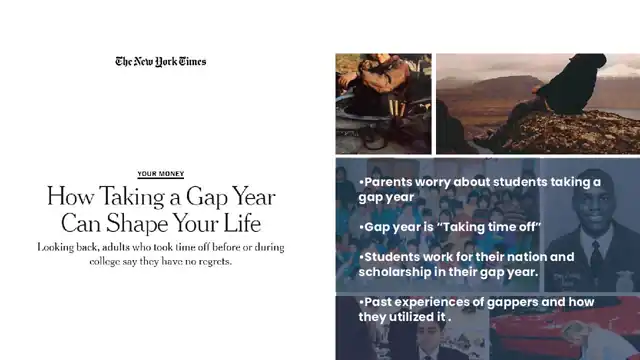
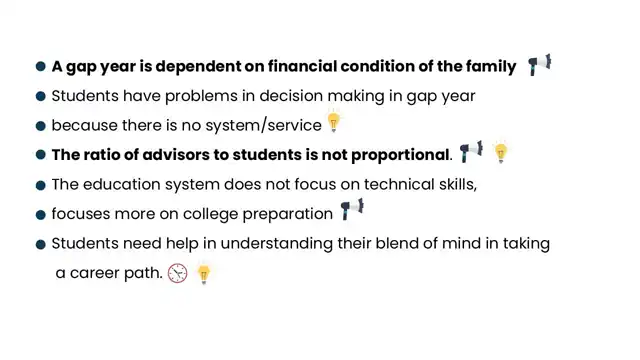
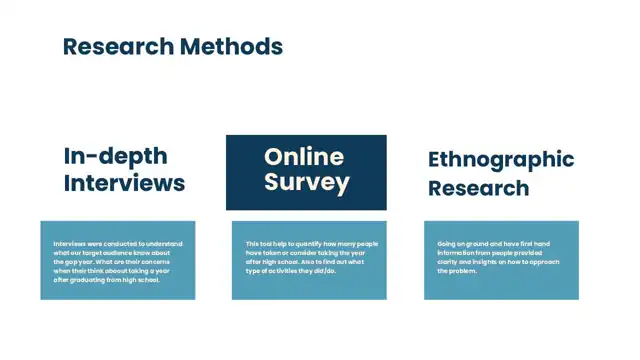
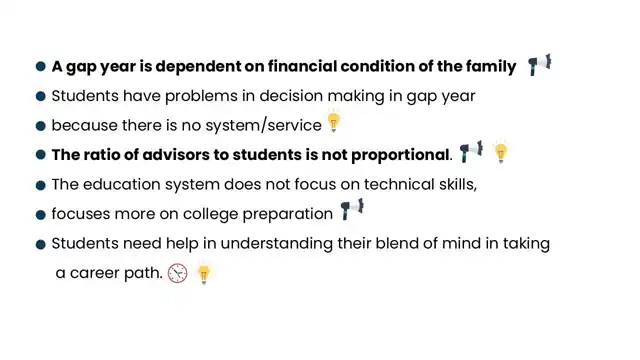
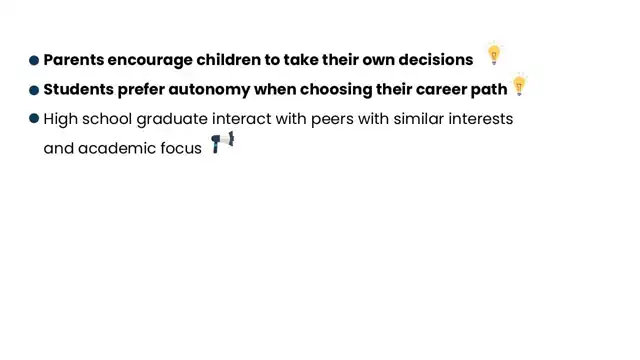
This project was done as a freelance project for one of the clients in the United States. It is being conducted to strategize a productive transition for students from high school to college during a gap year by developing desired design prototypes and solutions using storytelling from the insights of the research. This research contains key findings and synthesized insights found from students who are in the process of planning their career journey.
02 / the project
What it is
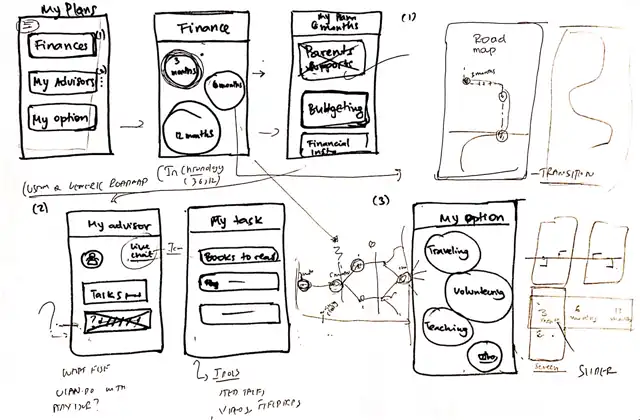
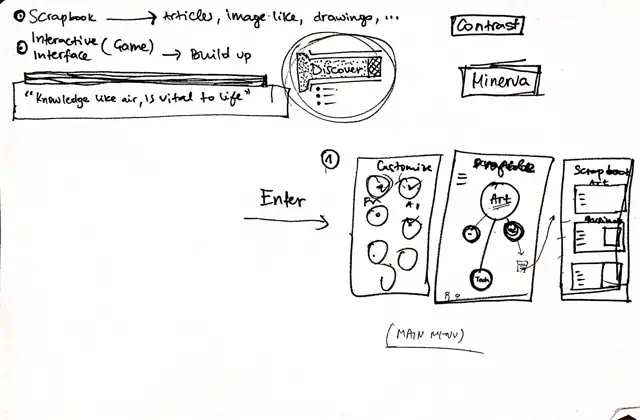
A companion in making a mindful decision. An application that helps students leverage technology to plan and help in the decision making process towards education and future careers.
01 / the project
Background
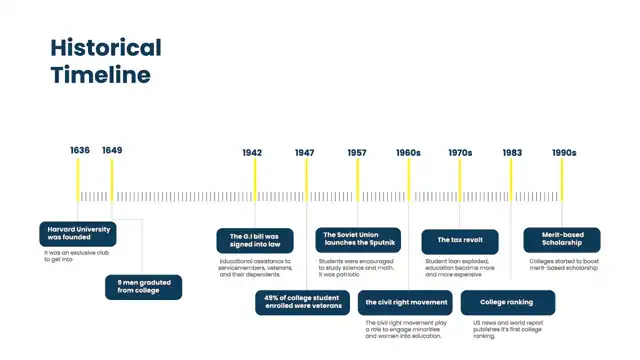
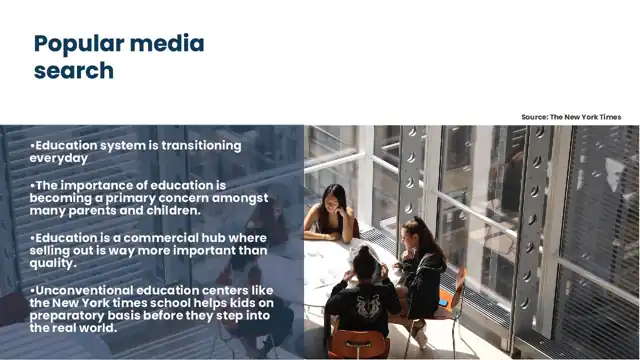
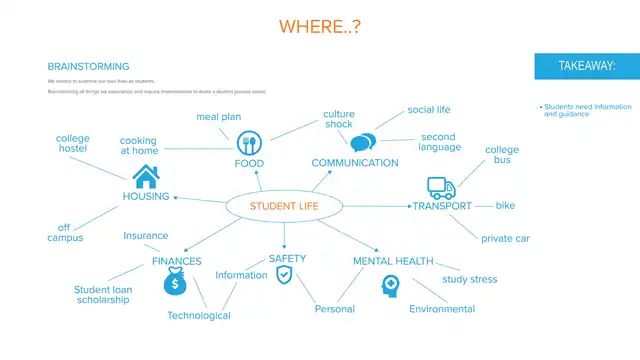
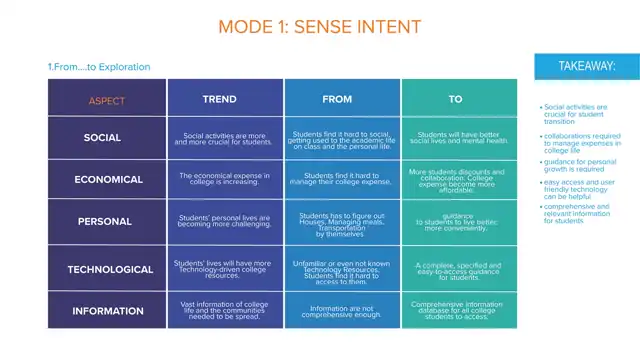
We conducted secondary research using tools like popular media scanning, publications research, and online surveys and also identified problems in different aspects like social, economic, personal, tech and information while in the process of transition.
1 / 5
Research process
02 / research process
Umbrella question
How might we use design thinking to strategize a productive transition from high school to college during a gap year?-
01Before gap year
02During gap year
03After gap year
03 / research process
Secondary research
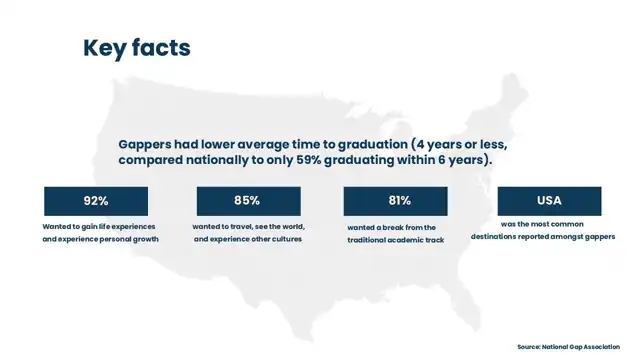
We conducted secondary research using tools like popular media scanning, publications research, and key facts and also identified problems in different aspects like social, economic, personal, tech and information while in the process of transition.
1 / 5
04 / research process
Primary research
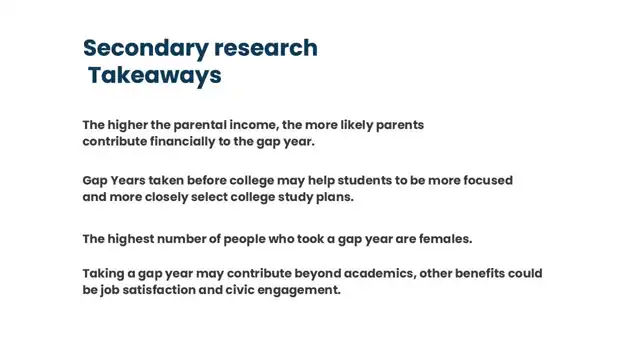
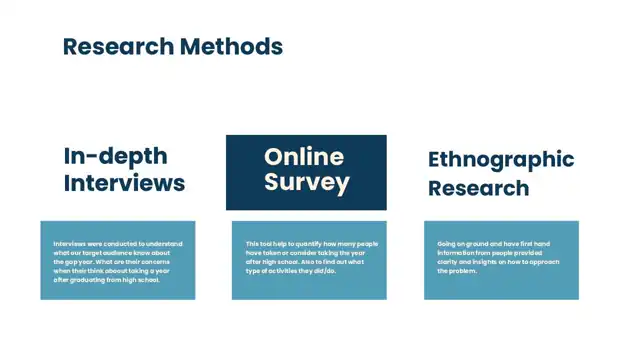
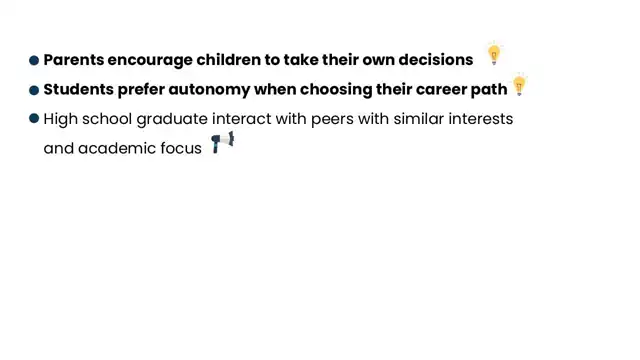
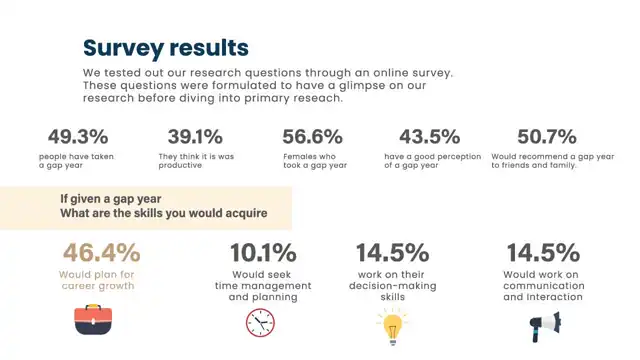
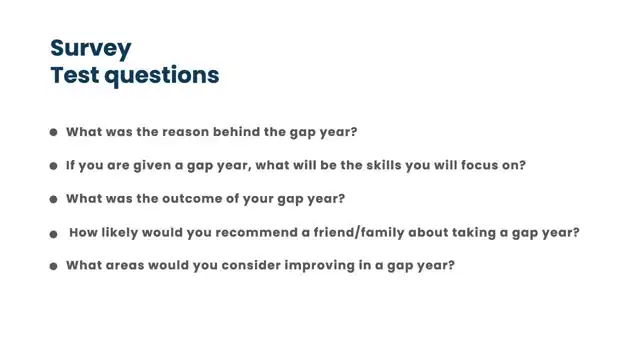
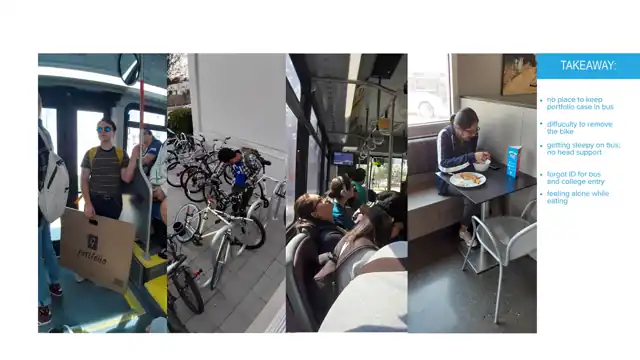
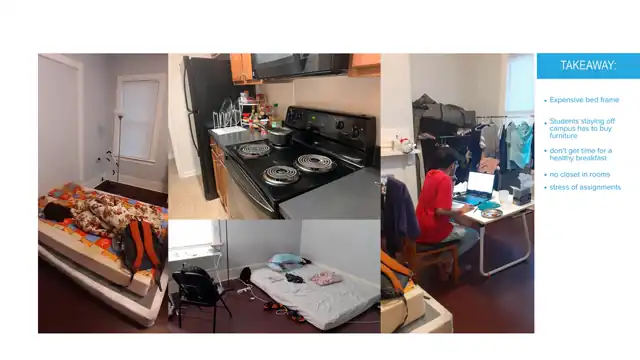
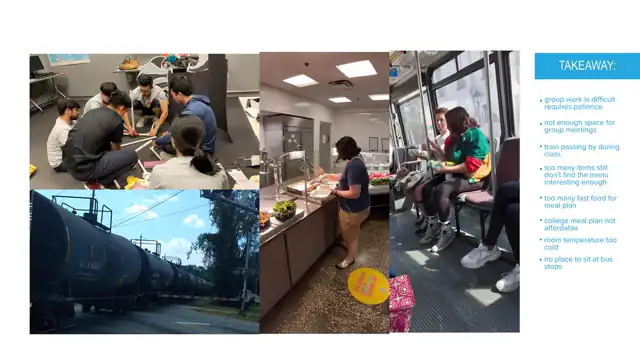
Through surveys, pure observation in various environments (such as a residence, shops, a university building, and on public transport), and detailed one-on-one interviews, we began to create a picture of students the current experience of transition before, during and after gap year.
1 / 10
05 / research process
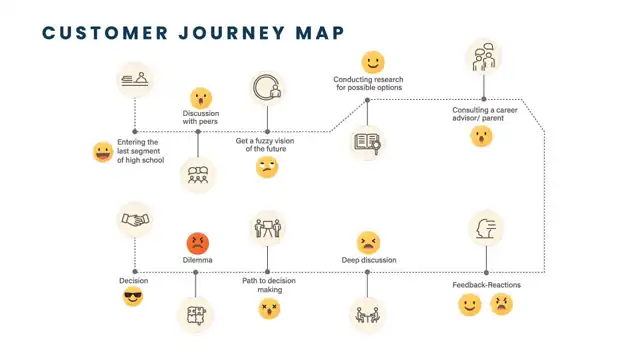
Customer journey 1
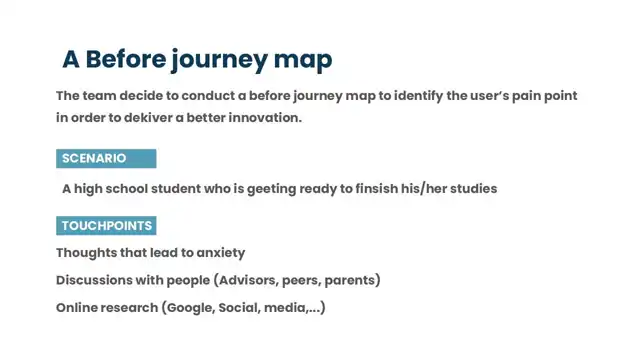
The team decided to conduct a before journey map to identify the user’s pain point to deliver a better innovation. after primary research.
1 / 2
06 / research process
Analysis and synthesis
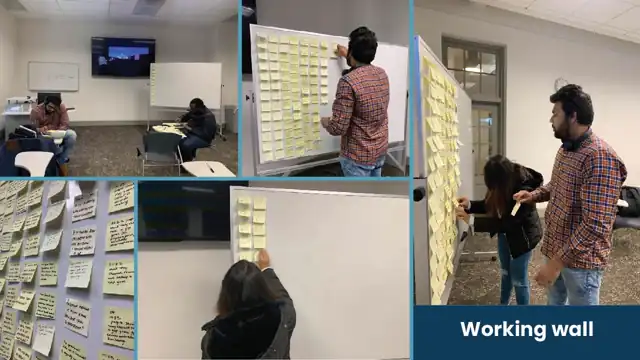
From the data collected from secondary and primary data, the qualitative and quantitative data were collected from various user groups. These insights were noted on YELLOW POST ITS.
research process
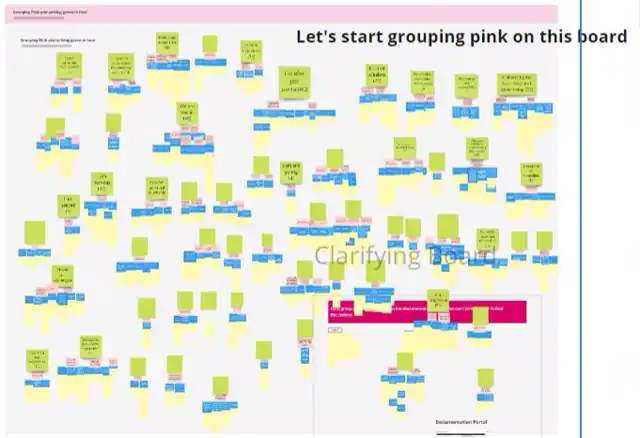
Following post, its were used in the process of synthesis-
Yellow Post- It - Direct voice user
Blue Post - It - Clustered user stories
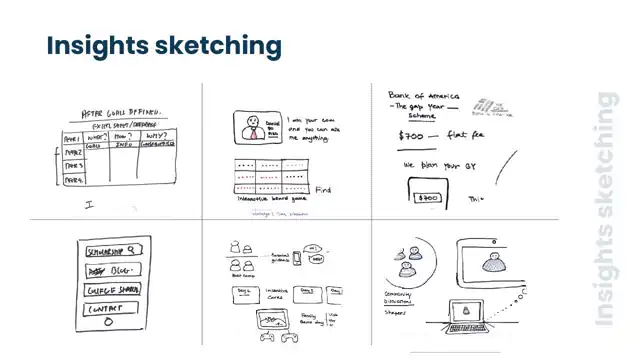
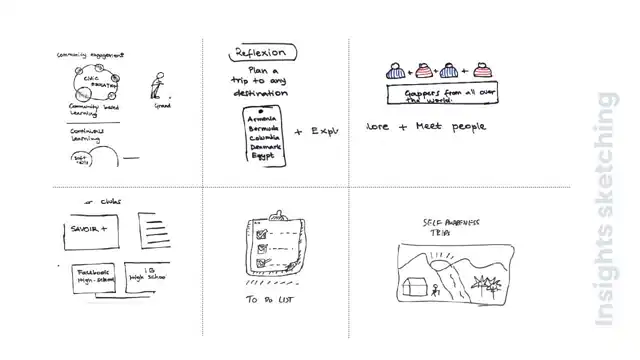
Ideation - Themes from Blue post its cluster. Initial sketches concepts on the insights generated
Pink Post-it- Combination of Blue Post its to general principle
1 / 4
research process
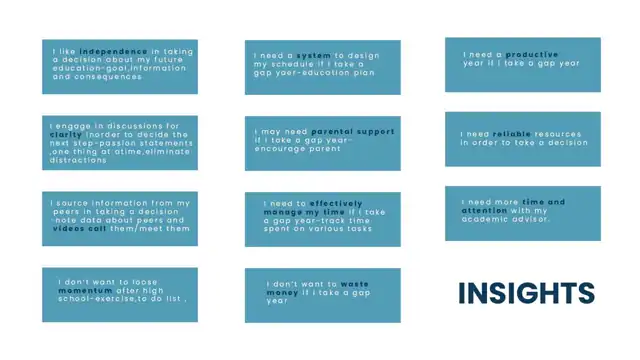
Time and attention
017 insights(clustered user stories)
02Independence
03System
04Productive
05Clarity
06Parentalsupport
07Momentum
08Timemanagement
09Money management
10Information source
08 / research process
Ideation
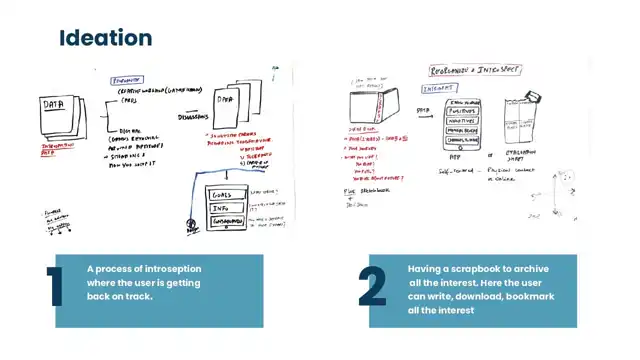
After generating insights,we started rapid ideation to narrow down the ideas which will eventually lead to final solutions
1 / 2
09 / research process
Principle generation
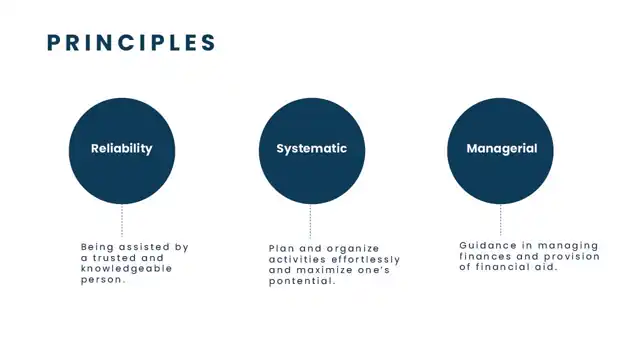
Combining the Blue insights into principles for the final solution and ideation on the key issue of the user. The guidance of our solution was generated from this process.
1 / 3
10 / research process
Concept development and evaluation
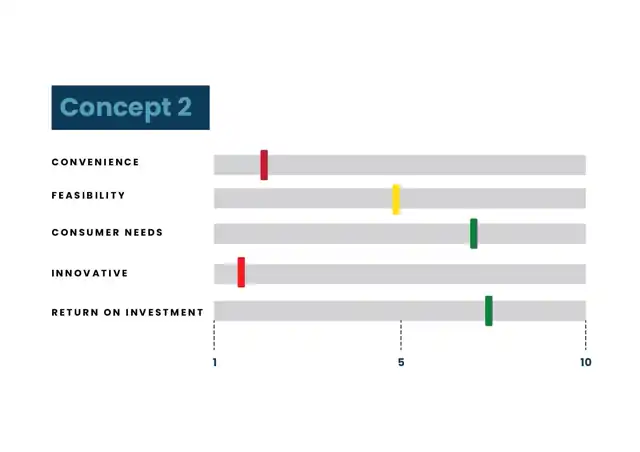
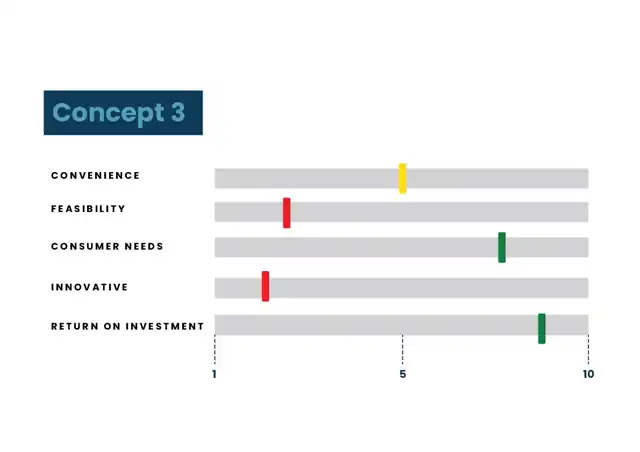
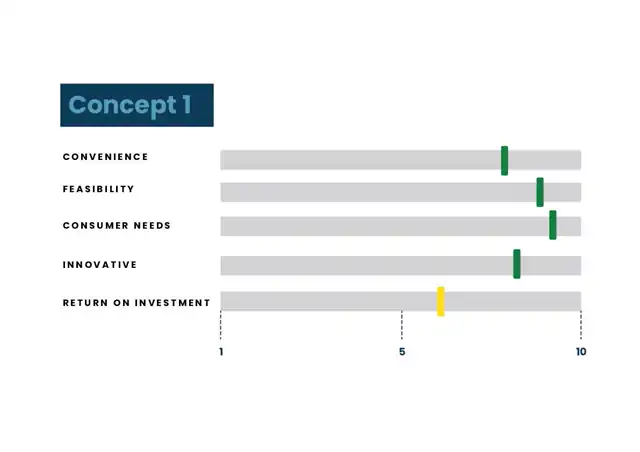
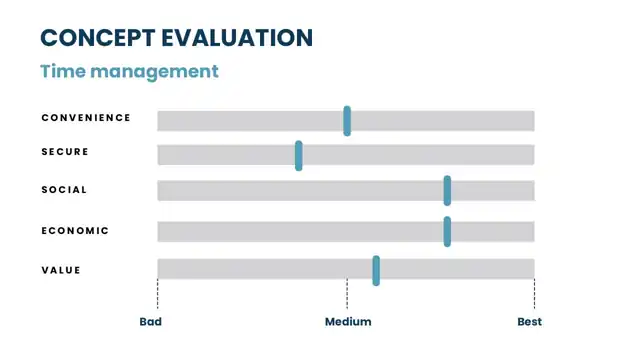
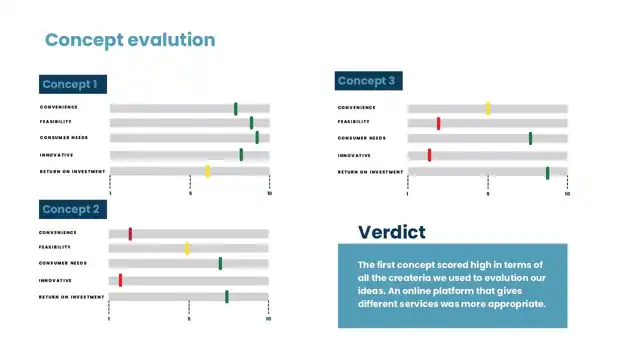
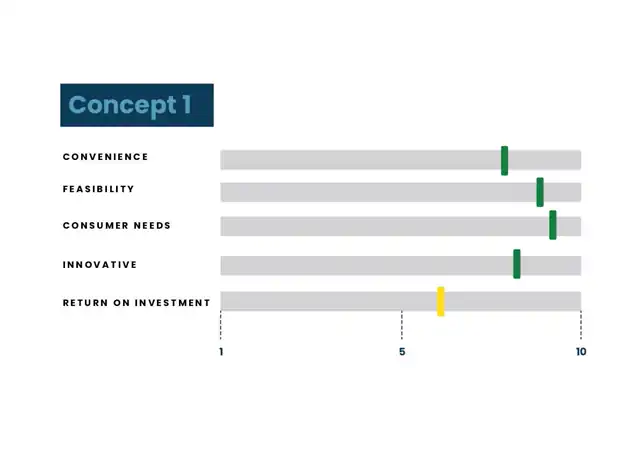
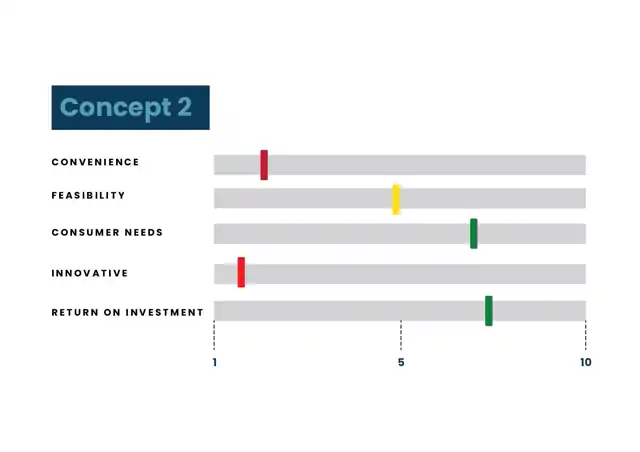
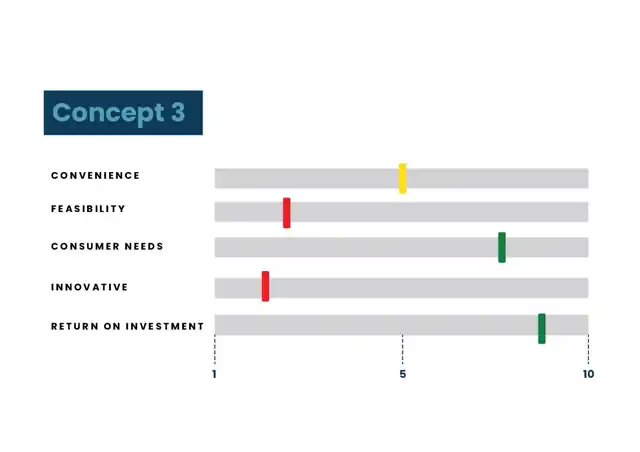
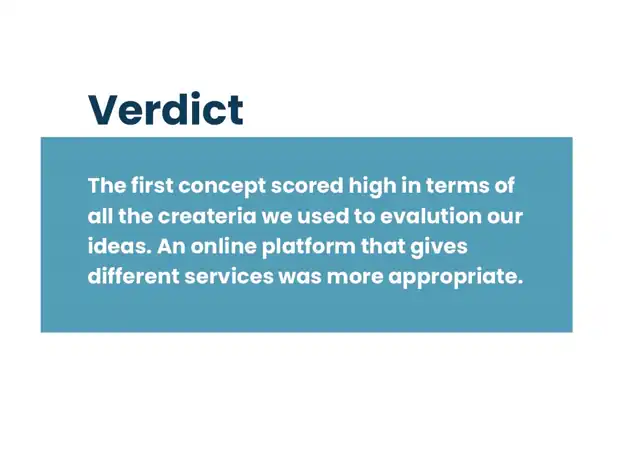
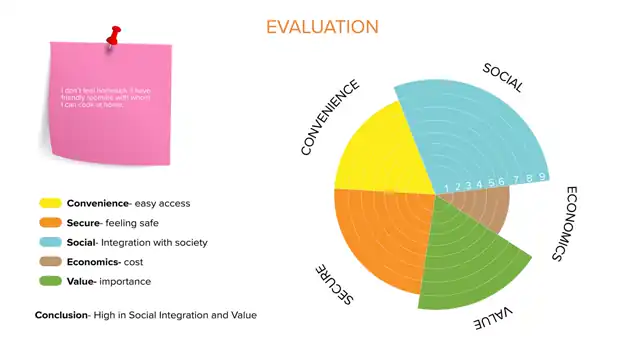
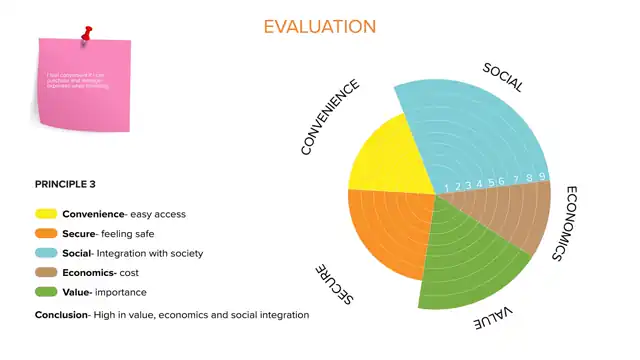
After ideation, the pinks were combined to form practice concepts that form the core basis of the customer journey. n this case, five different criteria were used to evaluate the developed concepts-CONVENIENCE, FEASIBILITY, CONSUMER NEEDS, INNOVATIVE,&RETURN ON INVESTMENT.
1 / 7
Strategy process
11 / strategy process
User testing and evaluation
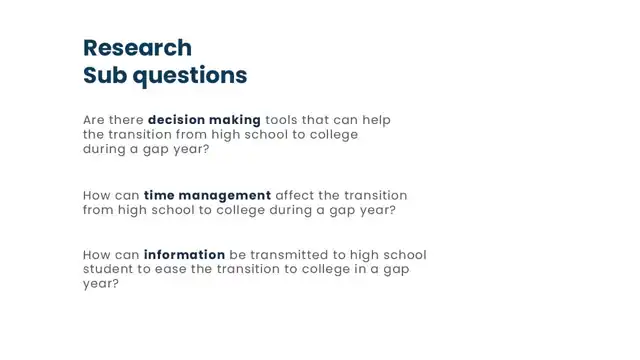
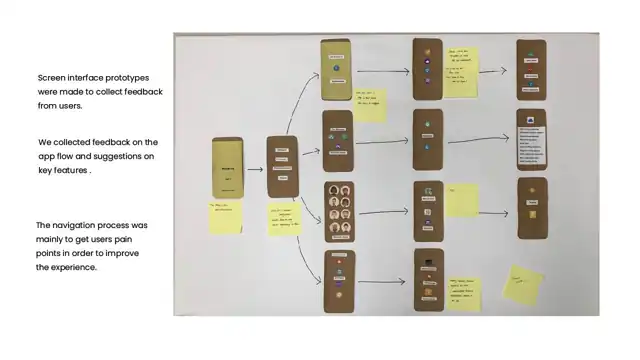
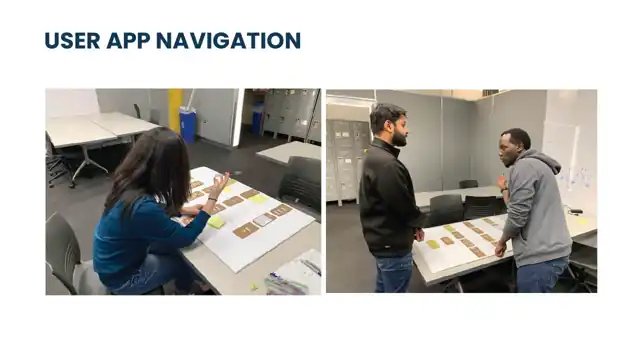
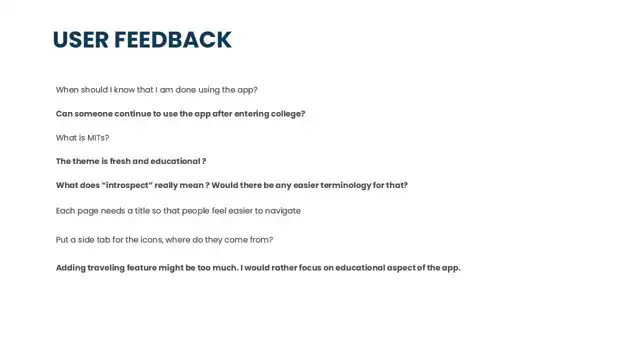
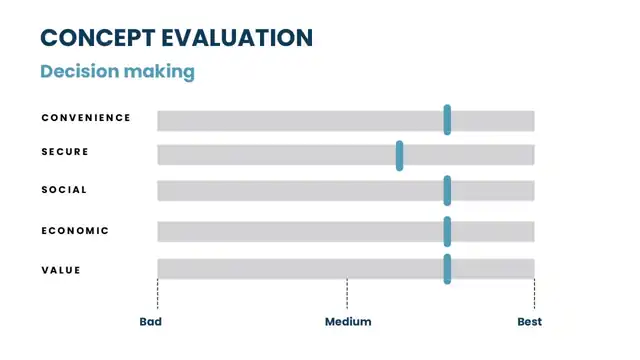
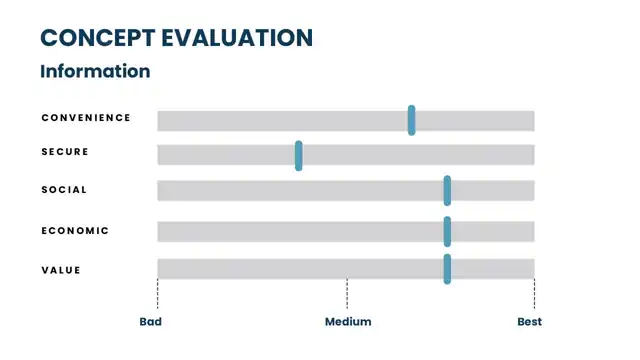
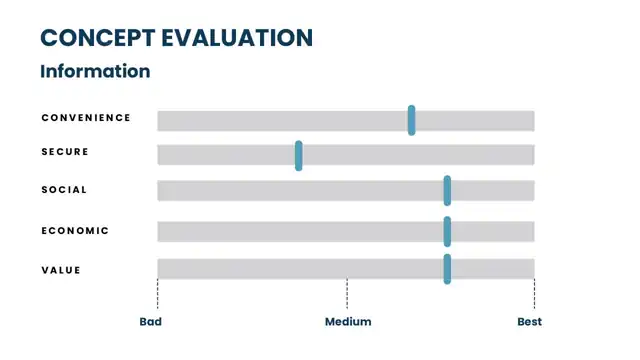
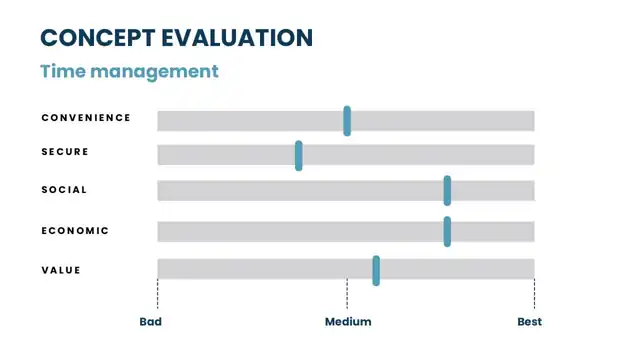
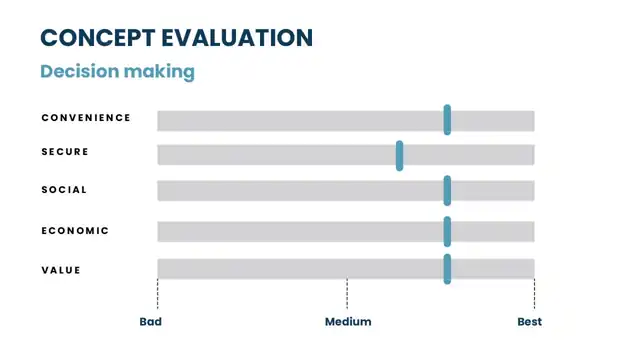
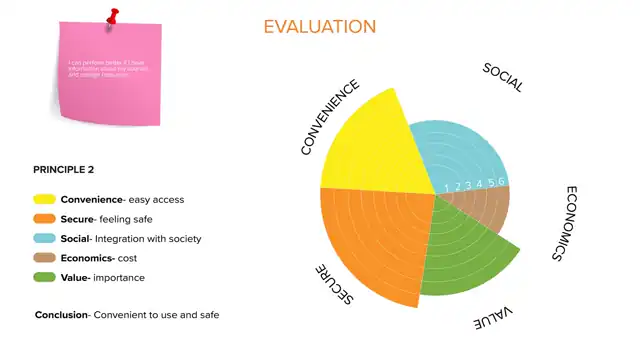
Low fidelity prototypes were made to have feedback from users. After Feedback, the app was evaluated on the three important principles-INFORMATION, TIME MANAGEMENT, DECISION MAKING.
1 / 6
12 / strategy process
Business design
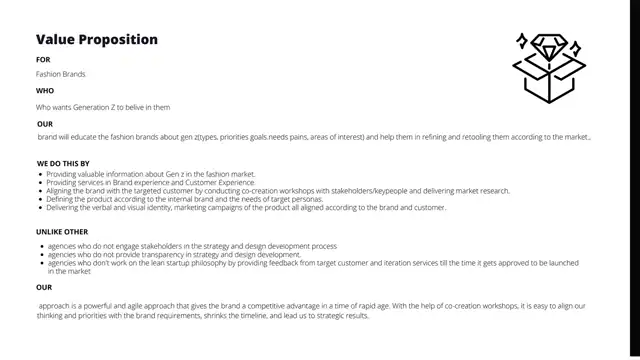
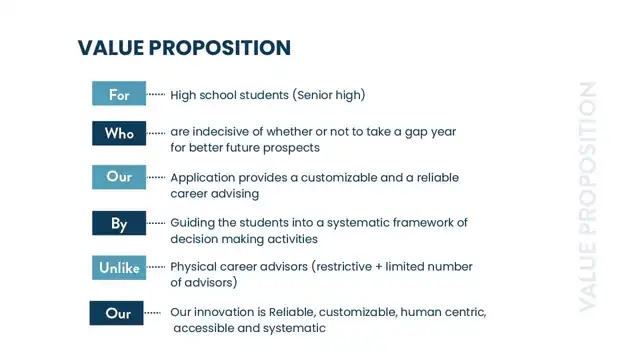
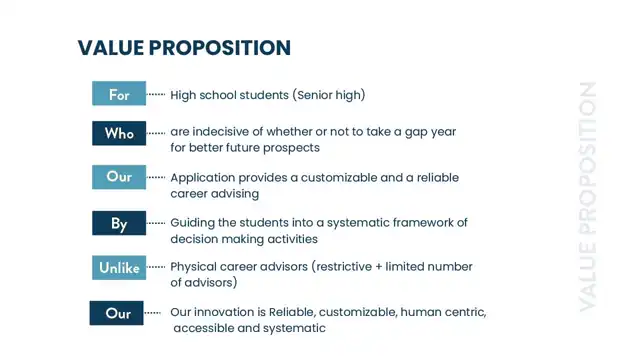
A value proposition refers to the value a company promises to deliver to customers should they choose to buy their product. In our case, we defined what exactly our app will deliver to the customers.
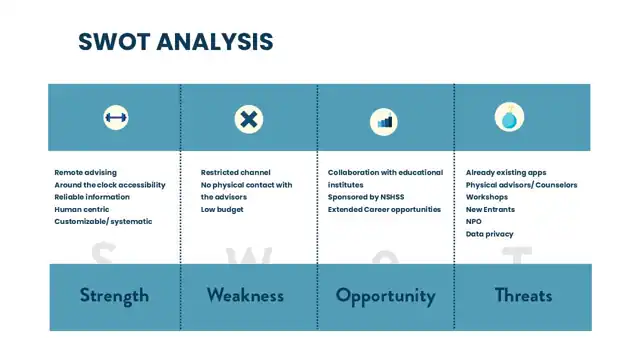
The development of high fidelity offering was conceptualized to make an online service. We started exploring it by doing a SWOT (Strength Weakness Opportunities and Threats), Value proposition and the 5E Model.
1 / 3
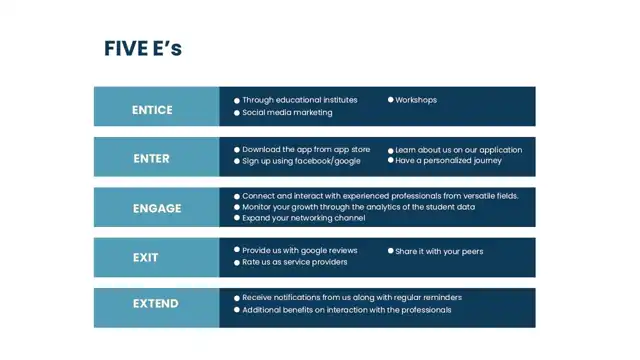
The 5E model is really useful to help you align a team, access collective creativity, and distributive leadership models, that enable collaboration and design in complexity. We did this together as a group again to align define our deliverables.
13 / strategy process
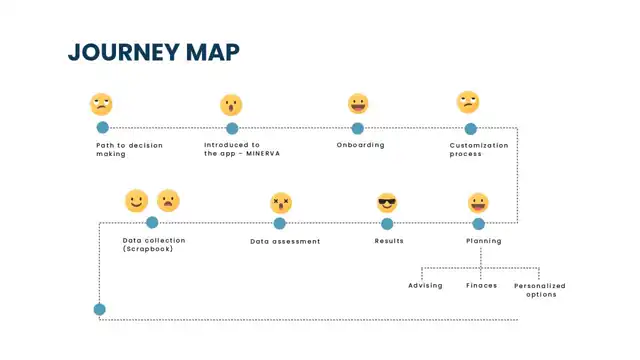
Customer journey 2
The customer journey is the complete sum of experiences that customers go through when interacting with your company and brand. Instead of looking at just a part of a transaction or experience, the customer journey documents the full experience of being a customer.
Design process
14 / design process
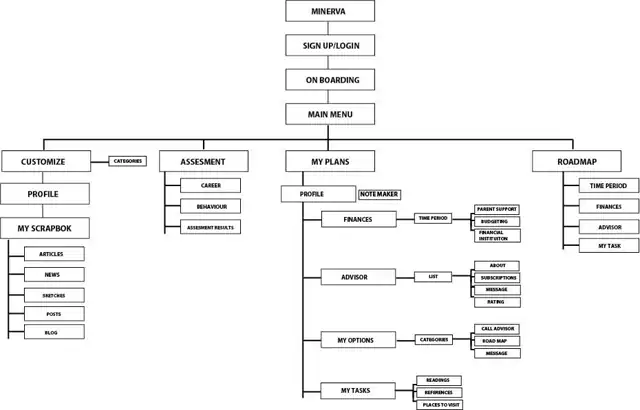
Information architecture (IA)
IA is the art and science of organizing and labelling websites, intranets, online communities, and software to support usability and findability. According to the customer journey, I started creating the hierarchy of the application.
15 / design process
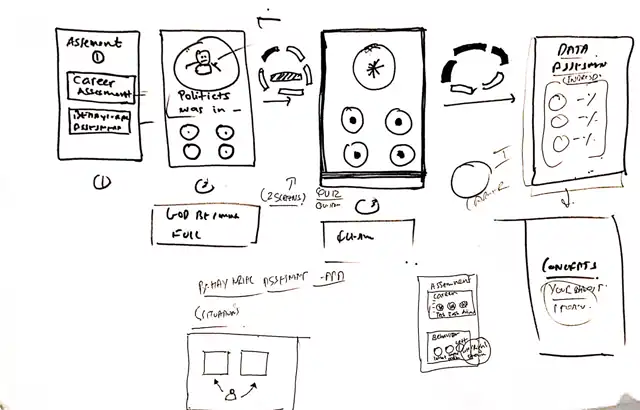
Paper prototypes
Once our initial prototype was heavily tested I began to assemble what would become a near-final prototype.
1 / 3
16 / design process
Low fidelity prototypes
I began rapidly ideating a number of concepts before narrowing in on one and creating user flows, user stories and storyboards to define user requirement
1 / 5
design process
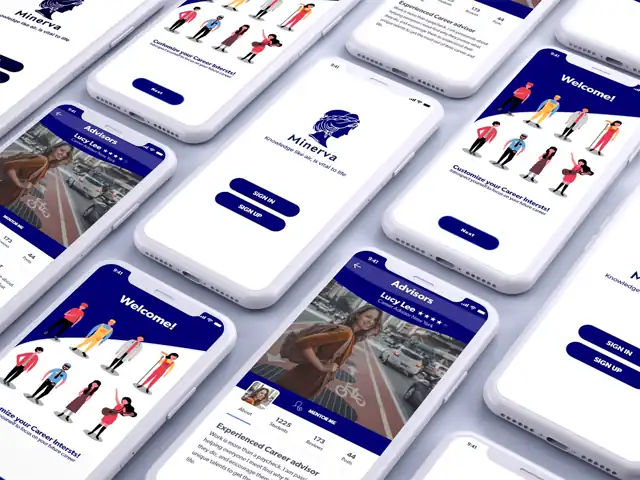
Minerva: the app
17 / design process
Medium fidelity wireframes
Once our initial prototype was heavily tested I began to assemble what would become a near-final prototype.
18 / design process
High fidelity wireframes
After the testing of the mid-fi frames within our personas in the real world, I finally made out hi-fi screens.
19 / design process
Interactive prototyping
20 / design process
App demonstration
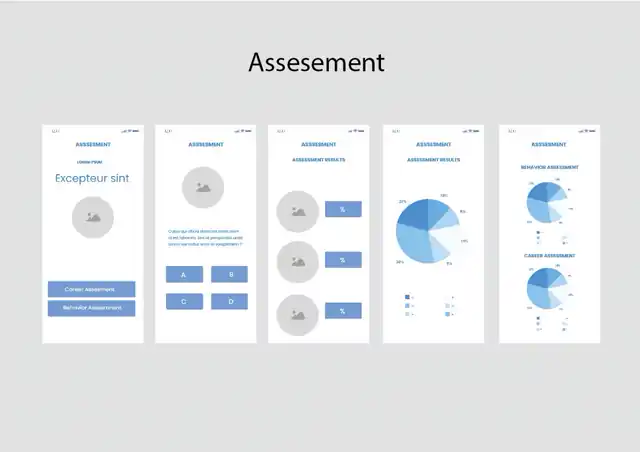
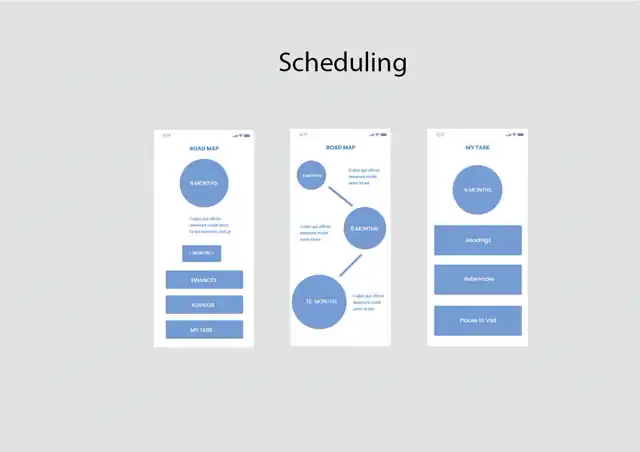
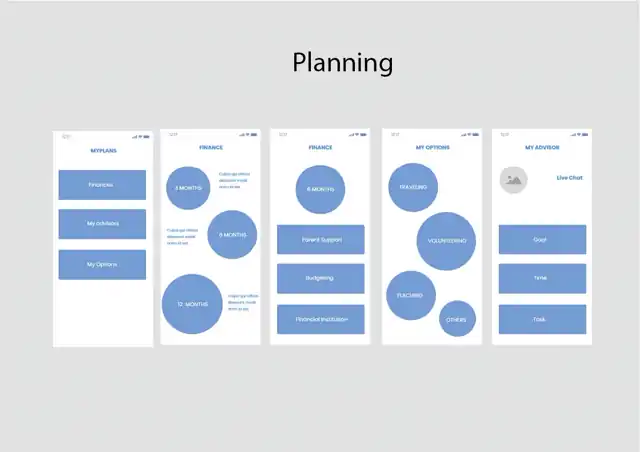
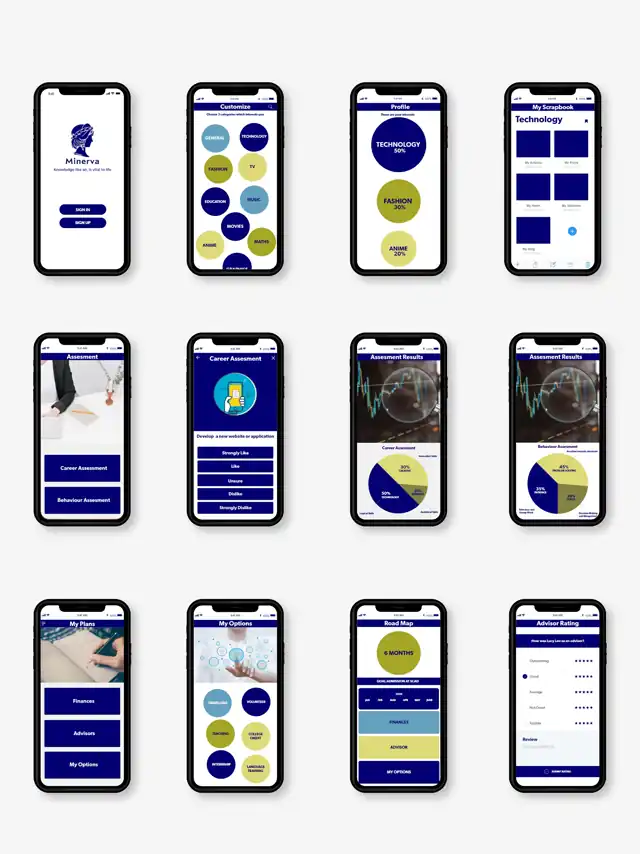
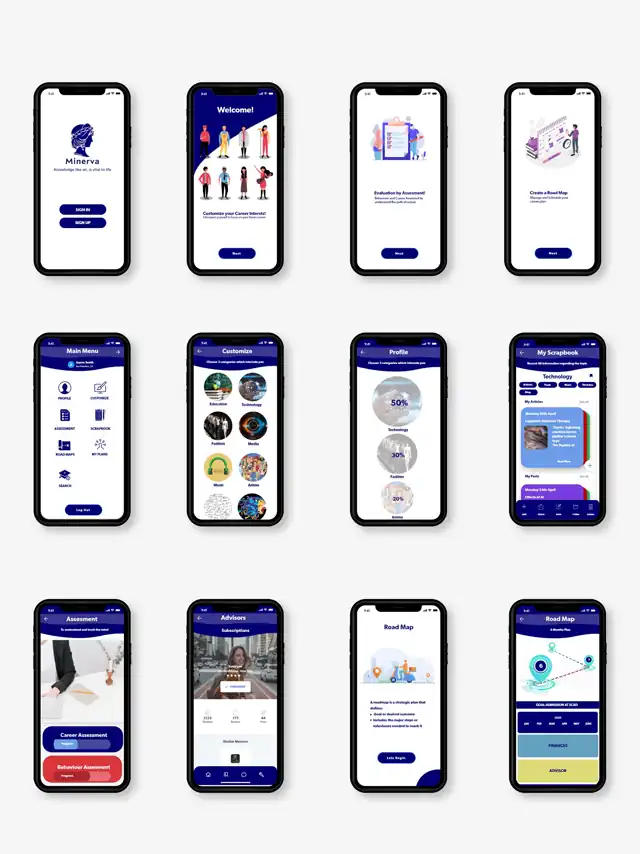
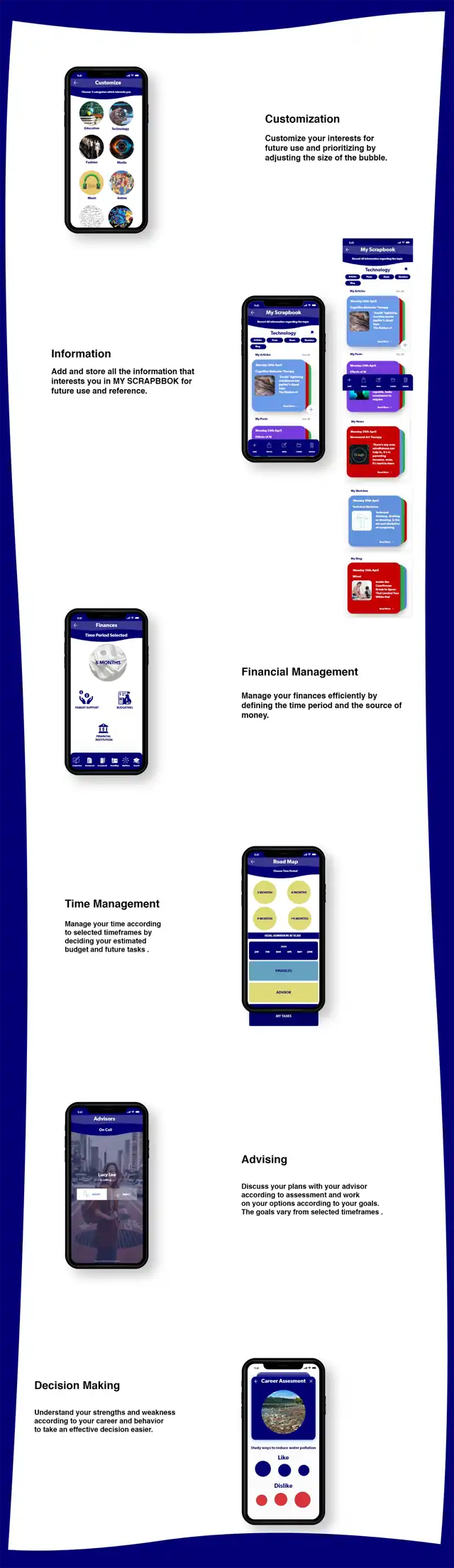
Following is the app demonstration of the MINERVA specially made for students during transition. This kit will help students by-
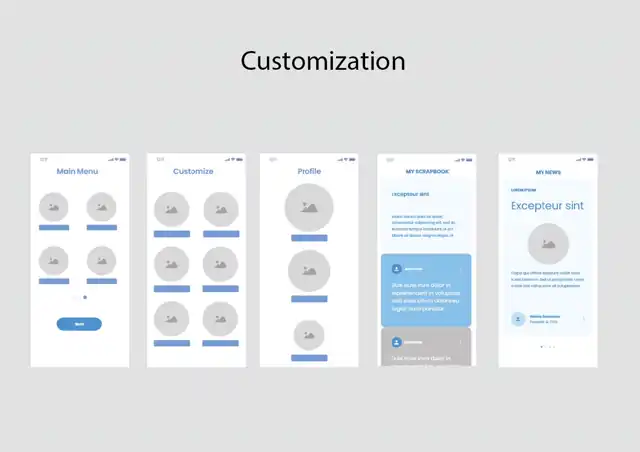
01Customizing Interests and prioritizing career goals.
02Store information regarding interests and use for future use.
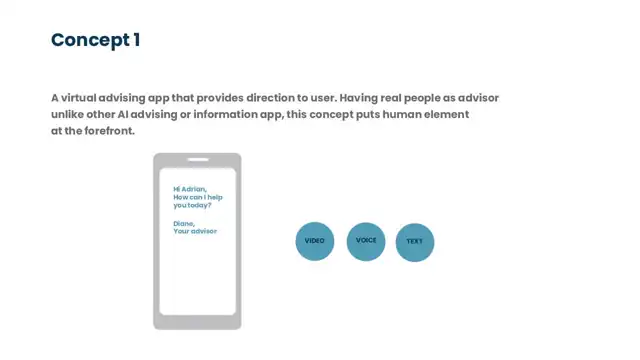
03Consult advisors whenever required to take any decision.
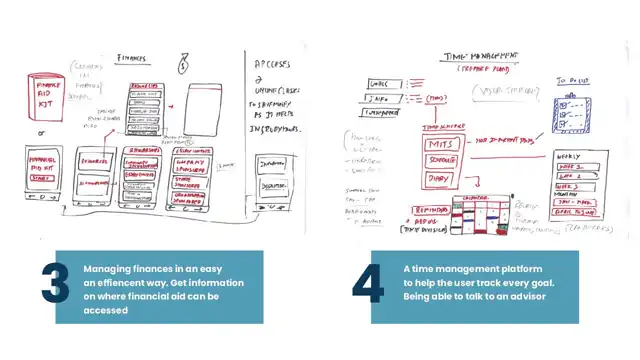
04Schedule goals by creating Road Maps to manage finances, time, and tasks.
go deeper
The full process, step by step.
Every research activity, framework and wireframe from the project, in the order it happened.
This project is part of the course Applied theory in Design. It is being conducted to strategize a productive transition from high school to college during gap year by developing desired design prototypes and solutions using storytelling from the insights of the research. This research contains key findings and synthesized insights found from students who are in the process of planning their career journey.
Project management, User research, Conceptualization, Strategy, Visual storytelling, Mobile Application Development.
Project navigation
project navigation
Minerva
This project is part of the course Applied theory in Design. It is being conducted to strategize a productive transition from high school to college during gap year by developing desired design prototypes and solutions using storytelling from the insights of the research. This research contains key findings and synthesized insights found from students who are in the process of planning their career journey.
Storytelling is used in design as a technique to get insight into users, build empathy and access them emotionally. It involves -
01Setting Context (tell me why this is important)
02Showing the Solution (why does this solve the problem)
03Defining Success (how are we going to know if this works)
In this case, we made an persona journey presentation by taking the case of one of the personas
1 / 12
01 / project navigation
Background
We conducted secondary research using tools like popular media scanning, publications research and online surveys and also identified problems in different aspects like social, economic, personal, tech and information while in the process of transition.
1 / 5
Research process
02 / research process
Umbrella question
How might we use design thinking to strategize a productive transition from high school to college during a gap year?-
01Before gap year
02During gap yearl
03After gap year
04 / research process
Primary research
Through surveys, pure observation in various environments (such as a residence, shops, a university building and on public transport), and detailed one-on-one interviews, we began to create a picture of students the current experience of transition before, during and after gap year.
1 / 3
1 / 4
06 / research process
Analysis and synthesis
From the data collected from secondary and primary data, the qualitative and quantitative data collected from various user groups. These insights were noted on YELLOW POST ITS.
research process
Following post, its were used in the process of synthesis-
Yellow Post- It - Direct voice user
Blue Post - It - Clustered user stories
Ideation - Themes from Blue post its cluster. Initial sketches concepts on the insights generated
Pink Post-it- Combination of Blue Post its to general principle
1 / 4
08 / research process
Ideation
After generating insights,we started rapid ideation to narrow down the ideas which will eventually lead to final solutions
1 / 2
11 / research process
Concept development anddesign criteria
After ideation, the pinks were combined to form practice concepts which form the core basis of the customer journey
1 / 3
03 / research process
Secondary research
We conducted secondary research using tools like popular media scanning, publications research and key facts and also identified problems in different aspects like social, economic, personal, tech and information while in the process of transition.
1 / 5
05 / research process
Customer journey
The team decided to conduct a before journey map to identify the user’s pain point in order to deliver a better innovation. after primary research.
1 / 2
1 / 3
research process
Time and attention
017 insights(clustered user stories)
02Independence
03System
04Productive
05Clarity
06Parentalsupport
07Timemanagemente
08Information source
09Money management
10Momentum
09 / research process
Principle generation
Combining the Blue insights into principles for the final solution and ideation on the key issue of the user. The guidance of our solution was generated from this proccess
1 / 3
11 / research process
Concept evaluation
Design criteria are the explicit goals that a project must achieve in order to be successful. In this case, five different criteria were used to evaluate the developed concepts-CONVENIENCE, FEASIBILITY, CONSUMER NEEDS, INNOVATIVE,&RETURN ON INVESTMENT.
1 / 5
Strategy process
12 / strategy process
Prototype &user testing
Low fidelity prototypes were made to have feedback from users. Method used: P a p e r c u t & c o l l a g e
13 / strategy process
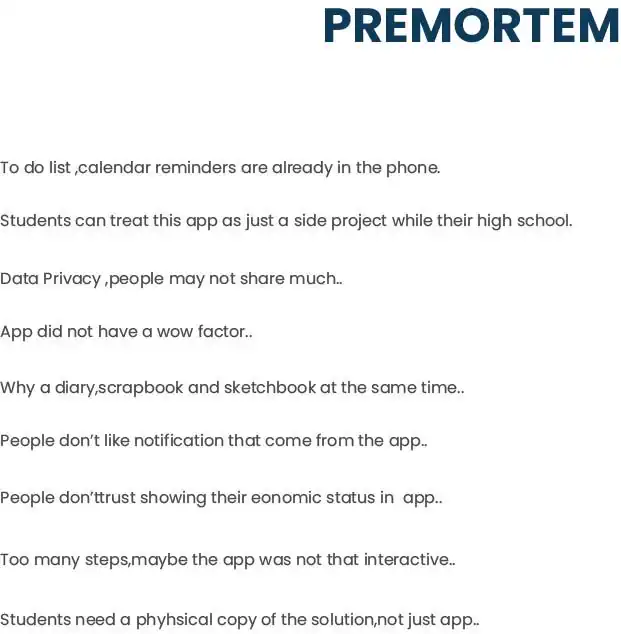
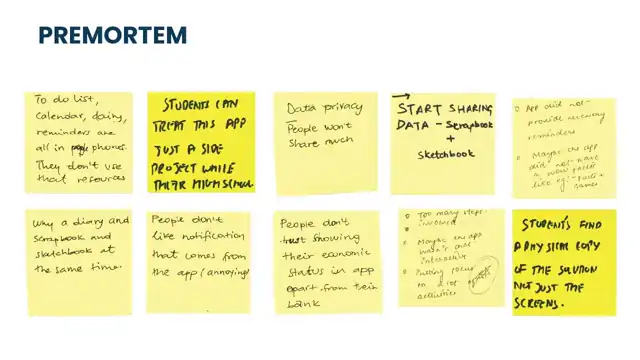
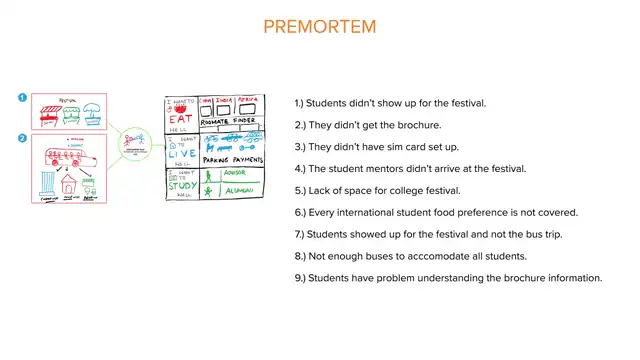
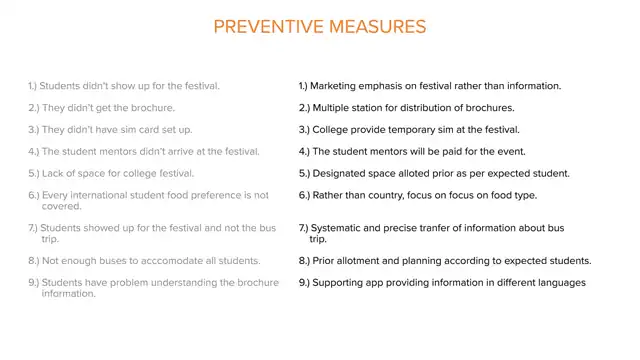
Premortem
is a managerial strategy in which a project team imagines that a project or organization has failed, and then works backwards to determine what potentially could lead to the failure of the project or organization. In this case, we already thought that our solution has failed and then found preventive measures so that it does not fail.
1 / 3
1 / 2
15 / strategy process
SWOT analysis
0114 prototype evaluation
02After premortem,or even further testing from our
03Side the app was evaluated on the three important
04Principles — information,time management,
05Decision making.
A development of high fidelity offering were conceptualized to make an online service.We started exploring it by doing a SWOT (Strength Weakness Opportunities and Threats)
1 / 3
16 / strategy process
Value proposition
A value proposition refers to the value a company promises to deliver to customers should they choose to buy their product. In our case we defined what exactly our app will deliver to the customers.
17 / strategy process
Five e's
he 5E model is really useful to help you align a team, access collective creativity and distributive leadership models, that enable collaboration and design in complexity. We did this together as a group again to align define our deliverables.
Information architecture (IA)
18 / information architecture(ia)
Customer journey
The customer journey is the complete sum of experiences that customers go through when interacting with your company and brand. Instead of looking at just a part of a transaction or experience, the customer journey documents the full experience of being a customer.
IA is the art and science of organizing and labelling websites, intranets, online communities and software to support usability and findability. According to the customer journey, I started creating the hierarchy of the application.
Design process
20 / design process
Paper prototypes
Once our initial prototype was heavily tested I began to assemble what would become a near-final prototype.
1 / 3
20 / design process
Low fidelity prototypes
I began rapidly ideating a number of concepts before narrowing in on one and creating user flows, user stories and storyboards to define user requirement
1 / 5
design process
Minerva: the app
18 / design process
Medium fidelity wireframes
Once our initial prototype was heavily tested I began to assemble what would become a near-final prototype.
21 / design process
High fidelity wireframes
After the testing of the mid-fi frames within our personas in the real world, I finally made out hi-fi screens.
22 / design process
Interactive prototyping
23 / design process
App demonstration
Following is the app demonstration of the MINERVA specially made for students during transition. This kit will help students by-
01Customizing Interests and prioritizing career goals.
02Store information regarding interests and use for future use.
03Consult advisors whenever required to take any decision.
04Schedule goals by creating Road Maps to manage finances, time and tasks.
Project management, User research, Conceptualization, Strategy, Visual storytelling, Mobile Application Development.
The project
01 / the project
Overview
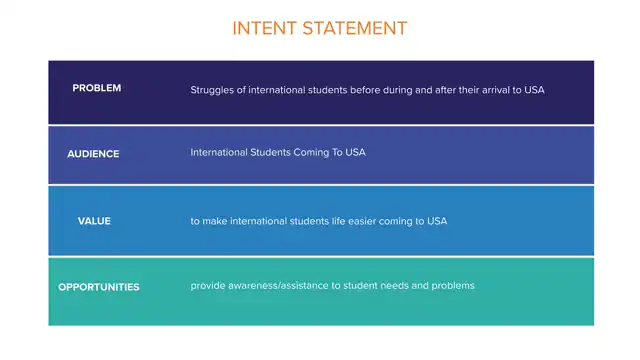
This project is done in collaboration with my graduate school. It is being conducted to strategize and create the ideal customized user experience for an international student coming to the USA for the first time by developing desired design prototypes and solutions using storytelling from the insights of the research. This research contains key findings and synthesized insights found from international students who travel for the very first time to the USA.
02 / the project
What it is
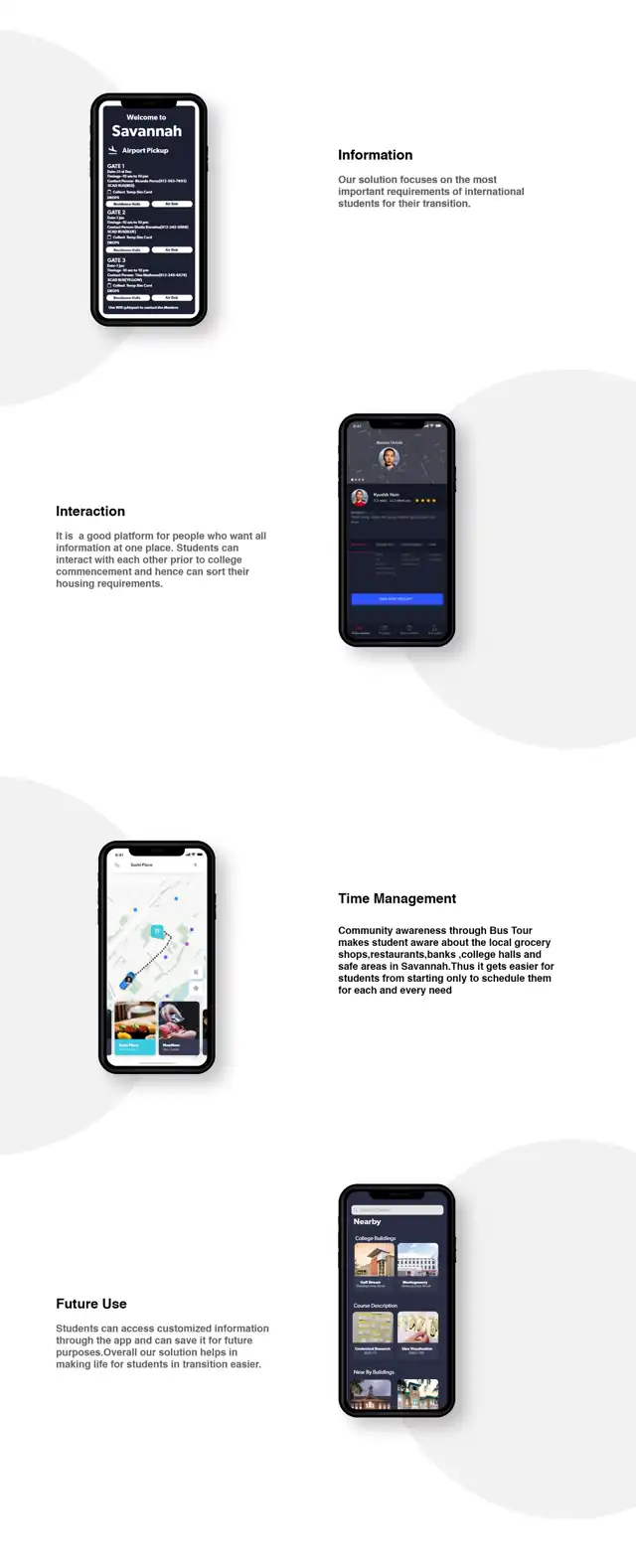
An application that helps international students coming first time in the USA by providing valuable information,ease in interaction, time management and getting ready for future purposes.
Storytelling
01 / storytelling
Background
Neelesh Ranjan,Niket Bisht,Evie Wang
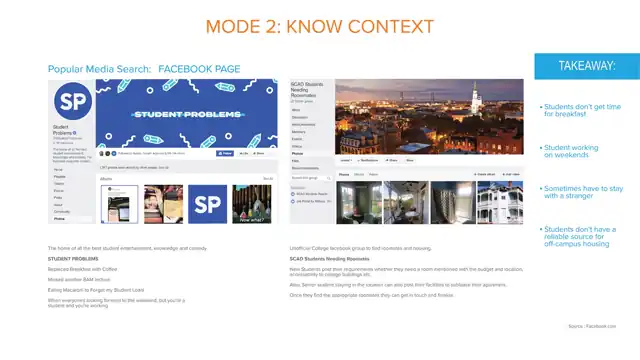
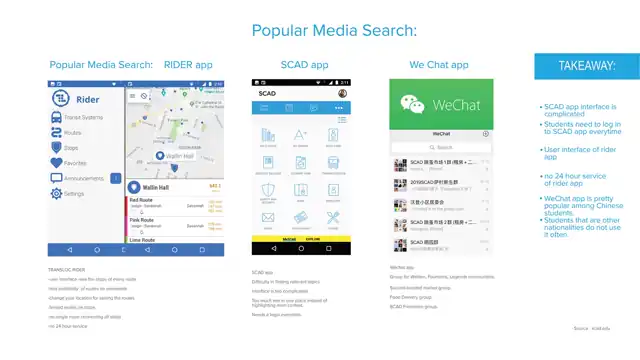
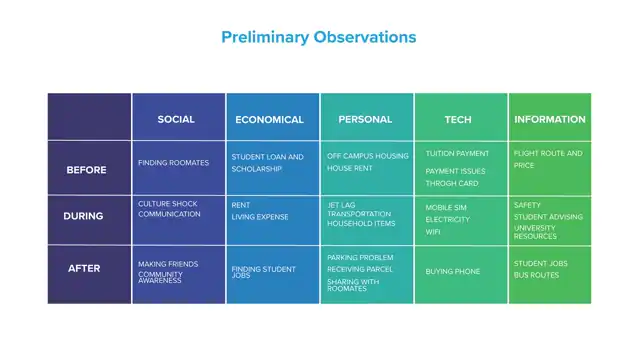
We conducted secondary research using tools like popular media scanning, publications research and online surveys and also identified problems in different aspects like social, economic, personal, tech and information while in the process of transition.
1 / 3
Research process
02 / research process
Umbrella question
How might we use design thinking to strategize the process of transition of international students coming the first time to the USA ? We even had 3 brackets in order to simplify the process of transition-
01Before arrival
02During arrival
03After arrival
03 / research process
Secondary research
We conducted secondary research using tools like popular media scanning, publications research and online surveys and also identified problems in different aspects like social, economic, personal, tech and information while in the process of transition.
1 / 3
04 / research process
Primary research
Through surveys, pure observation in various environments (such as a residence, shops, a university building and on public transport), and detailed one-on-one interviews, we began to create a picture of students the current experience of transition before, during and after the time of arrival.
1 / 7
05 / research process
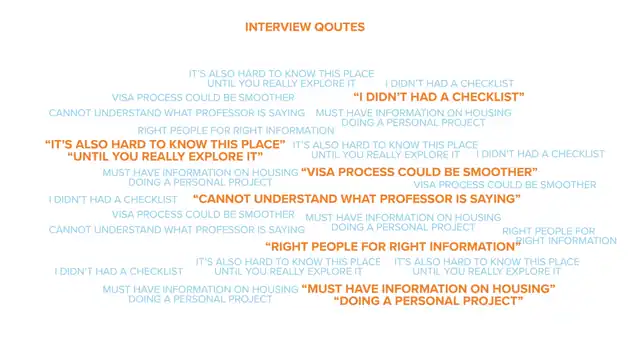
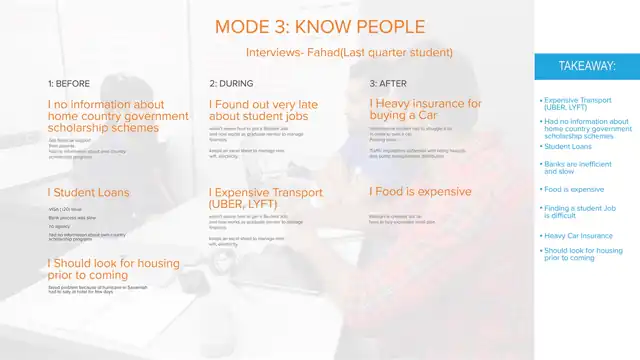
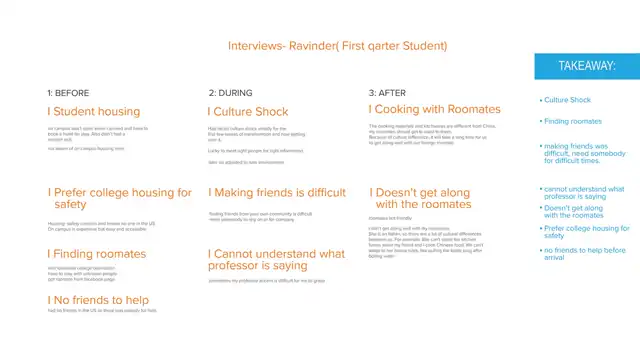
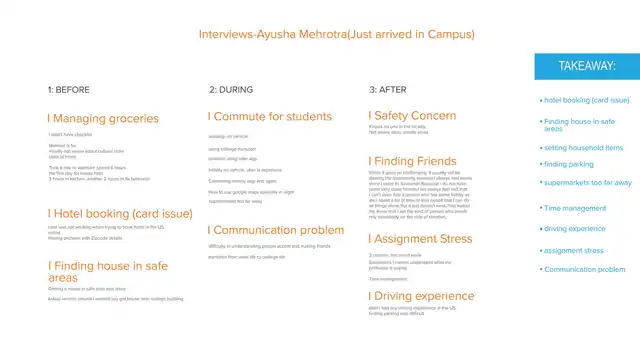
Interview quotes
1 / 4
06 / research process
Analysis and synthesis
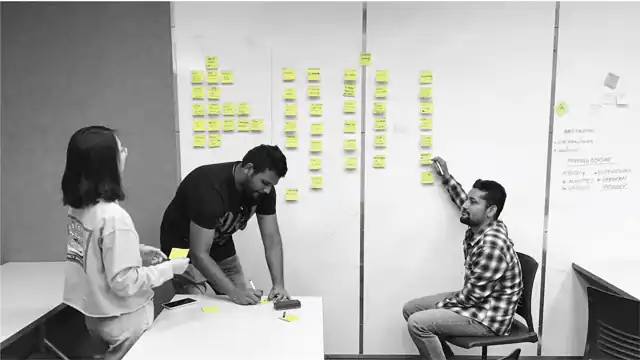
From the data collected from secondary and primary data, the qualitative and quantitative data collected from various user groups. These insights were noted on YELLOW POST ITS.
research process
Following post, its were used in the process of synthesis-
Yellow Post- It - Direct voice user
Blue Post - It - Clustered user stories
Ideation - Themes from Blue post its cluster. Initial sketches concepts on the insights generated
Pink Post-it- Combination of Blue Post its to general principle
1 / 5
08 / research process
Ideation
017 insights(clustered user stories)
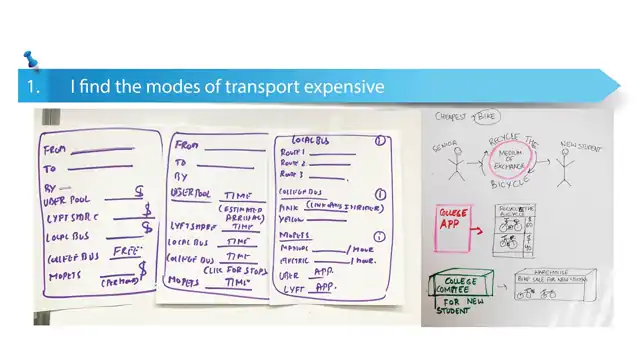
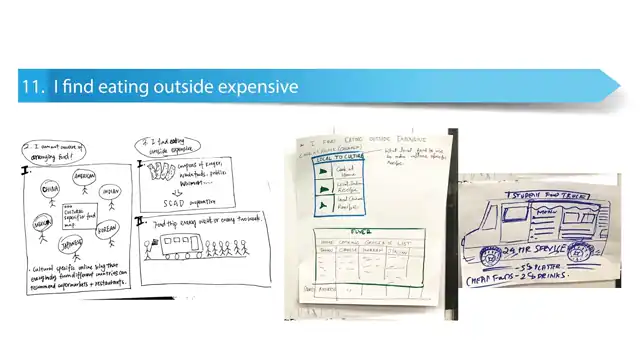
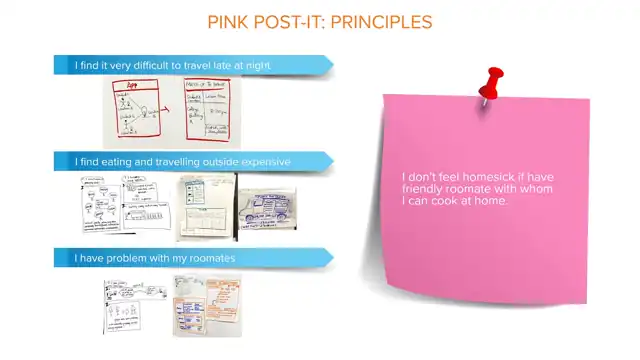
02I find the modes oftransport expensive.
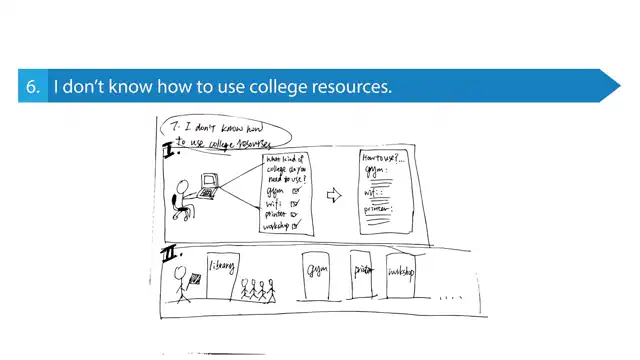
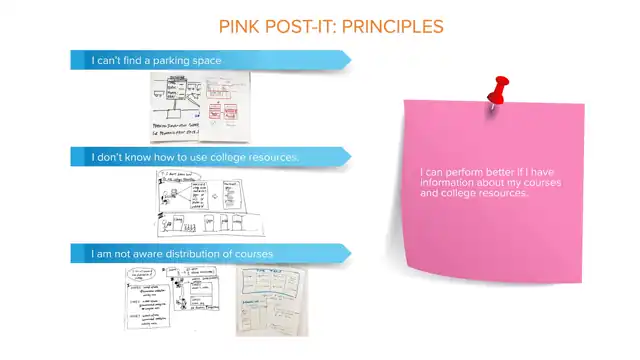
03I dont know how to use college resources.
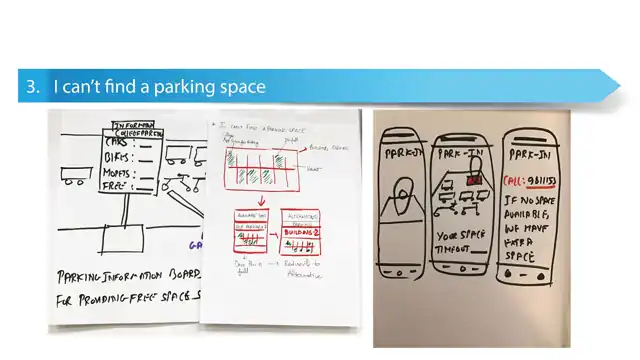
04I cant't find a parkingspace.
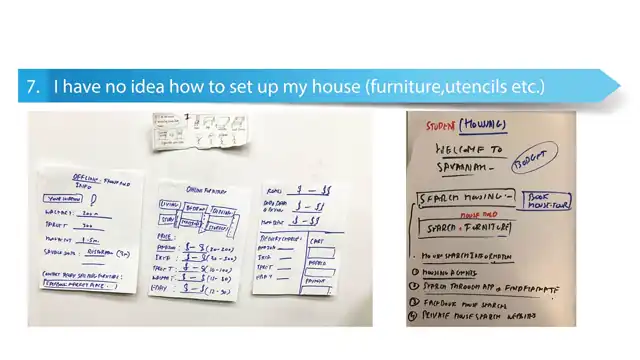
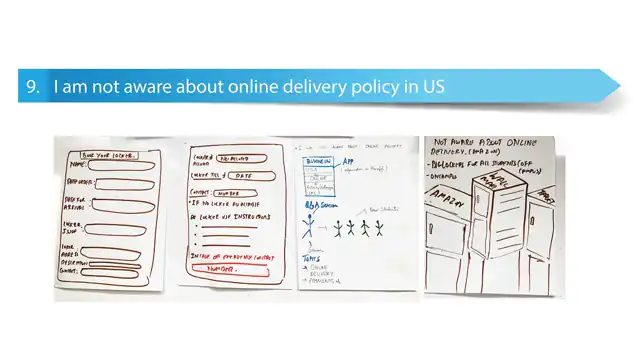
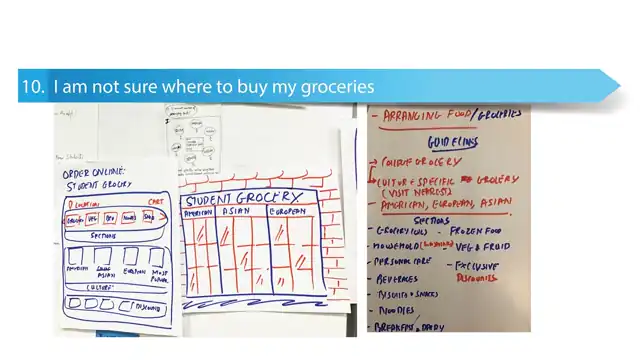
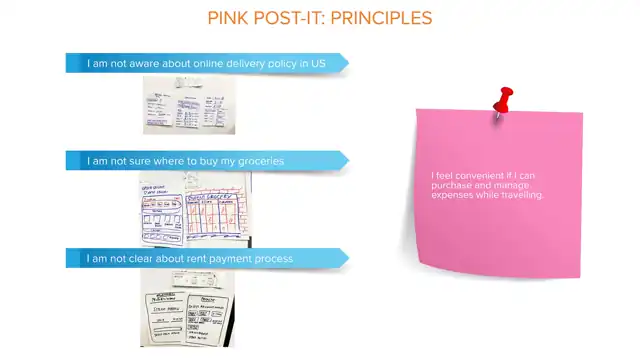
05I had no idea how toset up my house,buymy groceries.
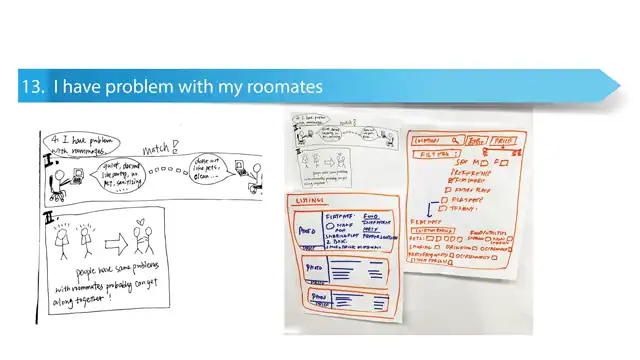
06I have problem with my roomates.
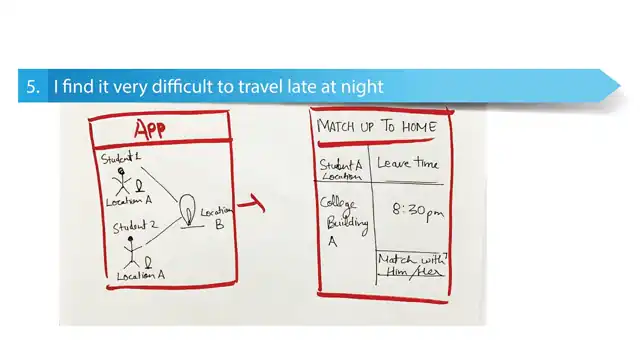
07I find it difficult to travel late in night.
08I find eating outside expensive.
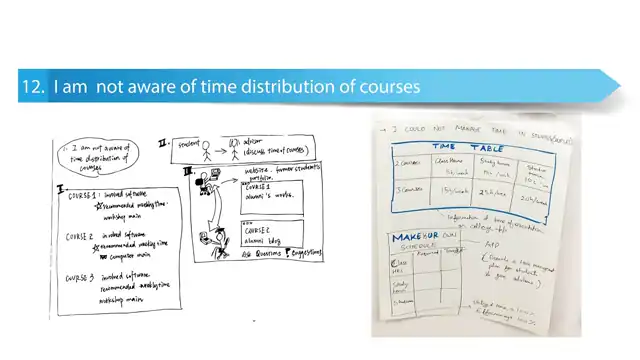
09I am not aware abouttime distribution of courses.
10I find eating outside expensive
11I need information about college and public transport.
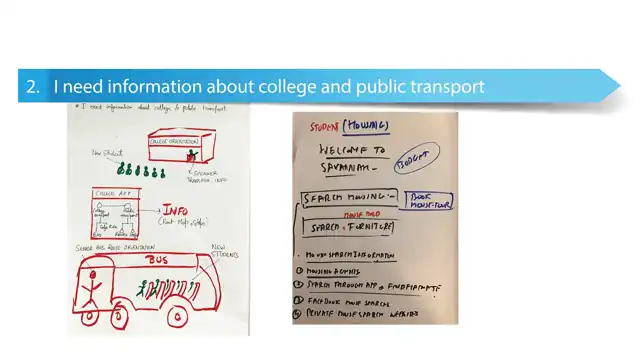
12I need information about college and public transport.
13I am not aware about time distribution of courses.
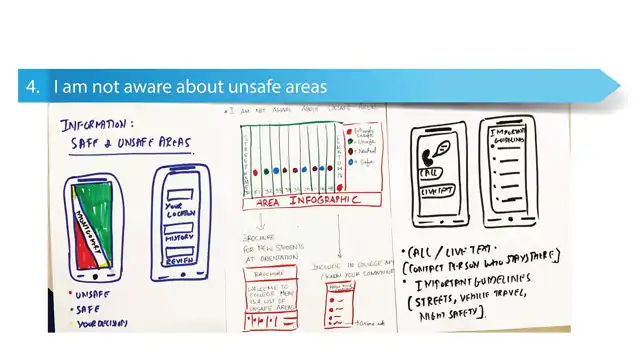
14I am not aware about unsafe areas.
After generating insights,we started rapid ideation to narrow down the ideas which will eventually lead to final solutions
1 / 13
09 / research process
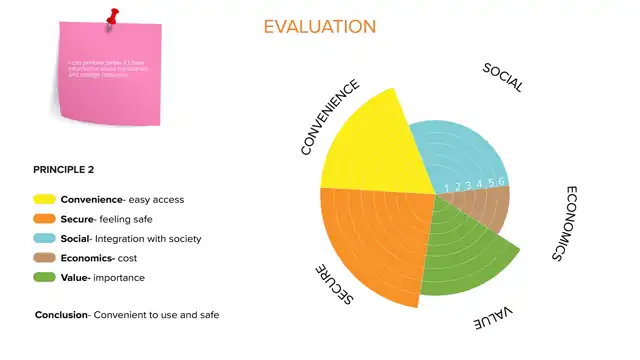
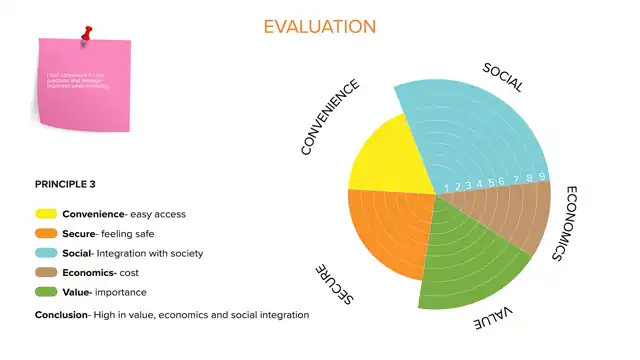
Principle generation and evaluation
Combining the Blue insights into principles for the final solution and ideation on the key issue of the user.
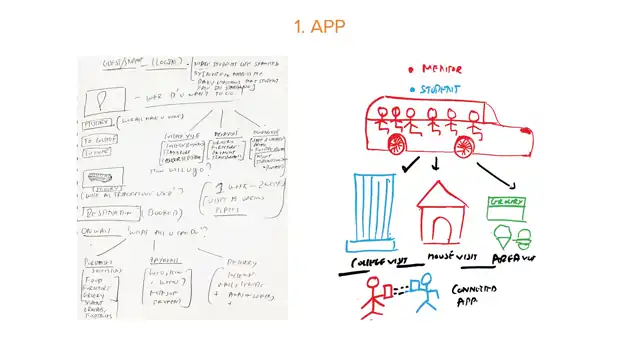
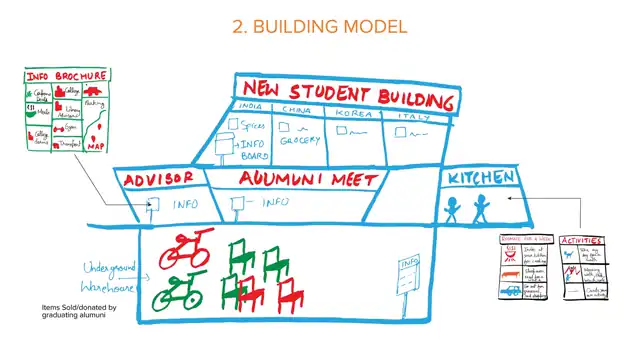
1 / 9
10 / research process
Final solution
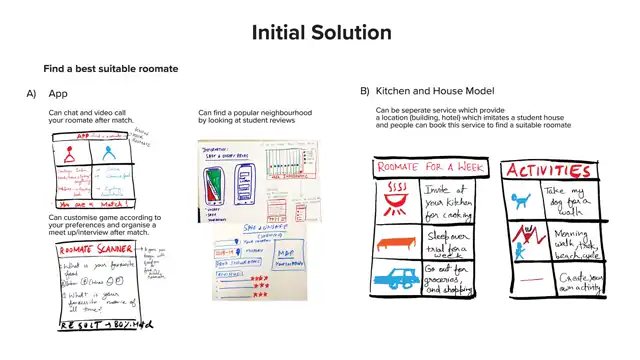
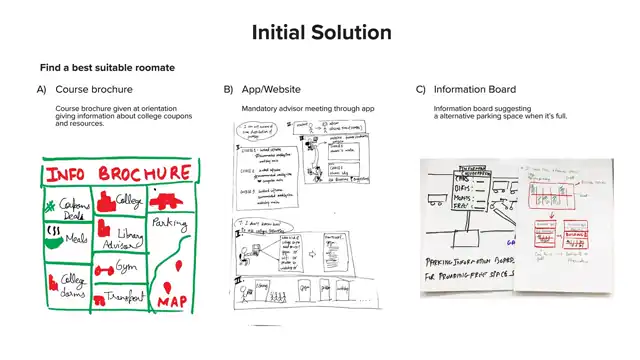
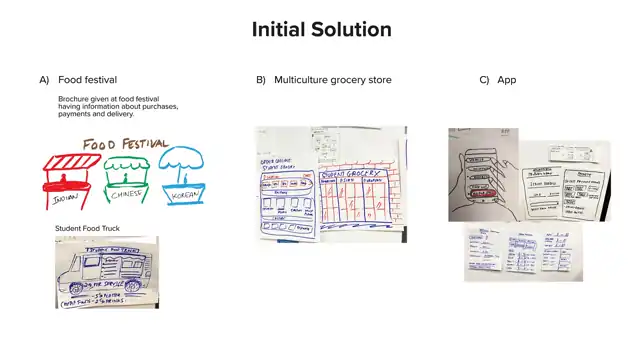
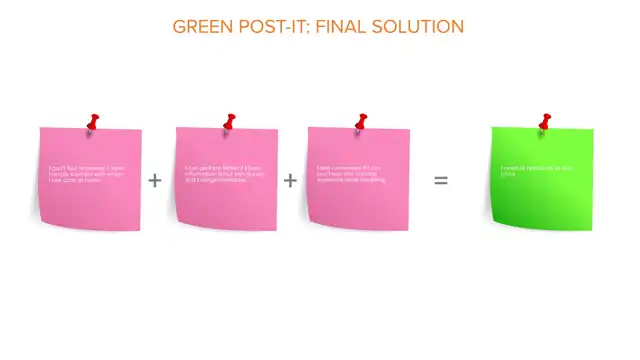
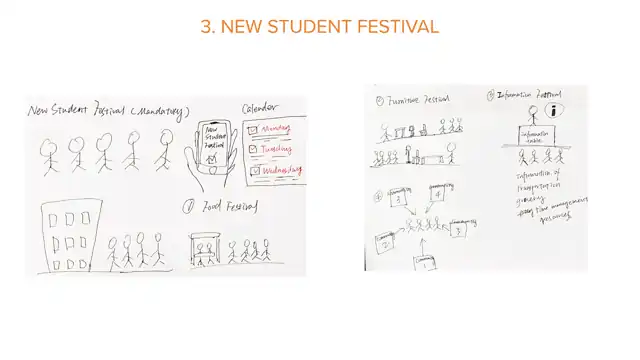
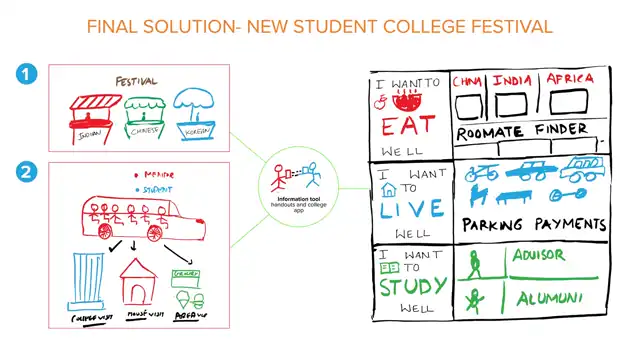
After Evaluation, the pinks were combined to form a single green which forms the core basis of the customer journey.
1 / 5
Development process
11 / develoment process
Customer journey
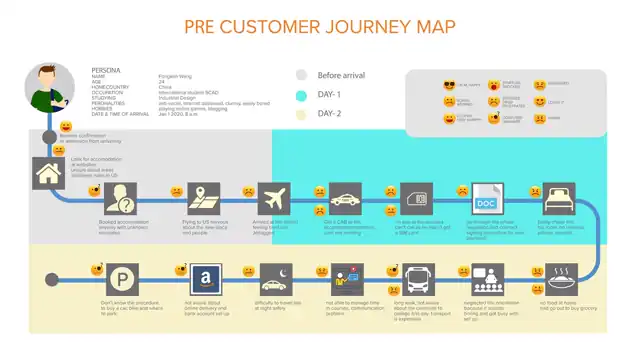
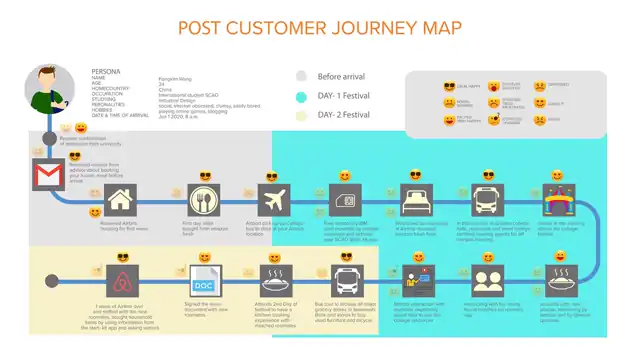
The customer journey is the complete sum of experiences that customers go through when interacting with your company and brand. Instead of looking at just a part of a transaction or experience, the customer journey documents the full experience of being a customer. We did a pre and post customer journey to understand the emotions associated with our persona.
1 / 2
12 / develoment process
Final solution
1 / 9
13 / develoment process
Information architecture (IA)
IA is the art and science of organizing and labelling websites, intranets, online communities and software to support usability and findability. According to the customer journey, I started creating the hierarchy of the application.
Initial ideation
initial ideation
Low fidelity wireframes
We began rapidly ideating a number of concepts before narrowing in on one and creating user flows, user stories and storyboards to define user requirements
15 / initial ideation
Medium fidelity wireframes
The wireframe is a page schematic or screen blueprint, is a visual guide that represents the skeletal framework of an application. According to the sketches, I started creating the skeletal of the application.
16 / initial ideation
High fidelity wireframes
17 / initial ideation
Interactive prototyping
go deeper
The full process, step by step.
Every research activity, framework and wireframe from the project, in the order it happened.
This project is part of the course Methods of Contextual Research. It is being conducted to strategize and create the ideal customized user experience for a student coming to USA for the first time by developing desired design prototypes and solutions using storytelling from the insights of the research. This research contains key findings and synthesized insights found from international students who travel for the very first time to USA.
Project management, User research, Conceptualization, Strategy, Visual storytelling, Mobile Application Development.
team
Neelesh Ranjan,Niket Bisht,Evie Wang
The project
01 / the project
SCAD start kit
This project is part of the course Methods of Contextual Research. It is being conducted to strategize and create the ideal customized user experience for a student coming to USA for the first time by developing desired design prototypes and solutions using storytelling from the insights of the research. This research contains key findings and synthesized insights found from international students who travel for the very first time to USA.
Storytelling is used in design as a technique to get insight into users, build empathy and access them emotionally. It involves -
01Setting Context (tell me why this is important)
02Showing the Solution (why does this solve the problem)
03Defining Success (how are we going to know if this works)
In this case, we made an infographic video by taking the case of one of the personas
01 / the project
Background
We conducted secondary research using tools like popular media scanning, publications research and online surveys and also identified problems in different aspects like social, economic, personal, tech and information while in the process of transition.
Research process
02 / research process
Umbrella question
How might we use design thinking to strategize the process of transition of international students coming the first time to the USA ? We even had 3 brackets in order to simplify the process of transition-
01Before arrival
02During arrival
03After arrival
04 / research process
Primary research
Through surveys, pure observation in various environments (such as a residence, shops, a university building and on public transport), and detailed one-on-one interviews, we began to create a picture of students the current experience of transition before, during and after the time of arrival.
1 / 7
06 / research process
Analysis and synthesis
From the data collected from secondary and primary data, the qualitative and quantitative data collected from various user groups. These insights were noted on YELLOW POST ITS.
research process
Following post, its were used in the process of synthesis-
Yellow Post- It - Direct voice user
Blue Post - It - Clustered user stories
Ideation - Themes from Blue post its cluster. Initial sketches concepts on the insights generated
Pink Post-it- Combination of Blue Post its to general principle
1 / 5
08 / research process
Ideation
After generating insights,we started rapid ideation to narrow down the ideas which will eventually lead to final solutions
1 / 13
10 / research process
Design criteria
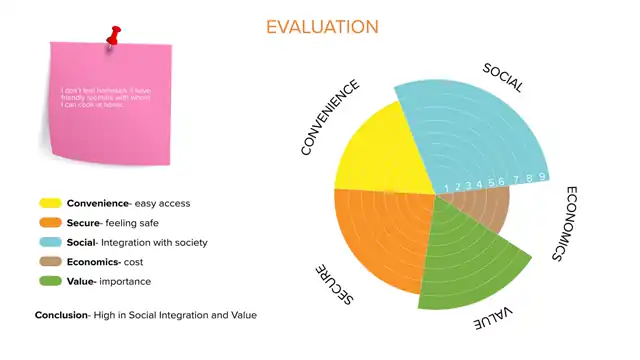
Design criteria are the explicit goals that a project must achieve in order to be successful. In this case, five different criteria were used to evaluate the principles generated.
1 / 3
03 / research process
Secondary research
We conducted secondary research using tools like popular media scanning, publications research and online surveys and also identified problems in different aspects like social, economic, personal, tech and information while in the process of transition.
1 / 3
05 / research process
Interview quotes
1 / 4
09 / research process
Principle generation
017 insights(clustered user stories)
02I find the modes oftransport expensive
03I need information about college and public transport.
04I cant't find a parkingspace.
05I am not aware about unsafe areas
06I find it difficult to travel late in night.
07I dont know how to use college resources
08I had no idea how toset up my house,buymy groceries.
09I am not aware abouttime distribution of courses.
10I find eating outside expensive
11I have problem with my roomates
Combining the Blue insights into principles for the final solution and ideation on the key issue of the user.
1 / 6
11 / research process
Final solution
After Evaluation, the pinks were combined to form a single green which forms the core basis of the customer journey.
1 / 5
Development process
12 / develoment process
Premortem
is a managerial strategy in which a project team imagines that a project or organization has failed, and then works backwards to determine what potentially could lead to the failure of the project or organization. In this case, we already thought that our solution has failed and then found preventive measures so that it does not fail.
13 / develoment process
Customer journey
The customer journey is the complete sum of experiences that customers go through when interacting with your company and brand. Instead of looking at just a part of a transaction or experience, the customer journey documents the full experience of being a customer. We did a pre and post customer journey to understand the emotions associated with our persona.
1 / 2
1 / 2
14 / develoment process
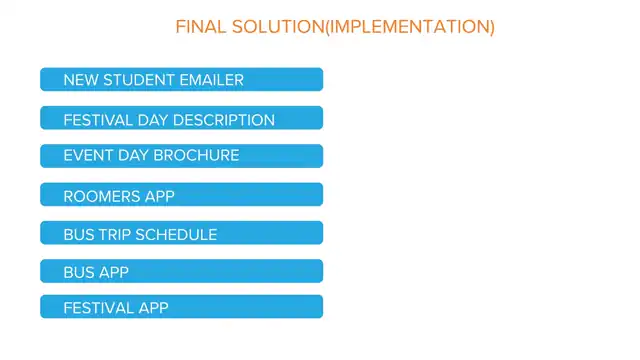
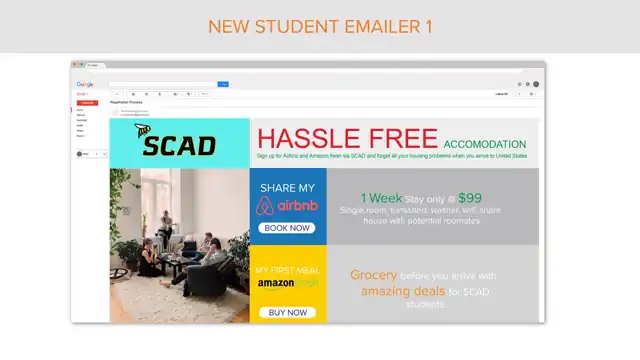
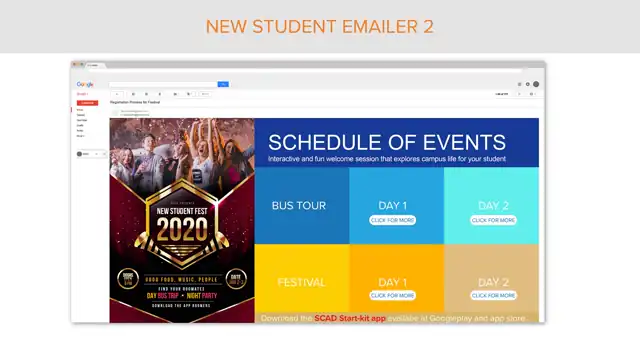
Final solution
1 / 9
15 / develoment process
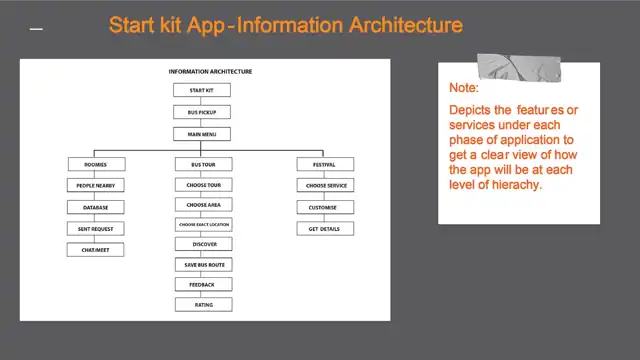
Information architecture (IA)
IA is the art and science of organizing and labelling websites, intranets, online communities and software to support usability and findability. According to the customer journey, I started creating the hierarchy of the application.
16 / develoment process
SCAD start kit
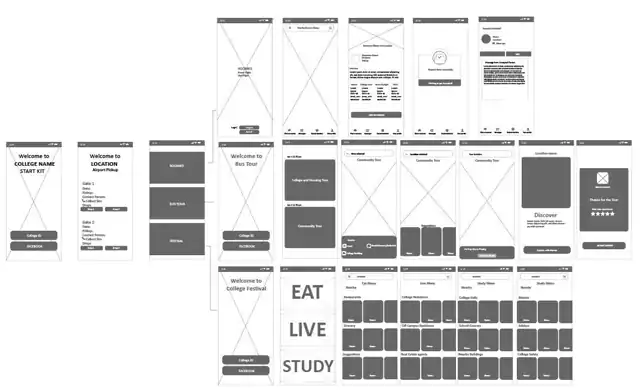
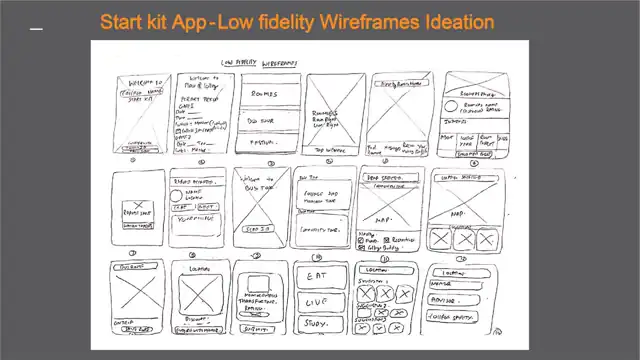
Low fidelity wireframes
19 / (low fidelity wireframes)
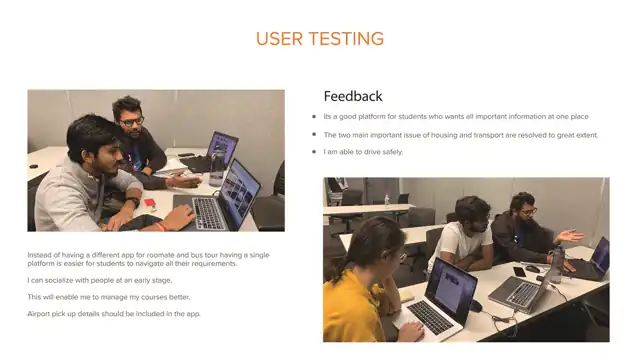
User testing
We began rapidly ideating a number of concepts before narrowing in on one and creating user flows, user stories and storyboards to define user requirements
Usability testing is the most common technique to check how usable your interface is from the human center design framework.
Medium fidelity wireframes
medium fidelity wireframes
19 above
The wireframe is a page schematic or screen blueprint, is a visual guide that represents the skeletal framework of an application. According to the sketches, I started creating the skeletal of the application.
20 / medium fidelity wireframes
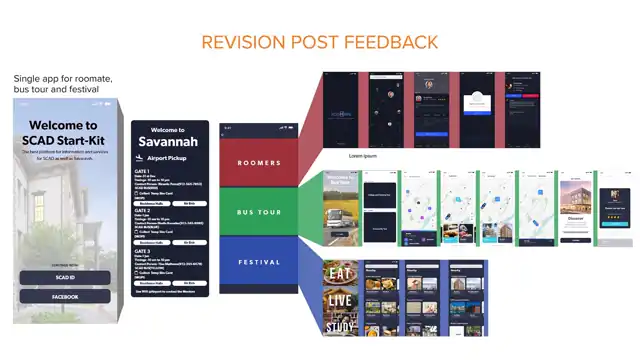
Revision
21 / medium fidelity wireframes
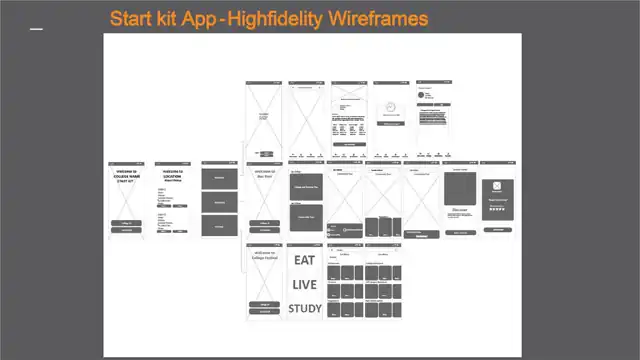
High fidelity wireframes
22 / medium fidelity wireframes
Interactive prototyping
23 / medium fidelity wireframes
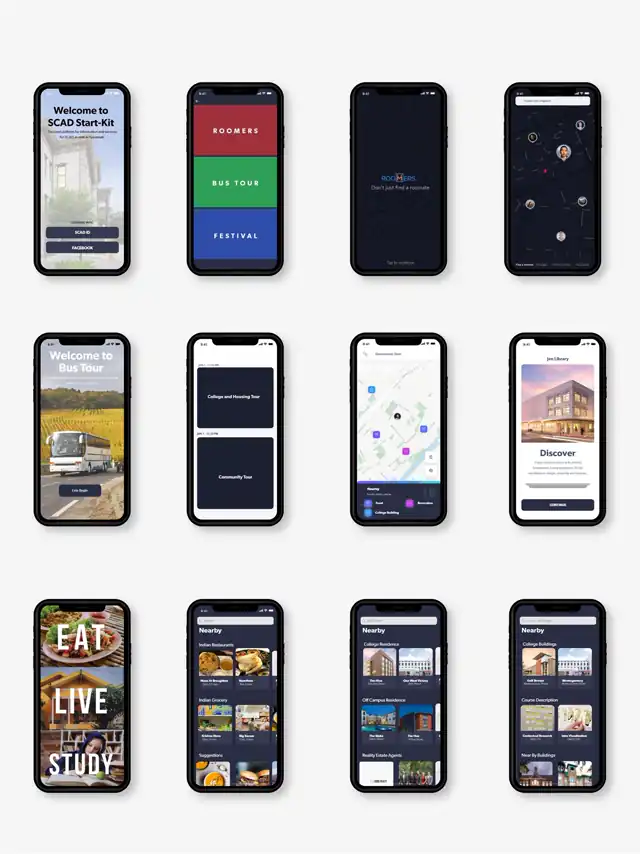
App demonstration
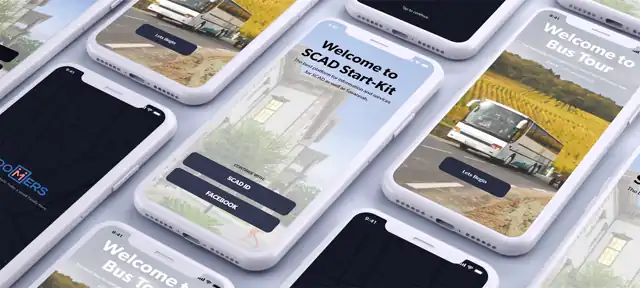
Following is the app demonstration of the SCAD Start Kit specially made for students during transition. This kit will help students finding-
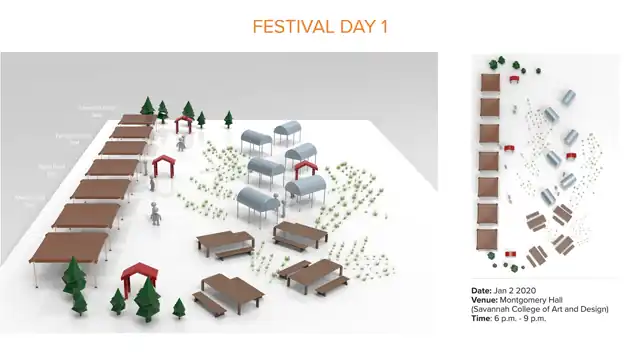
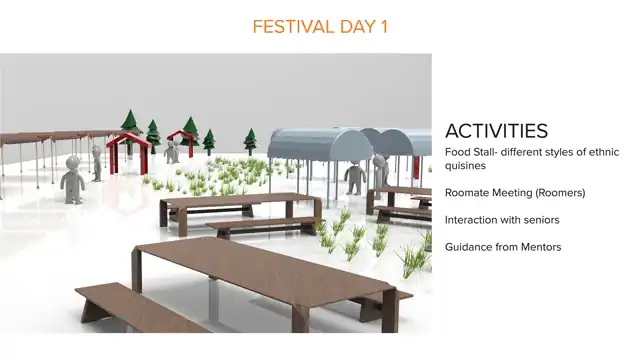
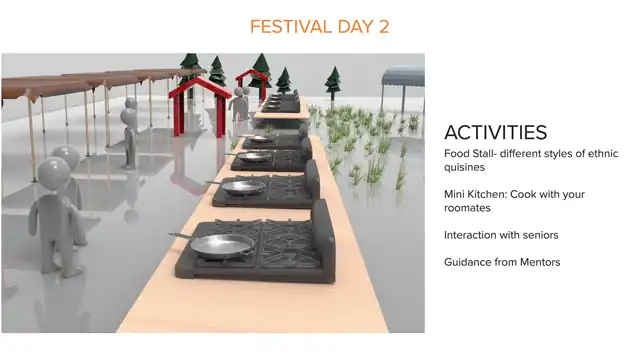
01Roommates, interact with them.
02Visit community and college buildings.
03Save routes to various buildings for future.
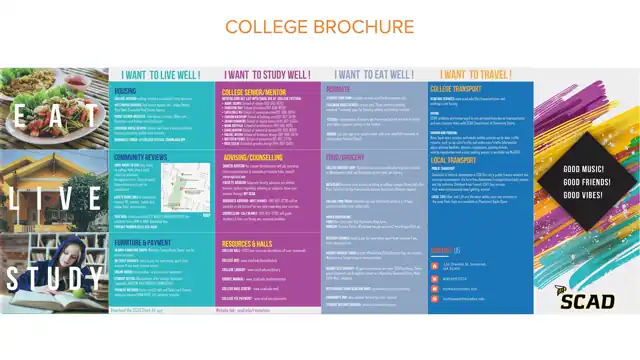
04Customized Information regarding EAT, LIVE, STUDY.
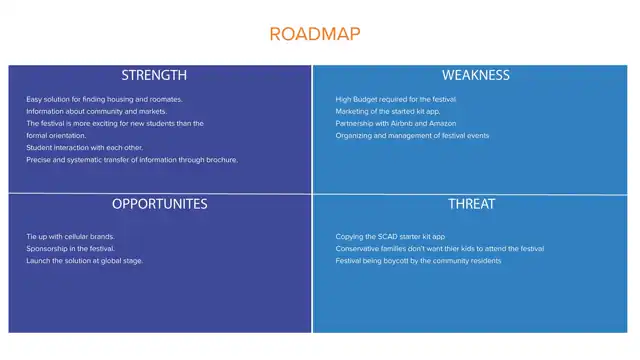
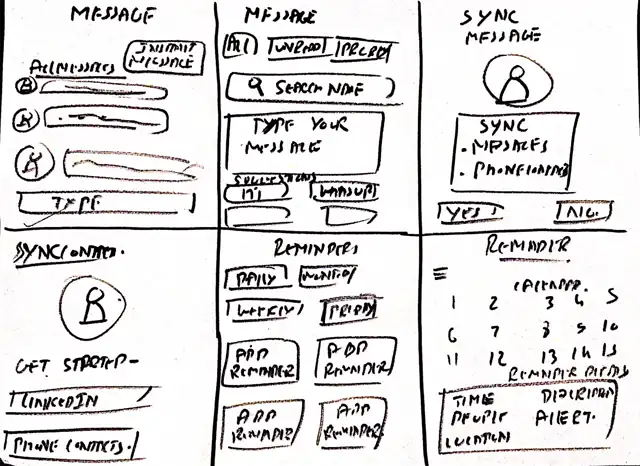
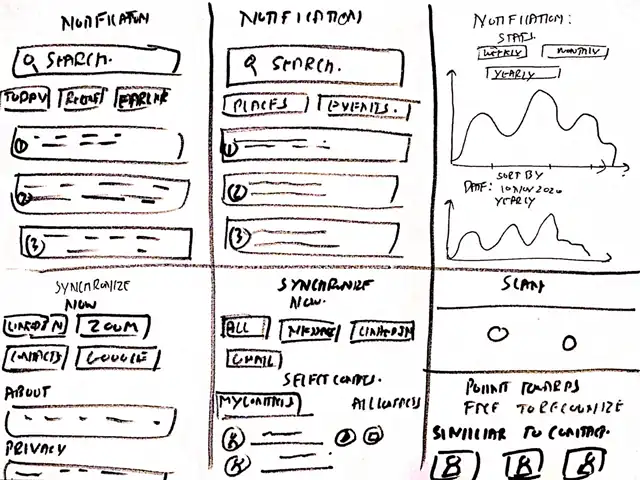
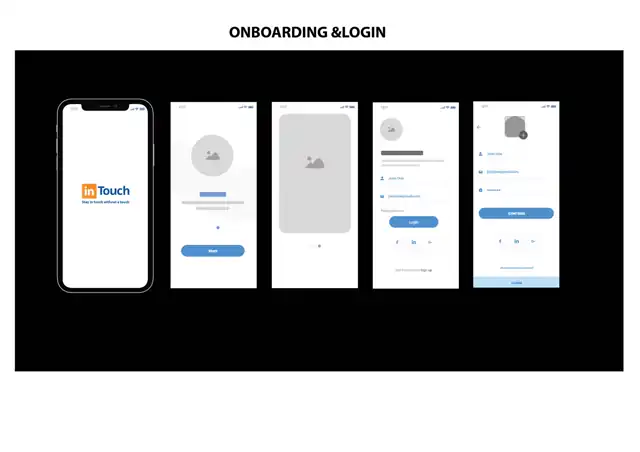
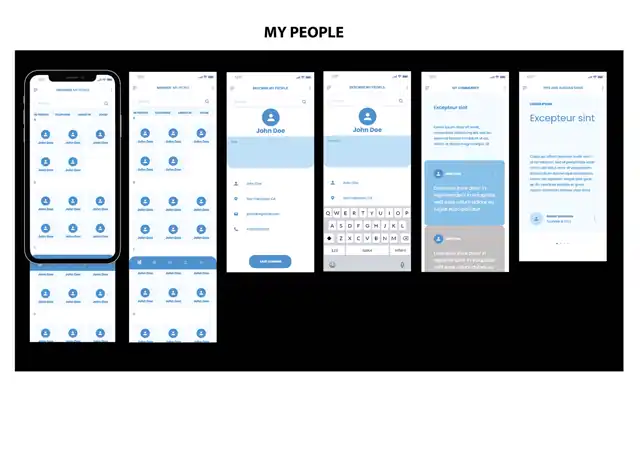
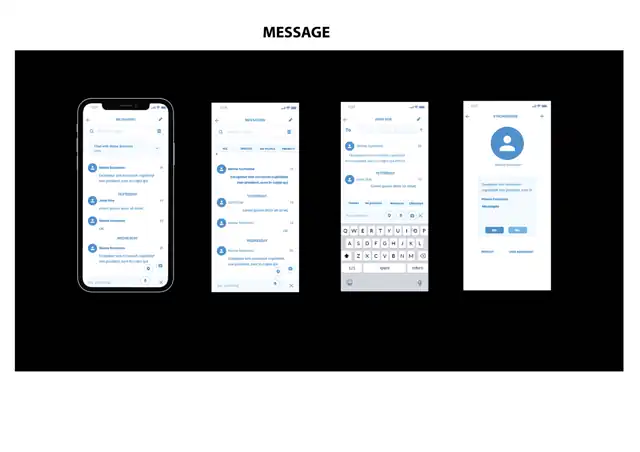
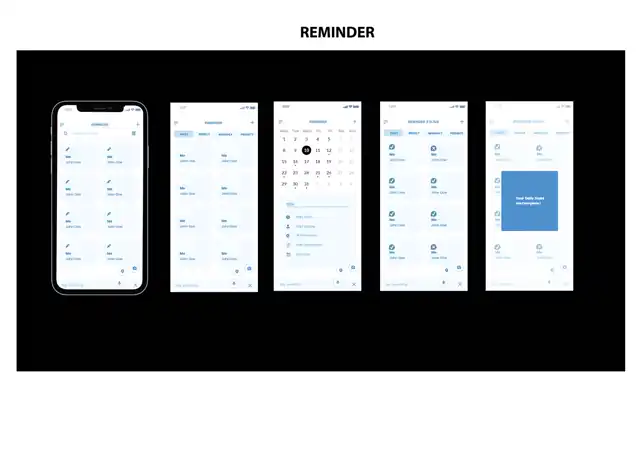
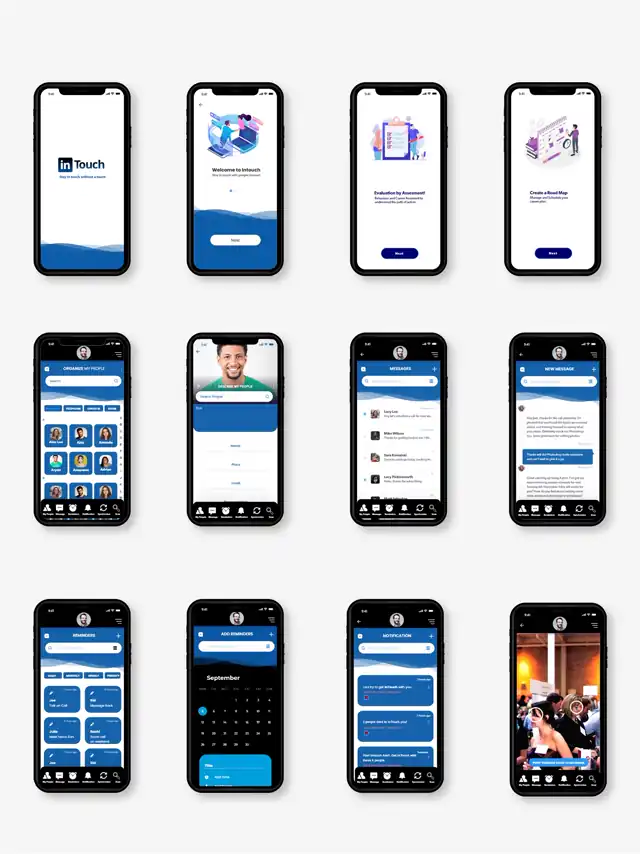
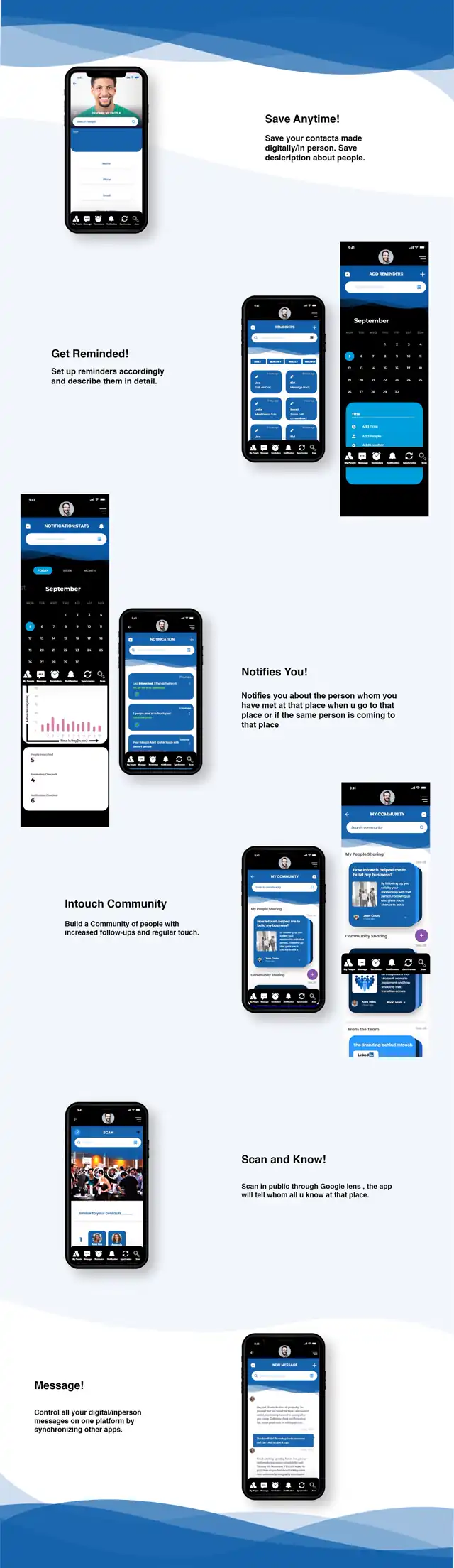
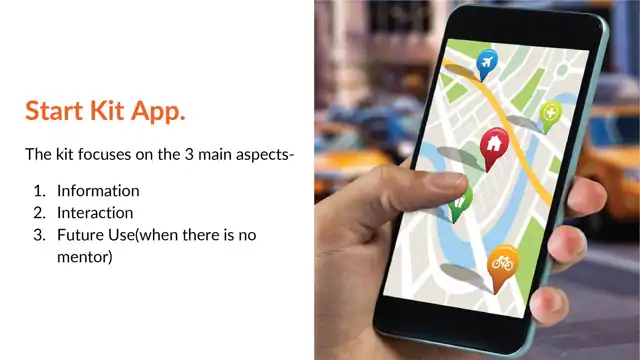
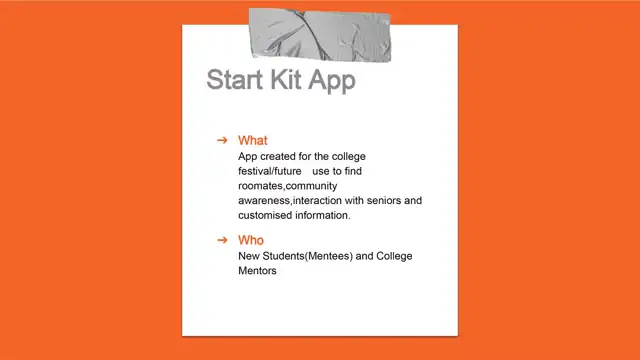
The app keeps a database of people you meet whether in person or digitally with the specific details and keep reminding you according to weeks, months and years. It even notifies you of the people you have met if you are going to a new place, with the scanner you can even recognize them with the database available. The app is basically an extension of Linkedin.
02 / the project
Function
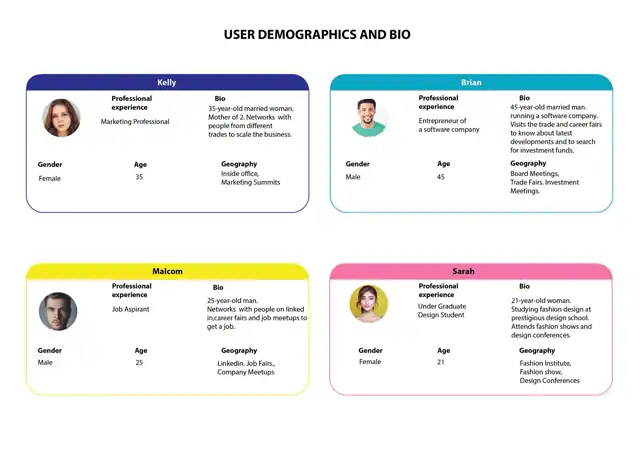
1)Save your contact made digitally/in person. Save notes about them. 2)Send Reminders on Daily. Weekly and Monthly basis of your connection. 3)Notifies you about the person whom u ve met at that place when u go to that place or if the same person is coming to that place. 4)Scan in public through Google lens, the app will tell whom all u know at that place.
03 / the project
User group
01Save contacts
02Make notes and message
03Get reminded
04Get notified
05Scan to recognize
•Working professionals •Entrepreneurs •People searching for jobs. •Undergraduate and Graduate Students
04 / the project
Goals
01Provide a useful app to decrease confusion and barriers to conversation.
02Build a Community of people with increased follow-ups and regular touch.
03Create an impact on people to make them aware of staying in touch.
04Make money out of the subscriptions.
05 / the project
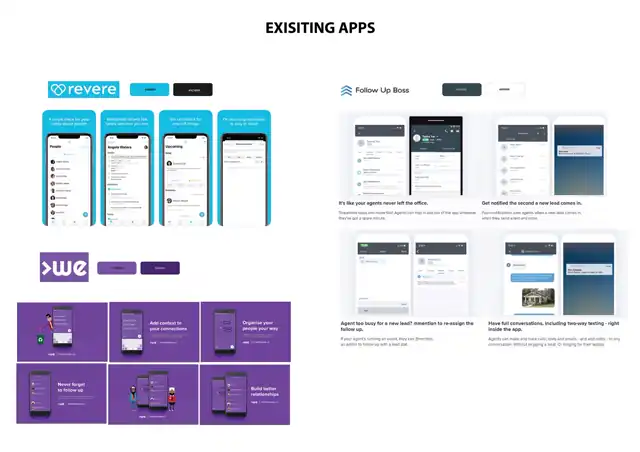
Existing apps
06 / the project
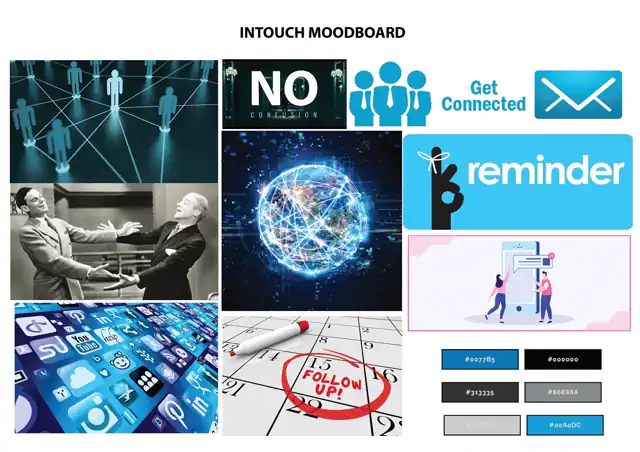
Moodboard
07 / the project
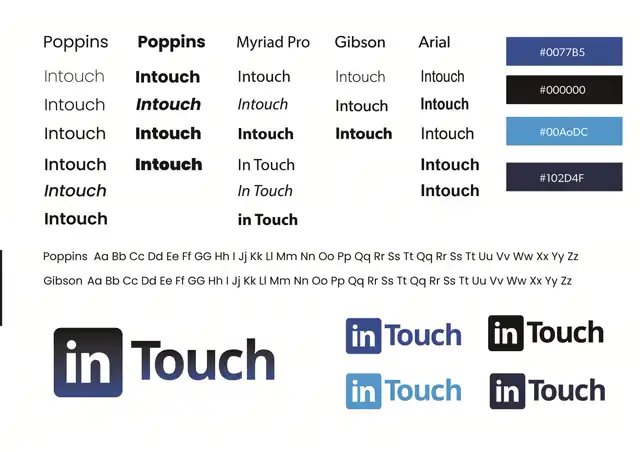
Branding
08 / the project
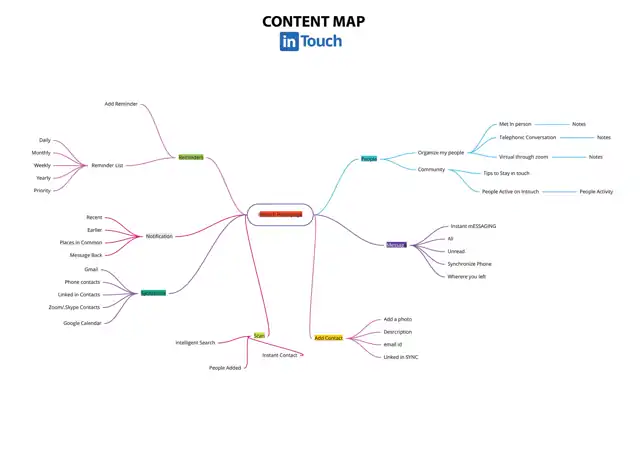
Content map
A content map is a plan to deliver the right content, to the right people, at the right time. The content map should have CLARITY, HIERARCHY, MODULARITY, AND GROWTH POTENTIAL.
09 / the project
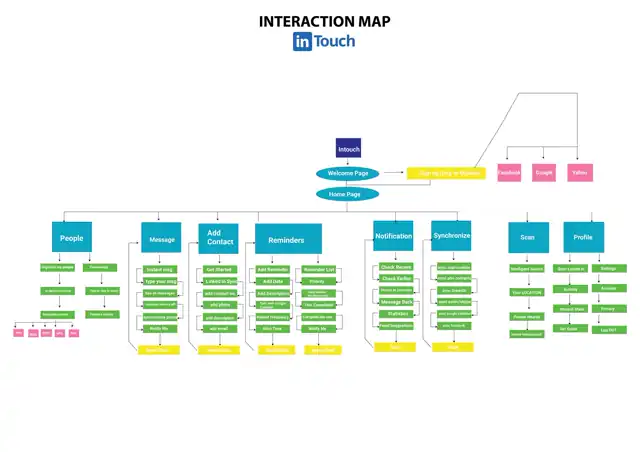
Interaction map
Interactive mapping involves using maps that allow zooming in and out, panning around, identifying specific features, querying underlying data such as by topic or a specific indicator. In this case, I have developed an interactive map of
Intouch by working on the following assumptions of interactions of our targeted user.
10 / the project
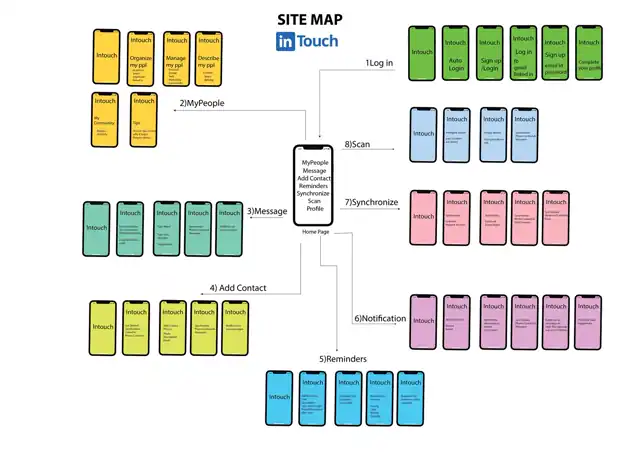
Site map
A site map is a visual or textually organized model of a web site/app's content that allows the users to navigate through the site to find the information they are looking for, just as a traditional geographical map helps people find places they are looking for in the real world
11 / the project
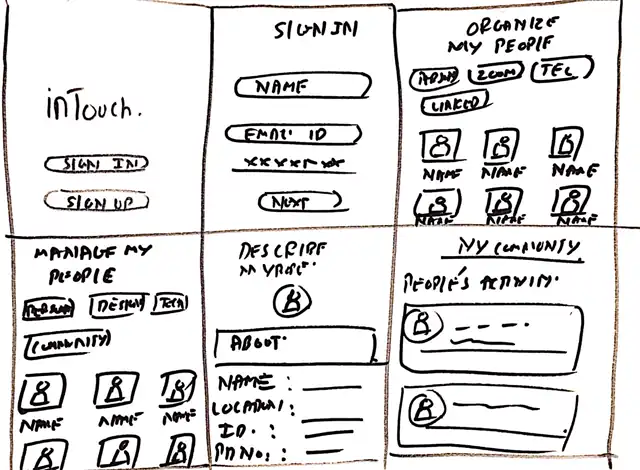
Paper prototypes
In human-computer interaction, paper prototyping is a widely used method in the user-centered design process, a process that helps developers to create software that meets the user's expectations and needs—in this case, especially for designing and testing user interface. After creating the site map, I began to create basic sketches of a near-final prototype.
1 / 3
12 / the project
Low fidelity wireframes
Low fidelity wireframes enable teams to be Agile, meaning they help project stakeholders determine the best solution for end-users faster. I began rapidly ideating a number of concepts before narrowing in on one and creating user flows, user stories, and storyboards to define user requirements
1 / 4
13 / the project
High fidelity wireframes
A high fidelity wireframe captures the look and feels of the product in the advanced stages of the design process.
14 / the project
Interactive prototyping
Interactive prototyping is a critical step in the app design phase. It allows one to validate your ideas and concepts. in this, I have listed the main functions of the app first and have attached a clickable prototype for the user to test the application.
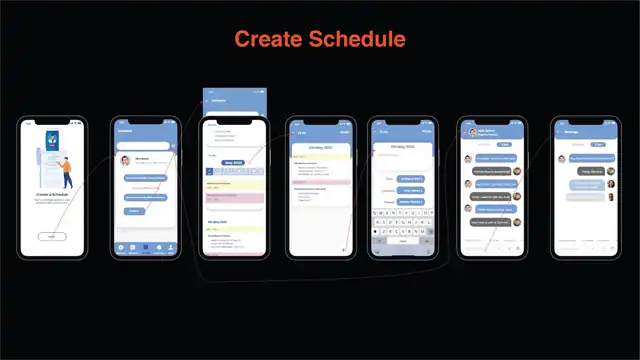
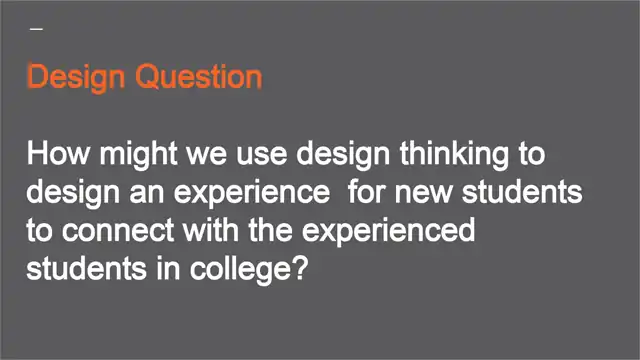
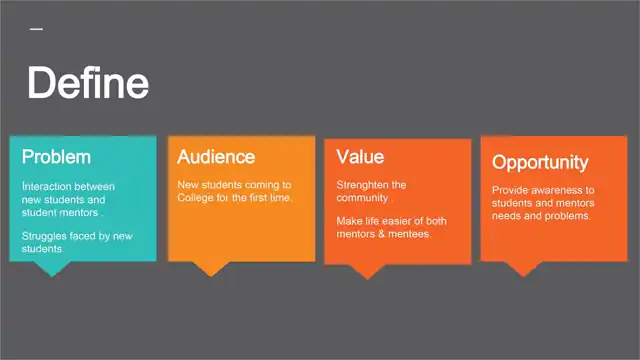
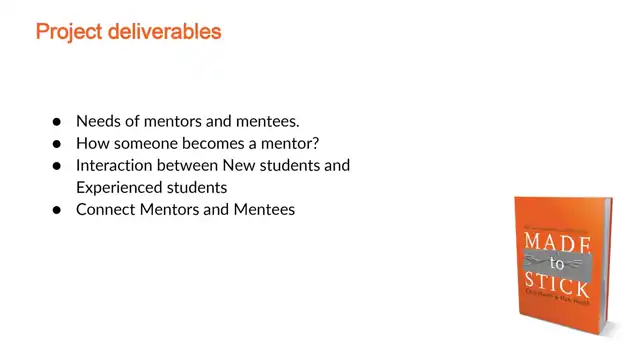
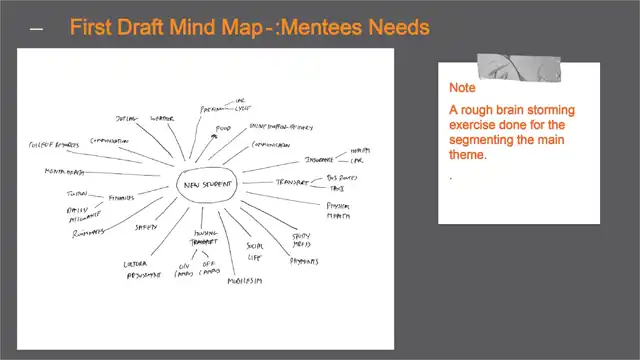
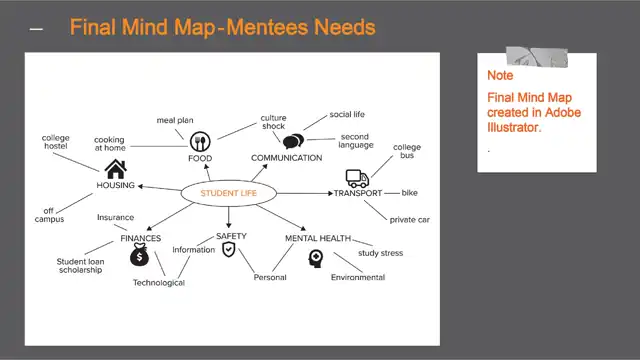
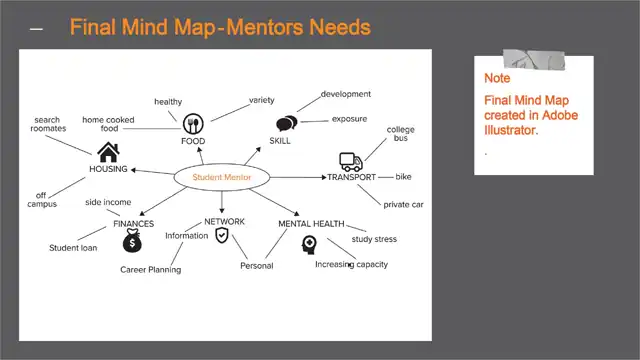
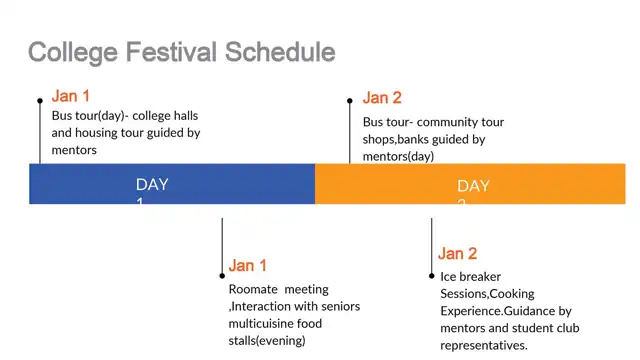
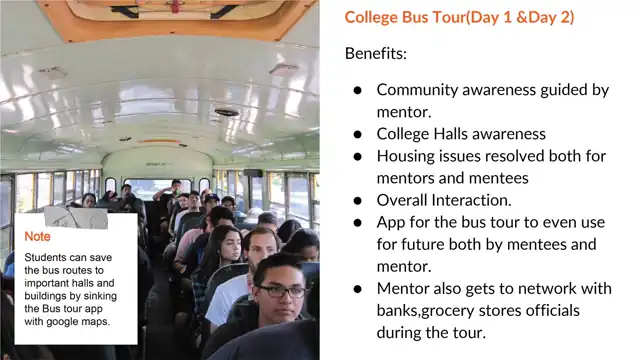
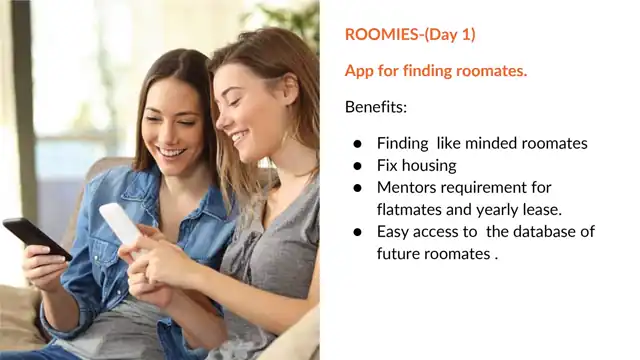
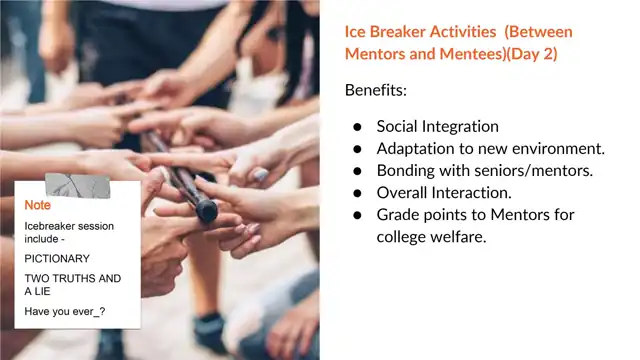
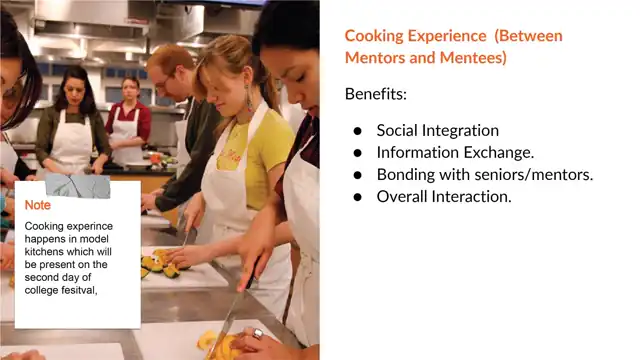
Your school wants to strengthen the community by encouraging experienced students to connect with new students and help them adjust to campus life. Design an experience that allows mentors and mentees to discover each other. Consider the needs of both mentors and mentees, including how someone may become a mentor and how to connect mentors to mentees
timeline
1 Week
target audience
New Students and existing students.
The challenge
Your school wants to strengthen the community by encouraging experienced students to connect with new students and help them adjust to campus life. Design an experience that allows mentors and mentees to discover each other. Consider the needs of both mentors and mentees, including how someone may become a mentor and how to connect mentors to mentees
01
Design question
02
Define: the intent
03
Project targets
04
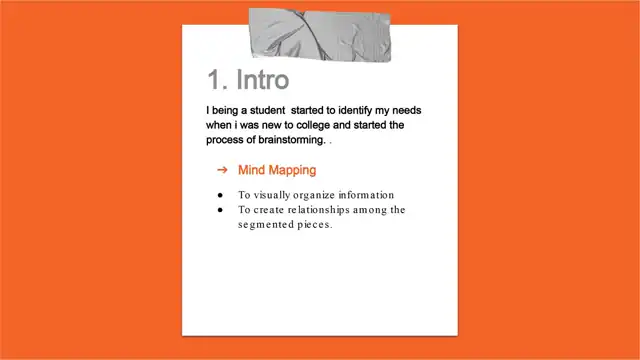
Introduction
05
Brainstorming
1 / 3
06
Secondary research
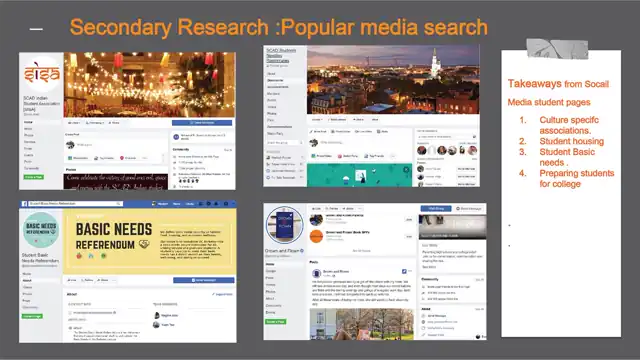
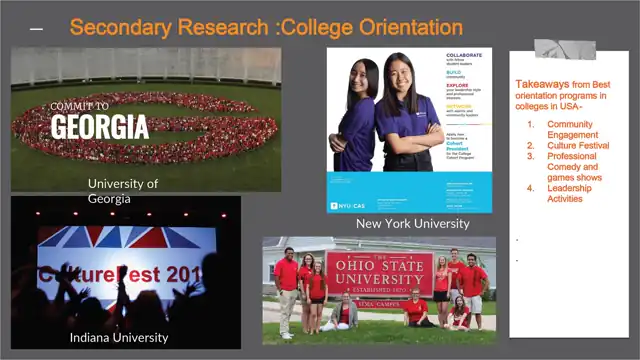
I conducted secondary research using tools like popular media scanning, publications research, and online research on existing college student association groups and orientation programs.
1 / 2
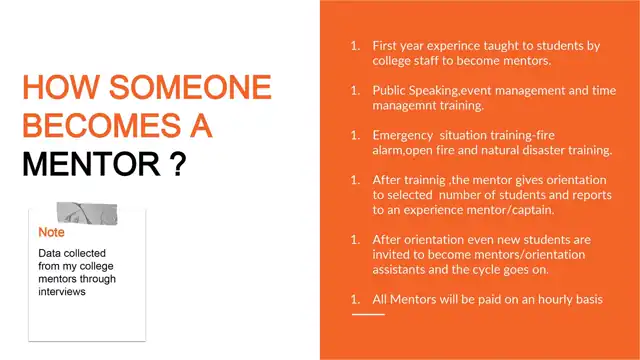
I even conducted research on mentor making process by collecting data from my college mentors and my college website. I even went through some different international colleges' website for this.
07
Design criteria
08
Schedule
1 / 6
09
Digital
1 / 2
10
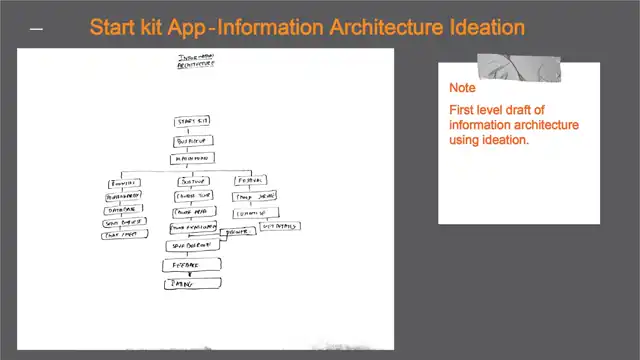
Information architecture
IA is the art and science of organizing and labelling websites, intranets, online communities, and software to support usability and findability. In this case, due to the limitation of time I worked on a rapid information architecture.
1 / 2
11
Wireframes
The wireframe is a page schematic or screen blueprint, is a visual guide that represents the skeletal framework of an application. According to the sketches, we started creating the skeletal of the application.
Hackathon. I participated in 48-hour hackathons both at the college and professional level to enhance my knowledge and experience by collaborating with people from different fields like Motion Designers, Industrial Designers, Architects and Service Designers.
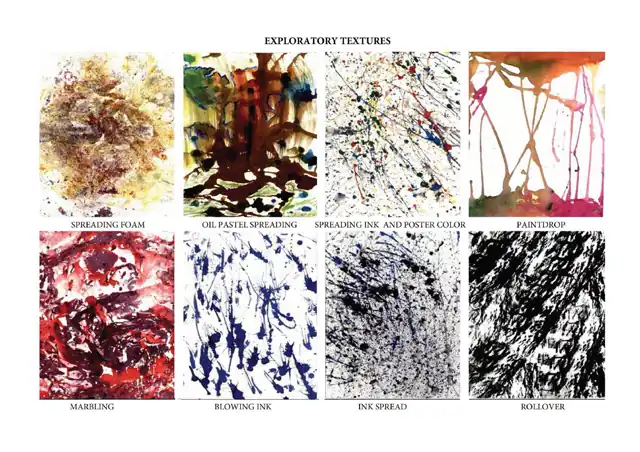
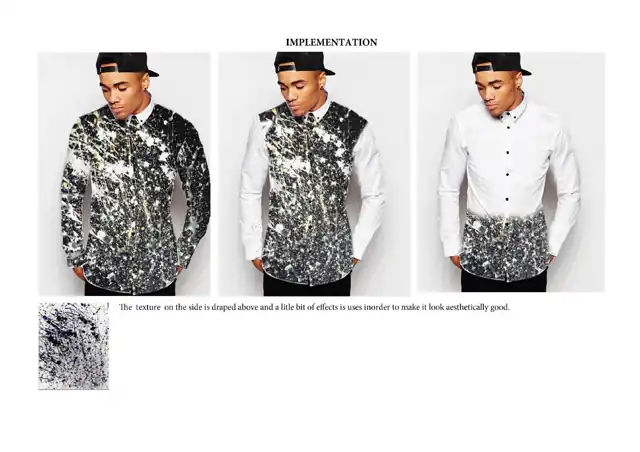
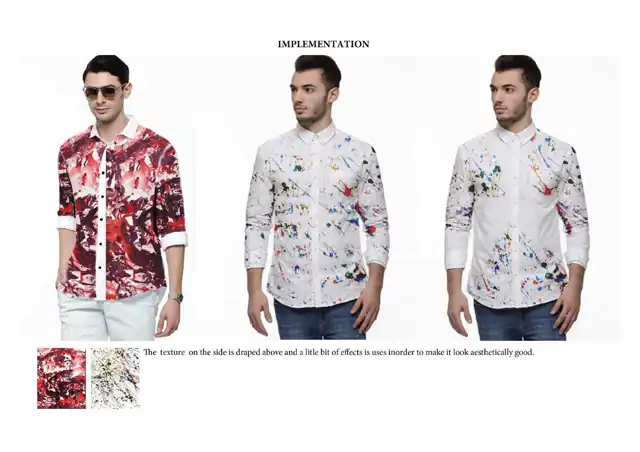
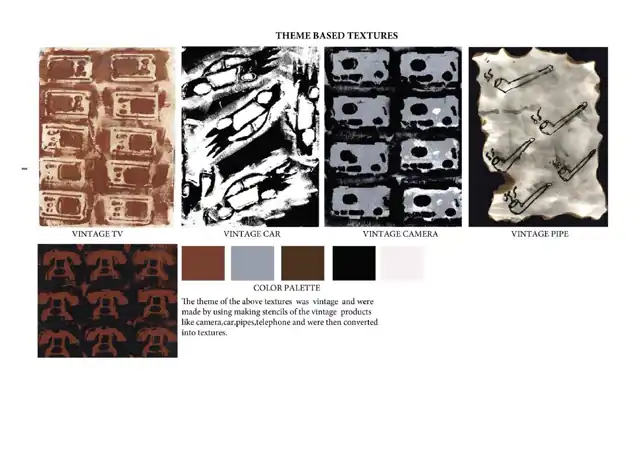
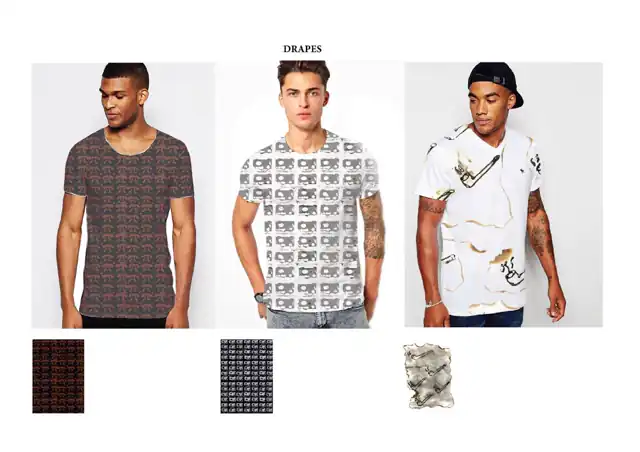
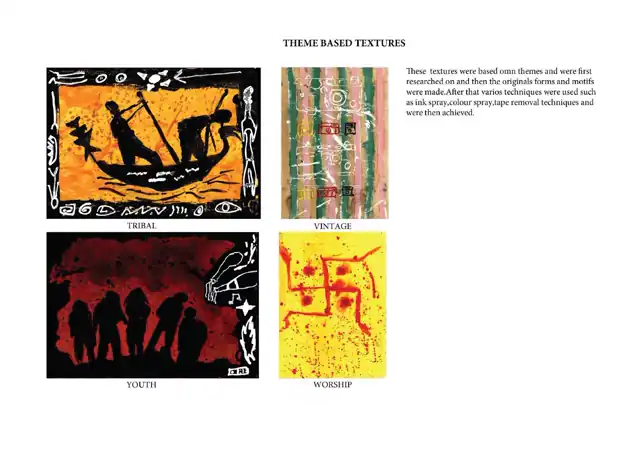
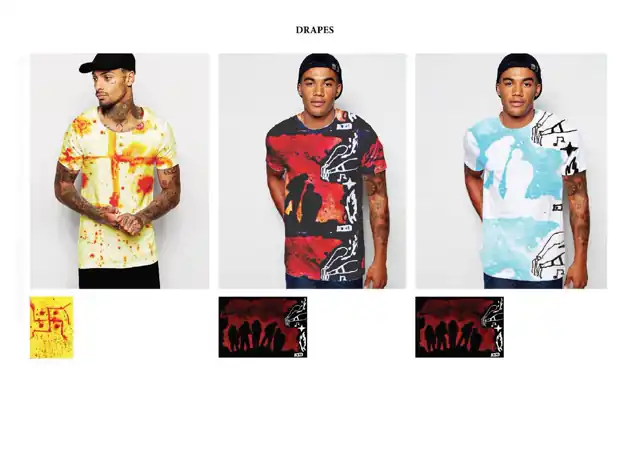
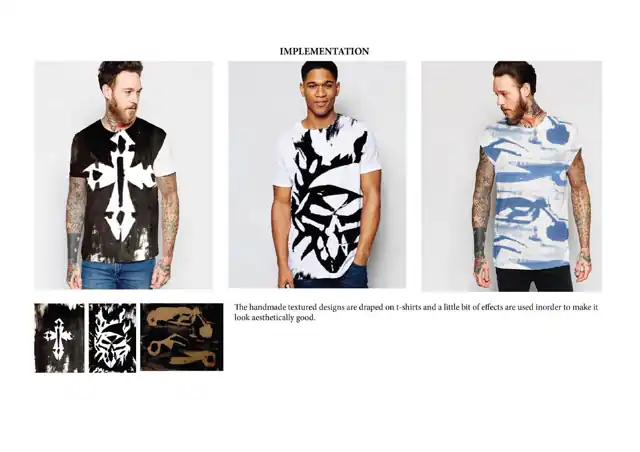
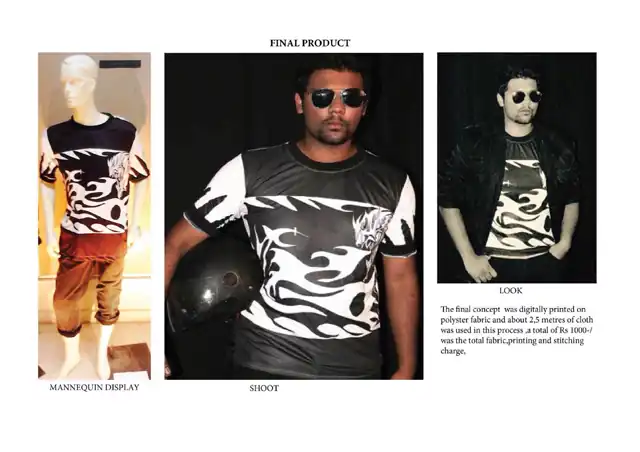
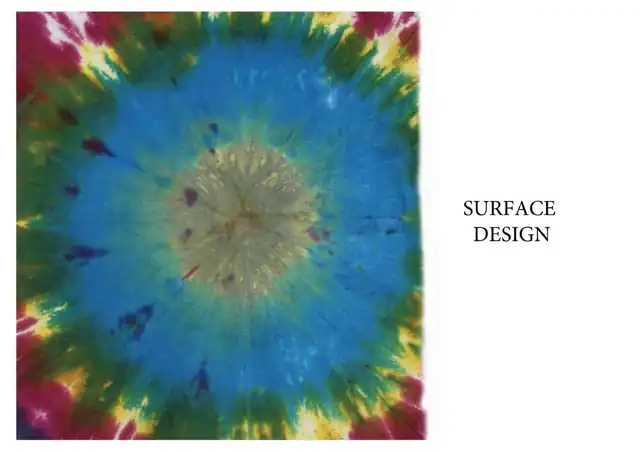
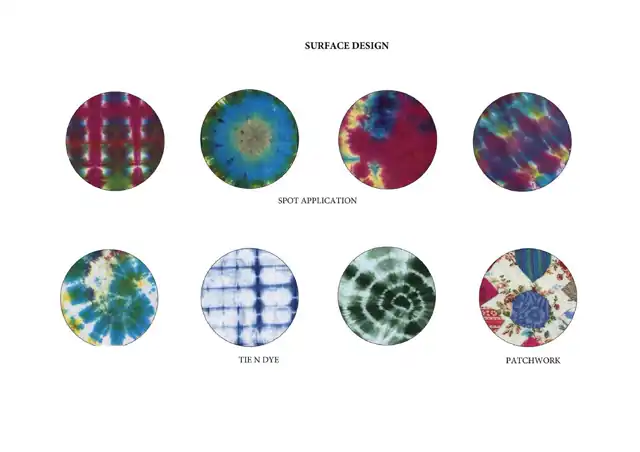
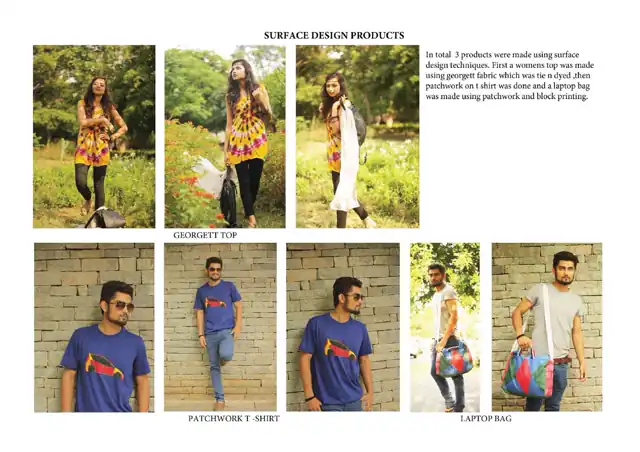
Work from earlier companies and my undergraduate education: product, experience and visual design, branding, apparel graphics, textiles, illustration and type. The craft years behind the strategy.
Product design
Product design is the process of creating and developing a new product or improving an existing one to meet the needs and desires of users. It encompasses a wide range of activities, including research, conceptualization, prototyping, testing, and refinement.
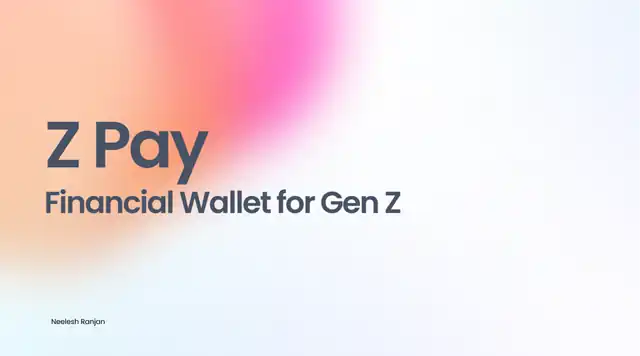
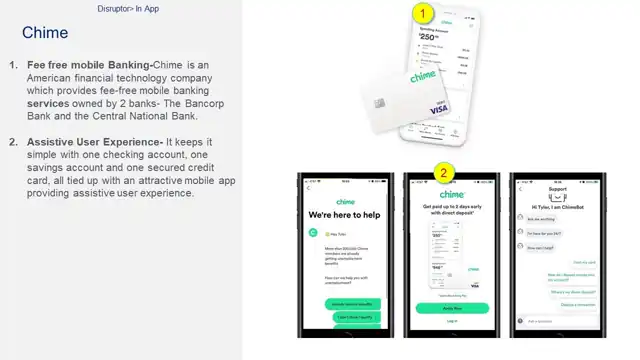
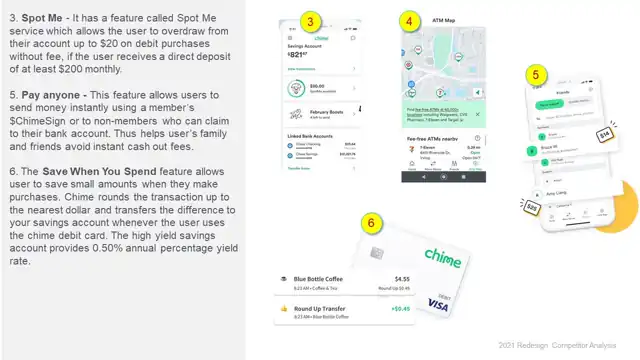
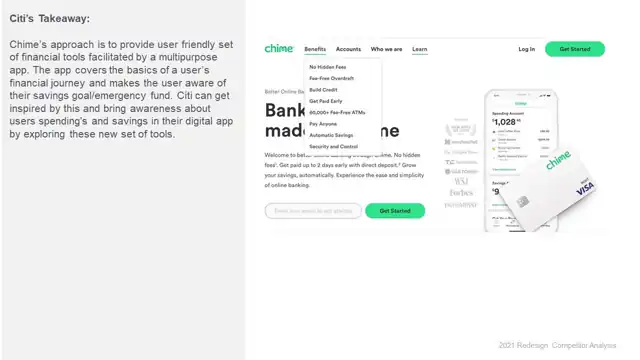
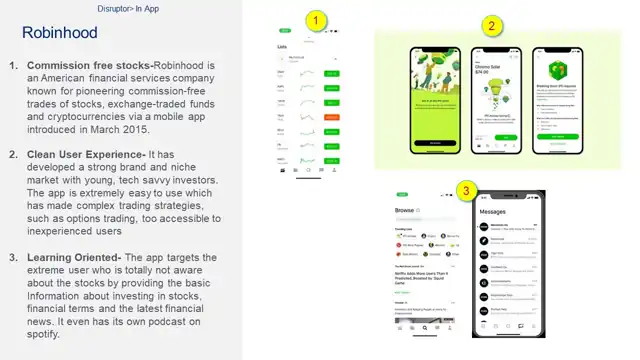
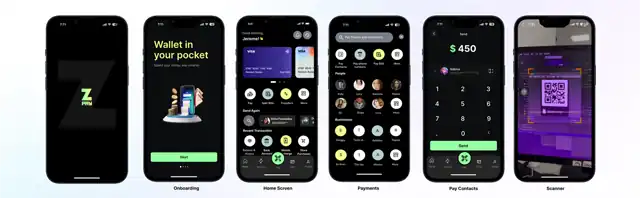
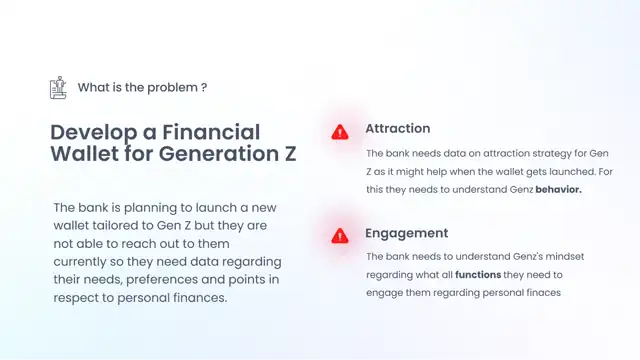
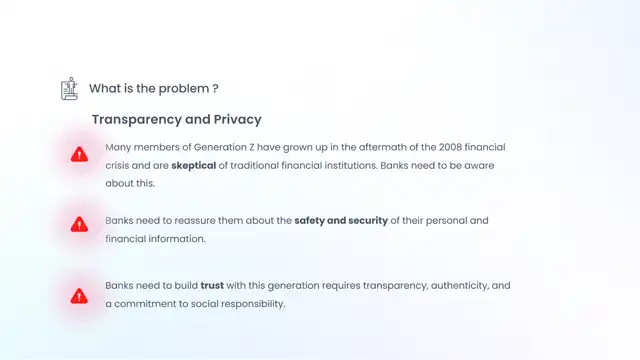
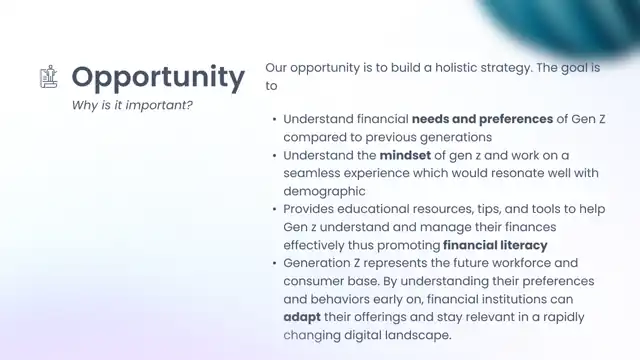
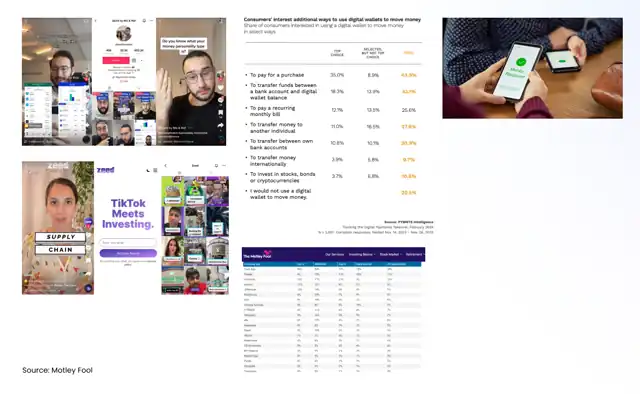
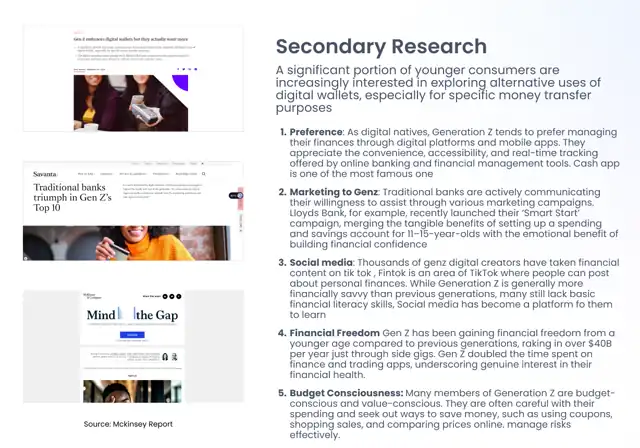
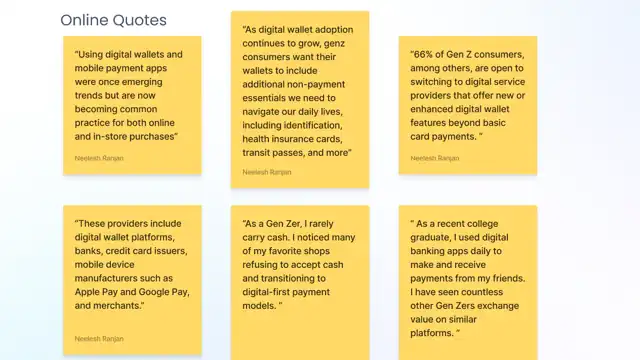
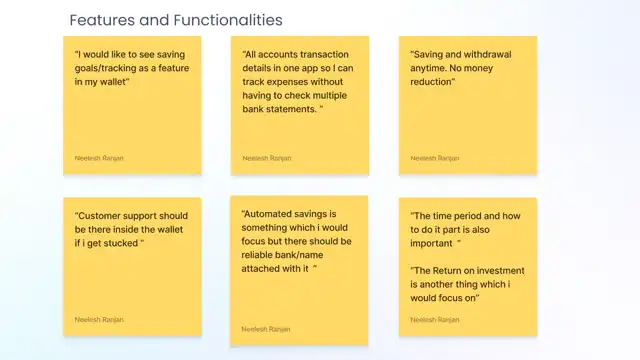
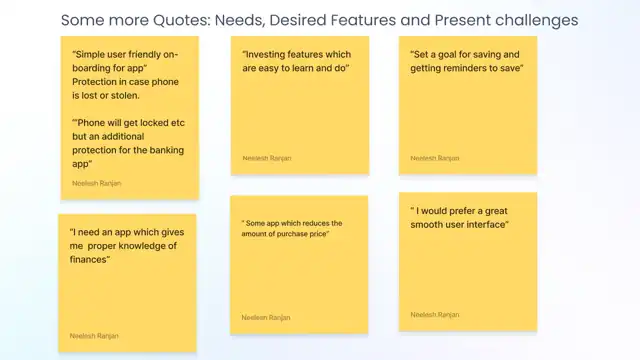
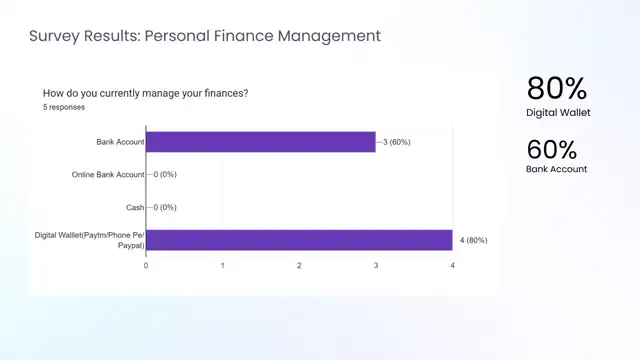
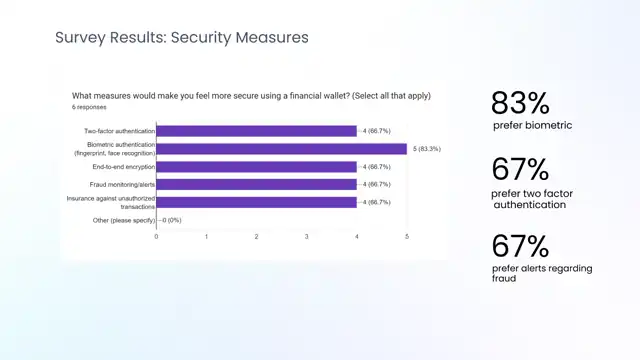
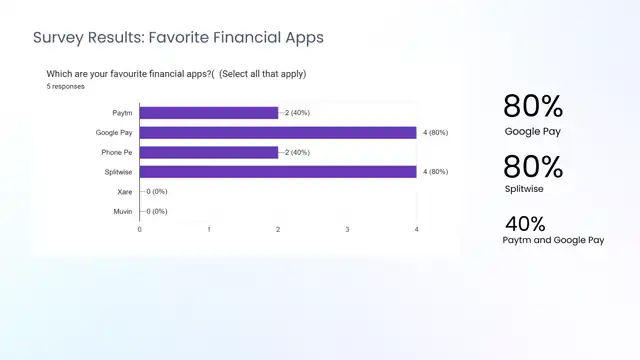
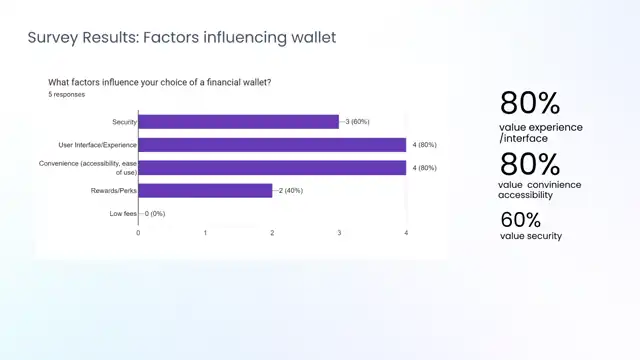
The objective of this project was to design a digital wallet for Generation Z by understanding the mindset of that generation. To understand the mindset I tried to understand the needs, desired features, and pain points of Gen Z concerning their finances. With a user-centric approach, I aimed to create a digital wallet that can provide a seamless and frictionless experience for this generation.
25 images
Experience design
Experience Design is the process of designing products, processes, services, events, and environments with a focus on the quality of the user experience
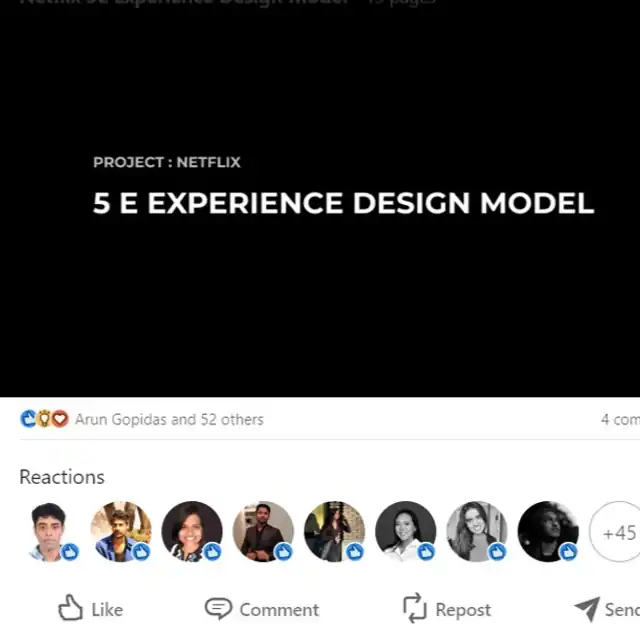
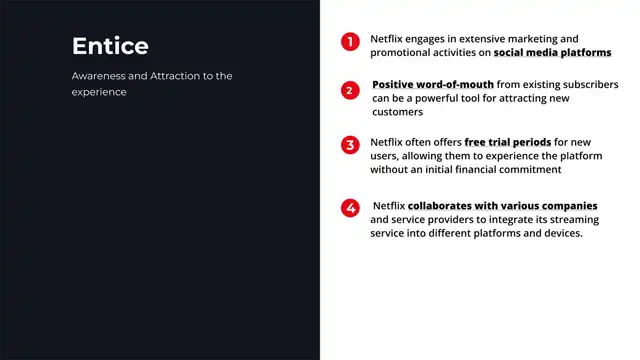
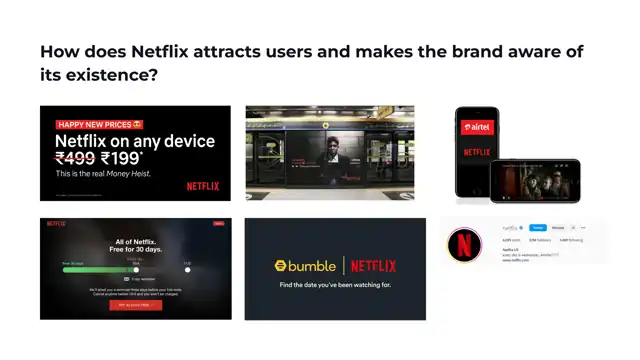
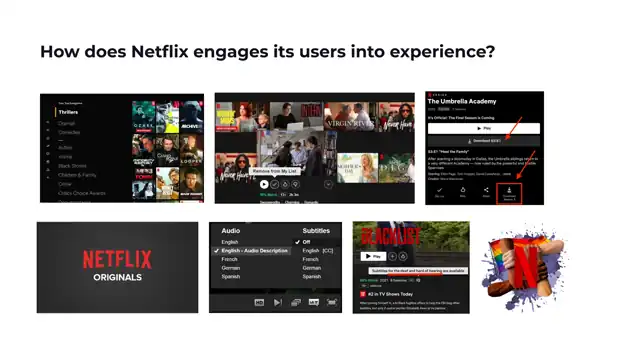
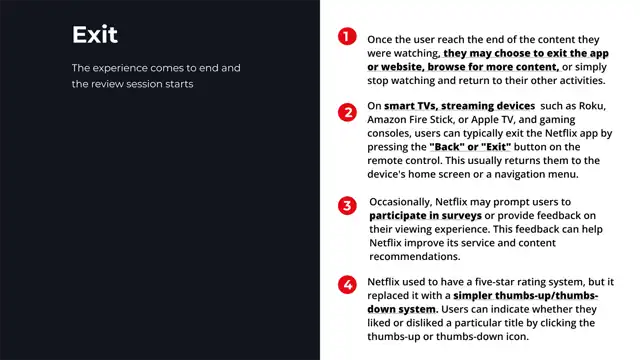
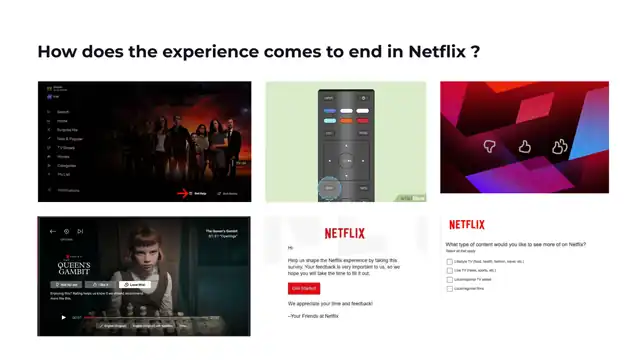
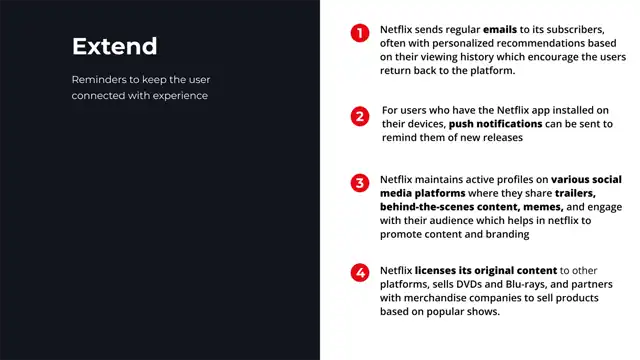
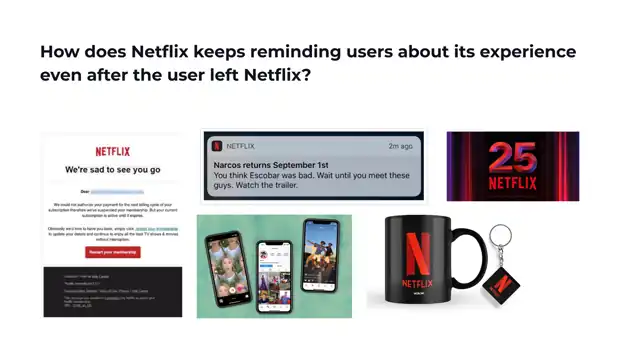
case study 01Netflix — the 5E experience model
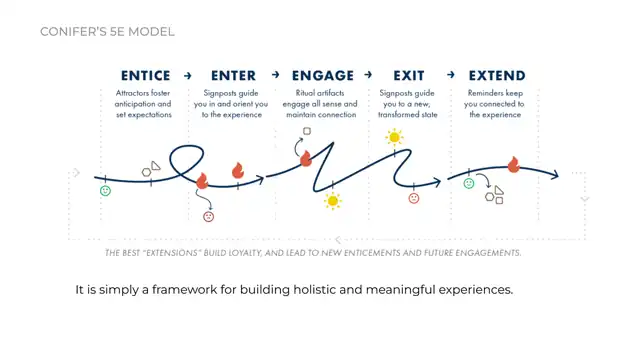
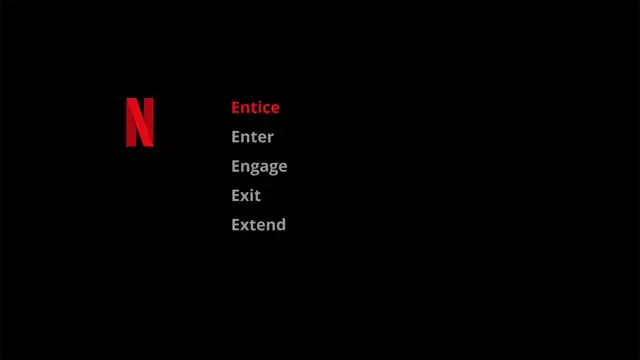
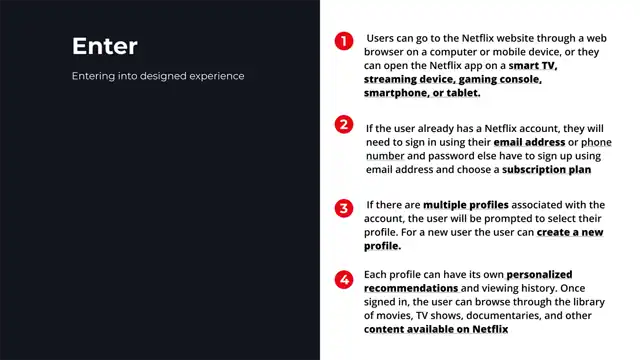
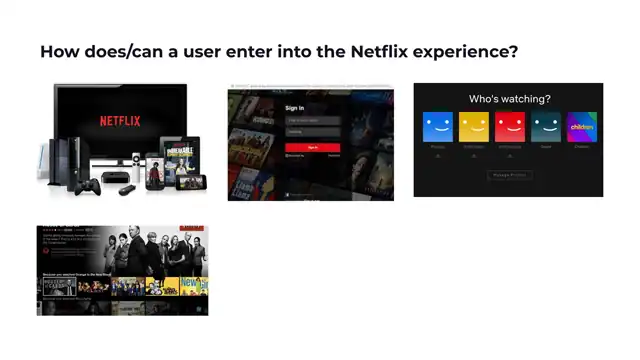
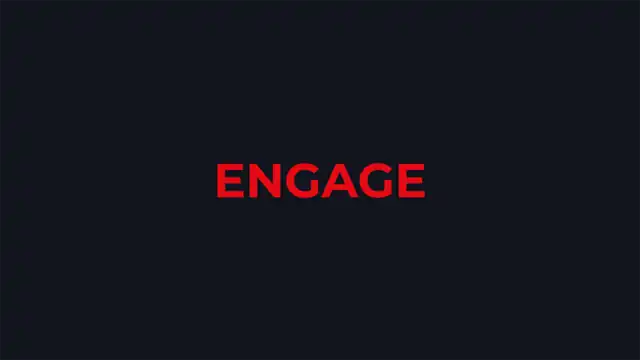
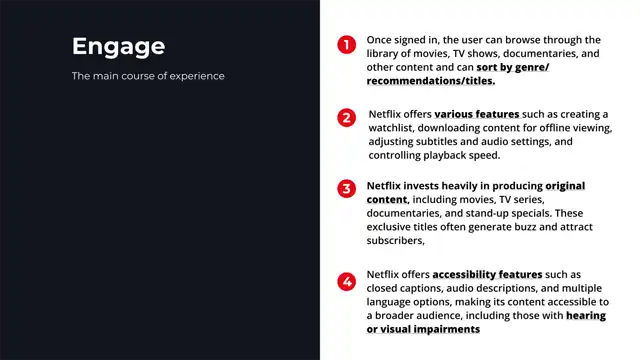
This experience design model was created for Netflix and was a consulting project for a design studio. The 5E model is beneficial to help align a team and access collective creativity and distributive leadership models that enable collaboration and design in complexity. It is an integrative model that can add coherence, elegance, and excitement to your service or experience
19 images
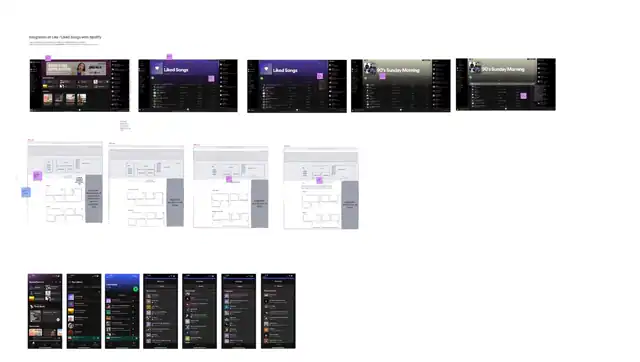
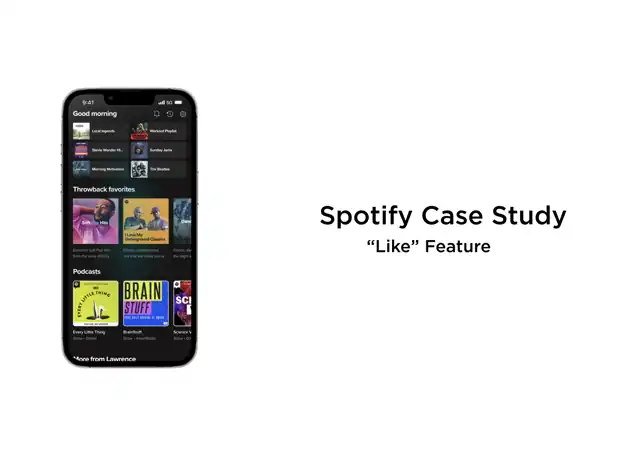
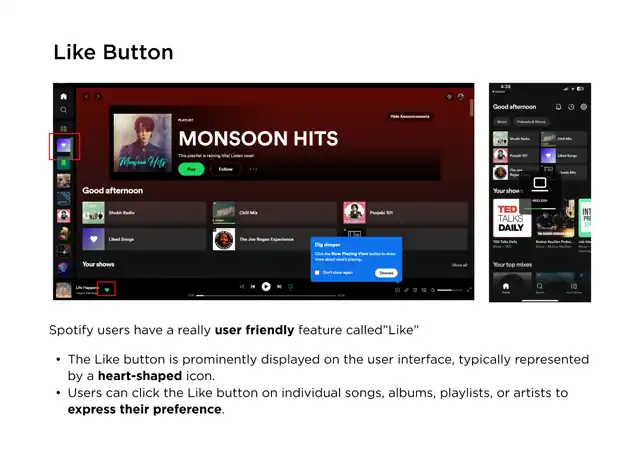
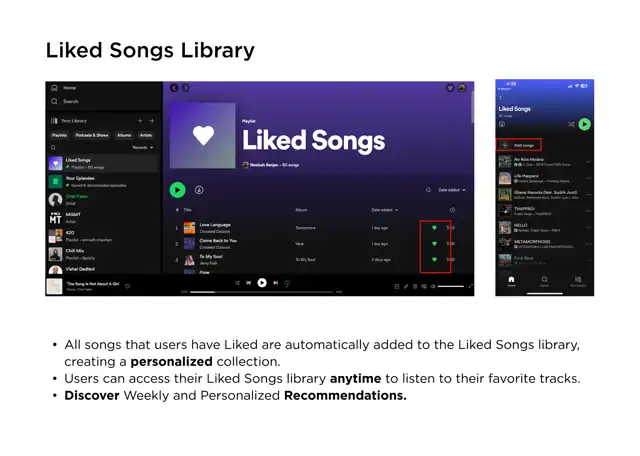
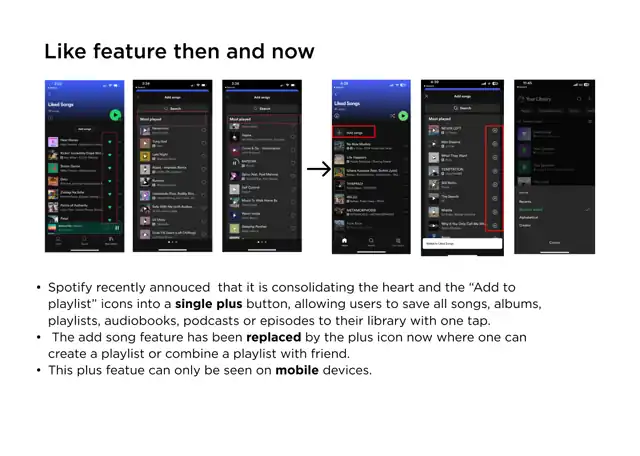
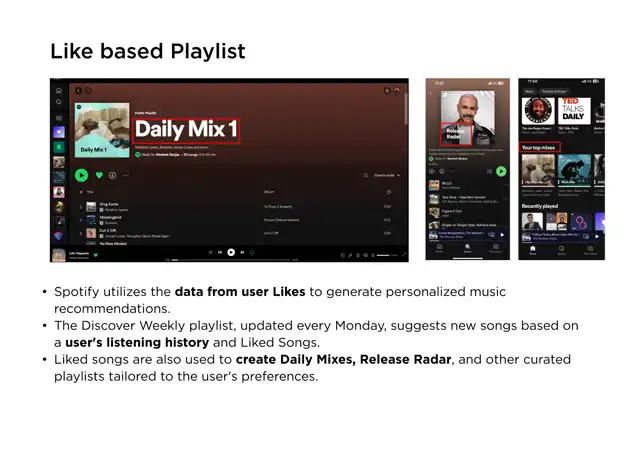
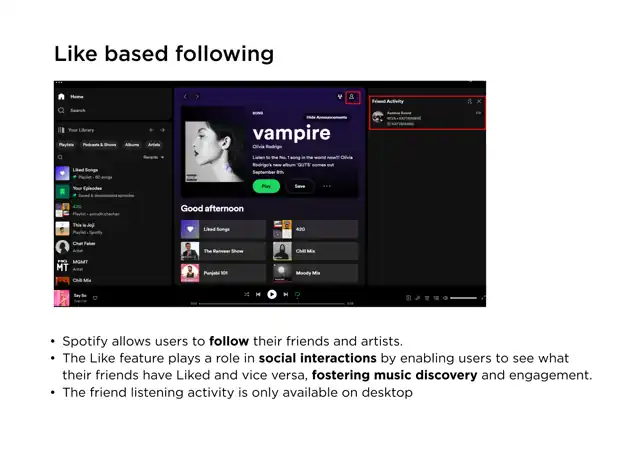
case study 02Spotify — the “Like” feature
This case study is about the context, functionality, and remarkable outcomes that the "Like" feature has brought to Spotify and its users.
Feature analysis in UX involves examining the functionality and characteristics of individual features within a product or service to understand their impact on the user experience.
9 images
Visual experience
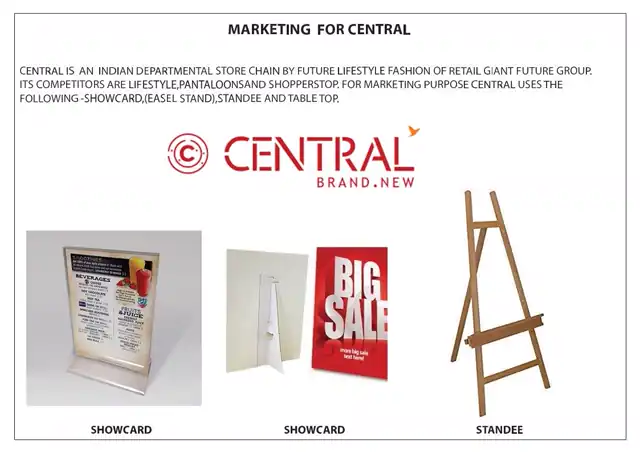
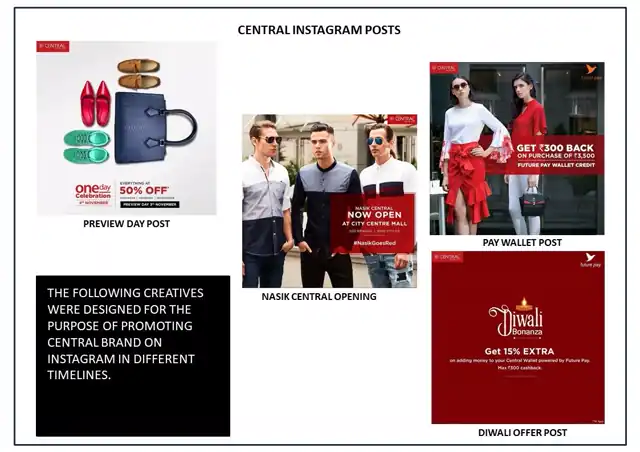
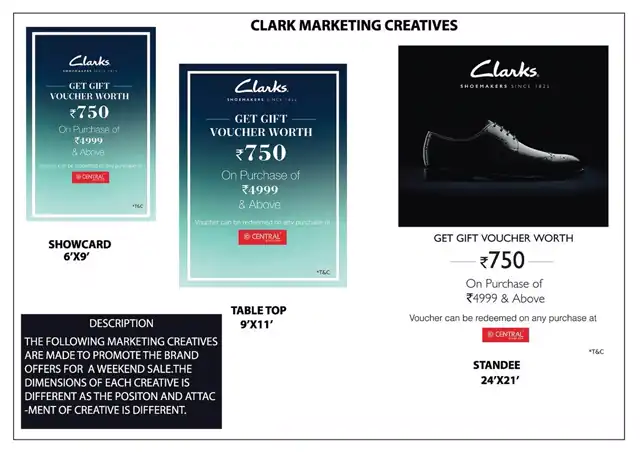
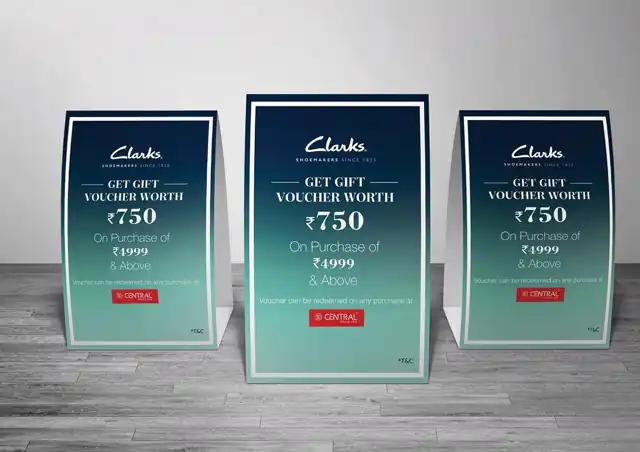
Visual experience refers to the subjective perception and interpretation of visual information by an individual through their sense of sight. In this case, my role was to increase customer interpretation of central and associated brands in both online and offline markets through brand promotions.
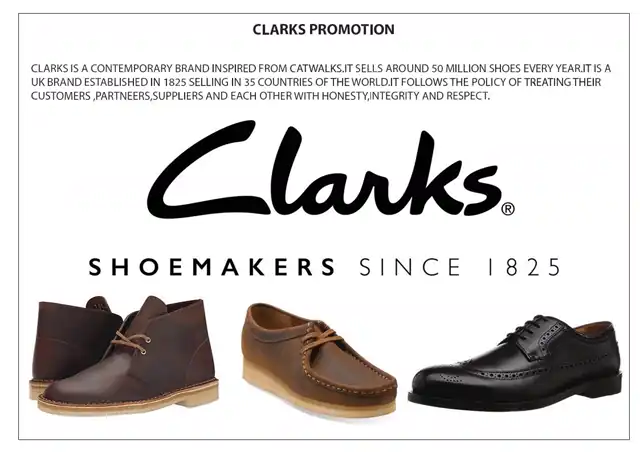
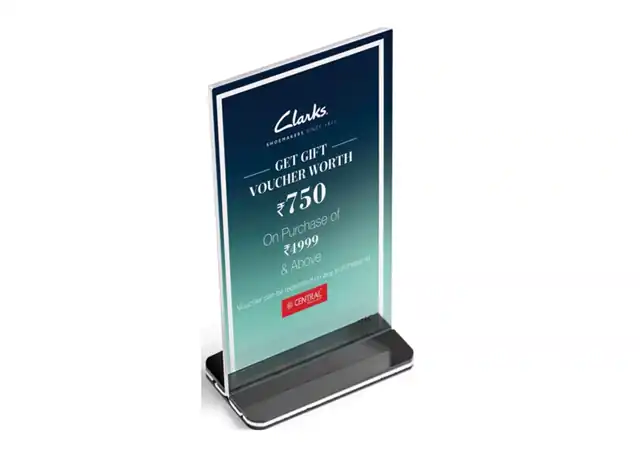
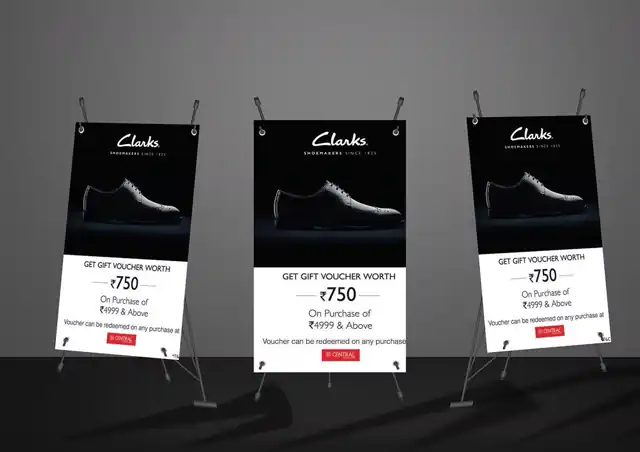
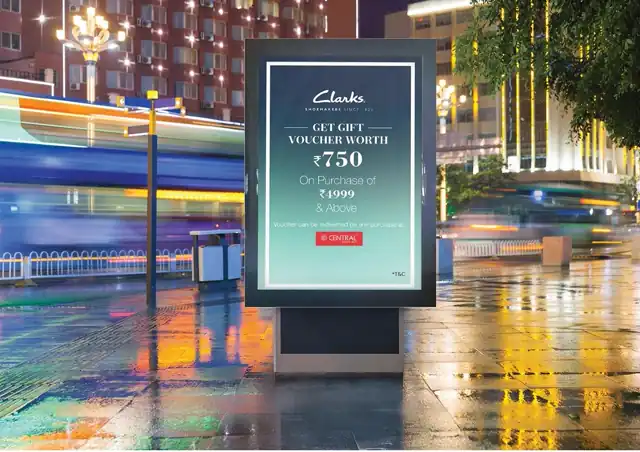
I conducted experiential analysis and developed Visual plans for Central(shopping mall) having window design, store layout, promotional brochures, brand arrangement, and cluster visual displays. This presentation is a compilation of design concepts for central Instagram posts and marketing promotion of CLARKS in the central ecosystem. I provided creative guidance and expertise for the visual direction of CLARKS even in Brand.Central.com (now reliance retail.com)
9 images
Branding
Branding is the process of giving a meaning to a specific organization, company, products or services by creating and shaping a brand in consumers’ minds.
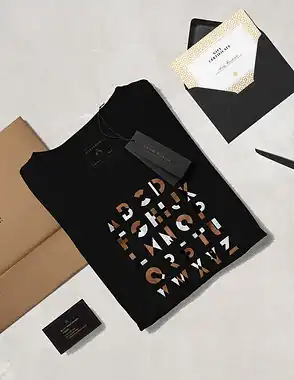
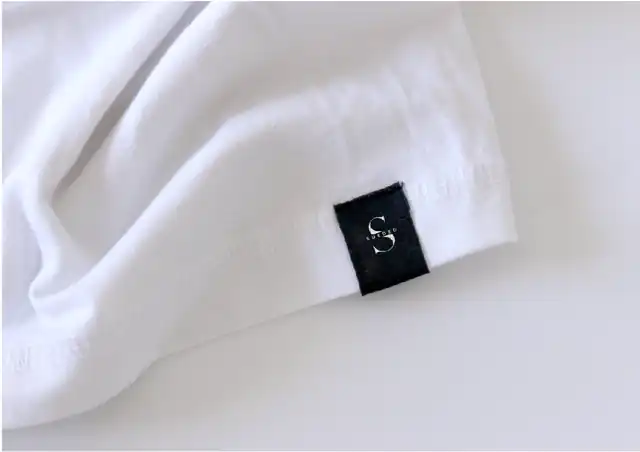
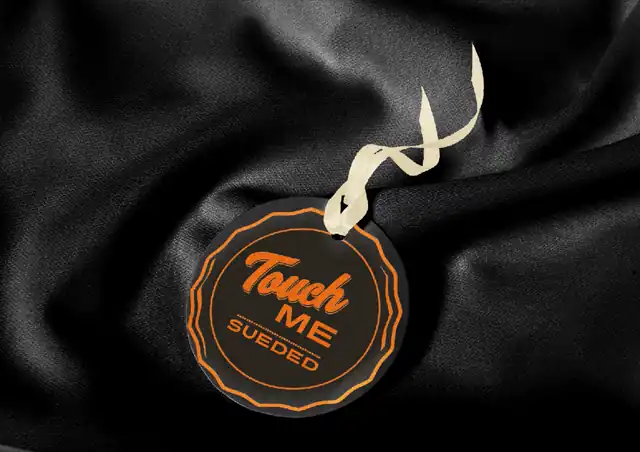
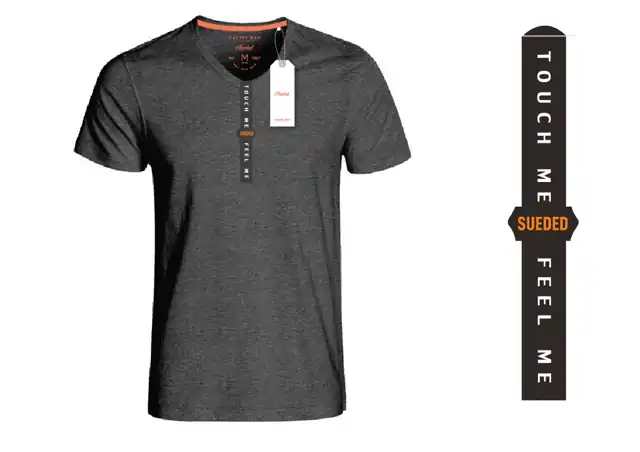
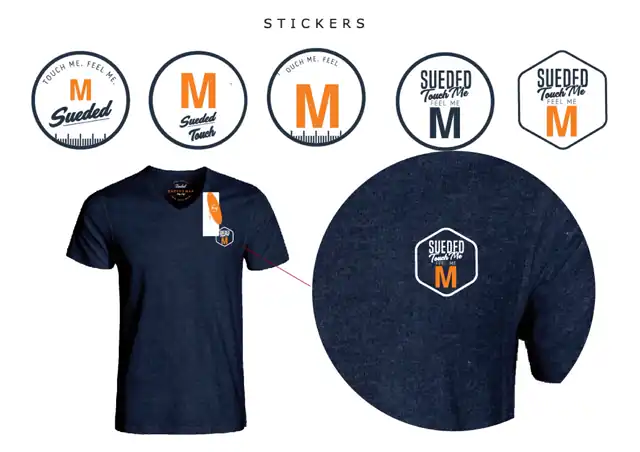
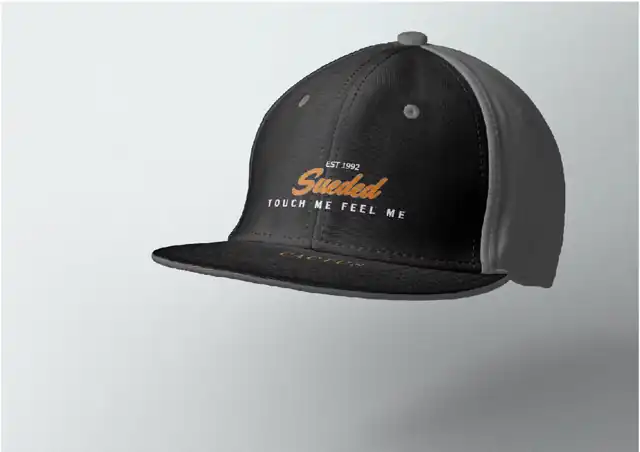
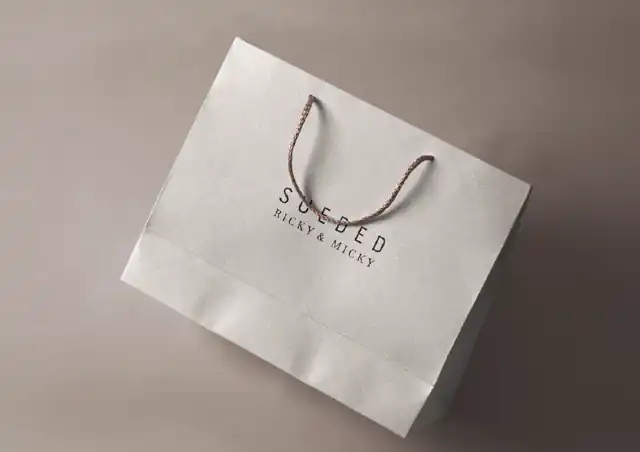
This branding project was done for CSG Globals Pvt Ltd for the Brand "Cactus Man" for a series of t-shirts to be sold in the US market. The aim was to help people to quickly identify and experience the brand, and give them a reason to choose these t-shirts over the competitors.
13 images
Graphics
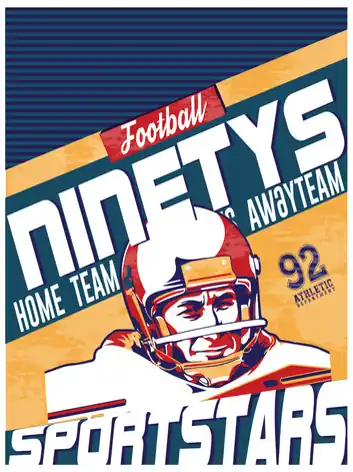
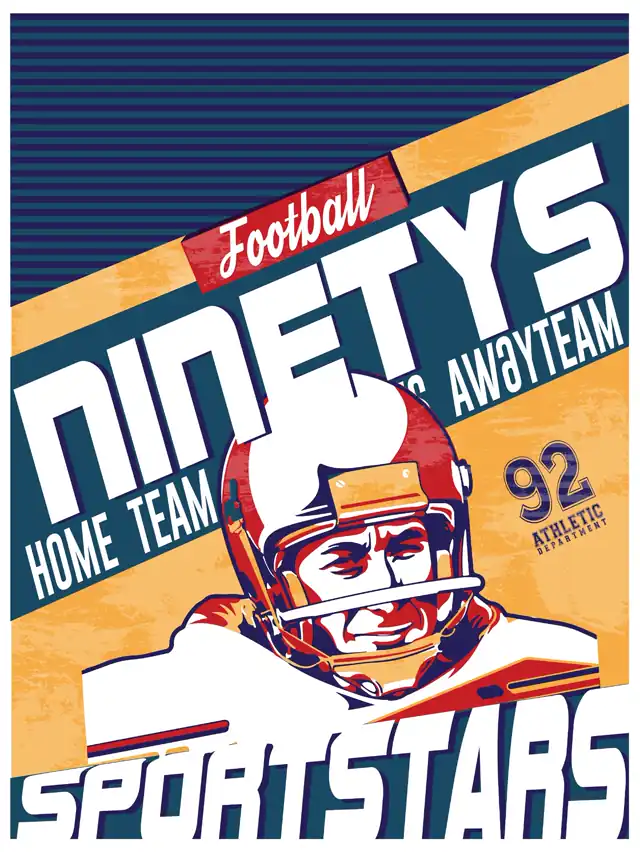
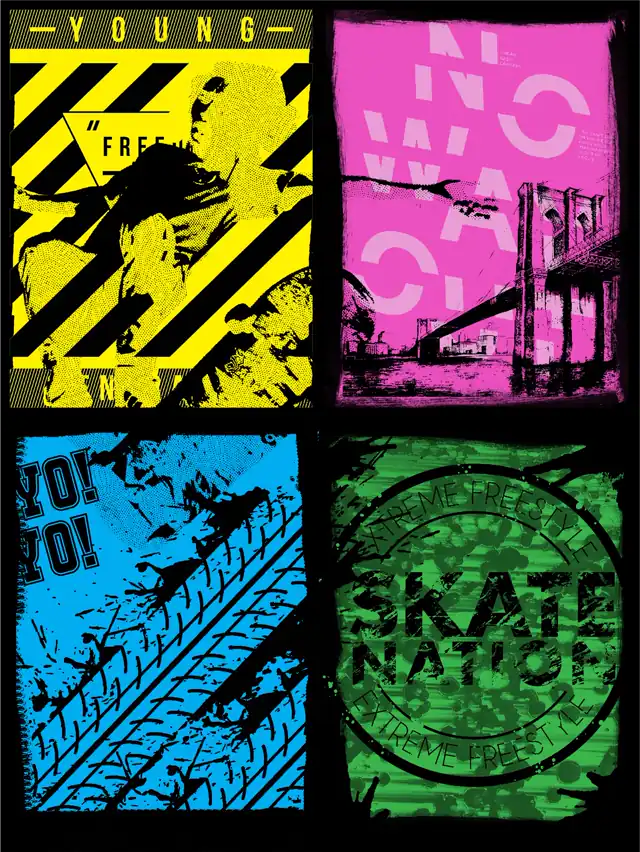
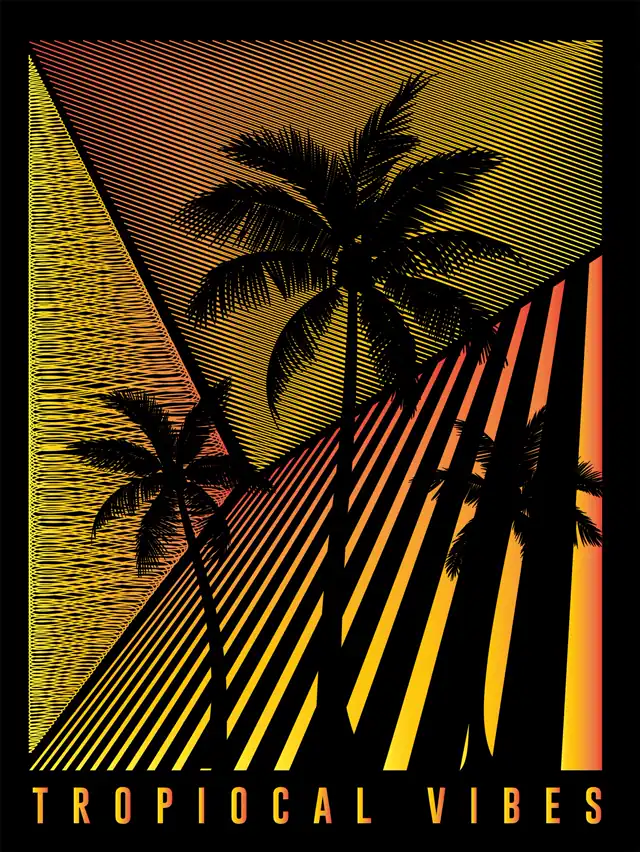
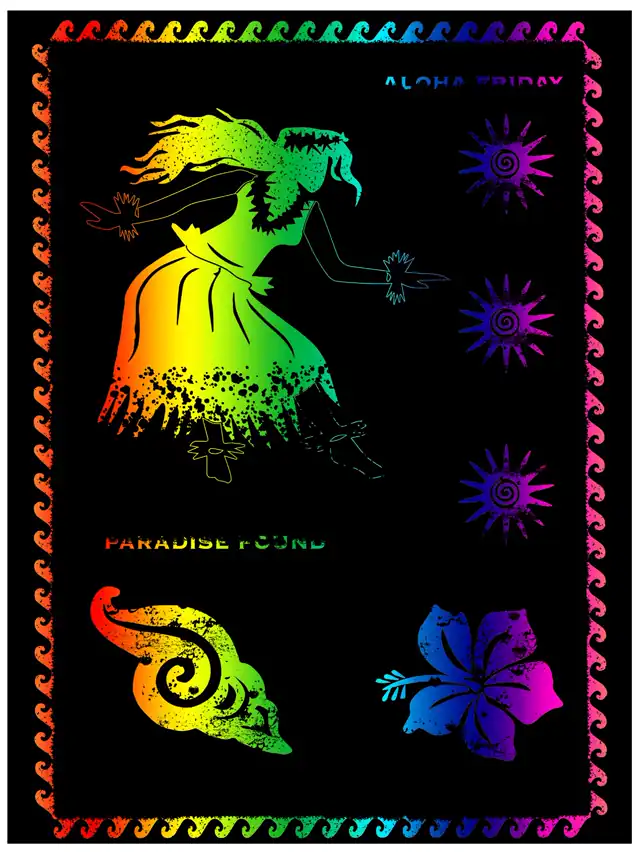
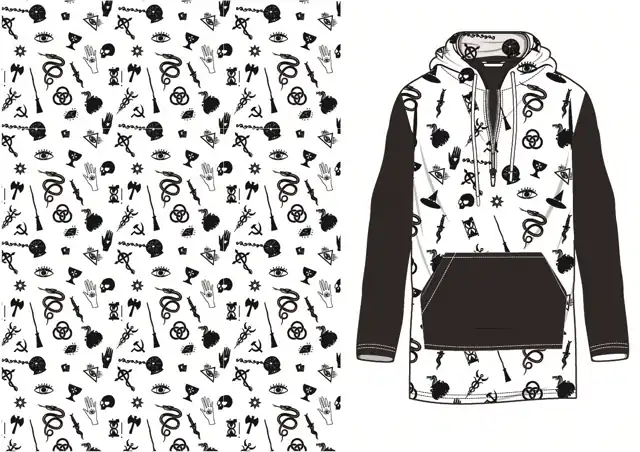
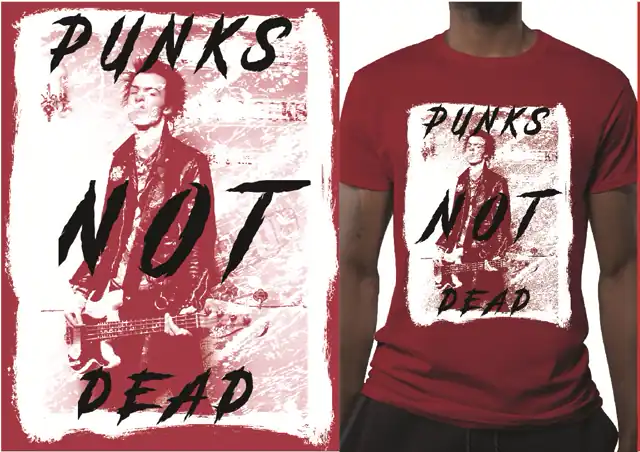
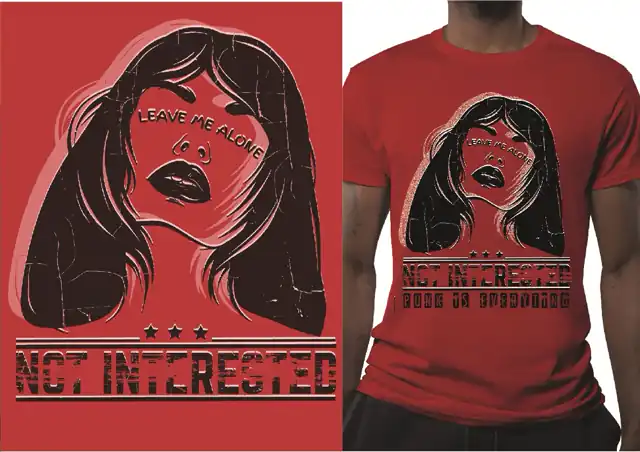
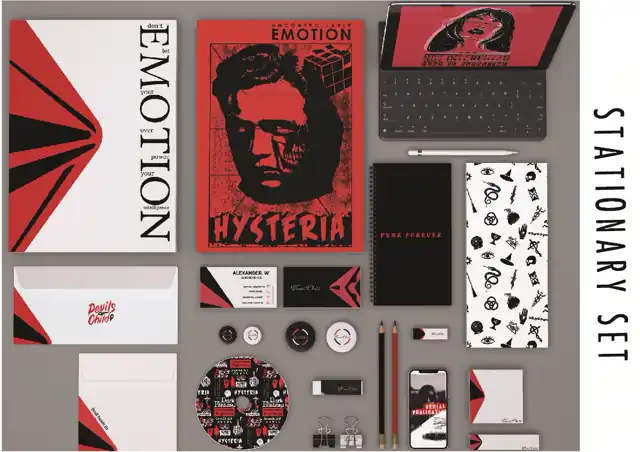
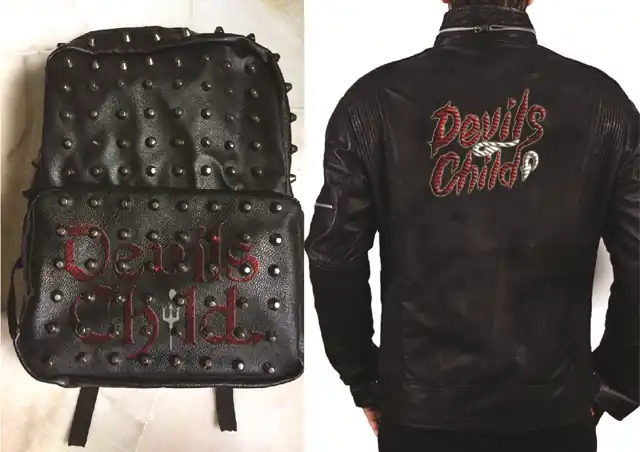
Graphic illustrations were done for Fashion brands like-JC Penney, Walmart,Hnm, Target, Next and Primark. These graphics were used mainly for t-shirts, sweatshirts and shorts.
9 images
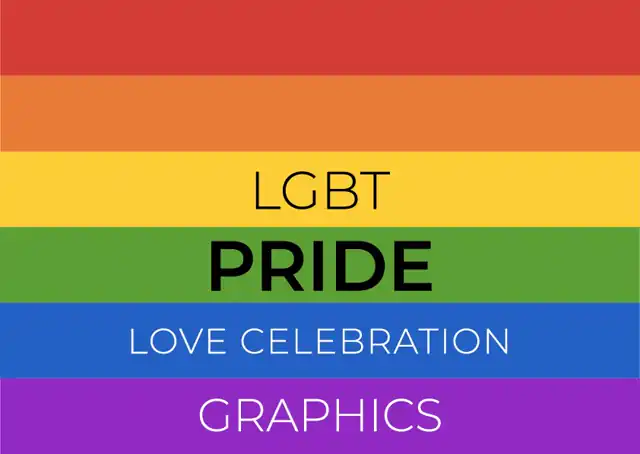
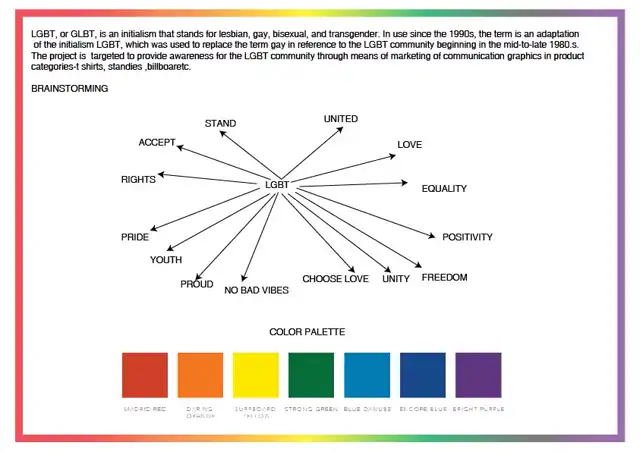
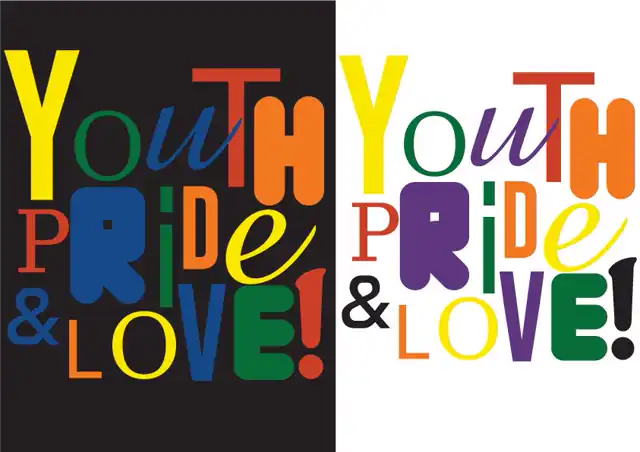
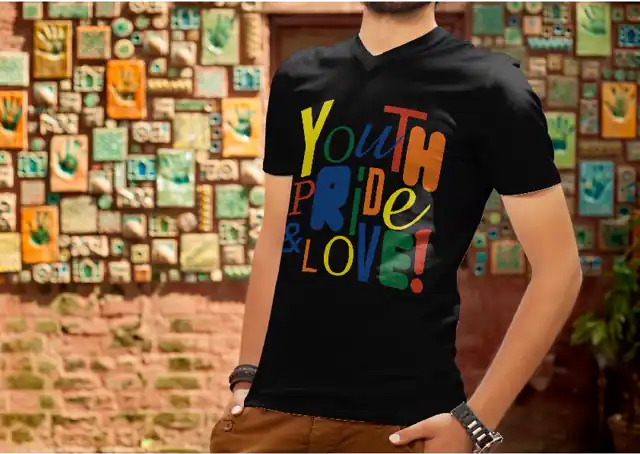
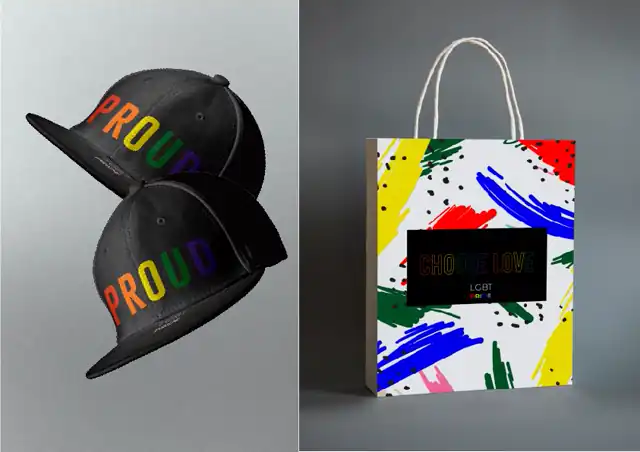
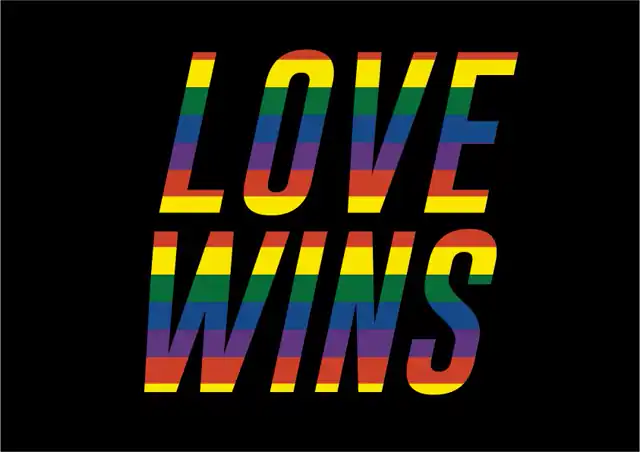
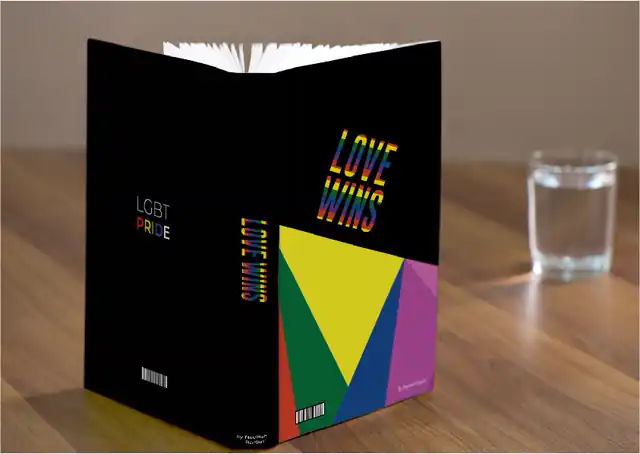
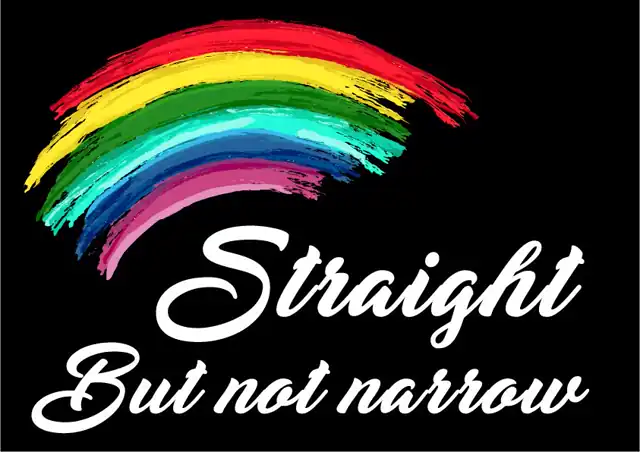
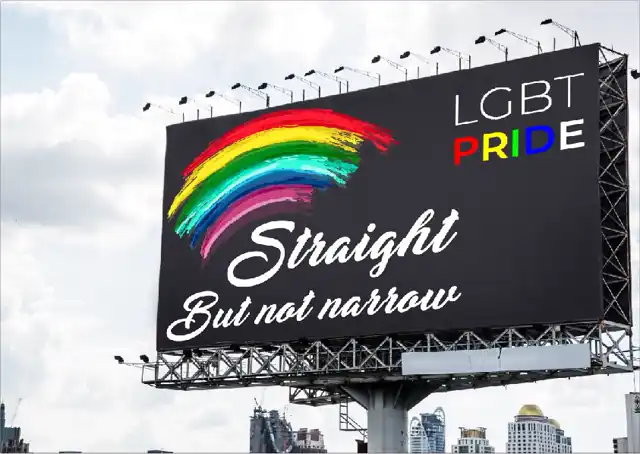
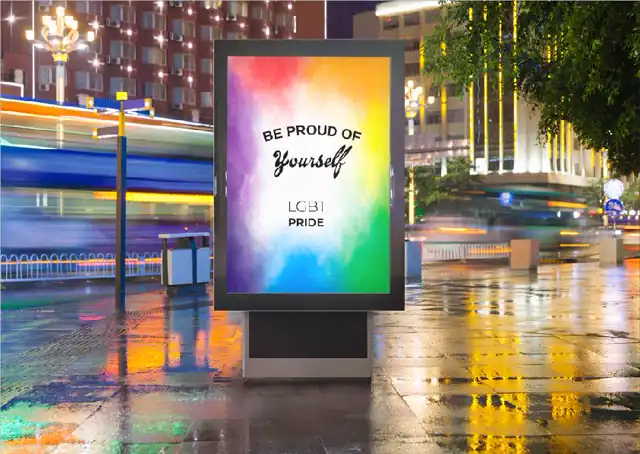
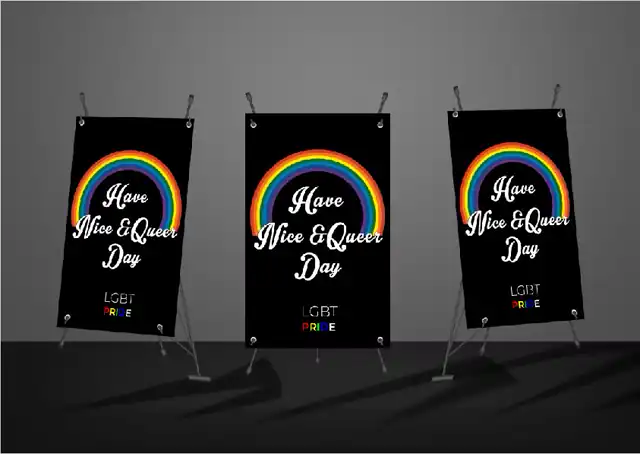
Graphic illustrations were done for Fashion brands like-JC Penney, Walmart,Hnm, Target, Next and Primark. These graphics were based on the "LGBT Pride" theme. These graphics are even mocked into some marketing products apart from apparel where it is used for awareness /communication purpose.
Pride
17 images
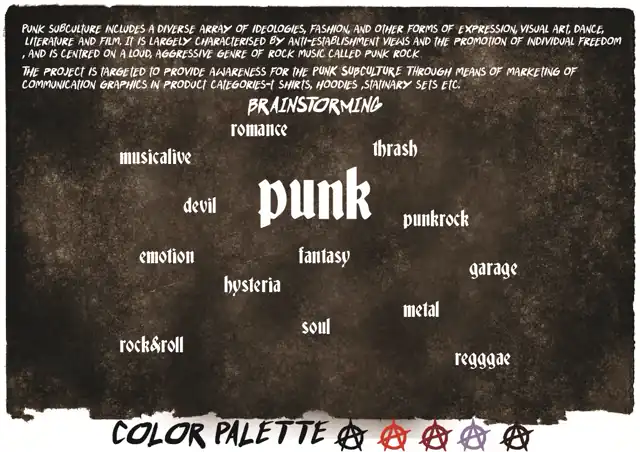
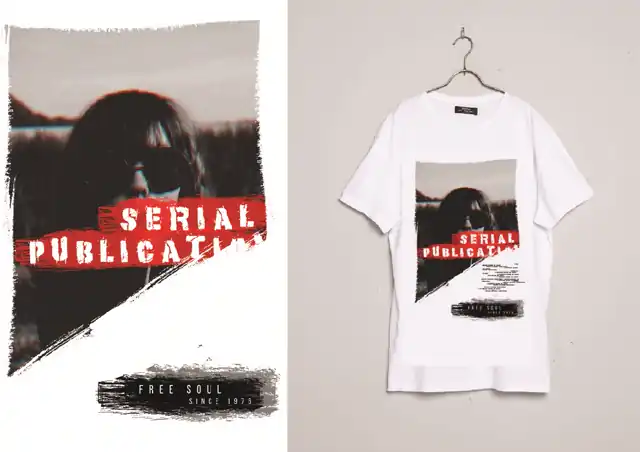
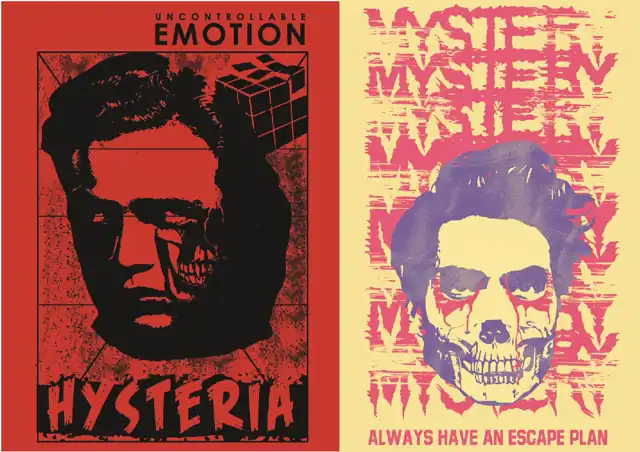
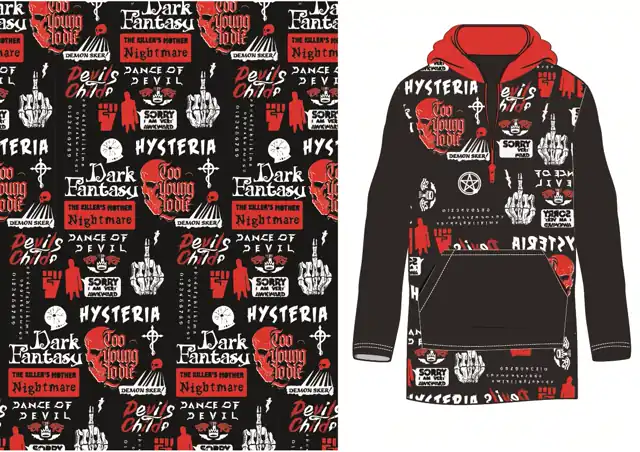
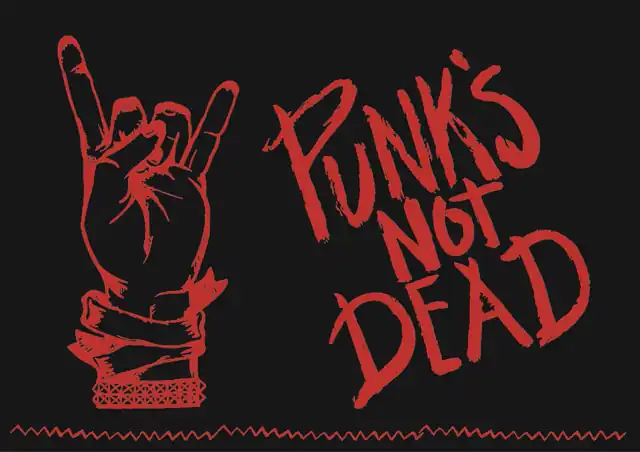
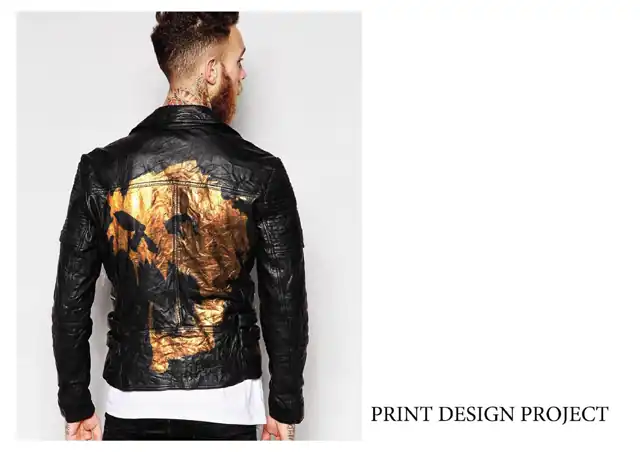
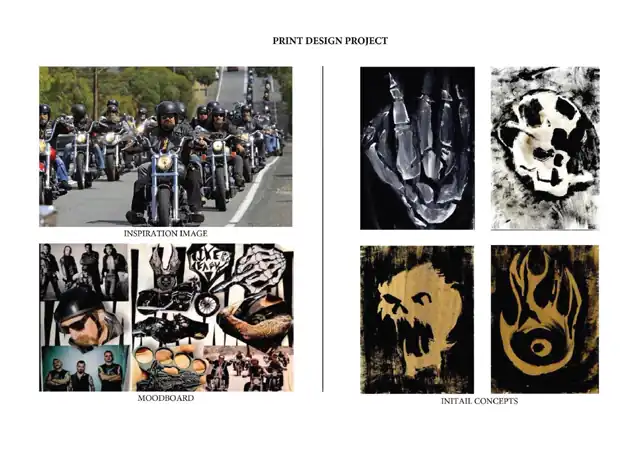
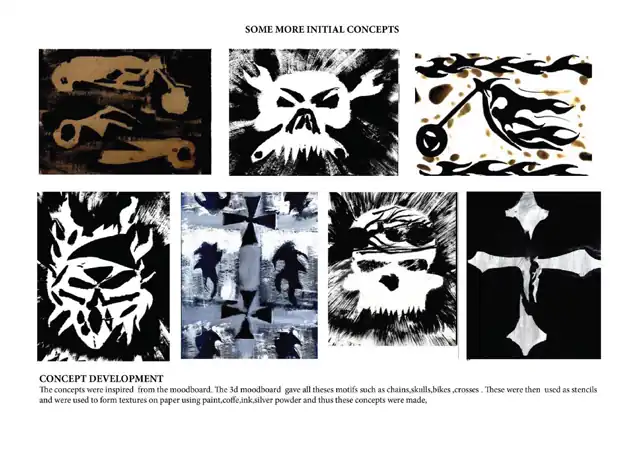
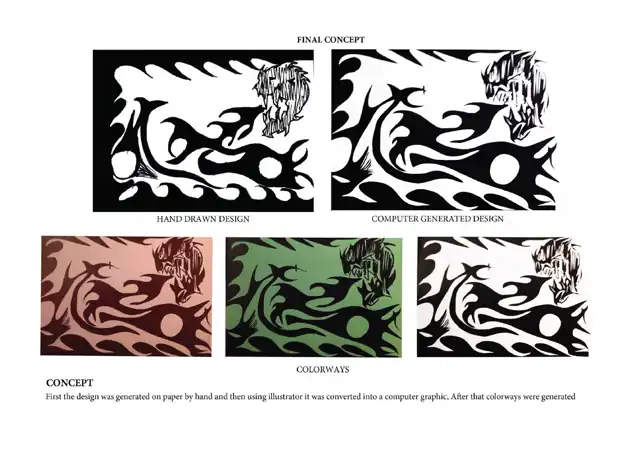
Punk
13 images
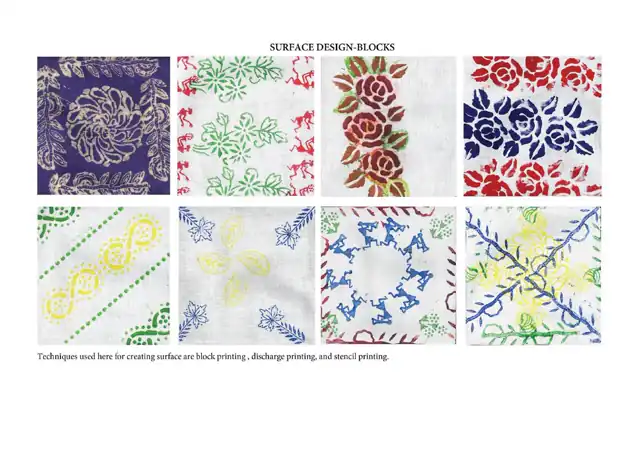
Textiles
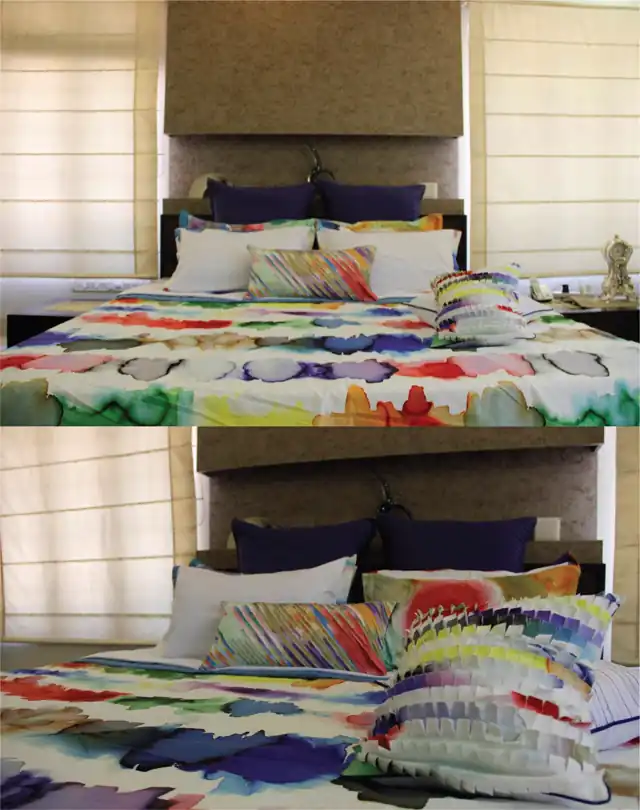
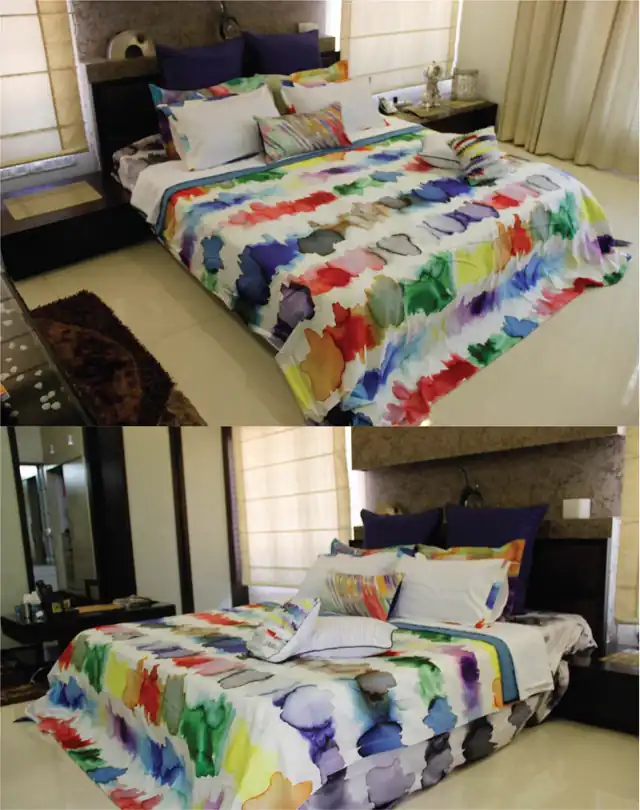
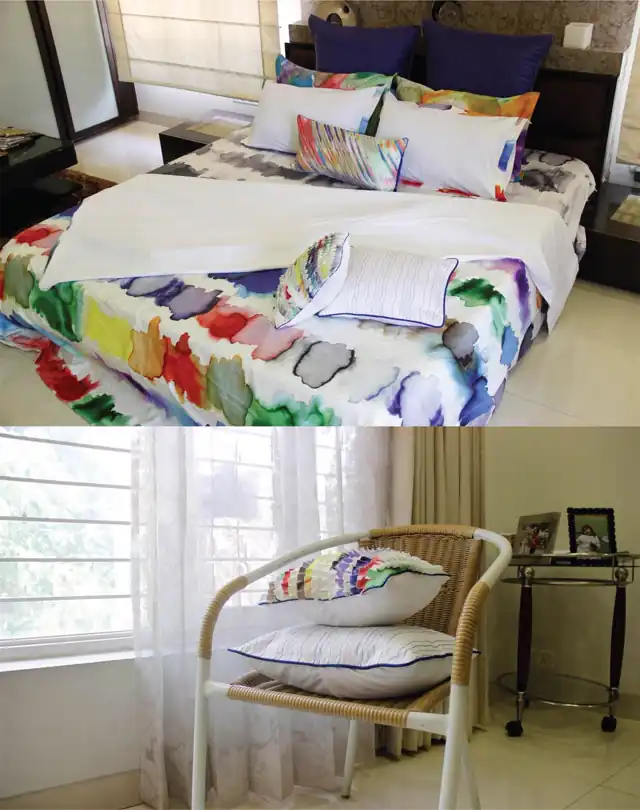
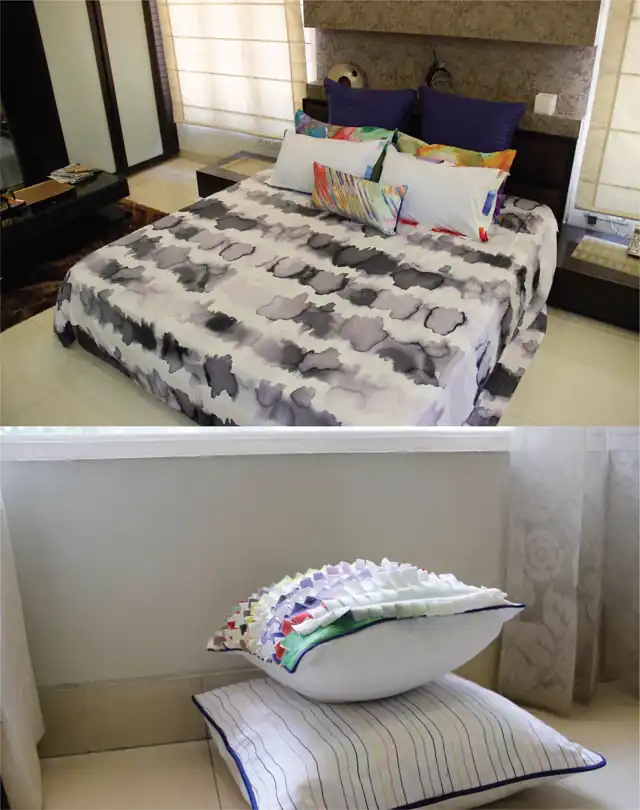
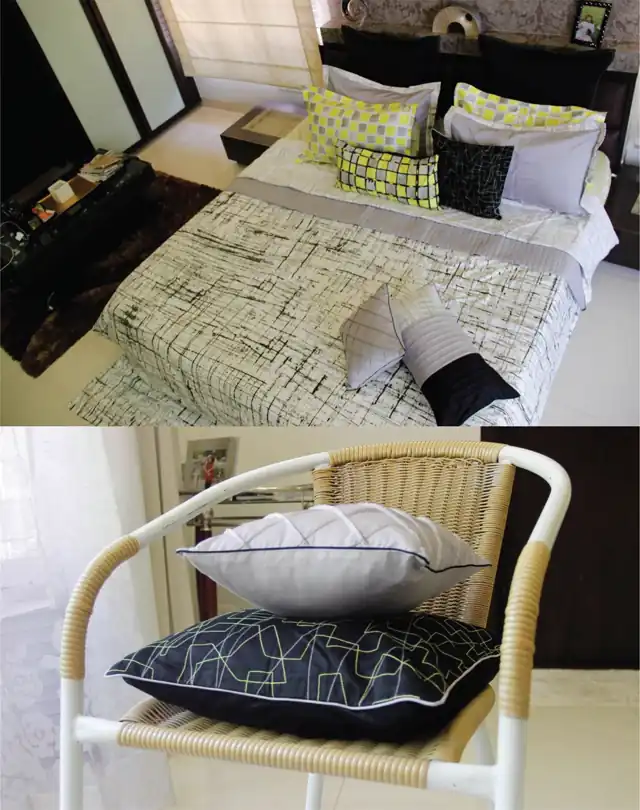
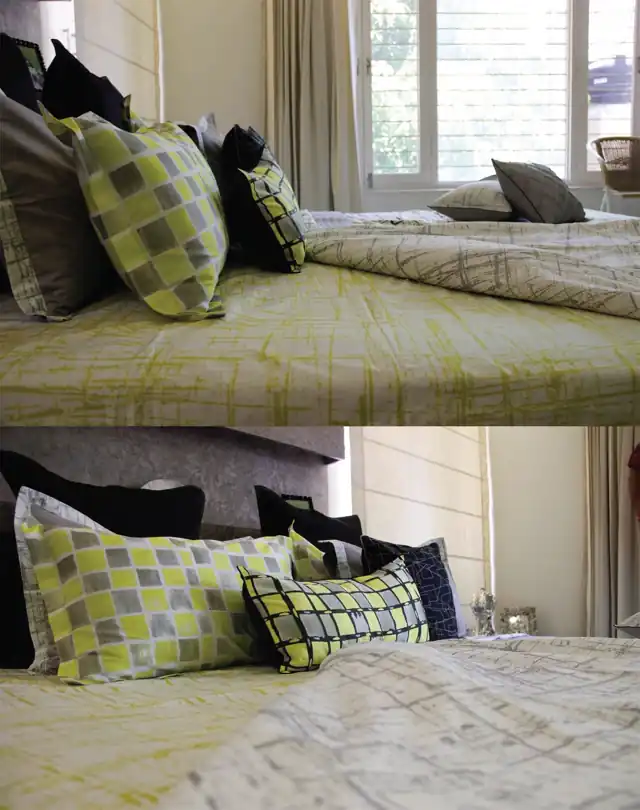
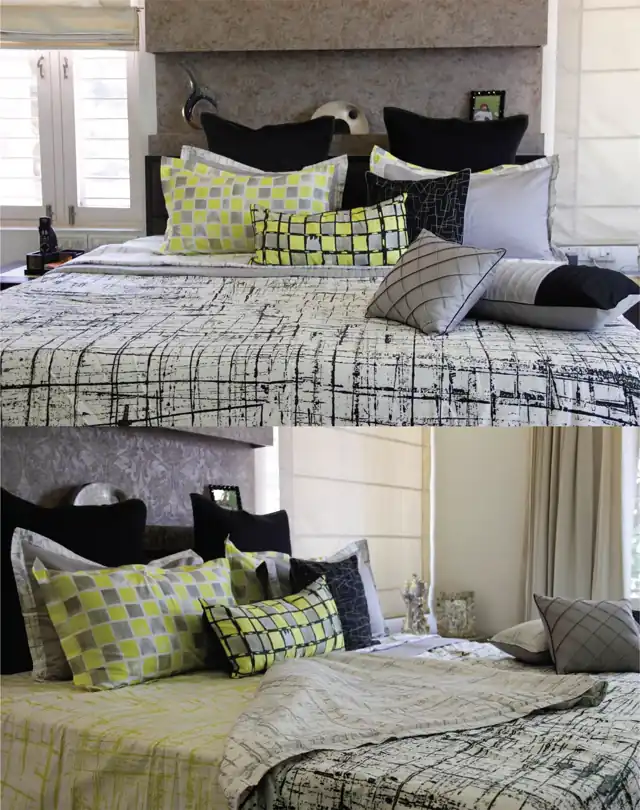
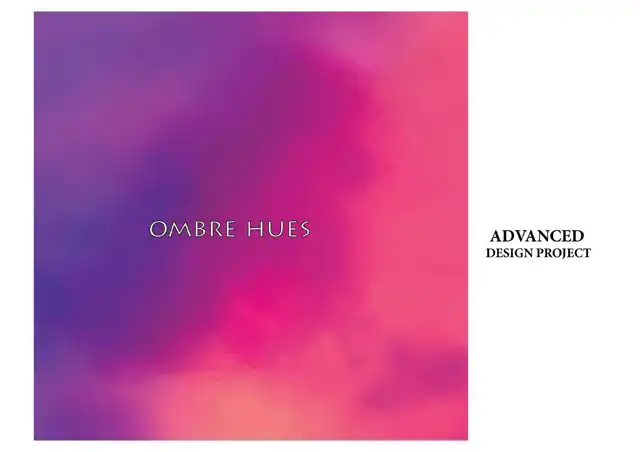
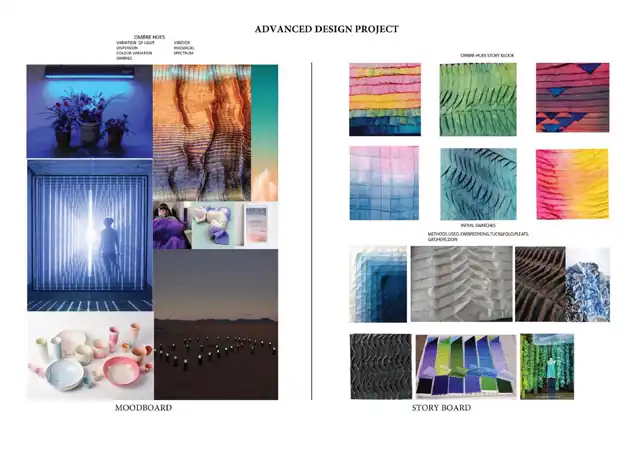
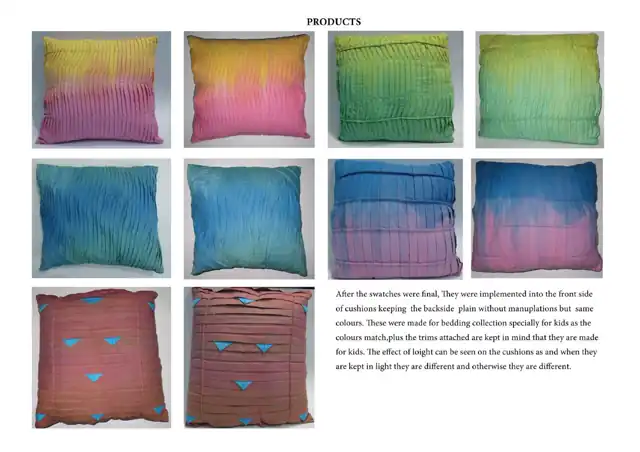
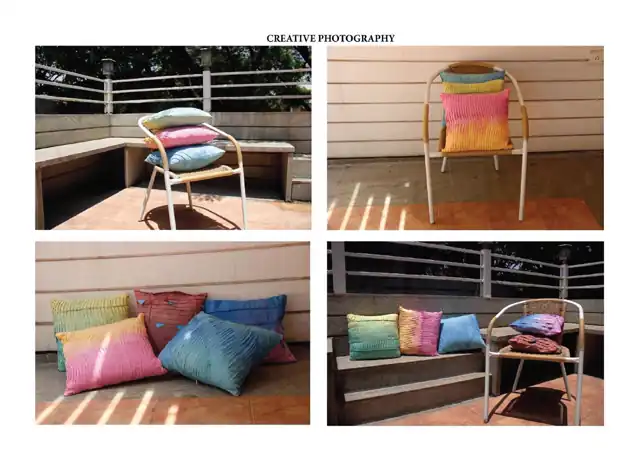
Fashion Bedding Collections made for Welspun Global Brands Pvt Ltd for their brand 'Spaces". These collections were launched in the market both offline in their retail stores and online on E-commerce websites like Myntra.com
7 images
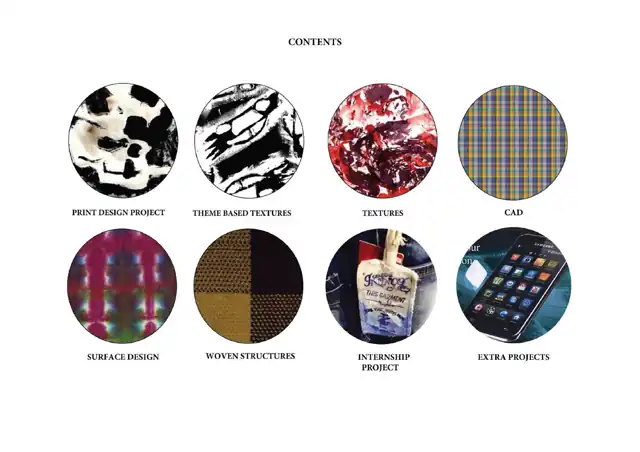
Design Portfolio of projects learned and skills obtained during my undergraduate college.
25 images
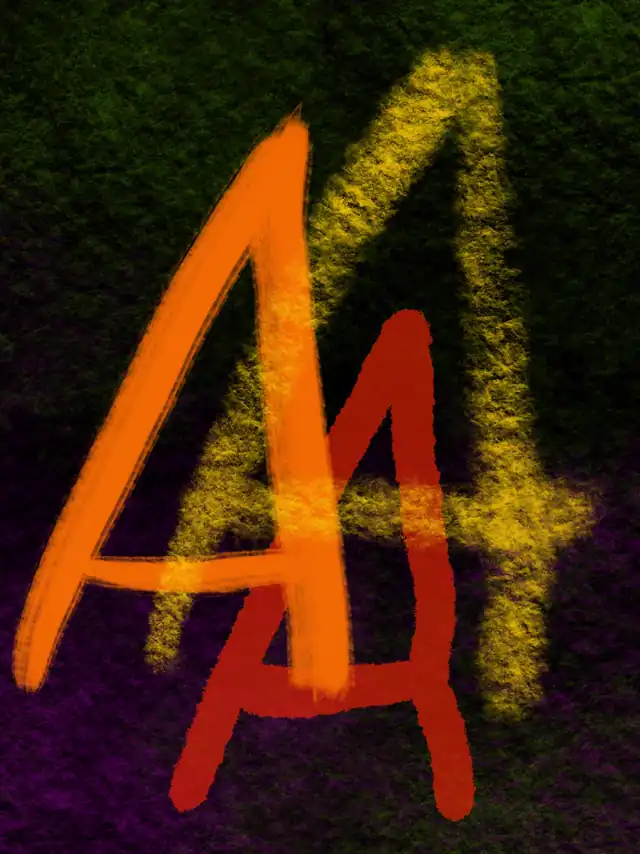
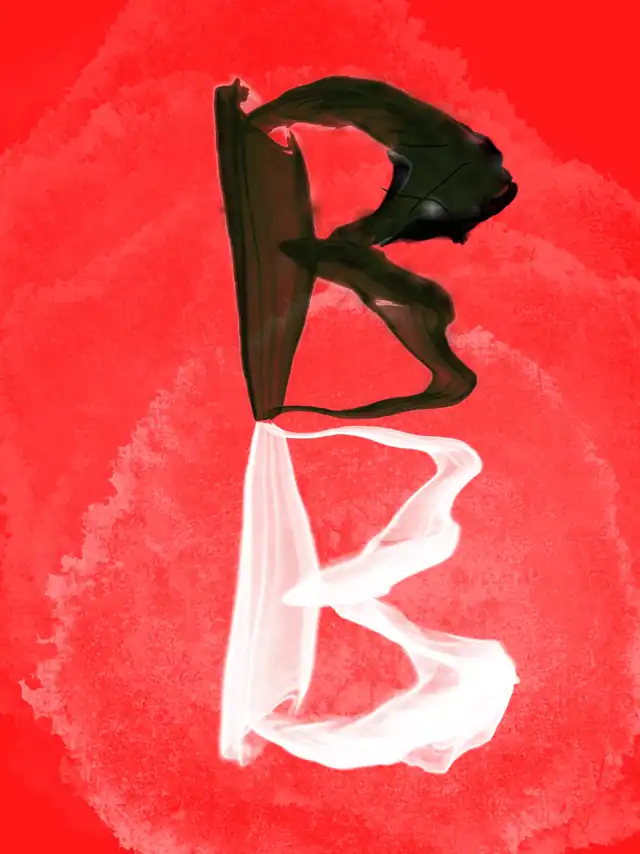
Illustrations
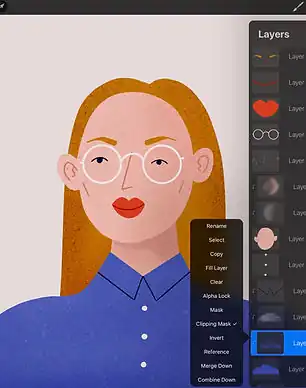
Collection of some creative illustrations that I do it passionately. I generally use Procreate and Adobe Creative Cloud for my illustrations.
36 days of type
36 Days of Type is a global project which is held on Instagram that invites designers, illustrators and graphic artists to
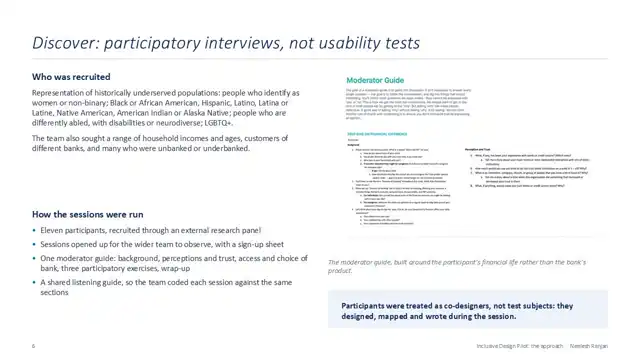
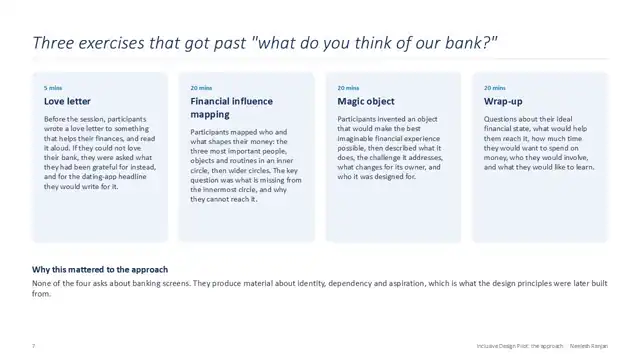
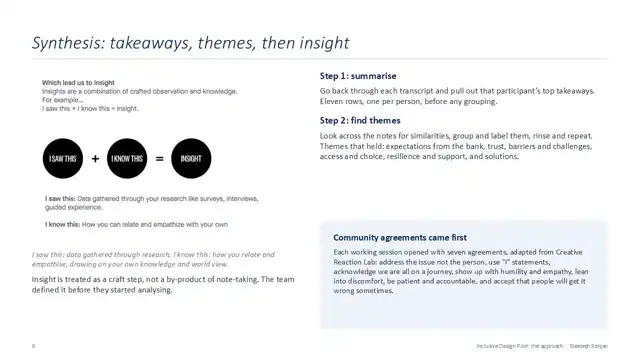
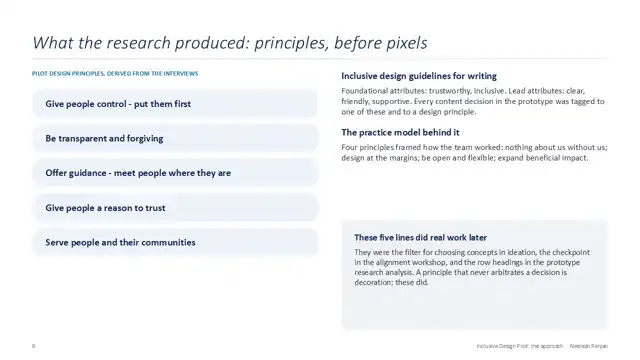
express their particular interpretations of the letters and numbers of Latin Alphabets.